PS Plastic Nameplate
CN → US| HS编码 | 关税税率 | 原产国 | 目的国 | 文档 |
|---|---|---|---|---|
| 3923290000 | 38.0% | CN | US | 官方文档 |
| 3923900080 | 38.0% | CN | US | 官方文档 |
| 3919905060 | 40.8% | CN | US | 官方文档 |
| 3919102055 | 40.8% | CN | US | 官方文档 |
| 3920300000 | 40.8% | CN | US | 官方文档 |
商品图片
AI分析
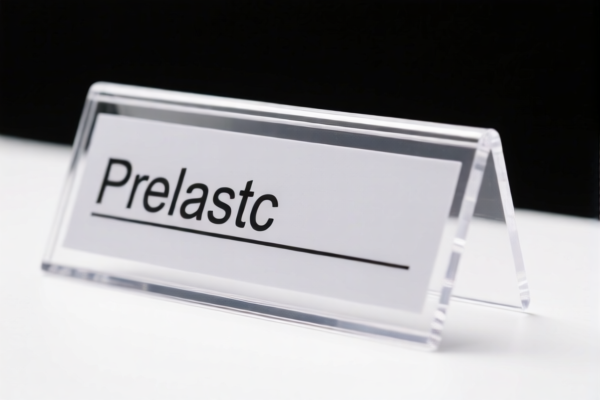
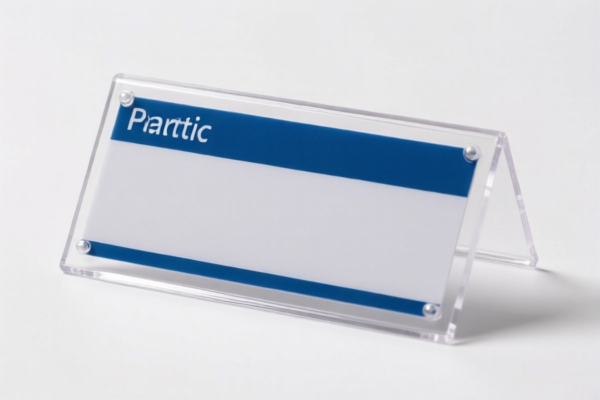
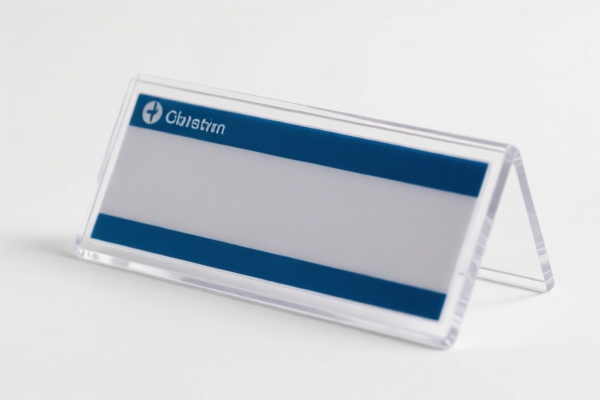
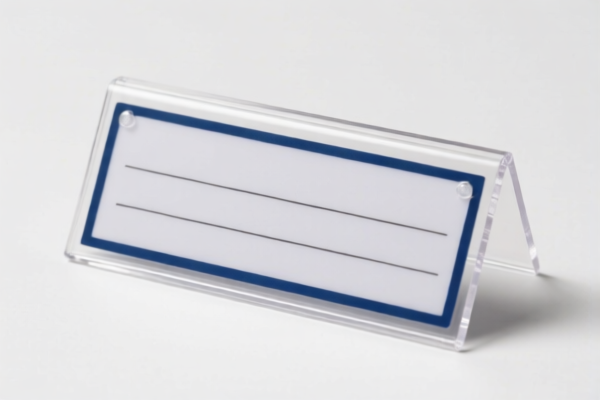
🏷️ PS Plastic Nameplate (Polystyrene Plastic Nameplates)
🌐 HS Code Reference & Customs Clearance Guide | 2026 Latest Tariff Analysis | Professional Clearance Strategy
📌 I. Product Definition & Classification: Is it a "Packaging" or a "Sheet/Film"?
PS Plastic Nameplates are rigid or semi-rigid labels made from Polystyrene (PS), used for branding, identification, or decorative purposes on products. In international trade, their classification hinges on their physical form and primary function:
1. Rigid/Structured Items (Packaging/Containers):
If the nameplate is thick, rigid, and used as part of the immediate packaging or as a distinct plastic article distinct from films/sheets, it may be classified as "Other articles of plastics" or "Plastic packing articles."
Key Feature:* High rigidity, molded shape, not primarily a "sheet" or "film."
2. Sheets/Films/Plates:
If the nameplate is flat, flexible, or thin enough to be considered a "sheet," "plate," or "film" of plastic (even if printed), it falls under chapters dealing with Plastic Plates, Sheets, Films, Foil, and Strip or Self-adhesive/Plastic Sheet/Film.
Key Feature:* Flat, potentially rollable, defined by thickness (thinness).
⚠️ Key Distinction Point:
- If the item is rigid, molded, and functions as a container or distinct plastic article → Look at 3923 (Plastic articles for the conveyance or packing of goods) or 3926.
- If the item is flat, sheet-like, or film-like (even if branded) → Look at 3919 (Self-adhesive plates, sheets, film, etc.) or 3920 (Other plates, sheets, film, foil, and strip).
📦 II. HS Code Classification Details (2026 Latest Tariff Authority Comparison)
Based on the provided data, the PS Plastic Nameplate can be classified into four distinct HS Codes depending on its specific physical attributes:
| HS Code | Product Description | Application Scenario | Physical Characteristic |
|---|---|---|---|
3923.29.00.00 |
Plastic Packing Articles (Film, Bag, Sack) | PS Nameplates packaged in plastic bags/films, or if the nameplate itself is considered a "plastic packing article" (e.g., a protective sleeve). | ✅ Often flexible, film-like, or part of the packing unit. |
3923.90.00.80 |
Other Plastic Packing Articles | PS Nameplates that do not fit specific film/bag categories but are still considered "packing" or "conveyance" items. | ✅ Rigid or semi-rigid, used for packaging purposes. |
3919.90.50.60 |
Plastic Film/Sheet (Self-adhesive/Other) | PS Nameplates that are self-adhesive labels or thin sheets/films with printing. | ✅ Thin, flat, often self-adhesive or roll-form. |
3919.10.20.55 |
Plastic Film/Sheet (Self-adhesive, width > 20cm) | Large-format PS Nameplate sheets or rolls (width > 20cm). | ✅ Wide format, self-adhesive, sheet/film form. |
3920.30.00.00 |
Polystyrene (PS) Plates, Sheets, Film, Foil & Strip | Pure PS Nameplates that are rigid plates or thin sheets, not self-adhesive, and not packaging. | ✅ Rigid or semi-rigid, pure PS material, flat form. |
🔍 Critical Reminder:
- "Nameplate" is not a standalone HS Code. You must classify based on material form.
- If it’s self-adhesive, prefer 3919.
- If it’s rigid PS sheet/plate (non-adhesive), prefer 3920.30.
- If it’s packaged as a film/bag or considered a packing accessory, consider 3923.
💰 III. 2026 Latest Tariff Rate Breakdown (Including Additional Taxes, Policy Surcharges)
✅ Applicable Country: United States (US)
✅ Country of Origin: China (CN)
✅ Effective Date: November 10, 2025 (for subsequent imports)
🎯 1. 3923.29.00.00 & 3923.90.00.80 —— Plastic Packing Articles
| Item | Detail |
|---|---|
| Base Tariff | 3.0% (ad valorem) |
| Section 301 Additional Tariff | +25.0% |
| Section 122 Tariff (IEEPA) | +10.0% |
| Total Rate | 38.0% |
| Tax Calculation | CIF Value × 38.0% |
| De Minimis Eligibility | ❌ Not Eligible (Due to 301 & 122 tariffs) |
| Legal Basis | USITC:3923.x9 → SECTION_301:Footnote → IEEPA:Section_122 |
📌 Explanation:
- "Base Tariff 3%": Standard MFN rate for plastic packing articles.
- "+25% Section 301": Standard punitive tariff on Chinese plastic goods.
- "+10% Section 122": Additional tariff under the International Emergency Economic Powers Act (IEEPA) targeting specific Chinese imports.
- Total 38%: High cost. Ensure the product is not misclassified to avoid penalties.
🎯 2. 3919.90.50.60 & 3919.10.20.55 & 3920.30.00.00 —— Plastic Sheets, Films, Polystyrene Articles
| Item | Detail |
|---|---|
| Base Tariff | 5.8% (ad valorem) |
| Section 301 Additional Tariff | +25.0% |
| Section 122 Tariff (IEEPA) | +10.0% |
| Total Rate | 40.8% |
| Tax Calculation | CIF Value × 40.8% |
| De Minimis Eligibility | ❌ Not Eligible (Due to 301 & 122 tariffs) |
| Legal Basis | USITC:3919/3920 → SECTION_301:Footnote → IEEPA:Section_122 |
📌 Note:
- "Base Tariff 5.8%": Higher base rate for plastic sheets/films/plates compared to packing articles.
- "+25% Section 301" + "+10% Section 122": Same additional tariffs apply.
- Total 40.8%: Highest among the options.
- Implication: Classifying as a "Sheet/Film" (3919/3920) results in a 2.8% higher total tax than classifying as "Packing Article" (3923). However, correct classification is mandatory. Misclassification can lead to severe penalties.
🛠️ IV. Customs Clearance Practical Advice (Best Practices & Pitfall Avoidance)
✅ 1. Documentation Checklist (Mandatory)
| Document | Required | Description |
|---|---|---|
| ✅ Product Specification Sheet | ✔️ | Must specify: Material (PS), Thickness, Form (Rigid Sheet vs. Film vs. Molded), Adhesive type (if any). |
| ✅ Product Photos | ✔️ | Clear images showing the nameplate’s shape, rigidity, and packaging. |
| ✅ Commercial Invoice | ✔️ | Clearly state "PS Plastic Nameplate" and specify form (e.g., "Rigid PS Nameplate" or "PS Self-Adhesive Film"). |
| ✅ Packing List | ✔️ | Detail how items are packed (e.g., "In plastic bags" vs. "In boxes"). |
| ✅ Material Safety Data Sheet (MSDS) | ✔️ | For PS plastic, though generally low risk, may be requested. |
| ✅ Certificate of Origin (CO) | ✔️ | Required for tariff determination. |
✅ 2. Declaration Tips (Key Strategy)
🔥 “Form Dictates Code, Code Dictates Cost!”
| Scenario | Recommended HS Code | Reasoning |
|---|---|---|
| Rigid, Molded Nameplate (Thick, hard plastic) | 3923.29.00.00 or 3923.90.00.80 |
If used as part of packaging or a distinct plastic article. Lower tax (38%). |
| Thin, Flat, Self-Adhesive Label | 3919.90.50.60 or 3919.10.20.55 |
Classified as "Self-adhesive plastic film/sheet." Higher tax (40.8%). |
| Pure PS Sheet/Plate (Non-adhesive, Rigid) | 3920.30.00.00 |
Classified as "Polystyrene plate/sheet." Highest tax (40.8%). |
⚠️ Warning:
- Do NOT misclassify a rigid nameplate as a "film" to avoid penalties if it doesn’t fit the definition.
- Do NOT misclassify a film as a "packing article" if it’s clearly a labeling material.
- Accuracy over Savings: A 2.8% difference is significant, but a customs penalty for misclassification can cost 10x more.
✅ 3. Special Circumstances
| Scenario | Handling Advice |
|---|---|
| Nameplate with Metal Parts | If metal parts are dominant, may fall under Chapter 83 (Metal fittings). However, for PS nameplates, plastic usually dominates. |
| Custom Printed Design | Ensure the invoice describes it as "Custom Printed PS Nameplate," not just "Plastic Sheet," to justify the use. |
| Bulk Rolls vs. Cut Pieces | Rolls may favor 3919 (film/sheet); Cut pieces may favor 3923 (article) or 3920 (plate). Clarify in documentation. |
| Origin Marking | Ensure "Made in China" is marked on the product/packaging to avoid origin fraud claims. |
🌍 V. Global Market Comparison (2026 Latest)
| Country/Region | Recommended HS Code | Tariff (China Origin) | Certification Required | Notes |
|---|---|---|---|---|
| 🇺🇸 United States | 3923.29.00.00 / 3919.90.50.60 |
38% - 40.8% | FDA (if food contact), Prop 65 | High tariffs due to 301 & 122. |
| 🇪🇺 European Union | 3923.29.00 / 3920.30.00 |
0% - 3.0% | REACH, RoHS | No additional punitive tariffs. |
| 🇨🇳 China | 3923.29.00 / 3920.30.00 |
5% - 7% | CCC (if applicable) | Lower taxes, no Section 301. |
| 🇬🇧 United Kingdom | 3923.29.00 / 3920.30.00 |
0% - 3.0% | UKCA, REACH | Post-Brexit standards apply. |
| 🇨🇦 Canada | 3923.29.00 / 3920.30.00 |
5% - 7% | Health Canada, CFIA | No US-style punitive tariffs. |
📌 Conclusion:
- The US is the most expensive market for PS Plastic Nameplates due to Section 301 and Section 122 tariffs.
- EU and other markets offer significant tariff advantages (0-3%).
- Consider supply chain diversification (e.g., Vietnam, Thailand) to avoid US tariffs if targeting the US market.
📌 VI. Common Mistakes & Pitfall Guide (Lessons Learned)
❌ Mistake 1: Classifying a rigid nameplate as a "plastic sheet" (3920) without justification.
👉 Consequence: Higher tax (40.8% vs 38%) if misclassification is challenged, or customs rejection.
❌ Mistake 2: Claiming "De Minimis" exemption for small shipments.
👉 Consequence: Denied. Section 301 and 122 tariffs apply regardless of value. Shipments may be seized.
❌ Mistake 3: Vague description: "Plastic Part."
👉 Consequence: Customs request for additional info, delays, and potential misclassification.
❌ Mistake 4: Ignoring Section 122 (10%) in cost calculation.
👉 Consequence: Underquoting price, leading to cash flow issues for buyers.
✅ Correct Practice:
"Polystyrene (PS) Nameplate, Rigid, Custom Printed, 100% Plastic, Not for Food Contact, Model XYZ"
🎯 VII. Conclusion: Professional Declaration, Cost Control, Efficiency!
🎯 Remember the Mantra:
🔹 "Rigid = Packing? 38%. Flat = Film? 40.8%. Choose Wisely!"
🔹 "Section 301 & 122 apply to ALL plastic goods from China. No Exceptions!"
📌 Pro Tip:
- If your nameplate is self-adhesive, it MUST be classified under 3919, not 3923, regardless of rigidity.
- For rigid, non-adhesive nameplates, 3923 (Packing Article) may offer a 2.8% tax saving over 3920 (Plate/Sheet), but only if the customs authority accepts it as a "packing article."
- Recommendation: Apply for an Advance Ruling from US Customs (CBP) to confirm the correct HS Code before shipping.
📣 Immediate Action:
📞 Consult a licensed customs broker.
📄 Prepare detailed product specifications (Rigidity, Adhesive, Thickness).
🚀 Optimize your supply chain to mitigate high US tariffs.
✨ Professional Customs Clearance Starts with Accurate Classification!
💼 Every Percentage Point Counts in Global Trade!
用户评价
关于 HS 编码归类
协调制度(HS)是由世界海关组织(WCO)制定的国际贸易商品分类标准。全球 200 多个国家采用 HS 系统作为海关关税、贸易统计和进出口监管的基础。
每个 HS 编码遵循以下层级结构:
- 章(2 位)——商品大类(例如:第 84 章:机器和机械设备)
- 品目(4 位)——章内的更具体分类
- 子目(6 位)——国际通用细分,所有 WCO 成员国统一使用
- 本国细分(8-10 位)——各国自行扩展的细分编码,如美国 HTSUS 10 位编码
正确的 HS 编码归类对于顺利通关、准确缴纳关税和遵守贸易法规至关重要。错误归类可能导致海关延误、多缴关税或罚款。
从CN进口到US时,适用的关税税率可能包括:
- 最惠国(MFN)税率——适用于 WTO 成员国的标准关税税率
- 普通税率——适用于无贸易协定国家
- 贸易救济关税——附加关税,如 301 条款(反倾销)、232 条款(国家安全)或反补贴税
本页内容仅供参考。如需正式归类,请咨询当地海关或持牌报关代理。