PU Belt
CN → US| HS编码 | 关税税率 | 原产国 | 目的国 | 文档 |
|---|---|---|---|---|
| 5911102000 | 38.8% | CN | US | 官方文档 |
| 3926906090 | 39.2% | CN | US | 官方文档 |
| 5911101000 | 37.9% | CN | US | 官方文档 |
| 4203300000 | 37.7% | CN | US | 官方文档 |
| 4203406000 | 35.0% | CN | US | 官方文档 |
商品图片
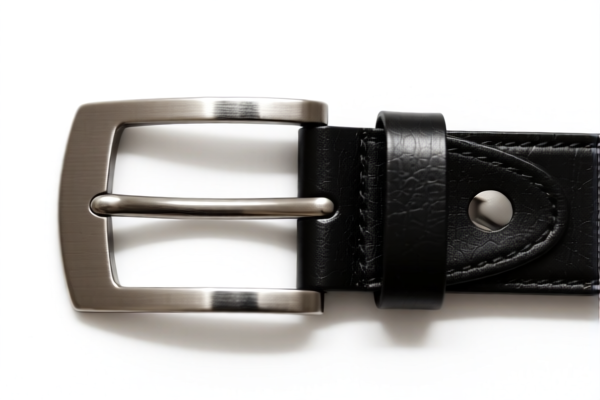
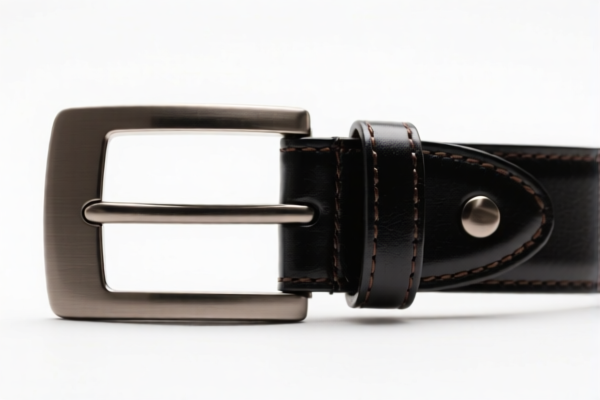
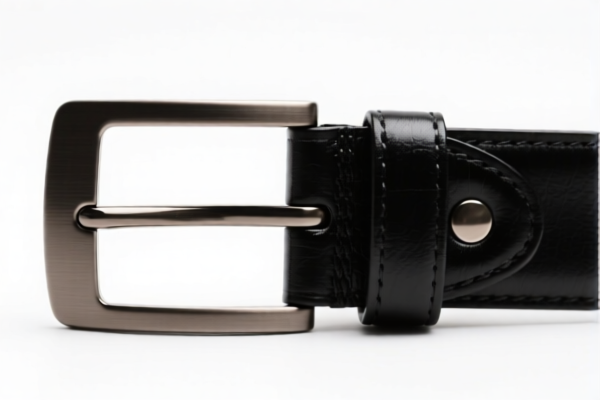
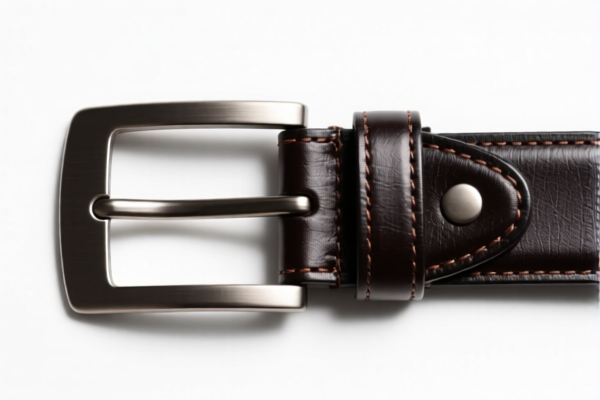
AI分析
🎡 PU Belts (Polyurethane Timing/Drive Belts)
🌐 HS Code Reference & Clearance Guide | 2026 Latest Tariff Analysis | Professional通关 Strategy
📌 Part I: Product Definition & Classification: What exactly is a "PU Belt"?
Polyurethane (PU) belts are industrial components used for power transmission, indexing, or conveying. In international trade, they are often misclassified due to the composite nature of their materials (rubber-like outer layer, fiberglass/cord core, fabric lining).
The key to correct classification lies in the primary function and material composition: * Textile/Fabric-based Belts: If the belt is primarily identified by its textile fabric structure (even if coated with PU), it may fall under Chapter 59 (Textile Articles). * Plastic/Rubber-based Belts: If the belt is considered a finished plastic article or a specific type of plastic belt without textile dominance, it may fall under Chapter 39 (Plastics) or Chapter 40/42 depending on specific sub-category interpretations.
⚠️ Critical Distinction Point:
- If the belt is considered a textile product (fabric backing dominates) → Chapter 59
- If the belt is considered a plastic article (polyurethane dominates as a plastic form) → Chapter 39
- If classified as an accessory (like a strap/buckle item) → Chapter 42
📦 Part II: HS Code Classification Details (2026 Latest Tariff Authoritative Comparison)
| HS Code | Product Description | Application Scenario | Primary Material Focus |
|---|---|---|---|
5911.10.20.00 |
Textile/Fabric products made of rubber, leather, or other materials (PU Round Belts) | Industrial transmission belts with fabric reinforcement | ✅ Textile/Fabric base |
3926.90.60.90 |
Other articles of plastics: Other belts and belting (PU Round Belts) | Plastic-dominated belts, industrial PU straps | ✅ Plastic/PU dominance |
5911.10.10.00 |
Belt-shaped textile/fabric products made of Polyurethane (PU) | Specific PU-coated textile belts | ✅ PU-coated Textile |
4203.30.00.00 |
Belts, not of textile: Belts with buckles, of leather or composition leather | Synthetic leather belts, fashion accessories, or specific buckle-equipped PU belts | ✅ Leather/Composition |
4203.40.60.00 |
Leather or composition leather articles of clothing accessories | PU belts classified as clothing accessories (e.g., fashion belts) | ✅ Clothing Accessory |
🔍 Key Reminder:
- Industrial PU Round Belts are most commonly classified under 5911 (Textile articles) or 3926 (Plastic articles) depending on whether the textile backbone is considered essential.
- Fashion/Strap-style PU belts are often misclassified; if they have buckles and are for clothing, they may fall under 4203, but this is rare for industrial "round belts."
- Misclassification Risk: Classifying an industrial transmission belt as a "clothing accessory" (4203) is a common error that leads to duty evasion claims.
💰 Part III: 2026 Latest Tariff Rate Details (Including Surcharges & Policy Add-ons)
✅ Applicable Country: United States (US)
✅ Origin: China (CN)
✅ Effective Date: From November 10, 2025 (including subsequent imports)
🎯 1. 5911.10.20.00 —— Textile/Fabric Products (PU Round Belts)
| Item | Content |
|---|---|
| Base Tariff | 3.8% (ad valorem) |
| Section 301 Surcharge | +25.0% |
| Section 122 Tariff | +10.0% |
| Total Rate | 38.8% |
| Tax Calculation | CIF Value × 38.8% |
| De Minimis Eligibility | ❌ Not Allowed (deny_de_minimis) |
| Legal Basis Path | USITC:5911.10.20.00 → Section 301: 25% → Section 122: 10% |
📌 Explanation:
- Base Tariff 3.8%: Standard Most Favored Nation (MFN) rate for textile articles.
- Section 301 (+25%): Trump-era tariff retained under Biden administration for Chinese goods.
- Section 122 (+10%): Section 232/122 tariffs often applied to steel/aluminum, but specific administrative rulings may apply to certain industrial inputs; in this dataset, it is explicitly listed as 10%.
- Total 38.8%: High burden for industrial components.
🎯 2. 3926.90.60.90 —— Other Articles of Plastics (PU Round Belts)
| Item | Content |
|---|---|
| Base Tariff | 4.2% |
| Section 301 Surcharge | +25.0% |
| Section 122 Tariff | +10.0% |
| Total Rate | 39.2% |
| Tax Calculation | CIF Value × 39.2% |
| De Minimis Eligibility | ❌ Not Allowed |
| Legal Basis Path | USITC:3926.90.60.90 → Section 301: 25% → Section 122: 10% |
📌 Note:
- This classification treats the PU belt as a plastic article.
- The rate is slightly higher (39.2%) than the textile classification due to a higher base tariff (4.2% vs 3.8%).
- Useful if the textile component is minimal or not structurally dominant.
🎯 3. 5911.10.10.00 —— Belt-shaped Textile/Fabric Products (Polyurethane)
| Item | Content |
|---|---|
| Base Tariff | 2.9% |
| Section 301 Surcharge | +25.0% |
| Section 122 Tariff | +10.0% |
| Total Rate | 37.9% |
| Tax Calculation | CIF Value × 37.9% |
| De Minimis Eligibility | ❌ Not Allowed |
| Legal Basis Path | USITC:5911.10.10.00 → Section 301: 25% → Section 122: 10% |
📌 Note:
- This is the lowest total tariff (37.9%) among the textile/plastic belt options.
- Applies when the belt is strictly defined as a "belt-shaped textile product" made of PU.
- Strategy: If your belt is textile-backed, aim for this code if technically accurate.
🎯 4. 4203.30.00.00 —— Belts with Buckles (Leather/Composition Leather)
| Item | Content |
|---|---|
| Base Tariff | 2.7% |
| Section 301 Surcharge | +25.0% |
| Section 122 Tariff | +10.0% |
| Total Rate | 37.7% |
| Tax Calculation | CIF Value × 37.7% |
| De Minimis Eligibility | ❌ Not Allowed |
| Legal Basis Path | USITC:4203.30.00.00 → Section 301: 25% → Section 122: 10% |
📌 Warning:
- Only applies if the PU belt has a buckle and is used as a clothing accessory (e.g., fashion belt).
- Industrial round belts DO NOT qualify. Misclassifying industrial belts here is high-risk.
- Lowest base rate (2.7%), but strict functional definition.
🎯 5. 4203.40.60.00 —— Articles of Clothing Accessories (Leather/Composition)
| Item | Content |
|---|---|
| Base Tariff | 0.0% |
| Section 301 Surcharge | +25.0% |
| Section 122 Tariff | +10.0% |
| Total Rate | 35.0% |
| Tax Calculation | CIF Value × 35.0% |
| De Minimis Eligibility | ❌ Not Allowed |
| Legal Basis Path | USITC:4203.40.60.00 → Section 301: 25% → Section 122: 10% |
📌 Warning:
- Lowest total tariff (35.0%), but only for clothing accessories.
- If you are importing industrial PU belts for machinery, this code is incorrect.
- Used for fashion belts, watch straps, or other apparel-related PU accessories.
🛠️ Part IV: Clearance Practical Advice (Real-world Pitfall Avoidance Guide)
✅ 1. Preparation Checklist (Missing items are critical)
| Document | Required? | Description |
|---|---|---|
| ✅ Product Specification Sheet | ✔️ | Must detail: Material composition (PU %, fabric %, core type), dimensions, tensile strength, intended use (industrial vs. fashion). |
| ✅ Cross-section Diagram | ✔️ | Crucial to prove if textile backbone dominates (for Ch 59) or if plastic dominates (for Ch 39). |
| ✅ Product Photos | ✔️ | Clear shots of ends, texture, and any buckles (if applicable). |
| ✅ Commercial Invoice | ✔️ | Must specify "Polyurethane Timing Belt" or "Industrial Drive Belt" – do not use generic "Belt." |
| ✅ Declaration of Non-Textile Dominance | ✔️ | If claiming Ch 39, provide lab test showing PU weight >50% or functional dominance. |
| ✅ Origin Certificate | ✔️ | For verifying China origin and applying Section 301/122 correctly. |
✅ 2. Declaration Tips (Key Mantra)
🔥 "Function Determines Chapter, Structure Decides Code, Buckle Changes Category!"
| Situation | Correct Declaration | Error to Avoid |
|---|---|---|
| Industrial Round Belt (No buckle, for machines) | 5911.10.10.00 or 5911.10.20.00 |
Misclassifying as 3926 → Higher base duty |
| Industrial Round Belt (Plastic-dominant, no textile) | 3926.90.60.90 |
Misclassifying as Textile → Incorrect legal basis |
| Fashion Belt (With buckle, for clothing) | 4203.30.00.00 or 4203.40.60.00 |
Misclassifying as Industrial → Penalty for undervaluation |
| Pure Plastic Strap (No textile, no buckle) | 3926.90.60.90 |
Misclassifying as 5911 → Rejection |
✅ 3. Special Case Handling
| Scenario | Handling Advice |
|---|---|
| Custom Industrial Belt | Provide detailed engineering drawings. If textile is coated, lean towards 5911. |
| Belt with Buckle for Machinery | Do NOT use Ch 42. Industrial belts with buckles are still usually Ch 59 or 39. |
| PU Material vs. Rubber | If it's Polyurethane, it's often Ch 39 or 59. If it's Rubber, it might be Ch 40. Clarify material! |
| Low-Value Samples | Still subject to Section 301/122. De Minimis does not apply to Chinese-origin goods under these sections. |
🌍 Part V: Global Market Clearance Comparison (2026 Latest)
| Country/Region | Recommended HS Code | Total Tariff (China Origin) | Certification | Notes |
|---|---|---|---|---|
| 🇺🇸 USA | 5911.10.10.00 / 3926.90.60.90 |
37.9% ~ 39.2% | None specific | High additional tariffs (35-39%). |
| 🇨🇳 China | 5911.10.10.00 |
~5-7% | None | Lower base rates. |
| 🇪🇺 EU | 5911.10.10.00 |
~4-6% | CE (if machinery) | No Section 301/122. |
| 🇬🇧 UK | 5911.10.10.00 |
~4-6% | UKCA | Post-Brexit tariffs apply. |
| 🇨🇦 Canada | 5911.10.10.00 |
~5-10% | None | CUSMA benefits if Canadian/Mexican origin. |
📌 Conclusion:
- USA has the highest cost due to layered tariffs.
- Textile-based classification (5911) is generally safer for industrial belts.
- Clothing accessory classification (4203) should be strictly reserved for fashion items.
📌 Part VI: Common Errors & Pitfall Guide (Lessons Learned)
❌ Error 1: Classifying industrial PU belts as "Plastic Articles" (3926) when they have a strong textile backing.
👉 Consequence: Customs may reclassify to 5911, leading to disputes or delays, though rates are similar.
❌ Error 2: Classifying industrial belts as "Clothing Accessories" (4203) to get lower tariffs (35%).
👉 Consequence: Severe Penalty. This is considered fraud. Industrial belts are not clothing.
❌ Error 3: Ignoring Section 122 Tariff.
👉 Consequence: Underpayment of 10%. US Customs will assess interest and penalties.
❌ Error 4: Using "Belt" as the product name without specifying "Polyurethane" or "Timing."
👉 Consequence: Customs cannot determine classification. Leads to Exam Hold.
✅ Correct Practice:
"Polyurethane Timing Belt, Industrial Grade, Fabric Backed, Model PT-100, for Conveyor Systems"
🎯 Part VII: Conclusion: Professional Declaration Saves Money!
🎯 Remember the Mantra:
🔹 "Industrial = Ch 59/39, Fashion = Ch 42. No De Minimis for China. Always Pay the 35-39%!"
🔹 "HS Code determines duty, Misclassification risks fines, Declare Clearly, Avoid Delays!"
📌 Tips:
- If your PU belt is 100% plastic with no textile, consider 3926.90.60.90 (39.2%).
- If it has a textile backbone, 5911.10.10.00 (37.9%) is usually the best fit for industrial use.
- Fashion belts with buckles can use 4203.40.60.00 (35.0%).
📣 Immediate Action:
📞 Consult a customs broker + Provide technical specs + Verify material composition
🚀 Ensure smooth clearance, avoid penalties, and optimize costs!
✨ Professional clearance starts with accurate classification!
💼 Every dollar of tariff should be legally minimized!
用户评价
关于 HS 编码归类
协调制度(HS)是由世界海关组织(WCO)制定的国际贸易商品分类标准。全球 200 多个国家采用 HS 系统作为海关关税、贸易统计和进出口监管的基础。
每个 HS 编码遵循以下层级结构:
- 章(2 位)——商品大类(例如:第 84 章:机器和机械设备)
- 品目(4 位)——章内的更具体分类
- 子目(6 位)——国际通用细分,所有 WCO 成员国统一使用
- 本国细分(8-10 位)——各国自行扩展的细分编码,如美国 HTSUS 10 位编码
正确的 HS 编码归类对于顺利通关、准确缴纳关税和遵守贸易法规至关重要。错误归类可能导致海关延误、多缴关税或罚款。
从CN进口到US时,适用的关税税率可能包括:
- 最惠国(MFN)税率——适用于 WTO 成员国的标准关税税率
- 普通税率——适用于无贸易协定国家
- 贸易救济关税——附加关税,如 301 条款(反倾销)、232 条款(国家安全)或反补贴税
本页内容仅供参考。如需正式归类,请咨询当地海关或持牌报关代理。