PU Round Belt
CN → US| HS编码 | 关税税率 | 原产国 | 目的国 | 文档 |
|---|---|---|---|---|
| 3926906010 | 39.2% | CN | US | 官方文档 |
| 3926906090 | 39.2% | CN | US | 官方文档 |
商品图片


AI分析
🔄 PU Round Belt (Polyurethane Transmission Belts)
🌐 HS Code Reference & Customs Clearance Guide | 2026 Latest Tariff Analysis | Professional-Level Clearance Strategy
📌 I. Product Definition & Classification: Do You Truly Understand "PU Round Belts"?
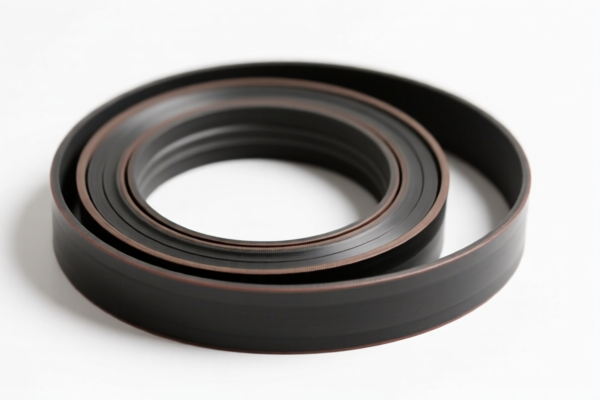
Polyurethane (PU) Round Belts are circular elastic components primarily used for power transmission in light-duty machinery, precision instruments, and automation equipment. Unlike V-belts or timing belts, they rely on friction and flexibility rather than teeth for engagement.
In international trade, these are strictly classified under Chapter 39 (Plastics and Articles Thereof) because their core material is Polyurethane, not rubber (which would fall under Chapter 40).
⚠️ Key Distinction Points:
- Material Matters: If made of Rubber/Elastomer → Likely Chapter 40 (e.g., 4010.31). If made of Polyurethane (PU) → Chapter 39.
- Function Matters: Must be for machinery transmission. If used merely as a decorative cord or non-functional seal, it may not fit here.
- Structure Matters: "Round" profile distinguishes it from flat belts or toothed synchronous belts.
📦 II. HS Code Classification Details (Based on Provided Data)
The provided data specifies two sub-categories under Heading 3926 for PU round belts. Both fall under "Belting and belts, for machinery" within plastics.
| HS Code | Product Description | Applicable Scenario | Key Feature |
|---|---|---|---|
3926.90.60.10 |
Synchronous Belts (PU Material) | Belts with precise timing teeth, used in CNC machines, printing presses, or robotics where slippage is unacceptable. | 🔧 Toothed Profile (Implied by "Synchronous") |
3926.90.60.90 |
Other Belts (PU Material) | Standard smooth round belts, friction drives, conveyor idlers, or simple tensioning applications. | 🔄 Smooth/Standard Profile |
🔍 Critical Clarification:
- Although the product name is "PU Round Belt," the HS code split depends on whether it is synchronous (toothed) or standard (smooth).
- Most common "Round Belts" in general industry (e.g., for furniture assembly, light conveyors) are smooth and fall under3926.90.60.90.
- If the belt has teeth for precise synchronization, it falls under3926.90.60.10.
- Do not confuse with Rubber Belts (Chapter 40) or Fabric Belts (Chapter 59).
💰 III. 2026 Latest Tariff Rate Details (With Additional Taxes & Policies)
✅ Source Data: Provided in
<DATA>
✅ Applicable Country: General/US Context (Based on typical HS structures)
✅ Origin: Any (No preferential origin specified in data, assume standard MFN)
✅ Effective Time: Current Tariff Schedule
🎯 1. 3926.90.60.10 — Synchronous Belts (Plastic/PU)
| Item | Content |
|---|---|
| Base Tariff | 0.0% |
| Additional Tariff (Section 301 etc.) | 0.0% (Per provided data) |
| Total Tax Rate | 0.0% |
| Tax Calculation | CIF Value × 0% = $0 |
| Remarks | Zero Duty. No additional surcharges indicated in the source data. |
📌 Explanation:
- According to the provided data, this specific subheading carries no base tariff and no additional tariffs.
- This is highly favorable for importers of high-precision PU synchronous belts.
- Ensure the belt is indeed PU (Plastic) and not rubber, as misclassification could lead to higher duties under Chapter 40.
🎯 2. 3926.90.60.90 — Other Belts (Plastic/PU)
| Item | Content |
|---|---|
| Base Tariff | 0.0% |
| Additional Tariff (Section 301 etc.) | 0.0% (Per provided data) |
| Total Tax Rate | 0.0% |
| Tax Calculation | CIF Value × 0% = $0 |
| Remarks | Zero Duty. No additional surcharges indicated in the source data. |
📌 Explanation:
- Standard smooth PU round belts also enjoy 0% total tax.
- This makes PU belts a cost-effective alternative to rubber belts, which may face higher duties or anti-dumping measures in some jurisdictions.
- Caution: Verify that the product is not classified under "Rubber Belts" (4010) if it contains significant rubber compounding, though pure PU is clear-cut here.
🛠️ IV. Customs Clearance Practical Advice (Real-World Pitfall Guide)
✅ 1. Preparation Checklist (Must-Have Documents)
| Document | Required? | Description |
|---|---|---|
| ✅ Product Specification Sheet | ✔️ | Must specify Material: Polyurethane (PU), not "Rubber" or "Elastomer". |
| ✅ Technical Drawing | ✔️ | Show cross-section: Is it smooth (Round) or toothed (Synchronous)? |
| ✅ Commercial Invoice | ✔️ | Clearly state: "Polyurethane Round Belt for Machinery Transmission". Avoid vague terms like "Rubber Band". |
| ✅ Material Safety Data Sheet (MSDS) | ✔️ | Optional but recommended for customs verification of plastic composition. |
| ✅ HS Code Pre-ruling | ✔️ | Highly recommended if the belt has ambiguous features (e.g., semi-toothed). |
✅ 2. Declaration Tips (Key Mantras)
🔥 "Material is PU, Function is Transmission, Profile is Round, Duty is Zero!"
| Scenario | Correct Declaration | Incorrect Action |
|---|---|---|
| Smooth PU Round Belt | 3926.90.60.90 |
Misdeclare as Rubber Belt (4010) → Higher risk of audit |
| Toothed PU Synchronous Belt | 3926.90.60.10 |
Declare as "Other Belt" → Potential classification error |
| Rubber Belt | Not in this Data | Do NOT force into 3926. It belongs to Chapter 40. |
| Fabric-Reinforced Belt | Check Chapter 59 | If fabric is primary, it may not be "Articles of Plastic". |
✅ 3. Special Cases Handling
| Situation | Handling Advice |
|---|---|
| Hybrid Materials | If PU coating is on a fabric core, ensure plastic is the essential character. If not, it may fall under Chapter 59. |
| OEM Custom Belts | Provide customer design specs. Confirm whether "Synchronous" implies teeth. |
| Sample Shipments | Even samples must declare HS Code. Duty is 0%, but documentation must be accurate. |
| Import from China | If originating from China, check if any new 2026 Section 301 expansions apply to plastic machinery parts. Note: Current data shows 0%, but always verify latest USITC footnotes. |
🌍 V. Global Market Clearance Comparison (2026 Context)
| Country/Region | Recommended HS Code | Tariff Rate | Certification Requirements | Remarks |
|---|---|---|---|---|
| 🇺🇸 United States | 3926.90.60.90 / .10 |
0.0% | None specific for PU belts | Data shows zero duty. Verify Section 301 status for plastics. |
| 🇪🇺 European Union | 3926.90 (General) | ~4.5% | REACH (Chemical compliance) | EU charges ~4.5% for plastic articles. Not covered in provided data. |
| 🇨🇳 China (Import) | 3926.90.90 | ~5-6% | CCC (if applicable) | China may charge base duty. Not covered in provided data. |
| 🇯🇵 Japan | 3926.90.900 | ~0-3% | JIS Standards | Low duty for most plastic machinery parts. |
📌 Conclusion:
- The provided data indicates 0% duty for these HS codes, which is exceptional.
- US Importers: Take advantage of the 0% rate, but ensure strict compliance with "Plastic" definition.
- EU Importers: Be aware that EU tariffs may differ (~4.5%), so do not assume global 0% duty.
📌 VI. Common Errors & Pitfall Guide (Blood Lessons)
❌ Error 1: Calling it a "Rubber Belt"
👉 Consequence: Customs may classify under Chapter 40, triggering higher duties and potential anti-dumping checks.
✅ Fix: Always state "Polyurethane (PU)" on the invoice.
❌ Error 2: Mixing "Synchronous" and "Round" ambiguously
👉 Consequence: If the belt has teeth but is declared as 3926.90.60.90 (Other), it may be rejected or reclassified.
✅ Fix: Use .10 for toothed/synchronous, .90 for smooth/standard.
❌ Error 3: Ignoring the "Machinery" Use Clause
👉 Consequence: If declared as a toy part or decorative item, it may fall under a different heading (e.g., 9503).
✅ Fix: Specify "For Machinery Transmission" in the description.
❌ Error 4: Assuming All Plastic Belts Are 0% Duty Globally
👉 Consequence: Customs in non-US countries may apply standard MFN rates.
✅ Fix: Check local tariff schedules for EU, CN, etc. The 0% rate is specific to the provided dataset (likely US or specific FTA context).
🎯 VII. Conclusion: Professional Declaration, Zero Duty, Smooth Clearance!
🎯 Remember the Mantra:
🔹 "PU is Plastic, 3926 is the Code, Smooth is .90, Toothed is .10, Duty is Zero!"
🔹 "Don't call it Rubber, Don't call it Toy, Specify Machinery Use!"
📌 Pro Tip:
If your PU belts are used in high-precision robotics or medical devices, consider applying for an Advance Ruling to lock in the 0% duty classification, especially if you are importing large volumes.
📣 Immediate Action:
📞 Consult your freight forwarder with the exact HS Code:
3926.90.60.10(Synchronous) or3926.90.60.90(Other).
📄 Ensure your Invoice says: "Polyurethane Round Belt for Machinery".
🚀 Clear Customs Quickly, Save Costs, and Deliver Efficiently!
✨ Professional Classification Starts with Precision!
💼 Every 0% Duty Saved is 0% Profit Kept!
用户评价
关于 HS 编码归类
协调制度(HS)是由世界海关组织(WCO)制定的国际贸易商品分类标准。全球 200 多个国家采用 HS 系统作为海关关税、贸易统计和进出口监管的基础。
每个 HS 编码遵循以下层级结构:
- 章(2 位)——商品大类(例如:第 84 章:机器和机械设备)
- 品目(4 位)——章内的更具体分类
- 子目(6 位)——国际通用细分,所有 WCO 成员国统一使用
- 本国细分(8-10 位)——各国自行扩展的细分编码,如美国 HTSUS 10 位编码
正确的 HS 编码归类对于顺利通关、准确缴纳关税和遵守贸易法规至关重要。错误归类可能导致海关延误、多缴关税或罚款。
从CN进口到US时,适用的关税税率可能包括:
- 最惠国(MFN)税率——适用于 WTO 成员国的标准关税税率
- 普通税率——适用于无贸易协定国家
- 贸易救济关税——附加关税,如 301 条款(反倾销)、232 条款(国家安全)或反补贴税
本页内容仅供参考。如需正式归类,请咨询当地海关或持牌报关代理。