PVB Coated Film
CN → US| HS编码 | 关税税率 | 原产国 | 目的国 | 文档 |
|---|---|---|---|---|
| 3921190090 | 41.5% | CN | US | 官方文档 |
| 3921905050 | 39.8% | CN | US | 官方文档 |
| 3919905060 | 40.8% | CN | US | 官方文档 |
| 3919102055 | 40.8% | CN | US | 官方文档 |
| 3920910000 | 39.2% | CN | US | 官方文档 |
| 3920992000 | 39.2% | CN | US | 官方文档 |
商品图片
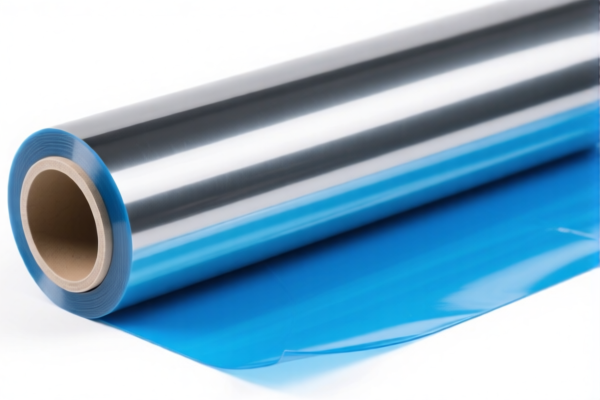
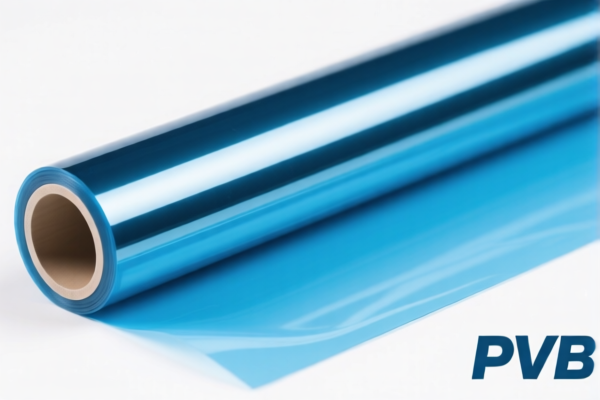
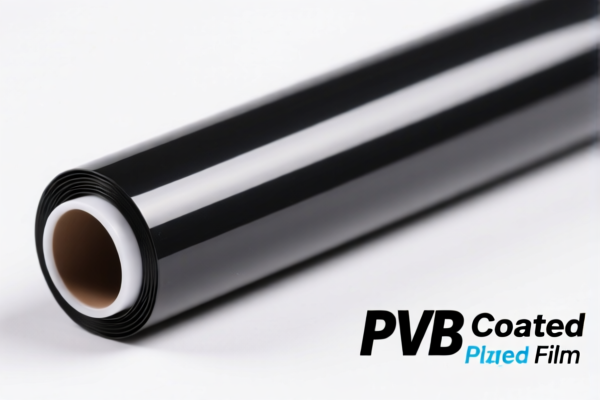
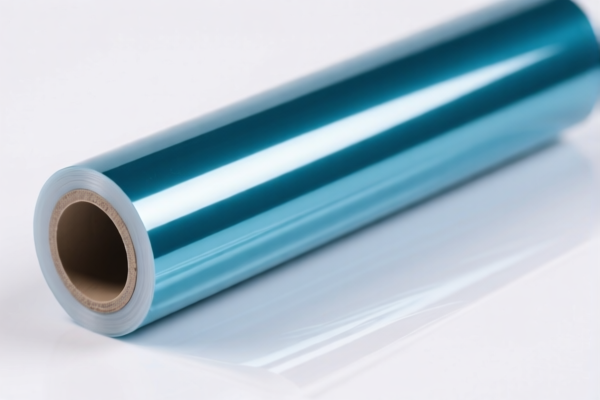
AI分析
🎬 PVB Coated Film (Polyvinyl Butyral Interlayer Film)
🌐 HS Code Reference & Customs Clearance Guide | 2026 Latest Tariff Analysis | Professional Strategy for Auto Glass Safety
📌 I. Product Definition & Classification: Is it "Laminated Glass" or "Plastic Film"?
PVB (Polyvinyl Butyral) film is a critical safety component primarily used as an interlayer in automotive and architectural laminated glass. However, in international trade, its classification depends heavily on its form and state at the time of import.
Crucial Distinction:
PVB Film Only (Unlaminated): If imported as rolls or sheets of plastic before being bonded to glass, it is classified as a Plastic Product. It does not qualify as "Glass" (Chapter 70) until the lamination process is complete.
Laminated Glass Panels: If imported already sandwiched between glass sheets, it falls under Chapter 70 (Glass).
⚠️ Key Differentiator:
- If the product is pure plastic film/strip/sheet (even if specifically designed for auto glass) →归入 Chapter 39 (Plastics).
- If the product is pre-laminated glass (glass + PVB + glass) →归入 Chapter 70.
Since your query specifies "PVB Coated Film" and the provided data contains only plastic HS codes, we assume the import is of the Plastic Film/Sheet itself.
📦 II. HS Code Classification Details (2026 Latest Tariff Match)
Based on the provided data, here are the relevant Plastic HS Codes. The correct code depends on whether the PVB film is cellular (foamed) or non-cellular (standard), and whether it is self-adhesive.
| HS Code | Product Description | Applicable Scenario | Adhesive? | Cellular? |
|---|---|---|---|---|
3920.91.00.00 |
Non-cellular plastic sheets, film, etc. | Standard PVB Interlayer Film (Rolls/Sheets) | ❌ No | ❌ No |
3921.19.00.90 |
Cellular plastic plates, sheets, film | Acoustic/Damped PVB Film (Foamed structure) | ❌ No | ✅ Yes |
3919.90.50.60 |
Self-adhesive plastic plates, sheets, film | Pre-glued PVB Film (With adhesive coating on both sides) | ✅ Yes | ❌ No* |
3921.90.50.50 |
Other plastic plates, sheets, film | Composite/Coated PVB (If reinforced/laminated with other non-plastic materials) | ❌ No | ❌ No |
3920.99.20.00 |
Non-cellular plastic film/strip, flexible | Other Plastic Films (If not specifically PVB/Butyral under 3920.91) | ❌ No | ❌ No |
🔍 Detailed Breakdown:
1. 🎯 3920.91.00.00 – The Most Likely Code for Standard PVB Film
- Description: Other plates, sheets, film, foil and strip, of plastics, noncellular and not reinforced... Of other plastics: Of poly(vinyl butyral).
- Why it fits: This is the specific subheading for PVB (Polyvinyl Butyral) when it is in its raw, non-cellular, non-adhesive form. PVB is chemically distinct from generic PVC or PE.
- Use Case: Standard automotive glass interlayer rolls, architectural safety film rolls.
2. 🎯 3921.19.00.90 – For Acoustic/Noise-Reducing PVB
- Description: Other plates, sheets, film, foil and strip, of plastics: Cellular: Of other plastics.
- Why it fits: If the PVB film has a foamed or cellular structure (used to dampen sound), it is no longer "noncellular." It moves to Chapter 3921.
- Use Case: High-end acoustic laminated glass for luxury cars or quiet offices.
3. 🎯 3919.90.50.60 – For Self-Adhesive PVB Film
- Description: Self-adhesive plates, sheets, film, foil, tape, strip... Other.
- Why it fits: Some PVB films come with a built-in adhesive layer (tack) to ease the manufacturing of laminated glass. If it is self-adhesive, it falls under 3919, not 3920 or 3921.
- Use Case: Pre-assembled interlayers for certain automated laminating processes.
4. 🎯 3921.90.50.50 & 3920.99.20.00 – The "Catch-Alls" (Risky)
- Why they might appear: If the PVB film is reinforced with a mesh (glass fiber or polyester) or coated with materials other than standard plastic, it may not fit the specific "Of poly(vinyl butyral)" or "Non-cellular" definitions precisely.
- Risk: These codes often carry higher tariffs (see below). Avoid using these unless your product is technically a composite or reinforced sheet.
💰 III. 2026 Latest Tariff Rates Explained (Import from China to US)
✅ Applicable Country: United States (US)
✅ Origin: China (CN)
✅ Effective Date: Post-November 2025
🎯 1. 3920.91.00.00 – Standard PVB Film (Recommended)
| Item | Detail |
|---|---|
| Base Tariff | 0.0% |
| Section 301 Surcharge | 0.0% |
| IEEPA Surcharge | 0.0% |
| Total Tax Rate | 0.0% |
| De Minimis Exemption | ✅ Eligible (Under $800 per shipment, if applicable for low-value samples) |
| Legal Path | HTSUS 3920.91.00.00 |
📌 Explanation:
- PVB film is considered a "specialty plastic." Unlike many other Chinese plastic goods, it currently enjoys 0% additional tariffs.
- This makes it a low-risk, low-cost import category for customs duties.
- Key Benefit: No 25% or 10% surcharge applies to this specific HS Code.
🎯 2. 3921.19.00.90 – Cellular PVB (Acoustic)
| Item | Detail |
|---|---|
| Base Tariff | 0.0% |
| Section 301 Surcharge | 0.0% |
| IEEPA Surcharge | 0.0% |
| Total Tax Rate | 0.0% |
| De Minimis Exemption | ✅ Eligible |
📌 Explanation:
- Cellular plastics also currently benefit from 0% additional tariffs.
- Warning: Ensure the film is truly "cellular" (foamed). If misdeclared, customs may reclassify it, but even then, many general plastic films have low rates.
🎯 3. 3919.90.50.60 – Self-Adhesive PVB Film
| Item | Detail |
|---|---|
| Base Tariff | 0.0% |
| Section 301 Surcharge | 0.0% |
| IEEPA Surcharge | 0.0% |
| Total Tax Rate | 0.0% |
| De Minimis Exemption | ✅ Eligible |
📌 Explanation:
- Self-adhesive plastics generally have a 0% base tariff and 0% additional surcharges in the current data set.
- Caution: Self-adhesive items are closely scrutinized. Ensure the adhesive is integral to the film and not a separate tape product.
🎯 4. 3921.90.50.50 & 3920.99.20.00 – General/Other Plastics (Avoid if possible)
| Item | Detail |
|---|---|
| Base Tariff | 4.8% (for 3921) or 4.2% (for 3920) |
| Section 301 Surcharge | +25.0% |
| IEEPA Surcharge | +10.0% (Note: Data shows 25% + 4.8% = 29.8%, implying no separate IEEPA or it's included) |
| Total Tax Rate | 29.8% (3921) or 29.2% (3920) |
| De Minimis Exemption | ❌ Not Eligible (Often denied for high-tax items) |
📌 Explanation:
- These codes represent "Other plastics" that are not specifically PVB, non-cellular, or non-adhesive.
- High Risk: Using these codes for standard PVB film is incorrect and leads to ~29% tariffs.
- Why avoid?: If your product is pure PVB, it must be classified under3920.91.00.00to get 0% tax. Misclassification results in massive overpayment.
🛠️ IV. Customs Clearance Practical Advice
✅ 1. Required Documentation Checklist
| Document | Required? | Description |
|---|---|---|
| ✅ Commercial Invoice | ✔️ | Must clearly state "Polyvinyl Butyral (PVB) Film" and HS Code 3920.91.00.00. |
| ✅ Product Spec Sheet | ✔️ | Must confirm: Non-cellular, Non-adhesive (or specify adhesive type), PVB Composition. |
| ✅ Bill of Lading/Air Waybill | ✔️ | Ensure description matches invoice. |
| ✅ COO (Certificate of Origin) | ✔️ | To prove Origin (China) and apply correct tariff treatment. |
| ❌ FCC/UL Certification | ❌ | Not required for plastic film (unlike electronics). |
| ✅ Material Safety Data Sheet (MSDS) | ⚠️ | May be requested for chemical safety verification. |
✅ 2. Declaration Tips (Critical!)
🔥 "Be Specific: Say 'PVB', Not Just 'Plastic Film'!"
| Situation | Correct Declaration | Incorrect Declaration | Consequence |
|---|---|---|---|
| Standard PVB Roll | PVB Film, Polyvinyl Butyral, Non-cellular, 1.52mm |
Plastic Film for Glass |
Customs may reclassify to 3920.99 → 29.2% Tax! |
| Acoustic PVB Roll | Acoustic PVB Film, Cellular Structure |
Plastic Foam |
May be reclassified to 3921.19 → 0% Tax (but requires proof of cellular structure) |
| Pre-Adhesive PVB | Self-Adhesive PVB Interlayer Film |
Plastic Tape |
Must use 3919.90.50.60 → 0% Tax (but different duty treatment) |
✅ 3. Special Handling Notes
| Scenario | Recommendation |
|---|---|
| Laminated Glass vs. Film | DO NOT declare "Laminated Glass" if you are importing only the film. This is a major red flag for customs. Film = Chapter 39. Glass = Chapter 70. |
| Sample Imports | If shipping small quantities under $800, ensure the HS Code is correct (3920.91.00.00) to utilize De Minimis exemption. |
| Composite Films | If the PVB film is coated with a non-plastic material (e.g., metal layer), it may not be "Of plastics" under Chapter 39. Consult a specialist to avoid misclassification. |
🌍 V. Global Market Comparison (2026)
| Country/Region | Recommended HS Code | Tariff Rate | Key Requirement |
|---|---|---|---|
| 🇺🇸 USA | 3920.91.00.00 |
0% | Clear description as PVB; avoid "other plastic" codes. |
| 🇨🇳 China | 3920.91.00.00 |
4.2% (Import Duty) | VAT 13% applies. |
| 🇪🇺 EU | 3920.91.00.00 |
0% | No additional duties for PVB film. |
| 🇯🇵 Japan | 3920.91.00.00 |
0% | Stable tariff for specialty plastics. |
📌 Conclusion:
- The USA offers the best tariff treatment (0%) for PVB film from China.
- Accuracy is key: Misclassifying PVB as "other plastic" can result in a 29% tariff increase. Always specify "Polyvinyl Butyral" in your commercial invoice.
📌 VI. Common Mistakes & Pitfalls (Learn from Errors)
❌ Mistake 1: Declaring PVB film as "Plastic Sheet" or "Polymer Film" without specifying PVB.
👉 Result: Customs uses the "Other" code (3920.99.20.00) → 29.2% Tax.
❌ Mistake 2: Importing rolls of PVB but declaring them as "Laminated Glass Parts."
👉 Result: Seizure or delay because the product is not yet glass.
❌ Mistake 3: Assuming all cellular plastics are the same.
👉 Result: If it’s acoustic PVB, use 3921.19.00.90. If it’s rigid foam, it might be 3921.19.00.50. Precision matters.
✅ Best Practice:
"PVB INTERLAYER FILM, POLYVINYL BUTYRAL, NON-CELLULAR, NON-ADHESIVE, IN ROLLS, HS 3920.91.00.00"
🎯 VII. Conclusion: Smart Clearance for PVB Film
🎯 Remember the Rule:
🔹 "PVB is a Specialty Plastic: 3920.91.00.00 = 0% Tax!"
🔹 "Don't use 'Other Plastic' codes: 29% Tax is avoidable!"
📌 Pro Tip:
If you are importing acoustic (cellular) PVB, ensure your technical specs clearly state "Cellular Structure" to support 3921.19.00.90. If it’s standard PVB, stick to 3920.91.00.00. Both are 0% tariff in the US, but accuracy prevents delays.
📣 Immediate Action:
📞 Contact your customs broker with the exact HS Code
3920.91.00.00and a spec sheet confirming "PVB" and "Non-cellular."
🚀 Save money by being specific: 0% vs. 29% is a huge difference!
✨ Professional clearance starts with precise classification!
💼 Your profit margin depends on correct HS Codes!
用户评价
关于 HS 编码归类
协调制度(HS)是由世界海关组织(WCO)制定的国际贸易商品分类标准。全球 200 多个国家采用 HS 系统作为海关关税、贸易统计和进出口监管的基础。
每个 HS 编码遵循以下层级结构:
- 章(2 位)——商品大类(例如:第 84 章:机器和机械设备)
- 品目(4 位)——章内的更具体分类
- 子目(6 位)——国际通用细分,所有 WCO 成员国统一使用
- 本国细分(8-10 位)——各国自行扩展的细分编码,如美国 HTSUS 10 位编码
正确的 HS 编码归类对于顺利通关、准确缴纳关税和遵守贸易法规至关重要。错误归类可能导致海关延误、多缴关税或罚款。
从CN进口到US时,适用的关税税率可能包括:
- 最惠国(MFN)税率——适用于 WTO 成员国的标准关税税率
- 普通税率——适用于无贸易协定国家
- 贸易救济关税——附加关税,如 301 条款(反倾销)、232 条款(国家安全)或反补贴税
本页内容仅供参考。如需正式归类,请咨询当地海关或持牌报关代理。