PVC Calcium Added Profile
CN → US| HS编码 | 关税税率 | 原产国 | 目的国 | 文档 |
|---|---|---|---|---|
| 3916200020 | 40.8% | CN | US | 官方文档 |
| 3916200010 | 40.8% | CN | US | 官方文档 |
| 3921125000 | 41.5% | CN | US | 官方文档 |
| 3921121950 | 40.3% | CN | US | 官方文档 |
商品图片

AI分析
🏗️ PVC Calcium-Added Profiles (Plastic Profile Shapes)
🌐 HS Code Reference & Customs Clearance Guide | 2026 Latest Tariff Analysis | Professional Clearance Strategy
📌 I. Product Definition & Classification: What Exactly is "PVC Calcium-Added Profile"?
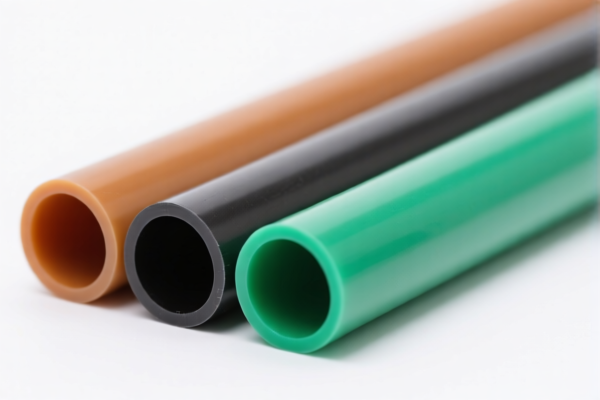
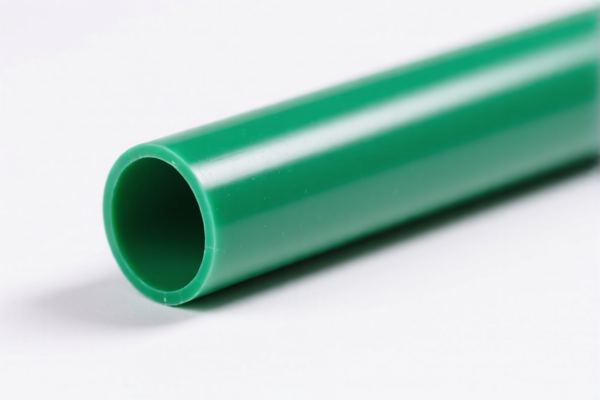
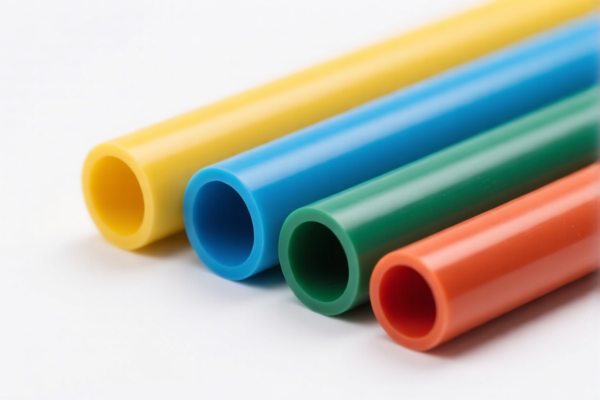
"PVC Calcium-Added Profile" refers to plastic shapes made primarily from Polyvinyl Chloride (PVC) polymers, where Calcium Carbonate (CaCO3) is added as a filler/stabilizer to reduce cost and enhance rigidity. These products are typically monofilaments, rods, sticks, or profile shapes (such as window frames, door frames, siding, or decking materials) that have undergone surface processing but are not further worked into finished assemblies (like installed windows).
In international trade, the classification depends strictly on the final form and specific application of the PVC profile. The key distinction lies in whether it is a generic "window/door/decking" profile or "siding for exterior use," or if it is a different PVC shape (plates/sheets/film).
⚠️ Key Classification Distinction:
- If the profile is specifically shaped for windows, doors, decking, or railings → It falls under 3916.20.00.20
- If the profile is specifically for siding (exterior house/building walls) → It falls under 3916.20.00.10
- If it is a cellular plate, sheet, or film (not extruded profiles) → It may fall under 3921.12.50.00 or 3921.12.19.50 (if combined with textiles)
📦 II. HS Code Classification Details (2026 Latest Tariff Authority Comparison)
| HS Code | Product Description | Application Scenario | Surface Worked? |
|---|---|---|---|
3916.20.00.20 |
Monofilament, rods, sticks, profile shapes of PVC: Window, door, decking, or railing profiles | Window frames, door frames, balcony railings, wooden-deck alternatives | ✅ Yes (Surface-worked) |
3916.20.00.10 |
Monofilament, rods, sticks, profile shapes of PVC: Siding for house or building exterior | Exterior wall siding, cladding panels for residential/commercial buildings | ✅ Yes (Surface-worked) |
3921.12.50.00 |
Other plates, sheets, film, foil, strip of plastics: Cellular: Of polymers of vinyl chloride: Other | Cellular PVC boards, flat sheets, non-profile PVC plates | ✅ Yes (Surface-worked) |
3921.12.19.50 |
Other plates, sheets, film, foil, strip of plastics: Cellular: Of polymers of vinyl chloride: Combined with textile materials | PVC-coated fabric, textile-reinforced cellular PVC sheets | ✅ Yes (Surface-worked) |
🔍 Key Reminder:
- All items in3916.20.00.xxare extruded profiles (cross-sectional dimension > 1mm).
- Items in3921.12.xxare plates/sheets/film. Do not confuse extruded profiles with flat sheets.
- If your product is a window frame profile, it MUST be classified under3916.20.00.20, not3921.12.50.00.
💰 III. 2026 Latest Tariff Rate Details (Including Additional Taxes & Policy Surcharges)
✅ Applicable Country: United States (US)
✅ Origin: China (CN)
✅ Effective Date: Current 2026 tariff structure (including Section 301 duties)
🎯 1. 3916.20.00.20 —— PVC Window, Door, Decking, or Railing Profiles
| Item | Content |
|---|---|
| Basic Tariff | 5.8% (Ad Valorem) |
| Additional Tariff (Section 301) | +25.0% |
| Total Tax Rate | 30.8% |
| Tax Calculation | CIF Value × 30.8% |
| De Minimis Exemption | ❌ Not Eligible (Section 301 duties apply to low-value shipments) |
| Legal Basis | HTSUS 3916.20.00.20 + USITC Footnote 9903.88.01 (Section 301) |
📌 Explanation:
- The "25% additional tariff" is levied under Section 301 of the Trade Act of 1974, targeting Chinese-made PVC profiles.
- The "5.8% basic tariff" is the standard Most Favored Nation (MFN) rate for PVC profiles.
- Total 30.8% is a significant cost factor. Importers must ensure this is built into the landed cost.
🎯 2. 3916.20.00.10 —— PVC Siding for House or Building Exterior
| Item | Content |
|---|---|
| Basic Tariff | 5.8% (Ad Valorem) |
| Additional Tariff (Section 301) | +25.0% |
| Total Tax Rate | 30.8% |
| Tax Calculation | CIF Value × 30.8% |
| De Minimis Exemption | ❌ Not Eligible |
| Legal Basis | HTSUS 3916.20.00.10 + USITC Footnote 9903.88.01 (Section 301) |
📌 Note:
- Identical tax structure to3916.20.00.20.
- Whether it’s for windows or siding, the 30.8% total rate applies.
- Ensure your commercial invoice clearly states "Siding for exterior use" to avoid misclassification disputes.
🎯 3. 3921.12.50.00 —— Cellular PVC Plates/Sheets (Other)
| Item | Content |
|---|---|
| Basic Tariff | 6.5% (Ad Valorem) |
| Additional Tariff (Section 301) | +25.0% |
| Total Tax Rate | 31.5% |
| Tax Calculation | CIF Value × 31.5% |
| De Minimis Exemption | ❌ Not Eligible |
| Legal Basis | HTSUS 3921.12.50.00 + USITC Footnote 9903.88.01 (Section 301) |
📌 Warning:
- This rate is higher (31.5%) than profiles (30.8%) due to a higher basic tariff (6.5% vs 5.8%).
- Only use this code if the product is a flat sheet or plate, NOT an extruded profile. Misclassification here can lead to penalties.
🎯 4. 3921.12.19.50 —— Cellular PVC Combined with Textile Materials
| Item | Content |
|---|---|
| Basic Tariff | 5.3% (Ad Valorem) |
| Additional Tariff (Section 301) | +25.0% |
| Total Tax Rate | 30.3% |
| Tax Calculation | CIF Value × 30.3% |
| De Minimis Exemption | ❌ Not Eligible |
| Legal Basis | HTSUS 3921.12.19.50 + USITC Footnote 9903.88.01 (Section 301) |
📌 Note:
- This is the lowest tax rate (30.3%) among the four options.
- Applies ONLY if the PVC is combined with textile materials (e.g., PVC-coated fabric).
- Do not use this for solid PVC profiles without textile backing.
🛠️ IV. Customs Clearance Practical Advice (Battle-Tested Pitfall Avoidance Guide)
✅ 1. Required Documentation Checklist (No Exceptions)
| Document | Mandatory? | Description |
|---|---|---|
| ✅ Product Specification Sheet | ✔️ | Must include: Composition (PVC% + CaCO3% profile), Dimensions, Cross-section shape, Color, UV Stabilization info. |
| ✅ HS Code Justification | ✔️ | Brief explanation: "Extruded PVC profile for window frames, surface-worked, not further assembled." |
| ✅ Commercial Invoice | ✔️ | Must explicitly state: "PVC Calcium-Added Profile" AND specific use (e.g., "Window Profile" OR "Siding"). |
| ✅ Packing List | ✔️ | Detail weight, volume, and number of units. Ensure no mixed HS Codes in one shipment unless declared separately. |
| ✅ Photo of Product (Including Cross-Section) | ✔️ | Critical for proving it is a "profile" (cross-section >1mm) and not a "sheet" or "film". |
| ✅ Certificate of Origin (CO) | ✔️ | Required for determining origin-based tariffs. |
| ✅ Third-Party Test Report (Optional but Recommended) | ✔️ | ASTM D1785 (PVC Compound) or equivalent to prove PVC content and calcium addition. |
✅ 2. Declaration Tips (Key Mantra)
🔥 “Profile vs. Sheet: Check the Cross-Section! Use the Right Keyword, Save Money!”
| Scenario | Correct Declaration | Wrong Declaration | Consequence |
|---|---|---|---|
| Window Frame Profile | 3916.20.00.20 – "PVC Window Profile" |
"PVC Sheet" or "Plastic Plate" | Risk of audit, potential reclassification to 3921.12.50.00 (31.5%) |
| Exterior Siding | 3916.20.00.10 – "PVC Exterior Siding Profile" |
"PVC Window Profile" | Minor discrepancy, but may trigger customs query |
| Cellular PVC Board | 3921.12.50.00 – "Cellular PVC Sheet" |
"PVC Profile" | High Risk: Customs may reject, demand reclassification, or impose penalties |
| PVC-Textile Composite | 3921.12.19.50 – "PVC-Coated Fabric" |
"PVC Profile" | Missed opportunity for lower rate (30.3% vs 30.8%) |
✅ 3. Special Situations Handling
| Situation | Handling Advice |
|---|---|
| OEM Custom Profiles | Provide client’s design drawings + proof of "surface-worked but not otherwise worked" status. |
| Mixed Shipment (Profiles + Accessories) | Declare separately. Do not bundle "finished windows" with "raw profiles." Finished windows may have different HS codes and higher scrutiny. |
| Color/Additives | Specify if UV-stabilized or flame-retardant. Some additives may affect classification under "Other plates/sheets." |
| Small Sample Shipments | Even under $800 (De Minimis), Section 301 duties still apply to PVC profiles from China. Do not rely on $800 exemption. |
🌍 V. Global Main Market Clearance Comparison (2026 Latest)
| Country/Region | Recommended HS Code | Tariff Rate (China Origin) | Certification Requirements | Notes |
|---|---|---|---|---|
| 🇺🇸 USA | 3916.20.00.20 / .10 |
30.8% (Basic 5.8% + 25% Section 301) | FCC (if electronic), no special for PVC | High tariff cost. Verify cross-section >1mm. |
| 🇨🇳 China | 3916.20.00 |
~5-6% | CCC (if applicable) | Low tariff, but focus on domestic sales. |
| 🇪🇺 EU | 3916.20.00 |
0-6.5% (depends on specific subheading) | REACH, RoHS | No Section 301 equivalent, but strict chemical regulations. |
| 🇬🇧 UK | 3916.20.00 |
0-6.5% | UKCA | Post-Brexit rules may differ from EU. |
| 🇨🇦 Canada | 3916.20.00 |
5-6% | None specific for PVC | CUSMA may offer duty-free for qualifying origins. |
📌 Conclusion:
- USA has the highest effective tariff (30.8%) due to Section 301.
- EU and Canada are more tariff-friendly, but compliance with REACH/RoHS is critical.
- PVC profiles are heavily scrutinized in the US for proper HS classification.
📌 VI. Common Mistakes & Pitfall Guide (Lessons Learned the Hard Way)
❌ Mistake 1: Declaring "PVC Profile" as "PVC Sheet" to avoid higher tariffs
👉 Consequence: Customs may reclassify to 3921.12.50.00 (31.5%) or penalize for misdeclaration.
❌ Mistake 2: Ignoring the "Cross-Section > 1mm" rule
👉 Consequence: If the cross-section is ≤1mm, it may be classified as "Monofilament" under a different code with different tax implications.
❌ Mistake 3: Assuming $800 De Minimis Exemption Applies
👉 Consequence: Section 301 duties apply to PVC profiles from China regardless of value. Do not use express courier for commercial shipments to avoid detection and subsequent duty back-charges.
❌ Mistake 4: Failing to Specify "Window/Door/Siding" Use
👉 Consequence: Vague descriptions like "PVC Plastic Shape" lead to customs holds, requests for information, and delays.
✅ Correct Practice:
"PVC Window Profile, Extruded, Surface-Worked, Cross-Section >1mm, Calcium Carbonate Filled, Model XYZ, for Residential Window Frames, HS Code 3916.20.00.20"
🎯 VII. Conclusion: Professional Declaration Saves Time and Money!
🎯 Remember the Mantra:
🔹 "Profiles are 30.8%, Sheets are 31.5%, Textile-Combined is 30.3%."
🔹 "Cross-section >1mm = Profile. Flat/Thin = Sheet. Know your shape!"
🔹 "Section 301 is REAL. No De Minimis Exemption for PVC Profiles!"
📌 Pro Tip:
If your PVC profiles are shipped from Vietnam, Mexico, or Thailand, you may qualify for exemption from Section 301 duties, reducing the total tax to the basic rate only (5.8%-6.5%).
👉 Action: Apply for Advance Ruling or consult a customs broker to verify origin rules.
📣 Immediate Action Required:
📞 Contact a licensed customs broker + Provide product photos + Verify HS Code classification
🚀 Ensure smooth clearance, avoid penalties, and optimize your landed cost!
✨ Professional Clearance Starts with Accurate Classification!
💼 Every percentage point of tax matters. Get it right the first time!
用户评价
关于 HS 编码归类
协调制度(HS)是由世界海关组织(WCO)制定的国际贸易商品分类标准。全球 200 多个国家采用 HS 系统作为海关关税、贸易统计和进出口监管的基础。
每个 HS 编码遵循以下层级结构:
- 章(2 位)——商品大类(例如:第 84 章:机器和机械设备)
- 品目(4 位)——章内的更具体分类
- 子目(6 位)——国际通用细分,所有 WCO 成员国统一使用
- 本国细分(8-10 位)——各国自行扩展的细分编码,如美国 HTSUS 10 位编码
正确的 HS 编码归类对于顺利通关、准确缴纳关税和遵守贸易法规至关重要。错误归类可能导致海关延误、多缴关税或罚款。
从CN进口到US时,适用的关税税率可能包括:
- 最惠国(MFN)税率——适用于 WTO 成员国的标准关税税率
- 普通税率——适用于无贸易协定国家
- 贸易救济关税——附加关税,如 301 条款(反倾销)、232 条款(国家安全)或反补贴税
本页内容仅供参考。如需正式归类,请咨询当地海关或持牌报关代理。