PVC Calcium Plastic Profile
CN → US| HS编码 | 关税税率 | 原产国 | 目的国 | 文档 |
|---|---|---|---|---|
| 3916200010 | 40.8% | CN | US | 官方文档 |
| 3916200020 | 40.8% | CN | US | 官方文档 |
| 3925200010 | 22.8% | CN | US | 官方文档 |
| 3925200020 | 22.8% | CN | US | 官方文档 |
| 3926305000 | 22.8% | CN | US | 官方文档 |
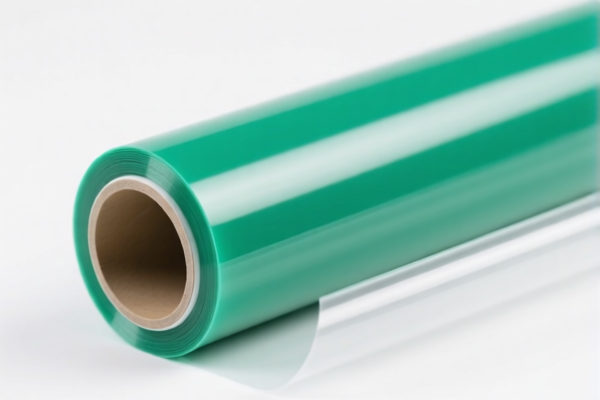
商品图片



AI分析
🏗️ PVC Calcium Plastic Profile (PVC Calcium Carbonate Modified Profiles)
🌐 HS Code Reference & Customs Clearance Guide | 2026 Latest Tariff Analysis | Professional Compliance Strategy
📌 Part I: Product Definition & Classification: Do You Understand "PVC Calcium Plastic"?
PVC Calcium Plastic Profiles are building materials made from polyvinyl chloride (PVC) resin, heavily modified with calcium carbonate (chalk/limestone) fillers. They are primarily used in construction decoration, including window frames, door frames, wall cladding, and flooring.
In international trade, these products are categorized based on their exact composition and intended application. The presence of high calcium carbonate content does not automatically change the HS code, but the specific formulation and end-use determine whether they fall under "Plastic Articles for Building" or "Other Plastic Articles."
⚠️ Key Classification Distinction:
- If classified strictly as profiles (extruded shapes) under Chapter 39.16 → Tariff Rate: 40.8%
- If classified as other building articles under Chapter 39.25 → Tariff Rate: 22.8%
- If classified as general plastic articles under Chapter 39.26 → Tariff Rate: 22.8%
📦 Part II: HS Code Classification Details (2026 Latest Tariff Alignment)
Based on the provided data, here are the precise HS codes for PVC Calcium Plastic Profiles:
| HS Code | Product Description | Application / Notes | Key Classification Feature |
|---|---|---|---|
3916.20.00.10 |
PVC Calcium Plastic Profile | Building decoration materials | Material: PVC; Form: Profile |
3916.20.00.20 |
PVC Calcium Plastic Profile | Plastic profiles classification | Material: Vinyl Polymer; Form: Profile |
3925.20.00.10 |
PVC Calcium Plastic Profile | Plastic building products | Material: Plastic; Form: Profile |
3925.20.00.20 |
PVC Calcium Plastic Profile | Plastic building components | Material: PVC; Form: Profile |
3926.30.50.00 |
PVC Calcium Plastic Profile | General plastic articles | Material: Plastic; Form: Article |
🔍 Critical Observation:
- The first two codes (3916...) carry a higher total tax burden (40.8%). - The latter three codes (3925...and3926...) carry a lower total tax burden (22.8%). - Misclassification Risk: Declaring a standard PVC profile under3925to save taxes is risky if the product strictly fits the definition of "plastic profiles" in3916.
💰 Part III: 2026 Tariff Rate Breakdown (Including Surtaxes & Policy Add-ons)
✅ Applicable Country: United States (US)
✅ Origin: China (CN)
✅ Effective Date: Current rates apply based on 122 Clause and Section 301/IEEPA add-ons.
🎯 1. Group A: HS Codes 3916.20.00.10 & 3916.20.00.20
Classification Basis: Plastic Profiles (Extruded shapes)
| Item | Content |
|---|---|
| Base Tariff | 5.8% (Ad Valorem) |
| Section 301 Surtax | +25.0% (Additional duty on Chinese plastics) |
| 122-Clause Tariff | +10.0% (Specific policy add-on) |
| Total Tax Rate | 40.8% |
| Tax Calculation | CIF Value × 40.8% |
| De Minimis Exemption | ❌ Not Eligible (Value usually exceeds threshold or is explicitly excluded for these categories) |
| Legal Basis Path | Chapter 39 → Heading 3916 → Footnotes for Surtaxes → 122-Clause Regulations |
📌 Explanation:
- These profiles are considered basic plastic materials for construction. - The 40.8% rate is significantly higher due to the cumulative effect of the base tariff, Section 301, and the 122-Clause. - This is the highest cost scenario for these goods.
🎯 2. Group B: HS Codes 3925.20.00.10, 3925.20.00.20, & 3926.30.50.00
Classification Basis: Other Plastic Building Articles / General Plastic Articles
| Item | Content |
|---|---|
| Base Tariff | 5.3% (Ad Valorem) |
| Section 301 Surtax | +7.5% (Reduced surtax for certain building components/articles) |
| 122-Clause Tariff | +10.0% (Specific policy add-on) |
| Total Tax Rate | 22.8% |
| Tax Calculation | CIF Value × 22.8% |
| De Minimis Exemption | ❌ Not Eligible (Subject to same restrictions as Group A) |
| Legal Basis Path | Chapter 39 → Heading 3925/3926 → Footnotes for Reduced Surtaxes → 122-Clause Regulations |
📌 Explanation:
- These codes apply if the profile is considered a "building article" (3925) rather than a raw "profile" (3916), or if it falls under general plastic articles (3926). - The 22.8% rate offers a 18% savings compared to Group A. - Strategic Importance: Proper documentation must support the classification under3925or3926to avoid penalties for misclassification.
🛠️ Part IV: Customs Clearance Practical Advice (Avoid Pitfalls)
✅ 1. Preparation Checklist (Mandatory)
| Document | Required | Notes |
|---|---|---|
| ✅ Product Specification Sheet | ✔️ | Must detail PVC resin content, Calcium Carbonate filler %, additives. |
| ✅ Technical Data Sheet (TDS) | ✔️ | Shows physical properties (hardness, density) to support "Profile" vs. "Article" status. |
| ✅ Product Photos | ✔️ | Clear images of cross-section (to prove it's an extruded profile) and end-use (window/door). |
| ✅ Commercial Invoice | ✔️ | Accurate description: "PVC Calcium Plastic Profile for Window Frames." |
| ✅ Packing List | ✔️ | Net/Gross weight, dimensions. |
| ✅ Certificate of Origin (CO) | ✔️ | To prove Chinese origin (triggers surtaxes). |
✅ 2. Declaration Strategy (Key Mnemonics)
🔥 "Profile vs. Article: Definition is Key!"
| Scenario | Correct HS Code Group | Risk if Incorrect |
|---|---|---|
| Standard Extruded Profile (raw shape, uncut) | 3916.20 (40.8%) |
Misclassifying as 3925 → Audit risk, back taxes + penalties. |
| Cut/Fitted Building Component (e.g., pre-cut window frame part) | 3925.20 (22.8%) |
Misclassifying as 3916 → Overpaying 18% tariff. |
| General Plastic Decoration Panel | 3926.30 (22.8%) |
Misclassifying as 3916 → Overpaying 18% tariff. |
✅ 3. Special Cases & Handling
| Situation | Recommendation |
|---|---|
| High Filler Content | If Calcium Carbonate > 50%, ensure the document states it’s still a "PVC Profile" primarily, not just "filled plastic." Some jurisdictions may reclassify as "articles" if the plastic content is minor. |
| Composite Profiles | If the profile has metal cores or wood laminates, it may no longer be a "plastic article" but a "composite material," potentially changing the HS code entirely. Check for Chapter 44 (Wood) or 76 (Aluminum) rules. |
| Sample vs. Bulk | For samples, ensure they are declared as "Samples not for sale" to potentially reduce duty liability, though 122-Clause may still apply. |
🌍 Part V: Global Market Comparison (2026 Latest)
| Country/Region | Recommended HS Code | Tariff (China Origin) | Certification | Notes |
|---|---|---|---|---|
| 🇺🇸 USA | 3916.20 or 3925.20 |
40.8% or 22.8% | None required for customs | High tariffs due to 301 & 122-Clause. |
| 🇨🇳 China | 3916.20 |
5.8% (Base) | CCC (if for construction safety) | No additional surtaxes. |
| 🇪🇺 EU | 3916.20 |
6.5% (Base) | CE Marking (if applicable) | No Section 301 equivalent. |
| 🇬🇧 UK | 3916.20 |
6.5% (Base) | UKCA Marking | Post-Brexit rules apply. |
| 🇦🇺 Australia | 3916.20 |
5% (Base) | No specific mark | Low tariffs. |
📌 Conclusion:
- USA is the most challenging market for PVC Calcium Plastic Profiles due to the layered surtaxes. - Optimization Strategy: Ensure your product documentation clearly supports the3925or3926classification if the product is finished/building components, as this saves 18% in duties.
📌 Part VI: Common Errors & Pitfalls (Lessons Learned)
❌ Error 1: Declaring "PVC Profile" under 3925 without proof it’s a finished building component.
👉 Consequence: Customs audit, reclassification to 3916, back taxes of 18%, and penalties.
❌ Error 2: Ignoring the 122-Clause Tariff.
👉 Consequence: Even if the base rate is low, forgetting the 10% add-on leads to underpayment and delays.
❌ Error 3: Mislabeling "Calcium Plastic" as "Pure PVC."
👉 Consequence: Regulatory non-compliance if the product fails to meet specific PVC performance standards.
❌ Error 4: Splitting shipments to avoid thresholds.
👉 Consequence: "De Minimis" does not apply to these HS codes. Splitting may trigger suspicion of circumvention.
✅ Correct Approach:
"PVC Calcium Carbonate Modified Plastic Profile for Exterior Cladding, Model XYZ, 100% PVC Resin Base with CaCO3 Filler, HS Code: [Select 3916 or 3925 based on form]."
🎯 Part VII: Conclusion: Professional Declaration, Cost Efficiency!
🎯 Remember the Key Takeaway:
🔹 "Profile = 40.8% | Article/Building Component = 22.8%"
🔹 "122-Clause is mandatory: +10% on top."
🔹 "Document your form and function to justify the lower rate."
📌 Pro Tip:
- If you are exporting large volumes, consider applying for an Advance Ruling from U.S. Customs and Border Protection (CBP) to confirm the correct HS Code (3916 vs 3925) before shipment. This prevents surprise taxes.
- Ensure your supplier provides a Material Safety Data Sheet (MSDS) if the profile contains any regulated additives.
📣 Immediate Action:
📞 Consult a licensed customs broker.
📝 Prepare technical specs proving the product's form (profile vs. article).
🚀 Clear your PVC profiles efficiently, minimize tariff costs, and ensure smooth clearance!
✨ Precision in Classification, Profit in Logistics!
💼 Every percentage point matters in international trade.
用户评价
关于 HS 编码归类
协调制度(HS)是由世界海关组织(WCO)制定的国际贸易商品分类标准。全球 200 多个国家采用 HS 系统作为海关关税、贸易统计和进出口监管的基础。
每个 HS 编码遵循以下层级结构:
- 章(2 位)——商品大类(例如:第 84 章:机器和机械设备)
- 品目(4 位)——章内的更具体分类
- 子目(6 位)——国际通用细分,所有 WCO 成员国统一使用
- 本国细分(8-10 位)——各国自行扩展的细分编码,如美国 HTSUS 10 位编码
正确的 HS 编码归类对于顺利通关、准确缴纳关税和遵守贸易法规至关重要。错误归类可能导致海关延误、多缴关税或罚款。
从CN进口到US时,适用的关税税率可能包括:
- 最惠国(MFN)税率——适用于 WTO 成员国的标准关税税率
- 普通税率——适用于无贸易协定国家
- 贸易救济关税——附加关税,如 301 条款(反倾销)、232 条款(国家安全)或反补贴税
本页内容仅供参考。如需正式归类,请咨询当地海关或持牌报关代理。