PVC Coated Agricultural Shade Net
CN → US| HS编码 | 关税税率 | 原产国 | 目的国 | 文档 |
|---|---|---|---|---|
| 6306192110 | 22.6% | CN | US | 官方文档 |
| 5903102090 | 35.0% | CN | US | 官方文档 |
| 3926206000 | 35.0% | CN | US | 官方文档 |
| 6306120000 | 18.8% | CN | US | 官方文档 |
| 5903102010 | 35.0% | CN | US | 官方文档 |
商品图片
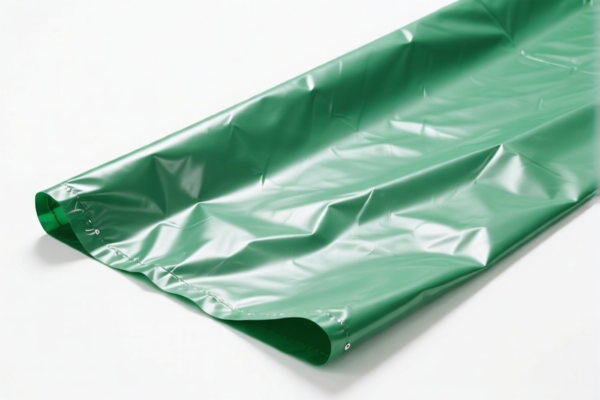
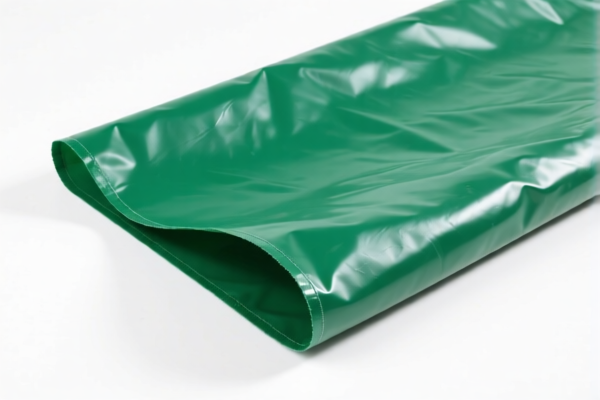
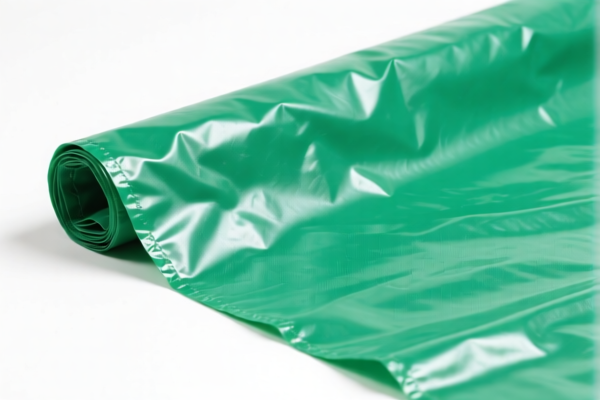
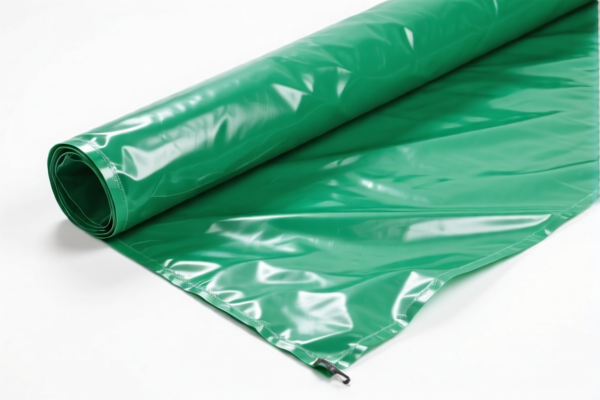
AI分析
☀️ PVC Coated Agricultural Shade Net (PVC Coated Sunshade Cloth)
🌐 HS Code Reference & Customs Clearance Guide | 2026 Latest Tariff Analysis | Professional-Level Clearance Strategy
📌 I. Product Definition & Classification: Do You Really Understand "PVC Coated Agricultural Shade Net"?
Agricultural Shade Nets (often referred to as Sunshade Cloths or Shading Nets) are essential greenhouse accessories used to regulate sunlight, temperature, and humidity for crop protection. However, their classification in international trade is highly controversial because they sit at the intersection of Textiles, Plastic Articles, and Rubber/Plastic Impregnated Fabrics.
The classification depends strictly on: 1. Material Composition: Is the base fabric synthetic fibers? 2. Coating/Lamination: Is it PVC (Polyvinyl Chloride)? 3. Primary Function: Is it primarily for "shading/agriculture" or "waterproofing/impermeable covering"?
⚠️ Key Distinction Point:
- If classified as Textile/Netting (Chapter 63): Lower base duty, but potentially higher Section 301 tariffs depending on the specific heading.
- If classified as Plastic-Coated Fabric (Chapter 59): Often zero base duty, but heavily impacted by USITC (Section 301) and IEEPA (Bipartisan Policy) surcharges.
- If classified as Plastic Articles (Chapter 39): Treated as plastic rainwear/covers, often resulting in the highest combined tariff burden.
📦 II. HS Code Classification Details (Based on Provided Data)
The following HS Codes are derived from the provided dataset (<DATA>). Note that while the product is identical, the legal description changes the tax outcome significantly.
| HS Code | Product Description (From Data) | Primary Classification Logic | Total Tax Rate |
|---|---|---|---|
6306.19.21.10 |
PVC coated shade cloth, use: shade cloth, material: PVC, meets requirement of man-made fiber made | Classified under Textile Nets/Covers (Chapter 63). Assumes the fabric structure is primary. | 22.6% |
5903.10.20.90 |
PVC coated shade cloth, material: PVC, form: impregnated, coated, covered or laminated | Classified under Plastic-Impregnated Textile Fabrics (Chapter 59). Focuses on the coating process. | 35.0% |
3926.20.60.00 |
PVC coated shade cloth, material: PVC, form: belongs to shade-type articles, meets plastic raincoat/rain gear | Classified under Plastic Articles (Chapter 39). Treated as a plastic utility item/rain cover. | 35.0% |
6306.12.00.00 |
PVC coated shade cloth, use: shade cloth, material: PVC, meets synthetic fiber/synthetic material category | Classified under Textile Nets/Covers (Chapter 63). Specific to synthetic fiber nets. | 18.8% |
5903.10.20.10 |
PVC coated shade cloth, material: PVC, form: textile fabric, meets definition of impregnated/coated fabric | Classified under Plastic-Impregnated Textile Fabrics (Chapter 59). Specific to textile definition. | 35.0% |
🔍 Key Takeaway:
- Cheapest Option:6306.12.00.00at 18.8%.
- Most Common/Risky Options:5903.10.20.90and5903.10.20.10at 35.0%.
- Misclassification Risk: Using3926.20.60.00(Plastic Articles) is often flagged by customs if the product is primarily a textile net, potentially leading to penalties if the "primary character" is deemed textile rather than plastic.
💰 III. 2026 Latest Tariff Rate Breakdown (Including Surcharges)
✅ Applicable Country: USA (US)
✅ Country of Origin: China (CN)
✅ Effective Time: Current applicable rates based on provided data.
🎯 1. The "Low Rate" Strategy: Chapter 63 (Textiles)
Option A: 6306.19.21.10 (Man-made Fiber Shade Cloth)
| Item | Content |
|---|---|
| Base Duty | 5.1% |
| Section 301 (USITC) | +7.5% |
| Section 122 (IEEPA) | +10% |
| Total Rate | 22.6% |
| Tax Calculation | CIF Value × 22.6% |
📌 Explanation:
- This classification assumes the item is a "net" or "shade cloth" primarily for shading, not waterproofing.
- It benefits from a lower base duty (5.1%) compared to Chapter 59.
- Risk: Customs may argue that PVC coating makes it impermeable, shifting it to Chapter 59.
Option B: 6306.12.00.00 (Synthetic Fiber Shade Cloth)
| Item | Content |
|---|---|
| Base Duty | 8.8% |
| Section 301 (USITC) | 0.0% |
| Section 122 (IEEPA) | +10% |
| Total Rate | 18.8% |
| Tax Calculation | CIF Value × 18.8% |
📌 Explanation:
- Best Available Rate.
- Crucially, the Section 301 tariff is 0% for this specific subheading in the provided data.
- This is the most cost-effective classification IF customs accepts it as a standard "synthetic fiber net" without emphasizing the PVC waterproofing aspect.
🎯 2. The "High Rate" Reality: Chapter 59 & 39 (Coated Plastics)
Option C: 5903.10.20.90 / 5903.10.20.10 (Plastic-Impregnated Textiles)
| Item | Content |
|---|---|
| Base Duty | 0.0% |
| Section 301 (USITC) | +25.0% |
| Section 122 (IEEPA) | +10% |
| Total Rate | 35.0% |
| Tax Calculation | CIF Value × 35.0% |
Option D: 3926.20.60.00 (Plastic Articles)
| Item | Content |
|---|---|
| Base Duty | 0.0% |
| Section 301 (USITC) | +25.0% |
| Section 122 (IEEPA) | +10% |
| Total Rate | 35.0% |
| Tax Calculation | CIF Value × 35.0% |
📌 Explanation:
- Why 35%? Even though the base duty is 0%, the Section 301 tariff jumps to 25% for plastic-coated fabrics and plastic articles.
- The Section 122 (Bipartisan Policy) tariff of 10% applies to almost all these categories from China.
- Combined Impact: 0% + 25% + 10% = 35%. This is 8.4% higher than the best textile option (6306.12.00.00).
🛠️ IV. Customs Clearance Practical Advice (Battle-Tested Tips)
✅ 1. Documentation Checklist (Non-Negotiable)
| Document | Mandatory? | Description |
|---|---|---|
| ✅ Product Specification Sheet | ✔️ | Must detail: Base fabric (e.g., HDPE, Polyester), PVC coating thickness, GSM (grams per square meter), Shading percentage (e.g., 50%, 70%). |
| ✅ Material Composition Statement | ✔️ | Explicitly state the weight ratio of textile vs. PVC. If textile > 50% by weight, argue for Chapter 63. |
| ✅ Product Photos | ✔️ | Show the mesh structure (to prove it's a "net") and the PVC coating texture. |
| ✅ Commercial Invoice | ✔️ | Use precise language: "Polyester Shade Net with PVC Coating" or "Agricultural Shading Cloth." Avoid vague terms like "Plastic Sheet." |
| ✅ Origin Certificate | ✔️ | Required to prove CN origin and apply appropriate surcharges. |
| ✅ Packing List | ✔️ | Standard export packing list. |
✅ 2. Declaration Strategy (The "Golden Rules")
🔥 "Textile Base, Coated Top. Prove the Net, Don't Sell the Plastic!"
| Scenario | Recommended HS Code | Reasoning | Risk Level |
|---|---|---|---|
| High-Grade Agricultural Net | 6306.12.00.00 |
Emphasize agricultural use, shading function, and textile mesh structure. | 🟡 Medium (Requires strong technical justification) |
| Standard PVC Tarp/Canvas | 5903.10.20.90 |
If the product is more like a tarp than a breathable net. | 🟠 High (35% duty) |
| Heavy-Duty Waterproof Cover | 3926.20.60.00 |
If it's essentially a plastic rain cover. | 🟠 High (35% duty) |
⚠️ Critical Warning:
- Do NOT declare as "Plastic Film" or "Geotextile" (5603) if it is PVC coated, as this will lead to misclassification audits.
- The difference between 18.8% and 35.0% is 16.2%. On a $100,000 shipment, this is a $16,200 difference.
✅ 3. Special Circumstances Handling
| Situation | Handling Advice |
|---|---|
| Customs Questions "Primary Character" | If asked, argue that the textile mesh provides the structural integrity and shading, while PVC is merely a protective coating. Cite GRI 3(b) (Essential Character). |
| Sample Submission | Submit a physical sample with a clear diagram showing the woven fabric base. |
| Previous Customs Rulings | Search for prior CBP rulings on "PVC Coated Shade Cloths" to see if any precedent supports 6306. |
| Dual-Use Items | If the net is used for both agriculture and construction (e.g., site shading), clarify primary intended use as agriculture to support Chapter 63. |
🌍 V. Global Market Comparison (2026 Outlook)
| Market | Recommended HS Code | Est. Total Duty | Notes |
|---|---|---|---|
| 🇺🇸 USA | 6306.12.00.00 |
18.8% | Best option. Avoid Chapter 59 if possible. |
| 🇺🇸 USA | 5903.10.20.90 |
35.0% | Default if "Textile" argument fails. |
| 🇪🇺 EU | Varies by thickness | ~6-12% | EU does not have Section 301/122 equivalents. Focus on CH codes. |
| 🇨🇳 China | 5903.20.90.90 |
10-13% | Import duty for raw materials vs. finished goods. |
📌 Conclusion:
- For the US market, fighting for classification under Chapter 63 (6306.12.00.00) is critical to save 16.2% in duties.
- Ensure all documentation supports the "Textile Net" narrative, not the "Plastic Sheet" narrative.
📌 VI. Common Mistakes & Pitfalls (Blood & Tears)
❌ Mistake 1: Declaring as "Plastic Tarpaulin" (3926 or 6306.19 with wrong subheading)
👉 Consequence: 35% tax. You paid 16.2% more than necessary.
❌ Mistake 2: Not specifying "Shading Percentage" (e.g., 50%, 70%)
👉 Consequence: Customs may view it as a generic plastic cover, forcing Chapter 59 classification.
❌ Mistake 3: Ignoring the "122 Tariff" (IEEPA)
👉 Consequence: Even the "low tax" items have a 10% IEEPA surcharge. Do not assume 0% additional taxes.
❌ Mistake 4: Using "Geotextile" for PVC coated nets
👉 Consequence: Geotextiles are usually non-woven and uncoated or lightly coated. PVC coated nets are distinct. Misclassification leads to delays.
✅ Correct Approach:
"Agricultural Shade Net, 50% Shading, Polyester Woven Fabric Base, PVC Coated, for Greenhouse Use. Model: AG-50-PVC."
🎯 VII. Conclusion: Precision in Classification Saves Thousands!
🎯 Remember the Golden Rule:
🔹 "Textile Base Wins. 18.8% vs 35.0%. Don't let PVC trick you!"
🔹 "Declare the Net, Not the Plastic. Save 16.2% on every dollar!"
📌 Pro Tip:
If your shade net is HDPE (High-Density Polyethylene) and not PVC coated, it may fall under 5608.19 (Knotless Nets), which could have different duties. Ensure your material is correctly identified.
For PVC coated, the battle is between 6306 (Textile) and 5903 (Coated Fabric). Always aim for 6306 if the technical specs allow.
📣 Immediate Action:
📞 Consult with a licensed customs broker.
📄 Prepare a Technical Data Sheet highlighting the woven textile structure.
🚀 Secure the 18.8% rate. Avoid the 35.0% trap.
✨ Professional Clearance Starts with Accurate Classification!
💼 Your Profit Margin Depends on This 16.2% Difference!
用户评价
关于 HS 编码归类
协调制度(HS)是由世界海关组织(WCO)制定的国际贸易商品分类标准。全球 200 多个国家采用 HS 系统作为海关关税、贸易统计和进出口监管的基础。
每个 HS 编码遵循以下层级结构:
- 章(2 位)——商品大类(例如:第 84 章:机器和机械设备)
- 品目(4 位)——章内的更具体分类
- 子目(6 位)——国际通用细分,所有 WCO 成员国统一使用
- 本国细分(8-10 位)——各国自行扩展的细分编码,如美国 HTSUS 10 位编码
正确的 HS 编码归类对于顺利通关、准确缴纳关税和遵守贸易法规至关重要。错误归类可能导致海关延误、多缴关税或罚款。
从CN进口到US时,适用的关税税率可能包括:
- 最惠国(MFN)税率——适用于 WTO 成员国的标准关税税率
- 普通税率——适用于无贸易协定国家
- 贸易救济关税——附加关税,如 301 条款(反倾销)、232 条款(国家安全)或反补贴税
本页内容仅供参考。如需正式归类,请咨询当地海关或持牌报关代理。