PVC Composite Textile Structural Boards
CN → US| HS编码 | 关税税率 | 原产国 | 目的国 | 文档 |
|---|---|---|---|---|
| 3925900000 | 40.3% | CN | US | 官方文档 |
| 3925200091 | 22.8% | CN | US | 官方文档 |
| 3921121100 | 39.2% | CN | US | 官方文档 |
| 3921121950 | 40.3% | CN | US | 官方文档 |
| 5903102500 | 42.5% | CN | US | 官方文档 |
商品图片

AI分析
🏗️ PVC Composite Textile Structural Boards (PVC Composite Fiber Structure Boards)
🌐 HS Code Reference & Customs Clearance Guide | 2026 Latest Tariff Analysis | Professional Clearance Strategy
📌 I. Product Definition & Classification: Do You Really Understand “PVC Composite Textile Structural Boards”?
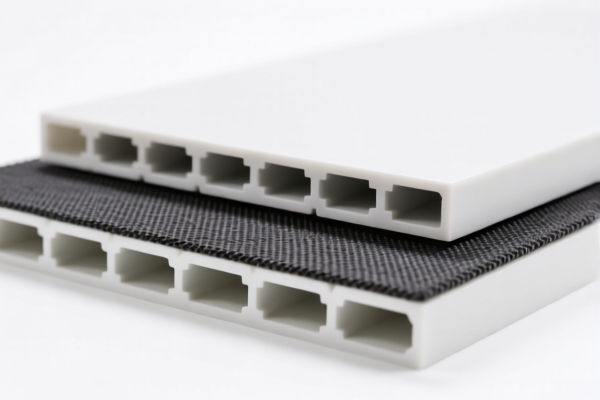
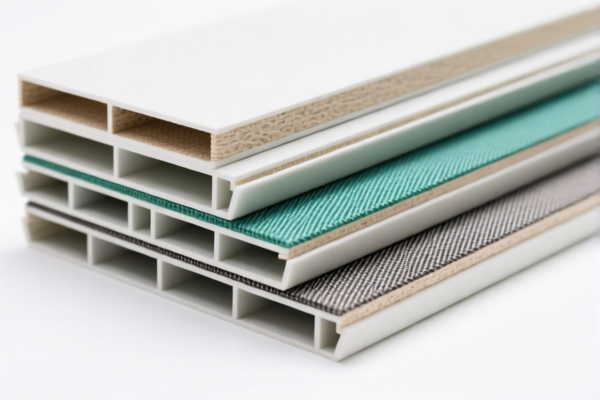
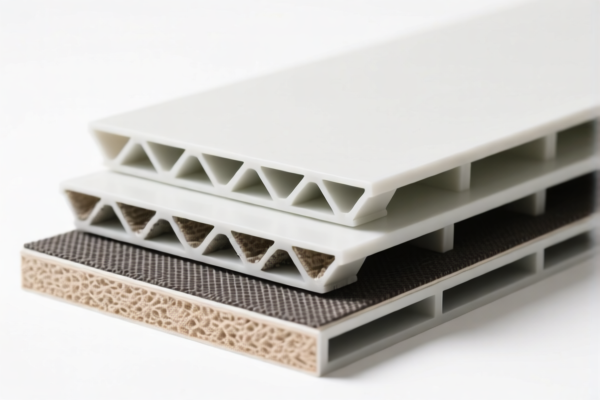
PVC Composite Textile Structural Boards are rigid or semi-rigid construction components made from Polyvinyl Chloride (PVC) plastic reinforced with textile/fiber materials. In international trade, they are categorized based on their physical form (board/panel vs. structural element) and their composite nature (plastic + textile).
Key Distinctions: * As "Plastic Building Articles": If classified primarily as a building component/board under Chapter 39 (Plastics), focusing on its use in construction (e.g., wall panels, roofing). * As "Composite Plastic/Textile": If classified under Chapter 39.21 or 59.03, emphasizing the lamination/impregnation of PVC with textile fibers, or specific structural composite properties.
⚠️ Critical Classification Point:
- If the board is viewed strictly as a plastic construction article/board → Likely falls under 3925.20 or 3925.90.
- If the board is viewed as a laminated plastic-textile composite → Likely falls under 3921.12 or 5903.10.
📦 II. HS Code Classification Details (2026 Latest Tariff Authority对照)
Based on the provided data, there are 5 potential HS Codes for "PVC Composite Textile Structural Boards," ranging from 22.8% to 42.5% total tax liability. Here is the breakdown:
| HS Code | Product Description (Based on Data) | Primary Characteristic | Total Tax Rate (China-US) |
|---|---|---|---|
3925.90.00.00 |
PVC composite fiber structure board, building component structure board | Classified as Plastic Building Articles (other) | 40.3% |
3925.20.00.91 |
PVC composite fiber structure board, board form, fall-back category for plastic building components | Classified as Plastic Building Articles (other boards) | 22.8% ✅ Lowest Tax |
3921.12.11.00 |
PVC composite fiber structure board, PVC polymer + textile composite | Classified as Plastic Plates/Sheets combined with textile | 39.2% |
3921.12.19.50 |
PVC composite fiber structure board, vinyl polymer + textile combo, other category | Classified as Other Plastic Plates/Sheets combined with textile | 40.3% |
5903.10.25.00 |
PVC textile composite board, impregnated/coated/laminated textile | Classified as Textile-Based (PVC-coated/impregnated fabric/board) | 42.5% ⚠️ Highest Tax |
🔍 Key Insight:
- The lowest tax rate (22.8%) applies if the product is clearly defined as a "board" for building components under HS 3925.20.00.91.
- The highest tax rate (42.5%) applies if it is classified as a textile composite (HS 5903.10.25.00), which treats it more like a coated fabric than a structural board.
- Most other classifications (3925.90, 3921.12) hover around 39–40%.
💰 III. 2026 Latest Tariff Rate Details (Including Additional Duties & Policy Surcharges)
✅ Applicable Country: United States (US)
✅ Origin: China (CN)
✅ Effective Date: Current rates apply (including Section 301 and IEEPA surcharges)
🎯 1. 3925.20.00.91 —— Plastic Building Components (Board Form) [RECOMMENDED]
| Item | Content |
|---|---|
| Base Tariff | 5.3% |
| Section 301 Additional Tariff | 7.5% |
| Section 122 Tariff (IEEPA) | 10% |
| Total Tax Rate | 22.8% |
| Tax Calculation | CIF Value × 22.8% |
| De Minimis Eligibility | ❌ No (Subject to full tariff) |
| Legal Basis Path | USITC:3925.20.00.91 → FOOTNOTE:301 → IEEPA:122 |
📌 Explanation:
- Base 5.3%: Standard Most Favored Nation (MFN) rate for plastic building articles.
- 7.5% Section 301: Additional duty on Chinese plastic products.
- 10% IEEPA 122: Additional tariff under Section 122 of the Trade Expansion Act for national security concerns.
- Total: 22.8% – This is the most cost-effective classification if the product can be justified as a "board" rather than a generic composite or textile.
🎯 2. 3925.90.00.00 —— Other Plastic Building Articles (Structure Board)
| Item | Content |
|---|---|
| Base Tariff | 5.3% |
| Section 301 Additional Tariff | 25.0% |
| Section 122 Tariff (IEEPA) | 10% |
| Total Tax Rate | 40.3% |
| Tax Calculation | CIF Value × 40.3% |
| De Minimis Eligibility | ❌ No |
| Legal Basis Path | USITC:3925.90.00.00 → FOOTNOTE:301 → IEEPA:122 |
📌 Explanation:
- Base 5.3%: Standard MFN rate.
- 25% Section 301: Higher additional duty applies to "other" plastic building articles.
- 10% IEEPA 122: National security surcharge.
- Total: 40.3% – Significantly higher than 3925.20.91. Avoid if possible.
🎯 3. 3921.12.11.00 & 3921.12.19.50 —— PVC + Textile Composite Plates
| Item | Content |
|---|---|
| Base Tariff | 4.2% (for .11) / 5.3% (for .50) |
| Section 301 Additional Tariff | 25.0% |
| Section 122 Tariff (IEEPA) | 10% |
| Total Tax Rate | 39.2% (.11) / 40.3% (.50) |
| Tax Calculation | CIF Value × Rate |
| De Minimis Eligibility | ❌ No |
| Legal Basis Path | USITC:3921.12.11.00/.50 → FOOTNOTE:301 → IEEPA:122 |
📌 Explanation:
- Classified as plastic plates combined with textile.
- 25% Section 301 applies, leading to high total taxes.
- 39.2–40.3% is not competitive compared to 3925.20.91.
🎯 4. 5903.10.25.00 —— PVC Textile Composite (Impregnated/Laminated)
| Item | Content |
|---|---|
| Base Tariff | 7.5% |
| Section 301 Additional Tariff | 25.0% |
| Section 122 Tariff (IEEPA) | 10% |
| Total Tax Rate | 42.5% |
| Tax Calculation | CIF Value × 42.5% |
| De Minimis Eligibility | ❌ No |
| Legal Basis Path | USITC:5903.10.25.00 → FOOTNOTE:301 → IEEPA:122 |
📌 Explanation:
- Classified as textile fabric impregnated with PVC.
- Highest Base Rate (7.5%) + 25% Section 301 + 10% IEEPA.
- Total: 42.5% – Most expensive. Avoid unless the product is clearly a flexible textile board, not a rigid structural board.
🛠️ IV. Customs Clearance Practical Advice (Real-World Pitfall Avoidance)
✅ 1. Preparation Checklist (All Documents Required)
| Document | Required? | Notes |
|---|---|---|
| ✅ Product Specification Sheet | ✔️ | Must specify: Material (PVC+Fiber), Form (Rigid Board), Usage (Building Construction) |
| ✅ Technical Data Sheet | ✔️ | Prove it is a structural board, not a flexible textile. Include thickness, density, rigidity. |
| ✅ Product Photos | ✔️ | Show rigid structure, edges, and labeling. |
| ✅ Commercial Invoice | ✔️ | Description: "PVC Composite Fiber Structure Board for Building Construction" |
| ✅ Packing List | ✔️ | Detail net/gross weight, dimensions. |
| ✅ Certificate of Origin (CO) | ✔️ | Required for Section 301 and IEEPA verification. |
✅ 2. Declaration Tips (Key Mantra)
🔥 "Define as 'Building Board', Not 'Textile' or 'Generic Plastic'!"
| Scenario | Correct Declaration | Wrong Declaration | Result |
|---|---|---|---|
| Rigid PVC+Fiber Board | 3925.20.00.91 |
"PVC Composite Material" | 22.8% vs. 40%+ |
| Flexible PVC Coated Fabric | 5903.10.25.00 |
"Structure Board" | 42.5% (High Tax) |
| Building Panel | 3925.20.00.91 |
3925.90.00.00 |
22.8% vs. 40.3% |
| Composite Plate | 3921.12.11.00 |
3925.20.00.91 |
39.2% vs. 22.8% |
📌 Strategy:
- Emphasize "Structural Board" and "Building Component" in the description.
- Avoid terms like "Fabric," "Textile," "Coated Cloth," or "Flexible Sheet" if it is rigid.
- Use "Other Plastic Building Components" to steer towards3925.20.00.91.
✅ 3. Special Situations
| Situation | Handling Advice |
|---|---|
| OEM Custom Boards | Provide design drawings proving structural use. Avoid "textile" labels. |
| Mixed Packaging | If shipped with accessories, declare main product as board. Do not split. |
| Rigid vs. Flexible | If it bends easily, CBP may classify as textile (5903). Ensure it is rigid. |
| Pre-Ruling Request | Strongly Recommended: Apply for a Binding Ruling with CBP to confirm 3925.20.00.91 eligibility. |
🌍 V. Global Market Comparison (2026 Latest)
| Country/Region | Recommended HS Code | Tariff (China Origin) | Certification | Notes |
|---|---|---|---|---|
| 🇺🇸 USA | 3925.20.00.91 |
22.8% | None specific | Lowest tax if classified as building board |
| 🇨🇳 China | 3925.20.00.91 |
5.3% | None | No additional surcharges |
| 🇪🇺 EU | 3925.20.00.91 |
4.0–5.0% | CE (if applicable) | No Section 301/122 |
| 🇬🇧 UK | 3925.20.00.00 |
4.0–5.0% | UKCA | Post-Brexit rules apply |
| 🇦🇺 Australia | 3925.20.00.00 |
5.0% | GHS | No major surcharges |
📌 Conclusion:
- USA has the highest burden due to Section 301 and IEEPA.
- Classification is critical: Moving from3925.90to3925.20saves 17.5% in duties.
- Avoid textile classification (5903) to save an extra 20%+.
📌 VI. Common Errors & Pitfall Guide (Lessons Learned)
❌ Mistake 1: Declaring as "PVC Textile Composite"
👉 Result: CBP classifies as 5903.10.25.00 → 42.5% Tax instead of 22.8%.
❌ Mistake 2: Using Generic "Plastic Board" Description
👉 Result: CBP assigns 3925.90.00.00 → 40.3% Tax instead of 22.8%.
❌ Mistake 3: Not Proving Rigidity
👉 Result: If CBP deems it "flexible," it may be classified as textile → 42.5% Tax.
❌ Mistake 4: Missing Section 122 Compliance
👉 Result: Even if HS is correct, failure to declare origin properly leads to 10% IEEPA penalty.
✅ Correct Practice:
"PVC Composite Fiber Structure Board, Rigid, for Building Construction, Model XYZ, Certified for Structural Use"
🎯 VII. Conclusion: Precise Classification Saves Money!
🎯 Remember:
🔹 "Board, Not Cloth! Rigid, Not Flexible! Building Use, Not Generic!"
🔹 HS Code3925.20.00.91= 22.8% Tax
🔹 HS Code3925.90.00.00= 40.3% Tax
🔹 HS Code5903.10.25.00= 42.5% Tax
📌 Pro Tip:
If your product is exported to the US, always request a Pre-Ruling from CBP to confirm 3925.20.00.91. This ensures you pay 22.8% and not 40%+.
📣 Take Action Now:
📞 Contact a licensed customs broker.
📄 Provide technical specs proving rigidity and building application.
🚀 Secure the 22.8% tariff rate and maximize your profit margin.
✨ Professional Clearance Starts with Precise Classification!
💼 Every 1% of duty saved is pure profit!
用户评价
关于 HS 编码归类
协调制度(HS)是由世界海关组织(WCO)制定的国际贸易商品分类标准。全球 200 多个国家采用 HS 系统作为海关关税、贸易统计和进出口监管的基础。
每个 HS 编码遵循以下层级结构:
- 章(2 位)——商品大类(例如:第 84 章:机器和机械设备)
- 品目(4 位)——章内的更具体分类
- 子目(6 位)——国际通用细分,所有 WCO 成员国统一使用
- 本国细分(8-10 位)——各国自行扩展的细分编码,如美国 HTSUS 10 位编码
正确的 HS 编码归类对于顺利通关、准确缴纳关税和遵守贸易法规至关重要。错误归类可能导致海关延误、多缴关税或罚款。
从CN进口到US时,适用的关税税率可能包括:
- 最惠国(MFN)税率——适用于 WTO 成员国的标准关税税率
- 普通税率——适用于无贸易协定国家
- 贸易救济关税——附加关税,如 301 条款(反倾销)、232 条款(国家安全)或反补贴税
本页内容仅供参考。如需正式归类,请咨询当地海关或持牌报关代理。