PVC Decorative Profile
CN → US| HS编码 | 关税税率 | 原产国 | 目的国 | 文档 |
|---|---|---|---|---|
| 3916200010 | 40.8% | CN | US | 官方文档 |
| 3916200091 | 40.8% | CN | US | 官方文档 |
商品图片
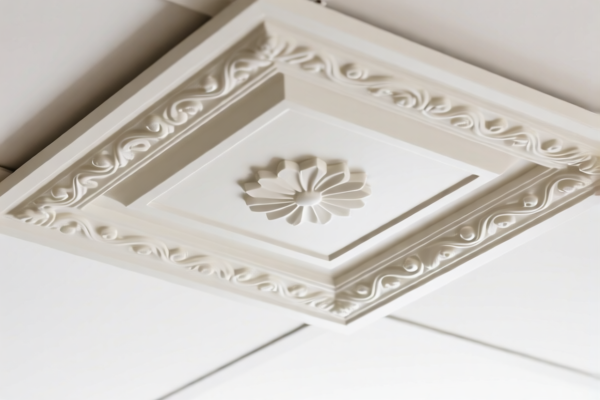

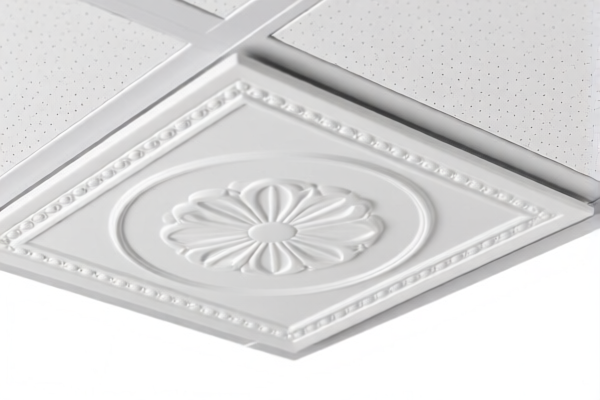

AI分析
🏠 PVC Decorative Profile (Siding for House or Building Exterior & Other)
🌐 HS Code Reference & Customs Clearance Guide | 2026 Latest Tariff Analysis | Professional Clearance Strategy
📌 I. Product Definition & Classification: What exactly is "PVC Decorative Profile"?
PVC Decorative Profiles generally refer to plastic extrusions used for aesthetic or protective purposes on building exteriors. In international trade, specifically under Chapter 39 (Plastics and Articles Thereof), these products fall under Heading 3916.
To ensure correct classification, you must distinguish between two main categories based on the specific application of the profile:
1. Siding for House or Building Exterior (3916.20.00.10)
- Definition: Profiles specifically designed and manufactured to be installed as exterior wall cladding (siding) for residential or commercial buildings.
- Key Feature: Shape and function are tailored for weather resistance and aesthetic facade coverage.
2. Other Polymers of Vinyl Chloride Profiles (3916.20.00.91)
- Definition: Monofilaments (>1mm), rods, sticks, and profile shapes made of PVC polymers that are not classified as siding. This includes general-purpose decorative moldings, trim, edge banding, or non-structural plastic profiles.
- Key Feature: General use, not specifically designated as building siding.
⚠️ Critical Distinction Point:
- If the product is explicitly labeled, marketed, and used as "House Siding" or "Exterior Wall Cladding" → Use 3916.20.00.10.
- If the product is a general decorative trim, molding, or profile NOT used as building siding → Use 3916.20.00.91.
- Both share the same tax rate in this dataset, but misclassification can lead to customs delays or audits regarding "Building Materials" vs. "General Plastics."
📦 II. HS Code Classification Details (2026 Latest Tariff Authority Comparison)
| HS Code | Product Description | Applicable Scenario | Tax Rate |
|---|---|---|---|
3916.20.00.10 |
Of polymers of vinyl chloride: Siding for house or building exterior | Exterior wall panels, vinyl siding strips, weather-resistant facade profiles | 30.8% |
3916.20.00.91 |
Of polymers of vinyl chloride: Other | General decorative moldings, interior/exterior trim, non-siding PVC profiles, edge bands | 30.8% |
🔍 Key Reminder:
- Both codes fall under 3916.20.00 (Monofilament/profiles of PVC, >1mm cross-section, not otherwise worked).
- The primary difference is sub-code specificity (10 vs. 91).
- Do not classify under 3916.10 (Monofilament >1mm for other plastics) unless the material is NOT PVC.
💰 III. 2026 Latest Tariff Rate Details (Including Additional Taxes)
✅ Applicable Country: United States (US)
✅ Origin: China (CN)
✅ Effective Date: Current applicable rates (Based on provided data)
🎯 1. 3916.20.00.10 & 3916.20.00.91 — PVC Decorative Profiles (All Variants)
| Item | Content |
|---|---|
| Base Tariff Rate | 5.8% (Standard MFN duty for PVC profiles) |
| Additional Tariff (Section 301) | +25.0% (Retaliatory/Add-on duty on Chinese PVC products) |
| Total Tax Rate | 30.8% |
| Tax Calculation | CIF Value × 30.8% |
| De Minimis Exemption | ❌ Not Applicable (Section 301 duties apply to all shipments regardless of value) |
| Legal Basis | HTSUS 3916.20.00 → Section 301 Tariff List |
📌 Explanation:
- The 5.8% is the standard U.S. customs duty for plastic profiles of PVC.
- The 25.0% is a significant surcharge imposed under U.S. Trade Act Section 301 against Chinese goods.
- Total 30.8% is a high tariff barrier. Importers must factor this into their landed cost immediately.
- There is no de minimis exemption (e.g., under $800) for these goods if they are subject to Section 301; the duty applies per entry.
🛠️ IV. Customs Clearance Practical Advice (Real-World Pitfall Avoidance)
✅ 1. Required Documentation Checklist (Mandatory)
| Document | Required | Description |
|---|---|---|
| ✅ Product Specification Sheet | ✔️ | Must clearly state: Material (100% PVC or PVC blend), Dimensions, Cross-section shape, Surface finish (smooth/textured). |
| ✅ Product Photos | ✔️ | Show the profile shape, any text/molding, and packaging. Essential for proving it's >1mm cross-section. |
| ✅ Commercial Invoice | ✔️ | Must use precise description: "PVC Decorative Profile, for building siding" or "PVC Trim Profile, not for siding". |
| ✅ Packing List | ✔️ | Net/Gross weight, number of bundles/cartons. |
| ✅ Material Safety Data Sheet (MSDS) | ✔️ | Optional but recommended to prove non-hazardous nature. |
✅ 2. Declaration Tips (Key Mnemonics)
🔥 "Material First, Shape Second, Usage Specific!"
| Scenario | Correct Declaration | Wrong Practice |
|---|---|---|
| Product is Siding | 3916.20.00.10 + "PVC Siding for Exterior Walls" |
Calling it "Plastic Pipe" or "General Profile" → Audit risk |
| Product is General Trim | 3916.20.00.91 + "PVC Decorative Molding, not siding" |
Calling it "Siding" → Unnecessary scrutiny if not used as such |
| Material is Not PVC | ❌ Do NOT use 3916.20.xxxx | Using PVC code for ABS/PE → Severe penalty |
| Cross-section <1mm | ❌ Do NOT use 3916 | Use 3917 or 3918 depending on form → Different duty |
✅ 3. Special Considerations
| Situation | Handling Advice |
|---|---|
| Composite Materials | If the profile has a wood veneer or metal core, it may NOT be classified under Chapter 39. Check Chapter 44 (Wood) or 76 (Aluminum). |
| Painted/Colored Profiles | Still classified under 3916 if "surface-worked but not otherwise worked." Painting is considered surface work. |
| Sample Shipments | Still subject to 30.8% duty. Do not assume samples are duty-free. |
| Re-export from Third Country | If re-exported from Vietnam/Mexico, ensure no substantial transformation occurred in China. Rules of Origin are strict. |
🌍 V. Global Market Clearance Comparison (2026 Latest)
| Country/Region | Recommended HS Code | Tariff (China Origin) | Certification Requirements | Notes |
|---|---|---|---|---|
| 🇺🇸 USA | 3916.20.00.10/91 |
30.8% (5.8% Base + 25% 301) | No special certs, but FTC labeling required | High tariff impact; 301 duty is permanent |
| 🇨🇳 China | 3916.20.00 |
~5-7% (Import Duty) | CCC (if applicable) | Export from China faces no internal export tax usually |
| 🇪🇺 EU | 3916.20.90 |
~6.5% | CE (if plastic additives regulated), REACH | No 25% retaliatory duty, but lower than US |
| 🇨🇦 Canada | 3916.20.90 |
~5-6% | Health Canada (food contact if applicable) | Similar to US but without Section 301 |
📌 Conclusion:
- USA has the highest landed cost due to the 25% Section 301 addition.
- EU and other markets are significantly cheaper for importers.
- Consider supply chain diversification if targeting the US market heavily.
📌 VI. Common Errors & Pitfall Guide (Lessons Learned)
❌ Error 1: Classifying PVC Siding as "Plastic Pipes" (3917)
👉 Consequence: Wrong HS Code → Customs hold, potential fines, retroactive duty assessment.
👉 Reality: Siding is a profile/rod, not a pipe/tube for fluid conveyance.
❌ Error 2: Ignoring the 25% Additional Tariff
👉 Consequence: Underpayment of duties → Penalty + Interest.
👉 Reality: The 5.8% is just the base; 30.8% is what you actually pay.
❌ Error 3: Misidentifying Material Composition
👉 Consequence: If it’s ABS or PE, not PVC, the duty rate may differ (though often similar, the legal description must match).
👉 Reality: Require a Material Test Report to confirm it is Polymers of Vinyl Chloride.
❌ Error 4: Using Vague Descriptions ("Plastic Decoration")
👉 Consequence: Customs may classify under a higher general duty rate or require additional review.
👉 Reality: Be specific: "PVC Extruded Profile for Building Exterior Cladding".
✅ Correct Practice:
"PVC Decorative Siding Profile, 100% Polymers of Vinyl Chloride, Cross-section >1mm, Surface-textured, for Residential Building Exterior, Model: ABC-123"
🎯 VII. Conclusion: Professional Declaration, Cost Control, Efficiency!
🎯 Remember the Mnemonic:
🔹 "PVC Profile, >1mm, Base 5.8, Add 25, Total 30.8!"
🔹 "Siding vs. Other, Code 10 vs. 91, Tax is Same, Description Must Be Clean!"
🔹 "HS Code Decides Duty, 30.8% is Real, Declare Accurately, Avoid Penalty Hell!"
📌 Pro Tip:
If your PVC profiles are originating from Vietnam, Thailand, or Mexico (not China), you may be eligible for lower or 0% Section 301 duties. Ensure your Certificate of Origin is accurate and that substantial transformation occurred in the third country.
📣 Immediate Action:
📞 Contact your Customs Broker + Provide Product Photos + Request HS Code Pre-Ruling
🚀 Let your PVC profiles pass customs smoothly, reduce costs, and boost profit margins!
✨ Professional Clearance Starts with Accurate Classification!
💼 Every cent of your duty cost deserves precise calculation!
用户评价
关于 HS 编码归类
协调制度(HS)是由世界海关组织(WCO)制定的国际贸易商品分类标准。全球 200 多个国家采用 HS 系统作为海关关税、贸易统计和进出口监管的基础。
每个 HS 编码遵循以下层级结构:
- 章(2 位)——商品大类(例如:第 84 章:机器和机械设备)
- 品目(4 位)——章内的更具体分类
- 子目(6 位)——国际通用细分,所有 WCO 成员国统一使用
- 本国细分(8-10 位)——各国自行扩展的细分编码,如美国 HTSUS 10 位编码
正确的 HS 编码归类对于顺利通关、准确缴纳关税和遵守贸易法规至关重要。错误归类可能导致海关延误、多缴关税或罚款。
从CN进口到US时,适用的关税税率可能包括:
- 最惠国(MFN)税率——适用于 WTO 成员国的标准关税税率
- 普通税率——适用于无贸易协定国家
- 贸易救济关税——附加关税,如 301 条款(反倾销)、232 条款(国家安全)或反补贴税
本页内容仅供参考。如需正式归类,请咨询当地海关或持牌报关代理。