PVC Elastic Waterproof Stop Material
CN → US| HS编码 | 关税税率 | 原产国 | 目的国 | 文档 |
|---|---|---|---|---|
| 3917220000 | 38.1% | CN | US | 官方文档 |
| 3917390020 | 38.1% | CN | US | 官方文档 |
| 3916200091 | 40.8% | CN | US | 官方文档 |
| 3916200020 | 40.8% | CN | US | 官方文档 |
| 3926904590 | 38.5% | CN | US | 官方文档 |
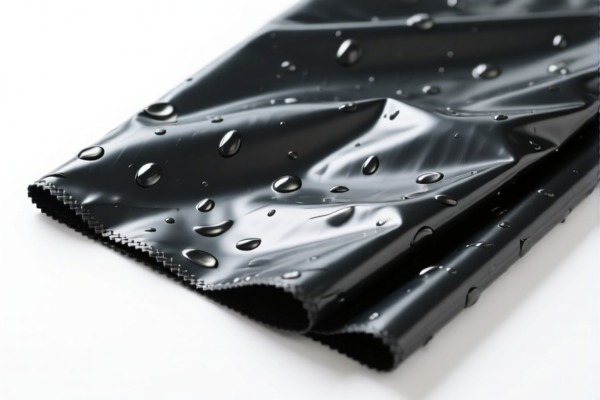
商品图片



AI分析
🛡️ PVC Elastic Waterproof Stop Material (Sealing Strips)
🌐 HS Code Reference & Customs Clearance Guide | 2024-2025 Latest Tariff Analysis | Professional Entry Strategies
📌 I. Product Definition and Classification: Do You Truly Understand "PVC Elastic Sealing Strips"?
PVC Elastic Waterproof Stop Materials, commonly referred to as PVC Elastic Sealing Strips, are essential components in construction, automotive, and plumbing industries. They are made from Polyvinyl Chloride (PVC) polymers, modified to provide elasticity, waterproofing, and sealing capabilities. In international trade, these products are often misclassified due to their ambiguous nature between "pipes," "profiles," and "general plastic articles."
Core Characteristics: 1. Material: Polyvinyl Chloride (PVC) – A halogenated polymer. 2. Form: Elastic strips, gaskets, tubes, or molded profiles. 3. Function: Sealing, waterproofing, dust-proofing, and shock absorption in pipelines or structural gaps.
⚠️ Key Distinction Point:
- If the product is a general plastic profile (not specifically for pipes) → Potentially 3916.20
- If the product is a pipe accessory/gasket specifically for plumbing systems → Potentially 3917.39 or 3926.90
- Classification depends heavily on the primary use and physical structure (hollow tube vs. solid strip).
📦 II. HS Code Classification Details (Latest Tariff Authority Comparison)
Based on the provided data, here are the five most likely HS Code classifications for "PVC Elastic Waterproof Stop Material," along with their tax implications and specific conditions.
| HS Code | Product Description | Application Scenario | Tax Rate (Total) | Key Differentiator |
|---|---|---|---|---|
3917.22.00.00 |
PVC Elastic Sealing Strips, categorized under pipe accessories | Used as seals for pipe joints, drainage systems | 38.1% | Classified as "parts/accessories of pipes" |
3917.39.00.20 |
PVC Elastic Sealing Strips, tube-shaped or soft strip accessories | Hollow tubular seals for pipes | 38.1% | Specifically defined as "tube-shaped accessories" |
3916.20.00.91 |
PVC Sealing Strips, classified as plastic monofilaments, rods, or profiles | Solid or semi-solid elastic strips not strictly for pipes | 40.8% | Broader category for "plastic profiles" |
3916.20.00.20 |
PVC Sealing Strips, categorized as profiles | Standard PVC extruded profiles used for sealing | 40.8% | General "plastic profiles" category |
3926.90.45.90 |
PVC Sealing Strips, classified as other plastic articles (gaskets/packers) | General-purpose plastic gaskets, washers, and seals | 38.5% | "Other plastic articles" including seals |
🔍 Critical Reminder:
- 3917.22.00.00 & 3917.39.00.20: These codes fall under "Plastic Pipes and Fittings." If your sealing strip is explicitly designed to connect or seal pipes, these are the most accurate codes.
- 3916.20.00.91 & 3916.20.00.20: These fall under "Plastic Monofilament, Rods, and Profiles." If the strip is a solid extruded profile used for general sealing (e.g., window frames, door gaps), these codes apply. Note the higher base tariff (5.8%).
- 3926.90.45.90: This is the "catch-all" for plastic articles not elsewhere specified. If the item is a molded gasket or non-profiled seal, this may be the safest fallback, but verify with local customs.
💰 III. 2024-2025 Latest Tariff Rate Breakdown (Including Surcharges & Policy Add-ons)
✅ Applicable Country: United States (US)
✅ Country of Origin: China (CN)
✅ Effective Date: Current tariffs apply as per 2024-2025 trade policies.
🎯 1. 3917.22.00.00 & 3917.39.00.20 —— Pipe Accessories/Seals
| Item | Content |
|---|---|
| Base Tariff | 3.1% (ad valorem) |
| Section 301 Surcharge | +25.0% (USITC Footnote 9903.88.01 equivalent) |
| IEEPA Surcharge | +10.0% (针对中国/香港产品,自2025年11月10日起) |
| Total Tax Rate | 38.1% |
| Tax Calculation | CIF Value × 38.1% |
| De Minimis Eligibility | ❌ Not Eligible (Section 301 goods are excluded from $800 de minimis exemption in many contexts, or subject to higher scrutiny) |
| Legal Basis Path | IEEPA:9903.01.25 → IEEPA:9903.01.24 → USITC:3917.xxxx → FOOTNOTE:3917.22.00.00 |
📌 Explanation:
- The 25% Section 301 tariff is the primary driver for the high cost.
- The 10% IEEPA tariff is an additional punitive tariff on Chinese goods.
- Total 38.1% is a significant cost factor. Ensure your supplier’s declaration matches this classification to avoid penalties for misclassification.
🎯 2. 3916.20.00.91 & 3916.20.00.20 —— Plastic Profiles
| Item | Content |
|---|---|
| Base Tariff | 5.8% (ad valorem) |
| Section 301 Surcharge | +25.0% |
| IEEPA Surcharge | +10.0% |
| Total Tax Rate | 40.8% |
| Tax Calculation | CIF Value × 40.8% |
| De Minimis Eligibility | ❌ Not Eligible |
| Legal Basis Path | IEEPA:9901.25 → IEEPA:9903.01.24 → USITC:3916.20.00.xx |
📌 Note:
- These codes have a higher base tariff (5.8%) compared to pipe accessories (3.1%).
- Total 40.8% is the highest among the options. Only use these if the product is strictly defined as a "profile" and not a "pipe accessory." Misclassifying a pipe seal as a profile can lead to customs audits.
🎯 3. 3926.90.45.90 —— Other Plastic Articles
| Item | Content |
|---|---|
| Base Tariff | 3.5% (ad valorem) |
| Section 301 Surcharge | +25.0% |
| IEEPA Surcharge | +10.0% |
| Total Tax Rate | 38.5% |
| Tax Calculation | CIF Value × 38.5% |
| De Minimis Eligibility | ❌ Not Eligible |
| Legal Basis Path | IEEPA:9903.01.25 → USITC:3926.90.45.90 |
📌 Note:
- This code has a moderate base tariff (3.5%).
- Total 38.5% is competitive but requires strict justification that the item is a "gasket/seal" and not a "profile" or "pipe part."
🛠️ IV. Customs Clearance Practical Advice (Battle-Tested Pitfall Avoidance)
✅ 1. Preparation Checklist (Non-Negotiable)
| Document | Mandatory? | Description |
|---|---|---|
| ✅ Product Spec Sheet | ✔️ | Must detail material (PVC), elasticity (soft/hard), dimensions, and primary use (e.g., "for pipe joint sealing") |
| ✅ Technical Drawing | ✔️ | Show cross-section. Is it hollow (tube) or solid (profile)? This determines 3917 vs. 3916 |
| ✅ Product Photos | ✔️ | Clear images showing installation context (e.g., installed on a pipe vs. mounted on a window frame) |
| ✅ Commercial Invoice | ✔️ | Must specify: "PVC Elastic Sealing Strip, HS Code: XXXX" |
| ✅ Bill of Lading | ✔️ | Ensure packaging details match invoice |
✅ 2. Declaration Strategy (Key Mantra)
🔥 "Use Defines Code, Shape Defines Category, Name Must Be Precise!"
| Scenario | Correct Declaration | Incorrect Practice |
|---|---|---|
| Seal for Water Pipe | 3917.22.00.00 or 3917.39.00.20 |
Declare as "Plastic Strip" → Risk of 3916 (40.8%) |
| Solid PVC Extruded Strip | 3916.20.00.91 or 3916.20.00.20 |
Declare as "Pipe Accessory" → Customs may reject |
| Molded Gasket | 3926.90.45.90 |
Declare as "Profile" → Mismatch in physical form |
✅ 3. Special Situations
| Situation | Handling Advice |
|---|---|
| OEM Custom Shapes | Provide mold diagrams. If the shape is unique, justify under 3926.90.45.90 as "other plastic articles" |
| Combined with Metal | If the seal has embedded metal cores, it may no longer be classified under Chapter 39. Check Chapter 73 or 76. |
| Used in Medical Devices | If for medical use, still classified under 3926.90.45.90 unless specifically exempted. Provide FDA/CE docs. |
🌍 V. Global Market Comparison (2024-2025)
| Country/Region | Recommended HS Code | Tariff (China Origin) | Certification Required | Notes |
|---|---|---|---|---|
| 🇺🇸 USA | 3917.22.00.00 |
38.1% | None specific | Highest tariff due to 301/IEEPA |
| 🇨🇳 China | 3917.22.00.00 |
5.0% (Est.) | None | Low domestic tariff |
| 🇪🇺 EU | 3917.39.00.90 |
3.5% | REACH, RoHS | No Section 301 equivalent |
| 🇦🇺 Australia | 3917.22.00.00 |
5.0% | None | Favorable trade agreement potential |
| 🇯🇵 Japan | 3917.39.00.90 |
3.0% | JIS Standards | Low tariff, strict quality checks |
📌 Conclusion:
- USA is the most expensive market due to Section 301 and IEEPA tariffs.
- EU and Japan offer significantly lower tariff burdens.
- For US imports, accurate classification is critical to avoid additional penalties or audits.
📌 VI. Common Mistakes & Pitfall Avoidance (Lessons Learned)
❌ Mistake 1: Declaring a pipe seal as a plastic profile (3916)
👉 Consequence: While the tax is similar (38.1% vs 40.8%), customs may reject it if the product doesn’t match the "profile" definition. If rejected, it delays clearance and incurs storage fees.
❌ Mistake 2: Ignoring the IEEPA 10% Surcharge
👉 Consequence: Importers often calculate only the 25% Section 301 tariff, forgetting the additional 10%. This leads to underpayment and potential fines upon audit.
❌ Mistake 3: Using vague descriptions like "Plastic Strip"
👉 Consequence: Customs officers may assign the highest duty rate among the possible codes (40.8%) due to lack of specificity.
❌ Mistake 4: Assuming De Minimis applies
👉 Consequence: Section 301 goods are often excluded from the $800 de minimis exemption. Even small shipments may be subject to full duties.
✅ Correct Approach:
"PVC Elastic Sealing Strip for Pipe Joints, Model XYZ, 25mm Width, Black, RoHS Compliant, HS Code: 3917.22.00.00"
🎯 VII. Conclusion: Precision Classification, Cost Efficiency!
🎯 Remember the Mantra:
🔹 "Pipe Use = 3917, Profile Use = 3916, Gasket = 3926"
🔹 "Don't Forget the 35% Add-on: 25% + 10%"
🔹 "Clear Specs Save Dollars!"
📌 Pro Tip:
- If your PVC seal is exclusively for use in China, tariffs are low.
- For US exports, consider supply chain diversification (e.g., sourcing from Vietnam or Thailand) to potentially avoid Section 301 tariffs, provided Rules of Origin are strictly met.
- Always request a Pre-Ruling from US Customs and Border Protection (CBP) if the product has a unique shape or use case.
📣 Immediate Action:
📞 Contact your freight forwarder + Provide technical drawings + Confirm HS Code pre-ruling
🚀 Ensure smooth customs clearance, minimize costs, and maximize profit margins!
✨ Professional Customs Clearance Starts with Accurate Classification!
💼 Every cent in tax is a cent of profit lost if misclassified!
用户评价
关于 HS 编码归类
协调制度(HS)是由世界海关组织(WCO)制定的国际贸易商品分类标准。全球 200 多个国家采用 HS 系统作为海关关税、贸易统计和进出口监管的基础。
每个 HS 编码遵循以下层级结构:
- 章(2 位)——商品大类(例如:第 84 章:机器和机械设备)
- 品目(4 位)——章内的更具体分类
- 子目(6 位)——国际通用细分,所有 WCO 成员国统一使用
- 本国细分(8-10 位)——各国自行扩展的细分编码,如美国 HTSUS 10 位编码
正确的 HS 编码归类对于顺利通关、准确缴纳关税和遵守贸易法规至关重要。错误归类可能导致海关延误、多缴关税或罚款。
从CN进口到US时,适用的关税税率可能包括:
- 最惠国(MFN)税率——适用于 WTO 成员国的标准关税税率
- 普通税率——适用于无贸易协定国家
- 贸易救济关税——附加关税,如 301 条款(反倾销)、232 条款(国家安全)或反补贴税
本页内容仅供参考。如需正式归类,请咨询当地海关或持牌报关代理。