PVC Flame Retardant Profile
CN → US| HS编码 | 关税税率 | 原产国 | 目的国 | 文档 |
|---|---|---|---|---|
| 3926305000 | 22.8% | CN | US | 官方文档 |
| 3926906090 | 39.2% | CN | US | 官方文档 |
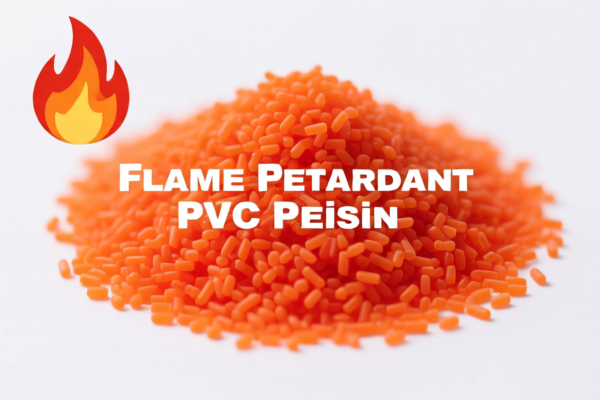
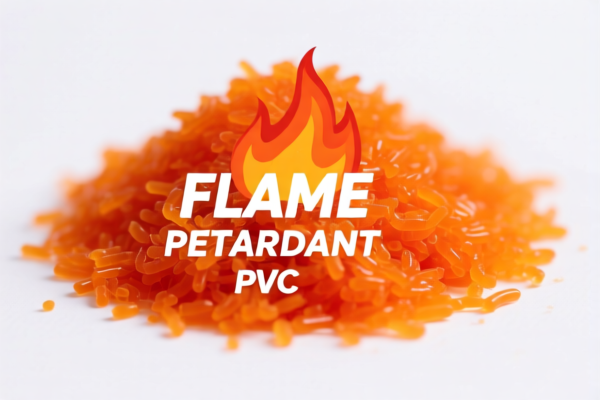
商品图片


AI分析
🏗️ PVC Flame Retardant Profile
🌐 HS Code Reference & Customs Clearance Guide | 2026 Latest Tariff Analysis | Professional Clearance Strategy
📌 I. Product Definition & Classification: Do You Really Understand "PVC Profile"?
PVC Flame Retardant Profile refers to extruded plastic shapes made primarily from Polyvinyl Chloride (PVC) compounds modified with flame retardants. These profiles are widely used in construction (window/door frames), electrical insulation, furniture fittings, and machinery applications due to their durability, weather resistance, and safety standards.
In international trade, these products generally fall under Chapter 39: Plastics and Articles Thereof, specifically within Heading 3926 for "Other articles of plastics and articles of other materials of headings 3901 to 3914." The exact sub-heading depends on the specific end-use of the profile.
⚠️ Key Distinction Point:
- If the profile is designed specifically as fittings for furniture, coachwork, or similar uses (e.g., cabinet edges, decorative trim, furniture legs) → It falls under 3926.30.
- If the profile is used as belting, belts, or similar transmission components for machinery (e.g., conveyor belts, drive belts) → It falls under 3926.90.
- Note: Standard construction window profiles not explicitly listed as "fittings" or "belts" may require careful classification, but based on the provided DATA, we focus on the two specific categories provided.
📦 II. HS Code Classification Details (2026 Latest Tariff Authoritative Comparison)
| HS Code | Product Description | Application Scenario | Is it a "Fitting"? |
|---|---|---|---|
3926.30.50.00 |
Other articles of plastics... Fittings for furniture, coachwork or the like: Other | Furniture trim, window/door seals, decorative edges, interior fittings | ✅ Yes |
3926.90.60.90 |
Other articles of plastics... Other: Belting and belts, for machinery: Other Other | Conveyor belts, drive belts, industrial transmission belts | ✅ No (Industrial Machinery) |
🔍 Important Reminder:
- 3926.30.50.00 is for static or decorative/functional fittings attached to furniture or vehicles.
- 3926.90.60.90 is for dynamic mechanical components like belts.
- Do not confuse a "window profile" (which might be considered a building material or fitting) with a "conveyor belt." If your PVC profile is used for furniture assembly or trim, use 3926.30.50.00. If it is used to transmit power in machinery, use 3926.90.60.90.
💰 III. 2026 Latest Tariff Rate Details (Detailed Tax Clause Explanation)
✅ Applicable Country: United States (US)
✅ Country of Origin: China (CN)
✅ Effective Date: Current rates as per provided DATA
🎯 1. 3926.30.50.00 —— Fittings for Furniture, Coachwork, or the Like
| Item | Content |
|---|---|
| Base Tariff Rate | 0.0% (ad valorem) |
| Additional Tariff (Section 301 / IEEPA) | 0.0% |
| Total Tariff Rate | 0.0% |
| Tax Calculation | CIF Value × 0.0% = $0 |
| De Minimis Eligibility | ✅ Yes (if under $800, generally exempt from duties) |
| Legal Basis | HTSUS 3926.30.50.00; No specific high-penalty footnote attached in provided data |
📌 Explanation:
- This category enjoys a zero-duty rate for Chinese-origin goods.
- There is no additional 25% or 10% tariff indicated in the provided data for this specific code.
- Cost Advantage: This is a highly competitive classification for cost-sensitive exports to the US.
- Caution: Ensure the product truly qualifies as "fittings." If misclassified, customs may reclassify it to a higher-tariff item, but based on current data, this is the safest low-cost route for furniture/plastic fittings.
🎯 2. 3926.90.60.90 —— Belting and Belts for Machinery
| Item | Content |
|---|---|
| Base Tariff Rate | 0.0% (ad valorem) |
| Additional Tariff (Section 301 / IEEPA) | 0.0% |
| Total Tariff Rate | 0.0% |
| Tax Calculation | CIF Value × 0.0% = $0 |
| De Minimis Eligibility | ✅ Yes (if under $800, generally exempt from duties) |
| Legal Basis | HTSUS 3926.90.60.90; No specific high-penalty footnote attached in provided data |
📌 Explanation:
- Like the furniture fittings, industrial PVC belts also enjoy a 0% tariff rate in the provided dataset.
- No Additional Taxes: Unlike electronics or certain metals, these plastic mechanical components are not subject to the heavy 25% or 10% add-on tariffs mentioned in the example.
- Strategic Use: If your PVC profile can be certified or described as a "belt for machinery," this code offers a zero-cost duty advantage. However, strict adherence to the definition of "belt" is required to avoid misdeclaration.
🛠️ IV. Customs Clearance Practical Advice (Avoid Pitfalls Guide)
✅ 1. Preparation Checklist (All Documents Required)
| Document | Required | Explanation |
|---|---|---|
| ✅ Product Specification Sheet | ✔️ | Must clearly state: Material (PVC), Additives (Flame Retardant), Dimensions, Hardness, Fire Rating (e.g., UL94 V-0). |
| ✅ Certificate of Composition | ✔️ | Confirms % of PVC and flame retardant additives to ensure it stays within Chapter 39. |
| ✅ Product Photos (Clear) | ✔️ | Show the profile’s cross-section, surface texture, and any markings. Crucial to distinguish "fitting" vs. "belt." |
| ✅ Commercial Invoice | ✔️ | Description must be precise. Example: "PVC Flame Retardant Profile for Cabinet Fitting" or "PVC Conveyor Belt Strip." |
| ✅ Packing List | ✔️ | List weight and dimensions. Avoid listing "machinery parts" if classifying as "furniture fittings." |
| ✅ Test Report (UL94/IEC) | ✔️ | Proof of flame retardancy. Required for compliance but not always for duty calculation. |
✅ 2. Declaration Techniques (Critical Tips)
🔥 “Match Use, Match Code, Don’t Over-Describe!”
| Scenario | Correct Declaration | Wrong Practice |
|---|---|---|
| Window/Door Frame Trim | “PVC Profile for Furniture/Coachwork Fitting” | “Building Material” → May be misclassified |
| Furniture Edge Banding | “PVC Fitting for Furniture” | “Plastic Sheet” → Different HTS |
| Conveyor Belt Component | “PVC Belt for Machinery” | “Plastic Tube” → Incorrect |
| General Extruded Rod | “Other Article of Plastic” → May need 3926.90.90 | Forcing it into 3926.30 → Risk of Audit |
📌 Key Tip:
- The term "Flame Retardant" is a functional characteristic, not a primary classifier. It does not change the HS Code to a different chapter. It remains in Chapter 39.
- Ensure the invoice description matches the HS Code intent. If using 3926.30.50.00, avoid words like "transmission," "drive," or "conveyor" in the description. Use "fitting," "trim," "seal," or "decorative element."
✅ 3. Special Cases Handling
| Situation | Handling Advice |
|---|---|
| Mixed Shipments | If sending both furniture fittings and machinery belts, split the declaration or use the most dominant use. Do not mix codes in one line item. |
| OEM Custom Profiles | Provide design drawings. If the profile is custom-shaped for a specific machine, justify 3926.90.60.90. If for generic furniture, use 3926.30.50.00. |
| Fire Safety Compliance | Ensure the product meets the flame retardant standards of the importing country (e.g., US NFPA, EU EN). While not affecting duty, it affects customs hold time if questioned on safety. |
| De Minimis (Section 321) | If shipment value < $800, both codes 0% duty may still apply, but ensure the carrier follows US CBP rules for low-value shipments. |
🌍 V. Global Market Comparison (2026 Latest)
| Country/Region | Recommended HS Code | Tariff Rate | Certification | Notes |
|---|---|---|---|---|
| 🇺🇸 USA | 3926.30.50.00 / 3926.90.60.90 |
0.0% | UL94, RoHS | No 301 tariff for these specific plastic codes |
| 🇨🇳 China | 3926.30 / 3926.90 |
~5-6% | CCC (if applicable) | Domestic production often cheaper |
| 🇪🇺 EU | 3926.30 / 3926.90 |
0% (if GSP/FTA) | REACH, RoHS | Strict chemical compliance (REACH) |
| 🇬🇧 UK | 3926.30 / 3926.90 |
0-5% | UKCA, REACH | Post-Brexit rules apply |
| 🇨🇦 Canada | 3926.30 / 3926.90 |
0% (if FTA) | Health Canada | No major tariffs for plastics |
📌 Conclusion:
- USA is the primary market where 0% tariff is a significant advantage for these specific plastic articles.
- EU requires strict REACH compliance for flame retardants (banned substances in PVC). Ensure chemical safety data sheets (SDS) are ready.
- No major trade wars currently target these specific plastic categories in the provided data, unlike electronics or steel.
📌 VI. Common Errors & Pitfalls (Lessons Learned)
❌ Error 1: Declaring PVC Profile as "Building Material" (e.g., Chapter 39 or 73)
👉 Consequence: Misclassification → Potential audit, back taxes, or delays.
✅ Fix: Stick to 3926 for "other articles of plastic."
❌ Error 2: Using "Furniture Fitting" code for a Machinery Belt
👉 Consequence: Customs may flag as "intent to evade."
✅ Fix: Clearly document the end-use in the invoice and commercial documents.
❌ Error 3: Ignoring Flame Retardant Chemical Composition
👉 Consequence: REACH/CPSC rejection in EU/USA.
✅ Fix: Provide a list of hazardous substances and confirm compliance with local laws.
❌ Error 4: Vague Description "Plastic Profile"
👉 Consequence: Customs officer has discretion to assign a higher tariff code.
✅ Fix: Use specific terms: "PVC Flame Retardant Profile for Cabinet Trim" or "PVC Drive Belt Strip."
🎯 VII. Conclusion: Precision Classification, Zero Duty Advantage!
🎯 Remember the Key Takeaways:
🔹 “Plastic Profile, Not Steel or Wood – Chapter 39 is your home!”
🔹 “Fitting or Belt? Choose 3926.30 or 3926.90 – Both 0% in USA!”
🔹 “Flame Retardant is a Feature, Not a Code – Don’t let it confuse the classifier!”
📌 Pro Tip:
If your PVC profile is part of a larger assembled unit (e.g., a window frame), consider if it’s better classified as part of the window system (possibly different HS). However, as a stand-alone profile, 3926 is correct.
Always request a Binding Tariff Information (BTI) or Advance Ruling from customs if the volume is high, to lock in the 0% duty status.
📣 Action Plan:
📞 Confirm End-Use with your client (Furniture vs. Machinery).
📄 Draft Invoice with precise HS Code and description.
🚀 Ship with confidence, knowing 0% Duty applies!
✨ Professional Clearance Starts with Accurate Classification!
💼 Your Cost Savings Are Calculated Down to the Cent!
用户评价
关于 HS 编码归类
协调制度(HS)是由世界海关组织(WCO)制定的国际贸易商品分类标准。全球 200 多个国家采用 HS 系统作为海关关税、贸易统计和进出口监管的基础。
每个 HS 编码遵循以下层级结构:
- 章(2 位)——商品大类(例如:第 84 章:机器和机械设备)
- 品目(4 位)——章内的更具体分类
- 子目(6 位)——国际通用细分,所有 WCO 成员国统一使用
- 本国细分(8-10 位)——各国自行扩展的细分编码,如美国 HTSUS 10 位编码
正确的 HS 编码归类对于顺利通关、准确缴纳关税和遵守贸易法规至关重要。错误归类可能导致海关延误、多缴关税或罚款。
从CN进口到US时,适用的关税税率可能包括:
- 最惠国(MFN)税率——适用于 WTO 成员国的标准关税税率
- 普通税率——适用于无贸易协定国家
- 贸易救济关税——附加关税,如 301 条款(反倾销)、232 条款(国家安全)或反补贴税
本页内容仅供参考。如需正式归类,请咨询当地海关或持牌报关代理。