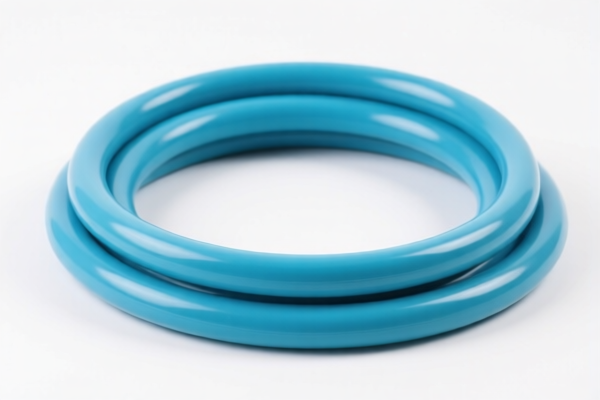
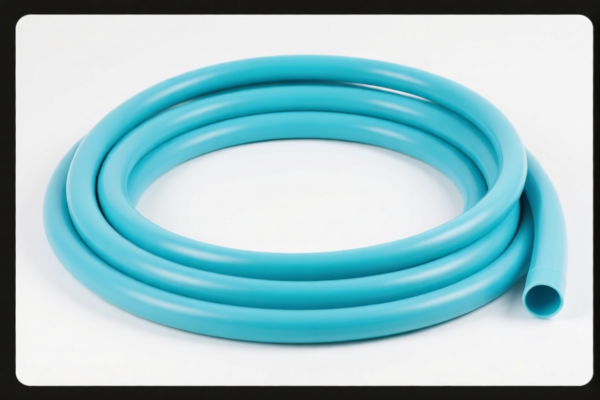
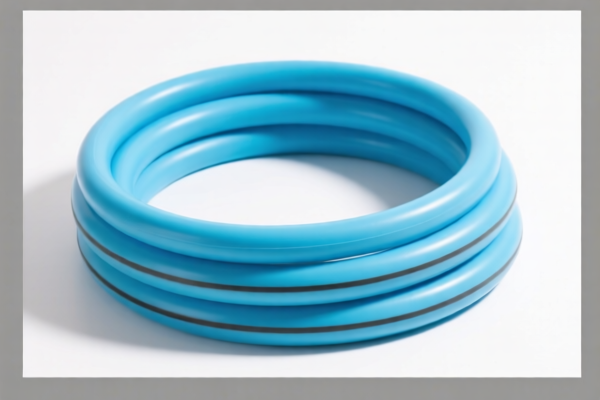
PVC Impact Resistant Hose
CN → US| HS编码 | 关税税率 | 原产国 | 目的国 | 文档 |
|---|---|---|---|---|
| 3926909987 | 22.8% | CN | US | 官方文档 |
| 3926909989 | 22.8% | CN | US | 官方文档 |
| 3904100000 | 41.5% | CN | US | 官方文档 |
| 3917390020 | 38.1% | CN | US | 官方文档 |
| 3917230000 | 38.1% | CN | US | 官方文档 |
| 3904210000 | 41.5% | CN | US | 官方文档 |
商品图片

AI分析
🚿 PVC Impact Resistant Hose (PVC Hoses & Conduits)
🌐 HS Code Reference & Customs Clearance Guide | 2026 Latest Tariff Analysis | Professional Compliance Strategy
📌 I. Product Definition & Classification: Do You Really Understand "PVC Hoses"?
PVC Impact Resistant Hoses are flexible piping solutions used primarily for fluid conveyance, electrical wiring protection (conduits), and industrial applications. In international trade, they are categorized based on their physical form and state of processing:
1. Finished Tubular Articles (Finished Goods):
These are finished pipes, tubes, or conduits ready for use. They may be rigid, semi-rigid, or flexible. If the product is specifically designed as an electrical conduit (e.g., for wiring protection) or a general-purpose hose, it falls under "Other articles of plastics."
2. Plastic Pipes, Tubes, and Hoses (Specific Subheadings):
These are products specifically identified as pipes, tubes, or hoses within the plastics section. This includes corrugated pipes, flexible hoses, and rigid conduits made of PVC.
3. Primary Forms of PVC (Raw Materials):
This includes pellets, granules, or raw polymers (like Suspend Polyvinyl Chloride). If the product is not yet formed into a tube or hose, but is in its raw polymer state, it falls here.
⚠️ Key Distinction Point:
- If the product is a finished tube/hose/conduit ready for installation → Look at 3926 or 3917.
- If the product is raw PVC resin/pellets → Look at 3904.
- Crucial Note: The term "Impact Resistant" describes the property of the material, not the form. The HS Code is determined by the physical shape (tube vs. raw material), not the durability feature.
📦 II. HS Code Classification Details (2026 Latest Tariff Authority Reference)
| HS Code | Product Description | Application Scenario | Form Status |
|---|---|---|---|
3926.90.99.87 |
Other articles of plastics: PVC material, tubular products,符合电线导管逻辑 (Consistent with electrical conduit logic) | Electrical conduits, protective tubes for wires, impact-resistant flexible tubing | ✅ Finished Tubular Article |
3926.90.99.89 |
Other articles of plastics: PVC material, tubular products, classified as "Other plastic articles" | General-purpose PVC hoses, non-specific tubular items not fitting pipe/hose definitions | ✅ Finished Tubular Article |
3904.10.00.00 |
PVC material: Polymer, primary forms or in shapes of powder, granules or flakes | Raw PVC resin, pellets, or powder before extrusion/molding | ❌ Raw Material |
3917.39.00.20 |
PVC material: Tubes, pipes, and hoses; other tubes, pipes, and hoses, stiff | Rigid PVC pipes, rigid conduits, industrial piping | ✅ Finished Pipe/Tube |
3917.23.00.00 |
PVC material: Tubes, pipes, and hoses; flexible, with a lining, coated, reinforced or otherwise combined with other materials | Flexible PVC hoses, corrugated flexible pipes, reinforced PVC tubing | ✅ Finished Flexible Hose |
3904.21.00.00 |
PVC material: Other polyvinyl chloride, tubular primary forms | Rare; typically refers to PVC in specific primary tubular shapes not yet finished | ❌ Semi-Finished/Raw |
🔍 Critical Reminder:
- Finished Products (Hoses, Pipes, Conduits) generally fall under 3917 (if specifically pipes/hoses) or 3926 (if general plastic articles like conduits).
- Raw Materials fall under 3904.
- Do not confuse "Impact Resistant" with a new category. It is just a material property. The HS code depends on whether it is a tube/hose (3917/3926) or raw resin (3904).
💰 III. 2026 Latest Tariff Rate Breakdown (Including Additional Taxes, Policy Add-ons)
✅ Applicable Country: United States (US)
✅ Origin: China (CN)
✅ Effective Date: Includes imports from November 10, 2025, onwards
🎯 1. 3926.90.99.87 / 3926.90.99.89 —— Finished PVC Tubular Articles (Conduits/Hoses)
| Item | Content |
|---|---|
| Base Tariff | 5.3% (ad valorem) |
| Section 301 Additional Tariff | +7.5% (Specific to these subheadings in some contexts, or part of the 25% block depending on exact classification history) |
| Section 122 Tariff | +10% (Specific additional levy on certain PVC/plastic products) |
| Total Tariff Rate | 22.8% |
| Tax Calculation | CIF Value × 22.8% |
| De Minimis Exemption | ❌ Not Eligible (subject to high tariffs) |
| Legal Basis Path | Base Rate + Section 301 (7.5%) + Section 122 (10%) |
📌 Explanation:
- These codes classify PVC as "Other plastic articles."
- The 22.8% total rate is significantly lower than the raw material rate because it reflects the added value of manufacturing.
- Section 122 is a specific U.S. tariff often applied to certain plastic articles to protect domestic manufacturing.
🎯 2. 3917.39.00.20 / 3917.23.00.00 —— PVC Pipes, Tubes, and Hoses
| Item | Content |
|---|---|
| Base Tariff | 3.1% (ad valorem) |
| Section 301 Additional Tariff | +25.0% (Standard 301 tariff on many plastic pipes/hoses) |
| Section 122 Tariff | +10% |
| Total Tariff Rate | 38.1% |
| Tax Calculation | CIF Value × 38.1% |
| De Minimis Exemption | ❌ Not Eligible |
| Legal Basis Path | Base:3.1% → Section301:25% → Section122:10% |
📌 Explanation:
- 3917 covers pipes, tubes, and hoses specifically.
- The 25% Section 301 tariff is higher here than in 3926.
- 3917.23.00.00 (Flexible hoses) and 3917.39.00.20 (Stiff pipes) both face this 38.1% total rate.
- Impact: If your product is a flexible hose, ensure it is correctly classified under 3917 to avoid misclassification penalties, but be prepared for the higher 38.1% rate compared to 3926’s 22.8%.
🎯 3. 3904.10.00.00 / 3904.21.00.00 —— Raw PVC Polymer/Primary Forms
| Item | Content |
|---|---|
| Base Tariff | 6.5% (ad valorem) |
| Section 301 Additional Tariff | +25.0% |
| Section 122 Tariff | +10% |
| Total Tariff Rate | 41.5% |
| Tax Calculation | CIF Value × 41.5% |
| De Minimis Exemption | ❌ Not Eligible |
| Legal Basis Path | Base:6.5% → Section301:25% → Section122:10% |
📌 Explanation:
- If you import PVC pellets/resin instead of finished hoses, the base rate is higher (6.5% vs 5.3% or 3.1%), and the Section 301 tariff is the full 25%.
- Total 41.5% is the highest rate.
- Warning: Do not misdeclare finished hoses as raw material to avoid the 25% tariff; Customs will verify the physical form.
🛠️ IV. Customs Clearance Practical Advice (Real-World Pitfall Avoidance)
✅ 1. Required Documentation Checklist (Non-Negotiable)
| Document | Mandatory | Explanation |
|---|---|---|
| ✅ Product Specification Sheet | ✔️ | Must specify: Material (PVC), Type (Flexible/Rigid), Diameter, Wall Thickness, Pressure Rating |
| ✅ Product Photos (Clear) | ✔️ | Show the cross-section, surface texture, and any corrugations |
| ✅ Certificate of Composition | ✔️ | Confirms PVC content and any additives (plasticizers, stabilizers) |
| ✅ Commercial Invoice | ✔️ | Clearly state: "PVC Impact Resistant Hose/Conduit," HS Code, Country of Origin |
| ✅ Packing List | ✔️ | Detail net/gross weight, dimensions, and quantity |
| ✅ Importer Security Filing (ISF) | ✔️ | File 24 hours before loading if shipping by ocean |
✅ 2. Declaration Tips (Key Mantras)
🔥 “Form Determines Code, Property is Secondary!”
| Scenario | Correct Declaration | Wrong Practice |
|---|---|---|
| Flexible PVC Hose (e.g., for water, air, or wire protection) | 3917.23.00.00 |
Misclassify as 3926.90.99.87 → Risk of penalty if clearly a hose |
| Rigid PVC Pipe/Conduit (e.g., electrical conduit) | 3917.39.00.20 or 3926.90.99.87 |
Use generic "Plastic Tube" → Leads to manual examination |
| Raw PVC Pellets | 3904.10.00.00 |
Declare as "Hose" → Rejected at customs |
| Composite Hose (PVC + Fabric/Metal Reinforcement) | 3917.23.00.00 |
Ignore reinforcement → Misclassification |
📌 Note:
- If the hose is specifically for electrical wiring and is a conduit,3926.90.99.87is often preferred for a lower tariff (22.8%).
- If it is a general-purpose fluid hose,3917.23.00.00is correct but carries a higher tariff (38.1%).
- Strategy: If the hose can be used for both, providing documentation that emphasizes its electrical conduit use (e.g., UL listing for wire protection) may support classification under3926.90.99.87.
✅ 3. Special Cases
| Case | Handling Advice |
|---|---|
| OEM Custom Hoses | Provide customer design specs. If non-standard, ensure the description matches the physical form accurately. |
| Corrugated Hoses | Clearly state "Corrugated PVC Hose." This supports 3917.23.00.00 (flexible). |
| High-Pressure Hoses | If reinforced with metal, ensure it is still classified as plastic. If metal is the primary characteristic, it may shift to Chapter 73, but PVC-lined remains 3917. |
| Food-Grade PVC Hoses | Provide FDA compliance statement. Does not change HS code, but required for clearance. |
🌍 V. Global Market Comparison (2026 Latest)
| Country/Region | Recommended HS Code | Tariff (China Origin) | Certification Requirements | Remarks |
|---|---|---|---|---|
| 🇺🇸 USA | 3917.23.00.00 / 3926.90.99.87 |
38.1% / 22.8% | FDA (if food), NSF (if water), UL (if electrical) | High tariffs due to Section 301 & 122 |
| 🇨🇳 China | 3917.23.00.00 |
~2.5%-5% | CCC (if electrical) | Low import duties |
| 🇪🇺 EU | 3917.23.00.00 |
0% (Most Favored Nation) | REACH, RoHS | No additional tariffs |
| 🇦🇺 Australia | 3917.23.00.00 |
5% | ACCC Standards | Moderate duties |
| 🇯🇵 Japan | 3917.23.00.00 |
0% | PSE (if electrical) | Low/No duties |
📌 Conclusion:
- The US market is the most expensive due to叠加 tariffs (Section 301 + Section 122).
- Diversification Strategy: Consider sourcing from Vietnam or Mexico for US-bound goods to potentially avoid Section 301 tariffs, but ensure substantial transformation occurs.
📌 VI. Common Errors & Pitfalls (Lessons Learned)
❌ Mistake 1: Classifying all PVC tubes as 3917.23.00.00 when they are clearly electrical conduits.
👉 Result: Paying 38.1% instead of 22.8% → Unnecessary Cost Increase!
❌ Mistake 2: Declaring finished hoses as "Plastic Parts" under 3926.90.99.89 without justification.
👉 Result: Customs audit may reclassify to 3917 with higher duties or apply penalties for misdeclaration.
❌ Mistake 3: Ignoring the "Section 122" tariff.
👉 Result: Unexpected 10% additional cost on top of base and 301 tariffs.
❌ Mistake 4: Using vague descriptions like "PVC Tube."
👉 Result: Customs delays, manual examination, potential demurrage fees.
✅ Correct Practice:
"PVC Flexible Impact Resistant Hose, 1/2 inch, Corrugated, for Fluid Conveyance, Model XYZ, RoHS Compliant"
OR
"PVC Electrical Conduit, Rigid, Impact Resistant, UL Listed, 3/4 inch, Model ABC"
🎯 VII. Conclusion: Precision in Classification Saves Money!
🎯 Remember the Mantra:
🔹 "Electrical Conduit = 3926 (22.8%)
🔹 "General Hose = 3917 (38.1%)"
🔹 "Raw Material = 3904 (41.5%)"
🔹 "Choose wisely, pay less!"🔹 "HS Code determines destiny. A 15.3% difference is huge. Declare accurately, save thousands!"
📌 Pro Tip:
If your PVC hose is primarily used for electrical wiring, provide UL listing certificates or product specs highlighting electrical safety features to support classification under 3926.90.99.87 for the lower 22.8% tariff.
Consider applying for a Binding Ruling (Advance Ruling) with U.S. Customs if the use case is ambiguous.
📣 Immediate Action:
📞 Consult a licensed customs broker + Provide product datasheets + Request a Binding Ruling if unsure
🚀 Ensure smooth customs clearance, efficient export, and maximized profit margins!
✨ Professional clearance starts with accurate classification!
💼 Every dollar of duty saved is pure profit!
用户评价
关于 HS 编码归类
协调制度(HS)是由世界海关组织(WCO)制定的国际贸易商品分类标准。全球 200 多个国家采用 HS 系统作为海关关税、贸易统计和进出口监管的基础。
每个 HS 编码遵循以下层级结构:
- 章(2 位)——商品大类(例如:第 84 章:机器和机械设备)
- 品目(4 位)——章内的更具体分类
- 子目(6 位)——国际通用细分,所有 WCO 成员国统一使用
- 本国细分(8-10 位)——各国自行扩展的细分编码,如美国 HTSUS 10 位编码
正确的 HS 编码归类对于顺利通关、准确缴纳关税和遵守贸易法规至关重要。错误归类可能导致海关延误、多缴关税或罚款。
从CN进口到US时,适用的关税税率可能包括:
- 最惠国(MFN)税率——适用于 WTO 成员国的标准关税税率
- 普通税率——适用于无贸易协定国家
- 贸易救济关税——附加关税,如 301 条款(反倾销)、232 条款(国家安全)或反补贴税
本页内容仅供参考。如需正式归类,请咨询当地海关或持牌报关代理。