PVC Plastic Hoses
CN → US| HS编码 | 关税税率 | 原产国 | 目的国 | 文档 |
|---|---|---|---|---|
| 3917320010 | 38.1% | CN | US | 官方文档 |
| 3926909987 | 22.8% | CN | US | 官方文档 |
| 3917230000 | 38.1% | CN | US | 官方文档 |
| 3926909989 | 22.8% | CN | US | 官方文档 |
| 3917290090 | 38.1% | CN | US | 官方文档 |
商品图片


AI分析
🌊 PVC Plastic Hoses: Ultimate HS Code Classification & US Customs Clearance Guide (2026)
🌐 HS Code Reference & Customs Clearance Strategy | 2026 Latest Tariff Analysis | Professional Compliance Protocol
📌 Part I: Product Definition & Classification Logic
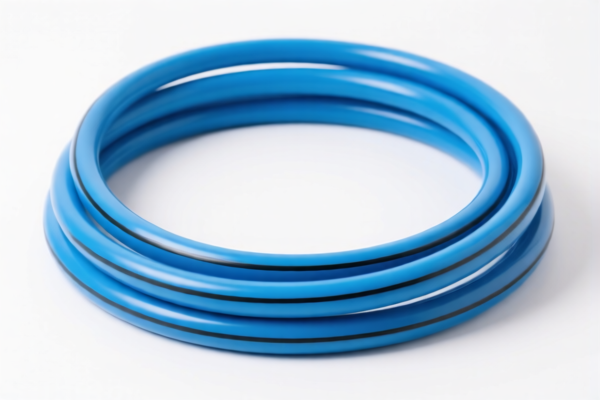
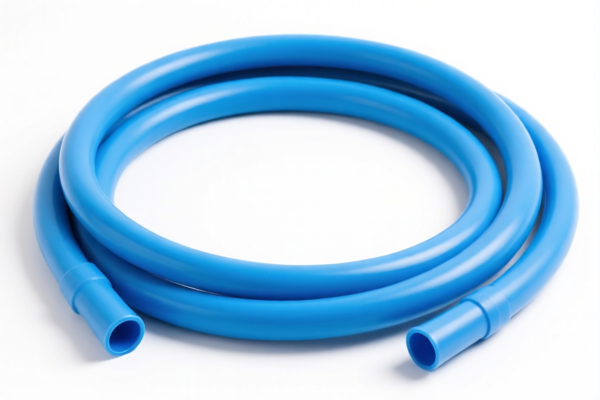
PVC Plastic Hoses (PVC Pipes/Tube) are rigid or semi-rigid conduits used for fluid transport in construction, industrial, and residential applications. In international trade, their classification depends strictly on material specificity and functional hierarchy.
Two Primary Classification Paths:
- Specific PVC Pipe Heading (3917): If the product is explicitly identified as "PVC" (Polyvinyl Chloride), it falls under Heading 3917 ("Tube, pipe and hose... of plastics"). This is the most accurate and often preferred classification for standardized PVC products.
- General Plastic Article Heading (3926): If the product is generic "plastic pipes" where PVC is not explicitly distinguished in the summary, or if it serves as a catch-all for other plastic forms, it may fall under Heading 3926 ("Other articles of plastics"). This is typically a "fallback" category with different tax implications.
⚠️ Key Distinction Point:
- If the product is clearly PVC and structured as a pipe/hose → Priority classification is usually 3917.
- If the product is generic plastic or the specific PVC subtype is not matched → Use 3926 (Fallback/Other).
- Do not confuse flexible tubing with rigid pipes; however, all items in the are classified as "pipes/hoses," implying a structural form recognized under Chapter 39.
📦 Part II: HS Code Classification Details (Based on Provided Data)
The following table breaks down the specific HS Codes derived from the input data, explaining why they apply and their associated tax structures.
| HS Code | Product Description & Rationale | Tax Rate (Total) | Tax Breakdown (US Import from CN) |
|---|---|---|---|
3917.32.00.10 |
PVC Pipe (Specific): Explicitly identified as PVC material, shaped as a pipe. Matches the specific subheading for plastic pipes. | 38.1% | Base: 3.1% Section 301: 25.0% Section 122: 10.0% |
3926.90.99.87 |
PVC Pipe (Generic/Catch-all): PVC material, shaped as a pipe, but classified under "Other plastic articles." Acts as a fallback category for hard pipes/tubes not elsewhere specified. | 22.8% | Base: 5.3% Section 301: 7.5% Section 122: 10.0% |
3917.23.00.00 |
PVC Pipe (Precise Match): "Chlorine polymer" (PVC) pipe, perfectly matching the specific subheading for plastic pipes/hoses. | 38.1% | Base: 3.1% Section 301: 25.0% Section 122: 10.0% |
3926.90.99.89 |
PVC Pipe (Other/Fallback): PVC material, shaped as a pipe, falling under "Other plastic articles." Broad catch-all for general plastic products. | 22.8% | Base: 5.3% Section 301: 7.5% Section 122: 10.0% |
3917.29.00.90 |
Plastic Pipe (General PVC): Plastic material, shaped as a pipe, fitting the logic of "other pipes" under Heading 3917 (length unspecified). | 38.1% | Base: 3.1% Section 301: 25.0% Section 122: 10.0% |
🔍 Critical Analysis:
- Heading 3917 Codes (3917.32.00.10,3917.23.00.00,3917.29.00.90) carry a higher total tax (38.1%) because the Section 301 tariff is 25%.
- Heading 3926 Codes (3926.90.99.87,3926.90.99.89) carry a lower total tax (22.8%) because the Section 301 tariff is only 7.5%.
- ⚠️ WARNING: While 3926 appears cheaper, misclassification is a major customs violation. PVC pipes are generally specifically provided for under 3917. Using 3926 to lower taxes is a high-risk strategy unless the product truly doesn't fit 3917 definitions.
💰 Part III: 2026 Tariff Rate Explanation (Detailed Breakdown)
✅ Origin: China (CN)
✅ Destination: United States (US)
✅ Effective Period: 2025–2026 (Current Trade Policy)
🎯 A. High-Tax Cluster: HS Code 3917 Series (38.1% Total)
| Component | Rate | Legal Basis / Explanation |
|---|---|---|
| Base Duty | 3.1% | Standard Most Favored Nation (MFN) duty for plastic pipes/hoses under Heading 3917. |
| Section 301 | +25.0% | High Impact. Added by the U.S. Trade Representative (USTR) on a wide range of Chinese manufactured goods. Applies strictly to PVC pipes from China. |
| Section 122 | +10.0% | Administrative/Specific Tariff. A specific additional tariff applied to this category (as per provided data). |
| TOTAL | 38.1% | Significant Cost Impact. Must be factored into FOB/CIF pricing. |
🎯 B. Low-Tax Cluster: HS Code 3926 Series (22.8% Total)
| Component | Rate | Legal Basis / Explanation |
|---|---|---|
| Base Duty | 5.3% | Standard MFN duty for "Other articles of plastics" under Heading 3926. |
| Section 301 | +7.5% | Lower Impact. Certain subheadings under 3926 are exempted from the full 25% 301 tariff, paying only a partial rate. |
| Section 122 | +10.0% | Administrative/Specific Tariff. Same as above; applies to the final classification. |
| TOTAL | 22.8% | Optimization Opportunity? Only if legally compliant. |
📌 Tax Strategy Insight:
The 15.3% difference (38.1% vs. 22.8%) is driven entirely by the Section 301 rate (25% vs. 7.5%).
However, customs authorities (CBP) will scrutinize the use of 3926 for PVC pipes. If the product is definitively a "pipe" of PVC, 3917 is the correct legal classification. Using 3926 to save 15.3% risks seizure, penalties, and back-dated duties.
🛠️ Part IV: Customs Clearance Practical Advice
✅ 1. Documentation Checklist (Mandatory)
| Document | Requirement | Purpose |
|---|---|---|
| Commercial Invoice | Must specify "PVC Pipe/Hose," Material: Polyvinyl Chloride, Dimensions (ID/OD), Pressure Rating. | Proof of material and form. |
| Product Specification Sheet | Detailed technical data: Wall thickness, stiffness class (SN8/SN16), manufacturer. | Determines correct HS subheading (e.g., rigid vs. flexible). |
| Material Composition Cert. | Confirm 100% PVC or PVC blend. No metal reinforcement (if metal, classify under Steel/Aluminum headings!). | Critical for Chapter 39 eligibility. |
| Country of Origin Cert. | Explicitly state "Made in China." | Triggers Section 301 and 122 tariffs. |
| Packing List | Net/Gross weight, carton count. | For cargo verification. |
✅ 2. Classification Strategy & Risk Management
🔥 Golden Rule: "Material + Form = Correct Heading"
| Scenario | Recommended HS Code | Risk Level | Action |
|---|---|---|---|
| Standard Rigid PVC Pipe (Water/Drainage) | 3917.23.00.00 or 3917.32.00.10 |
🟢 Low (Correct) | Use 3917. Pay 38.1%. Ensure product is strictly plastic. |
| Generic Plastic Pipe (Non-PVC or Mixed) | 3926.90.99.87 |
🟡 Medium | Use only if material is NOT PVC or doesn't fit 3917 specs. |
| PVC Hose (Flexible, Non-Rigid) | 3917.29.00.90 |
🟢 Low (Correct) | Classified under "Other pipes/hoses" in 3917. |
| PVC Pipe Misclassified as 3926 | 3926.90.99.89 |
🔴 HIGH | Avoid. High risk of audit, penalty, and retroactive tax + 301 difference. |
⚠️ Common Mistake:
Importers often try to use 3926.90.99.87/89 to save on the 301 tariff (7.5% vs 25%).
Consequence: If CBP proves the product is a PVC pipe (which it is), they will reclassify to 3917, charge the 15.3% difference, plus interest and penalties.
Advice: Only use 3926 if the product is truly a "plastic article" that is not a pipe or hose (e.g., plastic fittings, connectors, or non-pipe shapes). For actual pipes, stick to 3917.
✅ 3. Special Considerations for PVC Pipes
- Reinforcement Check: If the PVC pipe contains any metal core or reinforcement, it may no longer be classified under Chapter 39. It could fall under Chapter 73 (Iron/Steel) or Chapter 76 (Aluminum), which have different tariffs. Ensure the invoice states "Non-reinforced PVC."
- Pressure Ratings: High-pressure PVC pipes might be subject to additional safety standards (ASTM D1785, NSF/ANSI 61). Ensure compliance documentation is ready for port inspection.
- Section 122 Tariff: Note that the 10% tariff is applied to both 3917 and 3926 categories in the provided data. This is a non-negotiable addition for these items from China.
🌍 Part V: Global Market Comparison (2026)
| Market | Recommended HS Code (PVC Pipe) | Base Tariff | US-Specific Surcharges (Section 301/122) | Total Est. Rate (China Origin) |
|---|---|---|---|---|
| 🇺🇸 United States | 3917.23.00.00 (Standard) |
3.1% | +25% (301) + 10% (122) | 38.1% |
| 🇺🇸 United States | 3926.90.99.87 (Fallback*) |
5.3% | +7.5% (301) + 10% (122) | 22.8% (*High Risk) |
| 🇪🇺 European Union | 3917.29 |
4.8% | None | ~4.8% |
| 🇨🇳 China (Export) | 3917.29 |
5.0% (VAT/Tax) | Export Tax Rebates may apply | Varies |
📌 Conclusion for US Imports:
The US market is the most expensive for PVC pipes from China due to the aggressive Section 301 tariffs.
- Cost Impact: A $10,000 shipment incurs $3,810 in duties (if correctly classified as 3917).
- Strategy: Consider supplier diversification (Vietnam, Mexico, Thailand) to avoid Section 301, or use Bonded Warehouses for deferral.
📌 Part VI: Common Errors & Pitfalls (Lessons Learned)
❌ Error 1: Classifying PVC Pipes as 3926 to save 15.3%.
👉 Result: CBP reclassification, back-taxes, 25% penalty, and potential loss of import privileges.
❌ Error 2: Ignoring "Reinforcement."
👉 Result: If metal-reinforced PVC is declared as plastic pipe, it gets misclassified, leading to duty evasion charges.
❌ Error 3: Missing Section 122 Tariff.
👉 Result: Underpayment of duties by 10%. CBP audits catch this quickly. Always verify the 122 clause application.
❌ Error 4: Vague Description ("Plastic Tube").
👉 Result: CBP asks for more info, delaying clearance. Be specific: "Rigid PVC Pipe, ASTM D1785, 4-inch OD."
✅ Best Practice:
"Be Specific, Be Accurate, Be Compliant."
Declare: "PVC Pressure Pipe, Unreinforced, for Water Supply, HS 3917.23.00.00"
🎯 Part VII: Conclusion & Action Plan
🎯 Key Takeaway:
For PVC Plastic Hoses/Pipes from China to the US, the standard compliant tariff is 38.1% under HS Code 3917.
While 22.8% (HS 3926) exists, it is a high-risk classification for PVC pipes and should only be used if the product genuinely does not meet the definition of a "pipe/hose" under Chapter 39.
🚀 Action Steps:
1. Verify Product Specs: Ensure it is unreinforced PVC.
2. Select HS 3917: For standard PVC pipes, use 3917.23.00.00 or 3917.32.00.10.
3. Budget for 38.1%: Include 38.1% duties in your landed cost calculation.
4. Prepare Docs: Have material certs and technical specs ready for CBP inspection.
5. Consider Alternatives: If 38.1% is prohibitive, evaluate sourcing from non-China origins to avoid Section 301.
📣 Final Reminder:
📞 Consult a Licensed Customs Broker before shipment.
📄 Apply for an Advance Ruling if your product is unique or borderline between 3917 and 3926.
💡 Compliance saves money in the long run. Avoid the hidden costs of misclassification.
✨ Smart Classification = Smooth Clearance = Maximized Profit.
💼 Your PVC Pipe Shipment, Optimized for 2026 Compliance.
用户评价
关于 HS 编码归类
协调制度(HS)是由世界海关组织(WCO)制定的国际贸易商品分类标准。全球 200 多个国家采用 HS 系统作为海关关税、贸易统计和进出口监管的基础。
每个 HS 编码遵循以下层级结构:
- 章(2 位)——商品大类(例如:第 84 章:机器和机械设备)
- 品目(4 位)——章内的更具体分类
- 子目(6 位)——国际通用细分,所有 WCO 成员国统一使用
- 本国细分(8-10 位)——各国自行扩展的细分编码,如美国 HTSUS 10 位编码
正确的 HS 编码归类对于顺利通关、准确缴纳关税和遵守贸易法规至关重要。错误归类可能导致海关延误、多缴关税或罚款。
从CN进口到US时,适用的关税税率可能包括:
- 最惠国(MFN)税率——适用于 WTO 成员国的标准关税税率
- 普通税率——适用于无贸易协定国家
- 贸易救济关税——附加关税,如 301 条款(反倾销)、232 条款(国家安全)或反补贴税
本页内容仅供参考。如需正式归类,请咨询当地海关或持牌报关代理。