PVC Resin (Non Suspension Grade)
CN → US| HS编码 | 关税税率 | 原产国 | 目的国 | 文档 |
|---|---|---|---|---|
| 3904210000 | 41.5% | CN | US | 官方文档 |
| 3904100000 | 41.5% | CN | US | 官方文档 |
商品图片
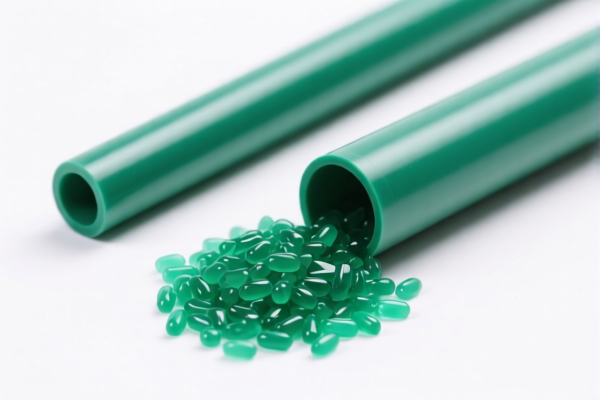
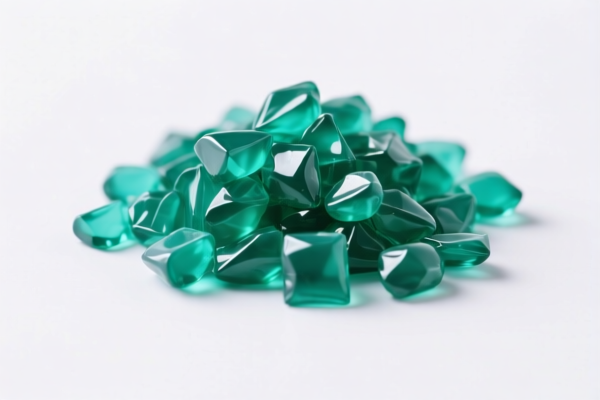
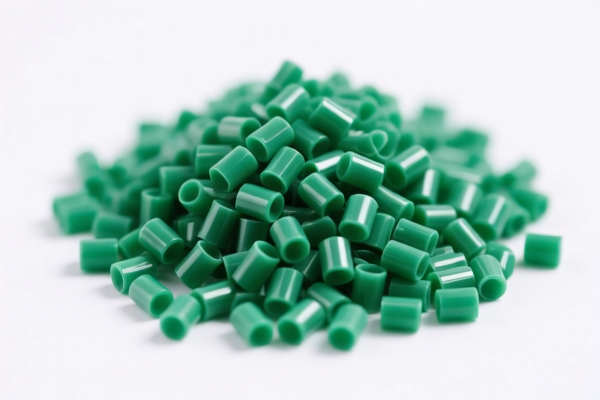
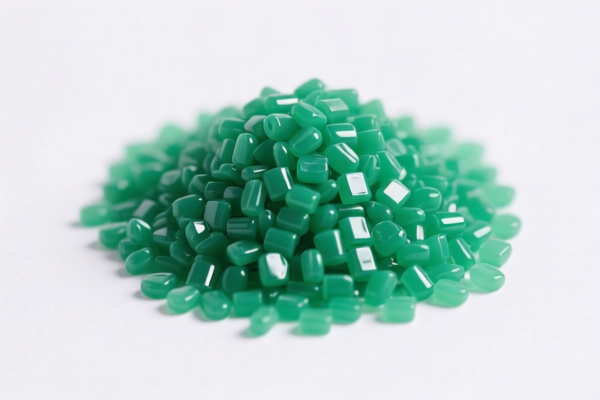
AI分析
🧪 PVC Resin (Non-Suspension Grade) | Vinyl Chloride Polymers
🌐 HS Code Reference & Customs Clearance Guide | 2026 Latest Tariff Analysis | Professional Entry Strategy
📌 I. Product Definition & Classification: What Exactly is "Non-Suspension Grade" PVC?
Polyvinyl Chloride (PVC) resin is one of the most widely used synthetic plastic polymers in the world. However, the manufacturing process significantly impacts its customs classification.
1. Suspension Grade (S-PVC):
Produced via suspension polymerization. This is the most common type (accounting for ~80% of production). It is granular/powdery, easy to handle, and used for rigid products like pipes, profiles, and films. HS Code: 3904.10.00.00
2. Non-Suspension Grades (e.g., Emulsion/Dispersion Grade or Bulk Polymerized): These are NOT produced via standard suspension polymerization. * Emulsion/DISPERSION Grade: Fine powder, used for soft products like coatings, adhesives, synthetic leather, and flexible hoses. * Bulk Polymerized: Used for specialized high-clarity applications.
⚠️ Key Distinction Point: * If the product is standard S-PVC (Suspension) → It falls under Subheading 3904.10. * If the product is Non-Suspension (e.g., Emulsion/DISPERSION type, or "Other") → It falls under Subheading 3904.21 (if non-plasticized) or other 3904 subheadings. * "Non-Suspension" is a critical keyword that triggers a different HS code than standard PVC resin.
📦 II. HS Code Classification Details (Based on Provided Data)
According to your input data, here are the two primary HS Codes applicable to PVC resins, with specific focus on the Non-Suspension category.
| HS Code | Product Description | Applicable Scenario | Key Differentiator |
|--------|--------------------------|-----------------------------|
| 3904.10.00.00 | Polymers of vinyl chloride... Poly(vinyl chloride), not mixed with any other substances | Standard Suspension Grade PVC | Typically S-PVC; Pure PVC; No plasticizers added. |
| 3904.21.00.00 | Polymers of vinyl chloride... Other poly(vinyl chloride): Nonplasticized | Non-Suspension Grades (e.g., Emulsion/DISPERSION, Bulk) | Target Code for your query. Non-Suspension; Pure; No plasticizers. |
🔍 Critical Analysis for "Non-Suspension Grade": * Most "Non-Suspension" PVC resins (like those used for synthetic leather or coatings) are classified under
3904.21.00.00because they are considered "Other poly(vinyl chloride)" distinct from the standard suspension type. * Condition: The resin must be non-plasticized (i.e., pure resin powder, not a pre-mixed compound with plasticizers). If it contains plasticizers, it may fall under different subheadings (e.g.,3904.22or3904.30), but based on the provided data, we only have3904.21and3904.10.
💰 III. 2026 Latest Tariff Rate Breakdown (Detailed Tax Clauses)
✅ Applicable Country: United States (US)
✅ Origin: China (CN) (Assumed based on typical trade context; verify if origin differs)
✅ Effective Time: Current rates as per provided data
🎯 1. 3904.21.00.00 — NON-SUSPENSION PVC RESIN (Nonplasticized)
(This is the most likely code for your "Non-Suspension Grade" product)
| Item | Content |
|---|---|
| Base Tariff Rate | 0.0% |
| Additional Tariff (Section 301/IEEPA) | 0.0% |
| Total Tax Rate | 0.0% |
| Tax Calculation | CIF Value × 0% = $0 |
| De Minimis Eligibility | ❌ No (Plastic resins generally do not qualify for $800 de minimis exemption if subject to other restrictions, but since tariff is 0%, this is less critical unless other regulations apply) |
| Legal Basis | HTSUS 3904.21.00.00 |
📌 Explanation: * Base Rate: The Harmonized Tariff Schedule of the United States (HTSUS) lists "Other poly(vinyl chloride), nonplasticized" at a 0% base duty. * Additional Taxes: According to the provided data, no additional tariffs (such as Section 301 or IEEPA surcharges) are applied to this specific HS code for Chinese origin. * Conclusion: Importing Non-Suspension, Non-Plasticized PVC Resin incurs NO CUSTOMS DUTY under the current provided tax rules. This is a highly favorable classification for cost management.
🎯 2. 3904.10.00.00 — STANDARD SUSPENSION PVC RESIN
(For comparison: If your product is actually Suspension Grade by mistake)
| Item | Content |
|---|---|
| Base Tariff Rate | 0.0% |
| Additional Tariff | 0.0% |
| Total Tax Rate | 0.0% |
| Tax Calculation | CIF Value × 0% = $0 |
📌 Note: Even if misclassified as Suspension Grade, the tax rate is also 0% in this dataset. However, regulatory compliance (misdeclaration) is still a risk.
🛠️ IV. Customs Clearance Practical Advice (Avoiding Pitfalls)
✅ 1. Prepare Essential Documentation (Must-Haves)
| Document | Required? | Notes |
|---|---|---|
| ✅ Product Specification Sheet | ✔️ | Must explicitly state "Non-Suspension Grade" (e.g., Emulsion PVC, DISPERSION Grade). Include K-value, viscosity, and polymerization method. |
| ✅ Certificate of Analysis (COA) | ✔️ | Shows purity, residual vinyl chloride monomer (VCM) levels, and physical properties. |
| ✅ Material Safety Data Sheet (MSDS/SDS) | ✔️ | Required for hazardous material handling (PVC is generally non-hazardous but VCM residue may be regulated). |
| ✅ Commercial Invoice | ✔️ | Clearly describe as: "Non-Suspension Polyvinyl Chloride Resin, Non-Plasticized, Grade XYZ" |
| ✅ Bill of Lading (B/L) | ✔️ | Match description with invoice. |
| ✅ Import License/Permits | ❓ | Check if VCM residue levels require EPA or OSHA compliance documentation. |
✅ 2. Declaration Tips (Key Rules)
🔥 "Specify the Polymerization Method! Name Matters!"
| Scenario | Correct Declaration | Wrong Declaration | Risk |
|---|---|---|---|
| Non-Suspension (Emulsion/DISPERSION) | 3904.21.00.00 "Non-Suspension PVC Resin, Non-Plasticized" |
"PVC Powder" (Too vague) |
High Risk of Misclassification → Potential audits, back-taxes if 301 tariffs later apply. |
| Suspension Grade | 3904.10.00.00 "Suspension Grade PVC Resin" |
"Non-Suspension PVC" | Incorrect → If it is S-PVC, misdeclaration can lead to penalties. |
| Plasticized PVC Compound | Not in data (likely 3904.22 or 3904.30) |
"Non-Plasticized PVC" | Fraudulent → Severe penalties. Ensure no plasticizers are added. |
✅ 3. Special Handling & Compliance
- VCM Residue Limits: The US EPA and OSHA have strict limits on Vinyl Chloride Monomer (VCM) in PVC resin. Ensure your product meets FDA 21 CFR 177.1680 or EPA standards. Provide a VCM Residue Certificate (typically < 1 ppm).
- Packaging: PVC resin is hygroscopic. Ensure packages are sealed and moisture-proof. Damaged packaging may lead to inspection delays.
- No Plasticizers: Confirm that the product is pure resin. If it contains stabilizers, lubricants, or plasticizers, it is a compound, not a "primary form" polymer, and may be classified differently (e.g., as a plastic article or mixture).
🌍 V. Global Market Comparison (2026 Outlook)
| Country/Region | Recommended HS Code | Tariff (China Origin) | Key Certification | Notes |
|---|---|---|---|---|
| 🇺🇸 USA | 3904.21.00.00 |
0% (as per data) | FDA, EPA (VCM) | No additional tariffs in provided data. Verify if Section 301 applies later. |
| 🇨🇳 China | 3904.21.00.00 |
~6-7% | CCC (if applicable) | Standard import duty. |
| 🇪🇺 EU | 3904.21.00 |
6.5% | REACH, RoHS | High regulatory barrier for VCM residue. |
| 🇯🇵 Japan | 3904.21.00 |
5.5% | JIS, PFAS regulations | Strict monitoring of plasticizers. |
📌 Conclusion: * USA offers 0% duty for this specific classification under current data. * Compliance is Key: The biggest risk is not tariff, but product safety compliance (VCM residue).
📌 VI. Common Errors & Pitfalls (Lessons Learned)
❌ Error 1: Declaring "Non-Suspension PVC" as 3904.10.00.00 (Suspension Grade)
👉 Consequence: Misclassification. While tax is same in this data, it may trigger regulatory reviews for wrong chemical properties.
❌ Error 2: Ignoring VCM Residue Certification
👉 Consequence: Product seized by FDA/EPA. PVC resin must meet < 1 ppm VCM in many applications. Provide lab test results!
❌ Error 3: Labeling as "Plasticized PVC" when it is Pure Resin
👉 Consequence: Wrong HS Code (3904.21 vs 3904.22). If labeled incorrectly, customs may reclassify and impose different tariffs.
❌ Error 4: Using "PVC Plastic" as a generic term
👉 Consequence: Customs officers cannot determine if it's resin or compound. Use precise terms: "PVC Resin, Non-Suspension Grade, Non-Plasticized."
✅ Correct Declaration Example:
"Polyvinyl Chloride Resin, Non-Suspension Grade (Emulsion/DISPERSION Type), Non-Plasticized, Pure Polymer, VCM Residue < 0.5 ppm, for use in Synthetic Leather Production"
🎯 VII. Conclusion: Professional Clearance for Cost Efficiency
🎯 Key Takeaway:
🔹 HS Code:
3904.21.00.00for Non-Suspension, Non-Plasticized PVC Resin.
🔹 Tariff: 0% (Base + Additional).
🔹 Critical Compliance: VCM Residue Certificate is mandatory.
🔹 Action: Ensure your specification sheet explicitly states "Non-Suspension" to avoid confusion with Suspension Grade (3904.10).
📌 Pro Tip:
If you are importing large volumes, consider Advance Ruling (CBP Ruling) to confirm the classification of "Non-Suspension Grade" as 3904.21.00.00 before shipment. This eliminates any ambiguity and ensures smooth customs clearance.
📣 Next Steps:
📞 Contact your freight forwarder with the COA and MSDS.
📄 Ensure commercial invoice states "Non-Suspension PVC Resin, Non-Plasticized."
🚀 Enjoy 0% Duty Compliance with Full Safety Documentation!
✨ Accurate Classification Saves Time and Money!
💼 Customs Compliance Starts with Precise Product Description!
用户评价
关于 HS 编码归类
协调制度(HS)是由世界海关组织(WCO)制定的国际贸易商品分类标准。全球 200 多个国家采用 HS 系统作为海关关税、贸易统计和进出口监管的基础。
每个 HS 编码遵循以下层级结构:
- 章(2 位)——商品大类(例如:第 84 章:机器和机械设备)
- 品目(4 位)——章内的更具体分类
- 子目(6 位)——国际通用细分,所有 WCO 成员国统一使用
- 本国细分(8-10 位)——各国自行扩展的细分编码,如美国 HTSUS 10 位编码
正确的 HS 编码归类对于顺利通关、准确缴纳关税和遵守贸易法规至关重要。错误归类可能导致海关延误、多缴关税或罚款。
从CN进口到US时,适用的关税税率可能包括:
- 最惠国(MFN)税率——适用于 WTO 成员国的标准关税税率
- 普通税率——适用于无贸易协定国家
- 贸易救济关税——附加关税,如 301 条款(反倾销)、232 条款(国家安全)或反补贴税
本页内容仅供参考。如需正式归类,请咨询当地海关或持牌报关代理。