PVC Resin Granules (for Pipes)
CN → US| HS编码 | 关税税率 | 原产国 | 目的国 | 文档 |
|---|---|---|---|---|
| 3917290090 | 38.1% | CN | US | 官方文档 |
| 3926909989 | 22.8% | CN | US | 官方文档 |
| 3926909987 | 22.8% | CN | US | 官方文档 |
| 3905290000 | 39.0% | CN | US | 官方文档 |
| 3905210000 | 39.0% | CN | US | 官方文档 |
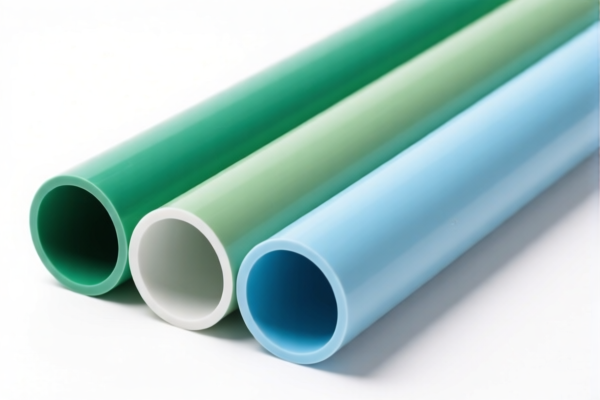
商品图片



AI分析
🏗️ PVC Resin Granules (for Pipes)
🌐 HS Code Reference & Customs Clearance Guide | 2026 Latest Tariff Analysis | Professional Entry Strategy
📌 I. Product Definition & Classification: What Exactly Are "PVC Resin Granules for Pipes"?
PVC Resin Granules are the primary raw material for producing polyvinyl chloride products. While the name specifies "for Pipes," the physical form is granular resin (primary shape), not the finished pipe itself.
In international trade, this distinction is critical: * Raw Material (Resin/Granules): Polymers in primary forms (powders, granules). These are generally classified under Chapter 39 (Plastics and Articles Thereof), specifically within the specific polymer headings (e.g., PVC). * Finished Good (Pipes): Rigid tubes. These are classified under Heading 3917.
⚠️ Key Classification Dilemma:
- If the product is pure PVC resin intended for pipe manufacturing → It is a Plastic Raw Material (Headings 3901-3914).
- If the product is a specific PVC copolymer (e.g., Vinyl Acetate) → It falls under specific copolymer headings (Heading 3905).
- If it is considered an "Other Plastic Article" due to ambiguity in material specificity → It may fall under the "Other" bucket (Heading 3926).
📦 II. HS Code Classification Details (Based on Provided Data)
The following HS Codes are derived from the provided <DATA>. Note that tax rates vary significantly based on the specific chemical composition (ehomopolymer vs. copolymer) and the customs authority's interpretation of the "pipe" designation.
| HS Code | Product Description (Summary) | Key Matching Criteria | Total Tax Rate (US/China Context) |
|---|---|---|---|
| 3917.29.00.90 | Rigid Plastic Pipes | Matches "For Pipes" usage; Copolymer Resin classified as plastic category. | 38.1% |
| 3926.90.99.89 | Other Plastic Articles | "Resin" matches plastic attributes; "Copolymer" is primary form; falls under "Other articles of plastics"兜底 (catch-all) category. | 22.8% |
| 3926.90.99.87 | Other Plastic Articles (Pipes) | "Resin" is plastic; "For Pipes" matches usage logic; no conflict with pipe article characteristics. | 22.8% |
| 3905.29.00.00 | Vinyl Acetate Copolymers (Other) | "VAC" = Vinyl Acetate Copolymer; "Resin" is primary form. | 39.0% |
| 3905.21.00.00 | Vinyl Acetate Copolymers (Water Soluble/Emulsions) | "Copolymer Resin" + "VAC" (Vinyl Acetate); "For Pipes" ignored as it fits primary polymer traits. | 39.0% |
🔍 Critical Observation:
- 3905 Series (39.0%): Applies if the resin is specifically Vinyl Acetate (VAC) based. High risk if the product is standard PVC.
- 3917 Series (38.1%): Applies if customs views the "For Pipes" designation as overriding the raw material status, treating it as a semi-finished pipe article.
- 3926 Series (22.8%): The lowest risk/cost option, treating the item as a generic "Other Plastic Article" or raw material not fitting specific headings.
💰 III. 2026 Latest Tariff Rate Breakdown (Detailed)
✅ Applicable Country: United States (US)
✅ Origin: China (CN)
✅ Effective Date: Post-November 10, 2025
🎯 1. 3917.29.00.90 — Rigid Pipes (Interpretation: Pipe-Ready Resin)
| Item | Detail |
|---|---|
| Base Duty | 3.1% |
| Section 301 Duty | 25.0% |
| Section 122 Duty | 10.0% |
| Total Effective Rate | 38.1% |
| Calculation | CIF Value × 38.1% |
| De Minimis Eligibility | ❌ No (Denied for Section 301/122 goods) |
| Legal Path | Section 301 → Section 122 → HS 3917 |
📌 Analysis:
- This classification is risky. Customs may argue that "Resin Granules" are not "Pipes."
- However, if the product is marketed specifically as "Pipe Compound" or has additives specifically for pipe extrusion, customs might lean here.
- High Tax Impact: 38.1% erodes profit margins significantly.
🎯 2. 3926.90.99.89 / 3926.90.99.87 — Other Plastic Articles (Best Case Scenario)
| Item | Detail |
|---|---|
| Base Duty | 5.3% |
| Section 301 Duty | 7.5% (Note: Data shows 7.5% here, likely a specific preferential or reduced 301 rate for this subheading) |
| Section 122 Duty | 10.0% |
| Total Effective Rate | 22.8% |
| Calculation | CIF Value × 22.8% |
| De Minimis Eligibility | ❌ No |
| Legal Path | Section 301 → Section 122 → HS 3926 |
📌 Analysis:
- This is the most cost-effective classification provided in the data.
- Strategy: Argue that the item is a "Plastic Article" in primary form, or a generic plastic material not specifically listed elsewhere. The "For Pipes" is just an intended use, not a product characteristic defining the HS code.
- Risk: Customs may challenge why it's not under 3901 (PVC Homopolymers). If it is pure PVC, it should be 3901. If 3901 is not in the data, 3926 is the fallback.
🎯 3. 3905.29.00.00 / 3905.21.00.00 — Vinyl Acetate Copolymers (VAC)
| Item | Detail |
|---|---|
| Base Duty | 4.0% |
| Section 301 Duty | 25.0% |
| Section 122 Duty | 10.0% |
| Total Effective Rate | 39.0% |
| Calculation | CIF Value × 39.0% |
| De Minimis Eligibility | ❌ No |
📌 Analysis:
- ONLY APPLICABLE if the resin is explicitly Vinyl Acetate Copolymer (VAC).
- If your product is standard PVC (Polyvinyl Chloride), do not use this code. Misclassification can lead to severe penalties.
- "VAC" must be clearly stated in the commercial invoice and product description.
🛠️ IV. Customs Clearance Practical Advice (Avoiding Pitfalls)
✅ 1. Essential Documentation Checklist
| Document | Requirement | Why It Matters |
|---|---|---|
| Product Specification Sheet | Must state Chemical Composition (e.g., 100% PVC vs. PVC/VAC Copolymer). | Determines if you use 3901/3905 vs. 3926. |
| Physical Form Declaration | Clearly state: "Granules/Powder (Primary Shape)". | Distinguishes from "Finished Pipes" (3917). |
| Intended Use Statement | "Intended for extrusion into pipes." | Supports the "For Pipes" link but doesn't force 3917 classification. |
| Commercial Invoice | Must match HS Code description exactly. | E.g., "PVC Resin Granules" NOT "PVC Pipes." |
| Certificate of Origin (CO) | Required for US Customs. | Proves Chinese origin for Section 301/122 assessment. |
✅ 2. Classification Strategy (The "Golden Rule")
🔥 "Form Over Function: Declare the Material, Not the Future Product!"
| Scenario | Recommended HS Code | Reasoning |
|---|---|---|
| Pure PVC Resin Granules | 3901.20 (Not in data, but standard) | Standard PVC is a homopolymer. If excluded, use 3926 as fallback. |
| VAC Copolymer Granules | 3905.29.00.00 | "VAC" is explicitly Vinyl Acetate. |
| Generic Plastic Resin (Unclear Type) | 3926.90.99.89 | "Other plastic articles" serves as the catch-all for ambiguous primary forms. |
| Pre-mixed Pipe Compound (with Additives) | 3917.29.00.90 | If additives make it a "compound" ready for pipe extrusion, customs may view it as a semi-finished pipe. |
⚠️ Warning:
- Do not write "PVC Pipes" in the product name. Write "PVC Resin Granules (Intended for Pipe Manufacturing)."
- Mislabeling granules as "pipes" will trigger a demand for proof of finish, leading to delays or reclassification.
✅ 3. Special Case Handling
| Situation | Action |
|---|---|
| Product is a Copolymer | If it contains Vinyl Acetate, use 3905. Provide lab test results proving VAC content. |
| Product is Pure PVC | If 3901 is not an option in your system, use 3926.90.99.89 to minimize tax (22.8% vs 38.1%). Argue "Other Plastic Article." |
| Customs Inquiry | Provide a Flow Chart: Raw Resin → Extrusion → Pipe. Emphasize the current state is Resin. |
🌍 V. Global Market Comparison (2026)
| Country | Recommended HS Code | Estimated Duty (China Origin) | Notes |
|---|---|---|---|
| 🇺🇸 USA | 3926.90.99.89 |
22.8% (Best Case) | Includes Section 301 (7.5%) + 122 (10%). Avoid 3905 unless VAC. |
| 🇺🇸 USA | 3917.29.00.90 |
38.1% | High risk if classified as "Pipe Article." |
| 🇨🇳 China | 3901.10 |
0-5% | Low duty for raw PVC resin. |
| 🇪🇺 EU | 3901.10 |
6.5% | Standard for PVC homopolymers. |
| 🇮🇳 India | 3901.10 |
7.5-10% | High anti-dumping duties may apply to Chinese PVC. |
📌 Conclusion:
- The USA is the most challenging market due to Section 301 and Section 122 tariffs.
- Maximize Cost Savings by classifying under 3926 (22.8%) rather than 3917 (38.1%) or 3905 (39.0%), provided the chemical composition supports it.
📌 VI. Common Mistakes & Pitfalls (Lessons Learned)
❌ Mistake 1: Naming the product "PVC Pipes" in the invoice.
👉 Result: Customs classifies as 3917.29.00.90 → 38.1% Tax.
👉 Fix: Name it "PVC Resin Granules."
❌ Mistake 2: Using 3905 codes for standard PVC.
👉 Result: Misclassification penalty + back taxes. "VAC" is not "PVC."
👉 Fix: Verify chemical structure. Only use 3905 for Vinyl Acetate Copolymers.
❌ Mistake 3: Ignoring Section 122.
👉 Result: Underpayment of 10%.
👉 Fix: Always include 122 in total tax calculation for Chinese plastic imports to the US.
🎯 VII. Conclusion: Professional Declaration, Lower Costs, Faster Clearance
🎯 Key Takeaway:
🔹 "Resin is Resin, Not Pipe!"
🔹 Aim for3926.90.99.89(22.8%) if the product is not strictly VAC.
🔹 Use3905(39.0%) ONLY if it is VAC Copolymer.
🔹 Avoid3917(38.1%) unless it is a pre-formed pipe article.
📌 Pro Tip:
If your product is standard PVC, and 3901 is not an option, argue for 3926 to save 15.3% in taxes compared to the pipe classification. Provide lab reports to prove it is a primary plastic form, not a finished good.
📣 Immediate Action Required:
1. Check Chemical Composition: Is it Pure PVC or VAC?
2. Update Invoice: Change "Pipes" to "Resin Granules (For Pipe Use)."
3. Verify HS Code: Choose 3926.90.99.89 for lowest cost (22.8%) unless VAC.
4. Prepare Lab Tests: To support classification if challenged.
✨ Precision in Classification = Profit in Your Pocket!
💼 Don't let tariffs eat your margin. Declare correctly.
用户评价
关于 HS 编码归类
协调制度(HS)是由世界海关组织(WCO)制定的国际贸易商品分类标准。全球 200 多个国家采用 HS 系统作为海关关税、贸易统计和进出口监管的基础。
每个 HS 编码遵循以下层级结构:
- 章(2 位)——商品大类(例如:第 84 章:机器和机械设备)
- 品目(4 位)——章内的更具体分类
- 子目(6 位)——国际通用细分,所有 WCO 成员国统一使用
- 本国细分(8-10 位)——各国自行扩展的细分编码,如美国 HTSUS 10 位编码
正确的 HS 编码归类对于顺利通关、准确缴纳关税和遵守贸易法规至关重要。错误归类可能导致海关延误、多缴关税或罚款。
从CN进口到US时,适用的关税税率可能包括:
- 最惠国(MFN)税率——适用于 WTO 成员国的标准关税税率
- 普通税率——适用于无贸易协定国家
- 贸易救济关税——附加关税,如 301 条款(反倾销)、232 条款(国家安全)或反补贴税
本页内容仅供参考。如需正式归类,请咨询当地海关或持牌报关代理。