PVC Shrink Film
CN → US| HS编码 | 关税税率 | 原产国 | 目的国 | 文档 |
|---|---|---|---|---|
| 3920435000 | 39.2% | CN | US | 官方文档 |
| 3920992000 | 39.2% | CN | US | 官方文档 |
商品图片


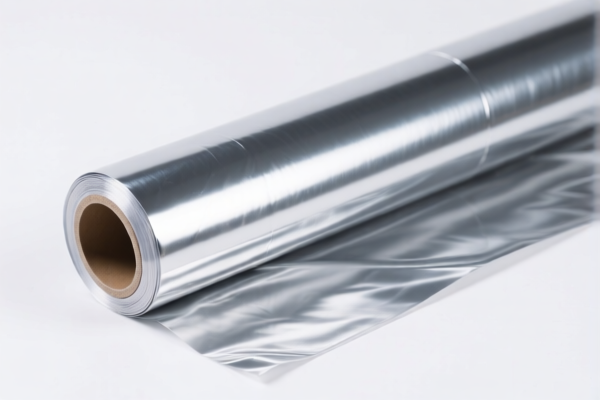

AI分析
📦 PVC Shrink Film (Polyvinyl Chloride)
🌐 HS Code Reference & Customs Clearance Guide | 2026 Latest Tariff Analysis | Professional Clearance Strategy
📌 1. Product Definition & Classification: What is "PVC Shrink Film"?
PVC Shrink Film is a flexible plastic packaging material made from Polyvinyl Chloride (PVC). It is widely used in food, beverage, cosmetic, and industrial packaging to wrap products, providing protection, tamper evidence, and aesthetic presentation. When heat is applied, the film shrinks tightly around the product.
In international trade, this product falls under Chapter 39 (Plastics and Articles Thereof), specifically under heading 3920 (Other plates, sheets, film, foil and strip, of plastics). The exact classification depends on: 1. Plastic Type: Is it Vinyl Chloride (PVC) or another plastic? 2. Structure: Is it cellular (foamed) or non-cellular? (Shrink films are non-cellular). 3. Reinforcement: Is it reinforced, laminated, or supported? (Standard shrink films are usually not reinforced/laminated). 4. Plasticizer Content: Does it contain ≥6% plasticizers by weight? (Most flexible PVC films do).
⚠️ Key Distinction Points:
- If the film is made of PVC (Vinyl Chloride) and is non-cellular, it likely falls under 3920.43.
- If the film is made of other plastics (e.g., PP, PE, PET) despite being called "shrink film," it falls under 3920.99.
- If the PVC film is cellular (foamed) or reinforced/laminated, it does NOT fit the descriptions below and belongs to different headings (e.g., 3921, 3919).
📦 2. HS Code Classification Details (2026 Latest Tariff Authority Comparison)
| HS Code | Product Description | Applicable Scenario | Plastic Type | Plasticizer Content | Reinforced/Laminated? |
|---|---|---|---|---|---|
3920.43.50.00 |
PVC Shrink Film (Standard Flexible) | Food packaging, beverage bundling, cosmetic wrapping | Polymers of Vinyl Chloride (PVC) | ≥ 6% by weight | ❌ No |
3920.99.20.00 |
Non-PVC Shrink Film (PP/PE/PET) | Alternative shrink films made from Polypropylene (PP) or Polyethylene (PE) | Other Plastics | N/A (Not PVC) | ❌ No |
🔍 Critical Reminder:
- PVC Shrink Film is classified under 3920.43.50.00 because it is "Of polymers of vinyl chloride" and typically contains plasticizers to make it flexible for shrinking.
- Non-PVC Shrink Films (like OPP or BOPP) are classified under 3920.99.20.00. Do NOT misclassify PP/PE films as PVC, as the HS Code differs.
- Both categories are non-cellular and not reinforced/laminated.
💰 3. 2026 Latest Tariff Rate Details (Including Surcharge Taxes)
✅ Applicable Country: United States (US)
✅ Origin: China (CN)
✅ Effective Date: Current rates as per 2026 tariff schedule
🎯 1. 3920.43.50.00 —— PVC Shrink Film (Vinyl Chloride Based)
| Item | Content |
|---|---|
| Base Tariff Rate | 4.2% |
| Section 301 Surcharge (USITC) | +25.0% |
| Total Tariff Rate | 29.2% |
| Tax Calculation | CIF Value × 29.2% |
| De Minimis Exemption | ❌ Not Eligible (Section 301 tariffs apply to shipments ≥ $800 as well, though enforcement varies; generally, high-value commercial shipments are strictly enforced) |
| Legal Basis Path | USITC:3920.43.50.00 → USITC:Footnote 9903.88.01 (Section 301) |
📌 Explanation:
- The 4.2% is the standard Most Favored Nation (MFN) base rate for PVC plates, sheets, and film.
- The +25.0% is the Section 301 tariff imposed on Chinese-origin PVC products.
- Total: 29.2%. This is a high tariff cost that must be factored into pricing.
🎯 2. 3920.99.20.00 —— Non-PVC Shrink Film (Other Plastics)
| Item | Content |
|---|---|
| Base Tariff Rate | 4.2% |
| Section 301 Surcharge (USITC) | +25.0% |
| Total Tariff Rate | 29.2% |
| Tax Calculation | CIF Value × 29.2% |
| De Minimis Exemption | ❌ Not Eligible |
| Legal Basis Path | USITC:3920.99.20.00 → USITC:Footnote 9903.88.01 (Section 301) |
📌 Note:
- Even though the base material is different (e.g., PP or PE), the total tax rate is identical (29.2%).
- Whether it is PVC or other plastics, if it is a non-cellular, non-reinforced plastic film from China, it faces the same 29.2% duty burden.
🛠️ 4. Customs Clearance Practical Advice (Real-World Pitfall Avoidance)
✅ 1. Required Documentation Checklist
| Document | Must Provide? | Notes |
|---|---|---|
| ✅ Product Specification Sheet | ✔️ | Must specify: Plastic type (PVC vs. PP/PE), thickness (microns), shrink ratio, plasticizer content. |
| ✅ Commercial Invoice | ✔️ | Clearly state "Shrink Film, PVC, Non-cellular, Flexible." Avoid vague terms like "Plastic Wrap." |
| ✅ Certificate of Origin (CO) | ✔️ | Essential for verifying Chinese origin and applying Section 301 tariffs. |
| ✅ Packaging List | ✔️ | Detail rolls, weight, dimensions. |
| ✅ Material Safety Data Sheet (MSDS) | ✔️ | Required for chemical transport compliance. |
✅ 2. Declaration Tips (Key Mnemonics)
🔥 "Be Specific: PVC or Other? Non-Cellular? No Reinforcement!"
| Scenario | Correct Declaration | Incorrect Practice | Consequence |
|---|---|---|---|
| PVC Shrink Film | 3920.43.50.00Desc: "PVC Shrink Film, non-cellular, not reinforced, with ≥6% plasticizers" |
Describing as "Plastic Sheet" | Risk of misclassification audit |
| PP/PET Shrink Film | 3920.99.20.00Desc: "Polypropylene Shrink Film, non-cellular, not reinforced" |
Calling it "PVC Film" | Customs will reject/penalize for false description |
| Laminated PVC Film | NOT 3920.43.50.00Look at Chapter 3921 or 3919 |
Declaring as 3920.43.50.00 |
Incorrect HS Code! Laminated films are excluded from 3920. |
| Foamed PVC Film | NOT 3920.43.50.00Look at Chapter 3921 |
Declaring as 3920.43.50.00 |
Incorrect HS Code! Cellular films are excluded from 3920. |
✅ 3. Special Considerations
| Situation | Handling Advice |
|---|---|
| Mixed Container (PVC + Non-PVC) | Declare separately. Do not mix HS Codes on one line if possible. Use separate line items for 3920.43.50.00 and 3920.99.20.00. |
| High Plasticizer Content (>6%) | Ensure documentation confirms ≥6% plasticizers for 3920.43. If <6%, it may fall under 3920.43.10 (different subheading), but most flexible shrink films are >6%. |
| Reinforced/Laminated Films | If the shrink film is laminated with paper or other plastic, it is NOT 3920. It may fall under 3921 (Laminated plastics). Re-classify accordingly! |
| Rolls vs. Sheets | Both are covered under "film, strip, sheets." Ensure packaging is clearly labeled as "rolls" if applicable. |
🌍 5. Global Market Comparison (2026 Latest)
| Country/Region | Recommended HS Code | Tariff (China Origin) | Certification Requirements | Notes |
|---|---|---|---|---|
| 🇺🇸 USA | 3920.43.50.00 or 3920.99.20.00 |
29.2% (Base 4.2% + 25% Sec 301) | FDA (if food contact), ASTM | High tariff cost |
| 🇨🇳 China | 3920.43.50.00 or 3920.99.20.00 |
4.2% (Import Tariff) | GB Standards | Lower import duty |
| 🇪🇺 EU | 3920.43.00 or 3920.99.00 |
6.5% (Standard MFN) | REACH, FDA for food contact | No Section 301 equivalent |
| 🇬🇧 UK | 3920.43.00 or 3920.99.00 |
6.5% (Standard MFN) | UKCA, REACH | Post-Brexit alignment with EU |
| 🇯🇵 Japan | 3920.43.00 or 3920.99.00 |
5.0% - 6.0% | JIS Standards | Competitive market |
📌 Conclusion:
- The US market is significantly more expensive for Chinese PVC shrink film due to the 25% Section 301 tariff.
- For non-US markets, tariffs are lower (typically 4-7%), making exports to EU, Japan, or ASEAN more cost-effective.
📌 6. Common Errors & Pitfalls (Lessons Learned)
❌ Error 1: Calling "Laminated Shrink Film" a "PVC Film" under 3920.43.50.00
👉 Consequence: Customs will reject, as laminated films are excluded from 3920. Must use 3921.
❌ Error 2: Declaring PP Shrink Film as "PVC" to fit a different duty rate
👉 Consequence: Both have 29.2% total duty, but false declaration leads to fines and delays. Always specify actual material.
❌ Error 3: Ignoring "Non-Cellular" requirement
👉 Consequence: If the film is foamed (cellular), it is NOT 3920. It belongs to 3921.99 or similar. Misclassification leads to back-taxes.
❌ Error 4: Not specifying Plasticizer Content
👉 Consequence: For PVC films, plasticizer content determines the subheading. If uncertain, provide lab test results showing ≥6% plasticizers for 3920.43.50.00.
✅ Correct Declaration Example:
"PVC Shrink Film, Non-Cellular, Not Reinforced, Not Laminated, Flexible, Contains 8% Plasticizers by Weight, Rolls, 12 Microns Thickness, For Food Packaging"
🎯 7. Conclusion: Professional Classification Saves Money!
🎯 Remember the Key Points:
🔹 "PVC Shrink = 3920.43.50.00" (If Non-Cellular, Not Reinforced)
🔹 "Other Plastic Shrink = 3920.99.20.00" (If Non-Cellular, Not Reinforced)
🔹 "Total US Tariff = 29.2%" (4.2% Base + 25% Section 301)
🔹 "Check for Lamination!" If laminated, do NOT use 3920.
📌 Pro Tip:
If you are exporting non-PVC shrink films (e.g., BOPP) to the US, the total tax is still 29.2%. Therefore, material substitution does not reduce tariff costs for China-origin goods to the US. Consider supply chain diversification (e.g., sourcing from Vietnam or Thailand) to avoid Section 301 tariffs.
📣 Immediate Action:
📞 Contact your customs broker to verify the exact plastic composition.
📄 Request a Pre-Ruling from US Customs if the product is complex (e.g., multi-layer).
🚀 Plan your logistics with the 29.2% duty cost in mind to maintain profit margins.
✨ Professional Clearance Starts with Accurate Classification!
💼 Every percentage point matters in global trade!
用户评价
关于 HS 编码归类
协调制度(HS)是由世界海关组织(WCO)制定的国际贸易商品分类标准。全球 200 多个国家采用 HS 系统作为海关关税、贸易统计和进出口监管的基础。
每个 HS 编码遵循以下层级结构:
- 章(2 位)——商品大类(例如:第 84 章:机器和机械设备)
- 品目(4 位)——章内的更具体分类
- 子目(6 位)——国际通用细分,所有 WCO 成员国统一使用
- 本国细分(8-10 位)——各国自行扩展的细分编码,如美国 HTSUS 10 位编码
正确的 HS 编码归类对于顺利通关、准确缴纳关税和遵守贸易法规至关重要。错误归类可能导致海关延误、多缴关税或罚款。
从CN进口到US时,适用的关税税率可能包括:
- 最惠国(MFN)税率——适用于 WTO 成员国的标准关税税率
- 普通税率——适用于无贸易协定国家
- 贸易救济关税——附加关税,如 301 条款(反倾销)、232 条款(国家安全)或反补贴税
本页内容仅供参考。如需正式归类,请咨询当地海关或持牌报关代理。