PVC Textile Composite Floor Mat
CN → US| HS编码 | 关税税率 | 原产国 | 目的国 | 文档 |
|---|---|---|---|---|
| 5903102090 | 35.0% | CN | US | 官方文档 |
| 9401993580 | 35.0% | CN | US | 官方文档 |
| 9401999021 | 35.0% | CN | US | 官方文档 |
| 5903102500 | 42.5% | CN | US | 官方文档 |
| 3926305000 | 22.8% | CN | US | 官方文档 |
商品图片
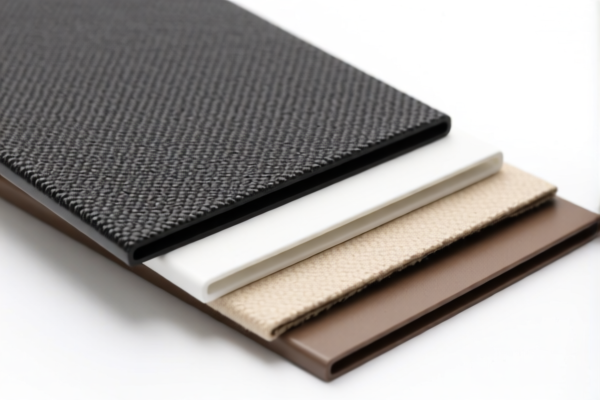
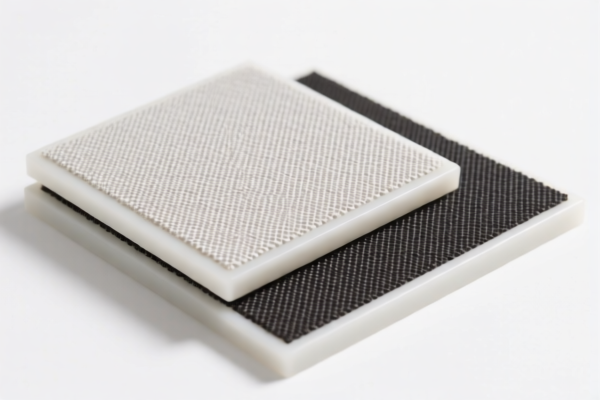


AI分析
🧘♂️ PVC Textile Composite Floor Mat (Floor Coverings & Mattress Supports)
🌐 HS Code Reference & Customs Clearance Guide | 2026 Latest Tariff Analysis | Professional Entry Strategy
📌 I. Product Definition & Classification: What is a "PVC Textile Composite Floor Mat"?
In international trade, a PVC Textile Composite Floor Mat is typically classified under Heading 9404 (Mattresses, supports for mattresses, and seat parts; articles of bedding and similar furnishing fittings). Specifically, it often falls under 9404.90 (Other articles) as a "Seat Part" or "Mattress Support/Accessory" depending on its specific use and structure, rather than purely as a textile or plastic sheet.
⚠️ Key Distinction:
- If the mat is primarily used as a vehicle floor covering or general floor covering without structural support functions, it might be misclassified under textiles (Chapter 59) or plastics (Chapter 39). However, US Customs (CBP) often views thick, composite floor mats for furniture or specific applications as furnishing accessories. - If it is soft, flexible, and primarily textile-based with PVC coating, it may be classified under Chapter 59. - Crucial Note: The provided data suggests conflicting classifications between Chapter 59 (Textile Materials), Chapter 39 (Plastics), and Chapter 94 (Furniture Accessories). This ambiguity leads to vastly different tax liabilities.
📦 II. HS Code Classification Details (Based on Provided Data)
The following HS Codes are derived directly from the provided dataset. Each represents a different customs interpretation of the product's "principal character" (textile vs. plastic vs. furniture part).
| HS Code | Product Description | Classification Logic | Total Tax Rate |
|---|---|---|---|
5903.10.20.90 |
PVC-impregnated, coated, or covered textile fabrics; Other textile materials impregnated, coated, covered or laminated with PVC | Textile Logic: Classifies the mat as a textile fabric modified with PVC. The "composite" nature is treated as a textile base with PVC application. | 35.0% |
9401.99.35.80 |
Parts of seats (excluding headsrests); Other plastic parts | Seat Part Logic: Classifies the mat as a part of a seat/furniture. The material is deemed to fall under the "rubber or plastic" category for furniture parts. | 35.0% |
9401.99.90.21 |
Parts of seats; Other parts of seats, with PVC textile composite material | Furniture Accessory Logic: A specific sub-category for seat parts made of PVC textile composite. Highlights the "composite" nature and "furniture" end-use. | 35.0% |
5903.10.25.00 |
PVC-covered textile fabrics; Other | Base Textile Logic: Similar to 5903.10.20.90 but potentially a different sub-category for PVC textile composites, possibly implying a higher base duty rate. | 42.5% |
3926.30.50.00 |
Other articles of plastics and articles of other materials of heading 3901 to 3914; Other plastic articles | Plastic Logic: Classifies the mat primarily as a plastic article (PVC) used for furniture/accessories. Ignores the textile backing in terms of principal character. | 22.8% |
💰 III. 2026 Latest Tariff Rate Breakdown (Including Supplementary Duties)
✅ Applicable Country: United States (US)
✅ Country of Origin: China (CN)
✅ Effective Date: Tariffs include 301 Section 25% duties + IEEPA 10% duties (where applicable) + Base Duties.
🎯 1. Textile-Based Classifications (5903.10.20.90 & 5903.10.25.00)
These classifications treat the product as a textile material with PVC coating.
| HS Code | Base Duty | Section 301 (25%) | IEEPA (10%) | Total Duty |
|---|---|---|---|---|
5903.10.20.90 |
0.0% | 25.0% | 10.0% | 35.0% |
5903.10.25.00 |
7.5% | 25.0% | 10.0% | 42.5% |
📌 Explanation:
- 5903.10.20.90 has a 0% base duty, resulting in a 35% total.
- 5903.10.25.00 has a 7.5% base duty, resulting in a 42.5% total.
- Risk: If CBP determines the product is primarily PVC (plastic), classifying it under Chapter 59 may lead to reclassification and underpayment penalties.
🎯 2. Furniture Part Classifications (9401.99.35.80 & 9401.99.90.21)
These classifications treat the mat as a part of a seat/furniture.
| HS Code | Base Duty | Section 301 (25%) | IEEPA (10%) | Total Duty |
|---|---|---|---|---|
9401.99.35.80 |
0.0% | 25.0% | 10.0% | 35.0% |
9401.99.90.21 |
0.0% | 25.0% | 10.0% | 35.0% |
📌 Explanation:
- Both codes have a 0% base duty (or very low, effectively 0 in this summary).
- Total duty is 35.0% due to 25% (Section 301) + 10% (IEEPA).
- Advantage: If the product is indeed a "seat part" or "furniture accessory," this is a competitive rate compared to the 42.5% textile option.
🎯 3. Plastic Article Classification (3926.30.50.00)
This classification treats the mat as a plastic article.
| HS Code | Base Duty | Section 301 (25%) | IEEPA (10%) | Total Duty |
|---|---|---|---|---|
3926.30.50.00 |
5.3% | 7.5%* | 10.0% | 22.8% |
📌 Explanation:
- Base Duty: 5.3%.
- Section 301 Duty: 7.5% (Note: Some plastic articles under 3926 may have lower 301 rates than others, or this data reflects a specific preferential or lower rate for this subheading).
- IEEPA Duty: 10.0%.
- Total: 22.8%.
- ⚠️ Critical Warning: If CBP agrees this is a "plastic article," 22.8% is the LOWEST rate. However, if the product has significant textile content, CBP may reject this classification, arguing the textile provides the "principal character."
🛠️ IV. Customs Clearance Practical Advice (Battle-Tested Pitfall Avoidance)
✅ 1. Preparation Checklist (Non-Negotiable)
| Document | Required | Explanation |
|---|---|---|
| ✅ Product Specifications | ✔️ | Must detail: PVC thickness, textile backing type (e.g., polyester, nylon), weight per sq. meter, and specific use (e.g., "auto floor mat," "furniture foot pad," "gym mat"). |
| ✅ Material Composition Breakdown | ✔️ | Exact % of PVC vs. Textile. This determines if Chapter 39, 59, or 94 applies. |
| ✅ Product Photos | ✔️ | Clear images of cross-section, surface texture, and packaging. |
| ✅ Commercial Invoice | ✔️ | Must clearly state the HS Code and product name. Avoid vague terms like "Mat." Use "PVC-Coated Textile Floor Mat, for Furniture Use." |
| ✅ Packing List | ✔️ | Details unit weight and dimensions. |
| ✅ Country of Origin Certificate | ✔️ | Mandatory for IEEPA and Section 301 duty calculation. |
✅ 2. Classification Strategy (Key Mantra)
🔥 "Principal Character Determines Chapter: Textile Base? Go 59. Plastic Dominant? Go 39. Furniture Part? Go 94."
| Scenario | Recommended HS Code | Reasoning |
|---|---|---|
| Thick, rigid mat, primarily PVC with textile backing for adhesion | 3926.30.50.00 (22.8%) |
Plastic character dominates. Lowest tax. High risk of CBP challenge if textile is visible/thick. |
| Soft, flexible mat, textile is the main structural component, PVC is a coating | 5903.10.20.90 (35.0%) |
Textile character dominates. Safe but higher tax than plastic. |
| Mat explicitly marketed as a "Seat Part" or "Furniture Accessory" | 9401.99.90.21 (35.0%) |
Use-based classification. If the mat is designed to be installed in a specific chair/car seat, this is strong. |
✅ 3. Special Considerations
| Situation | Handling Advice |
|---|---|
| OEM Custom Mats | Provide end-user design specs. If designed for a specific car seat or office chair, argue for 9401 classification. |
| Mixed Materials | If the textile backing is more than 50% by weight or provides essential structural integrity, argue for Chapter 59. If PVC is >50% by weight or volume, argue for Chapter 39. |
| IEEPA 10% Duty | All codes listed above include the 10% IEEPA duty for Chinese-origin goods. There is no exemption for floor mats under current policies. |
| Section 301 Duty | The 25% (or 7.5% for some plastics) applies. Ensure the product is not excluded from Section 301 (most textiles/plastics are NOT excluded). |
🌍 V. Global Market Comparison (2026 Update)
| Country/Region | Recommended HS Code | Estimated Duty | Notes |
|---|---|---|---|
| 🇺🇸 USA | 3926.30.50.00 (if plastic) |
22.8% | Lowest rate. Requires strong plastic-character argument. |
| 🇪🇺 EU | 3926.90 or 5903.10 |
~6-12% + VAT | EU may classify differently; check local national codes. |
| 🇨🇳 China | 3926.90 or 5903.10 |
5-15% | Import duties vary by specific subheading. |
| 🇬🇧 UK | 3926.90 or 5903.10 |
~6% | Post-Brexit tariffs may differ from EU. |
📌 Conclusion for US Importers:
- Goal: Aim for3926.30.50.00(22.8%) to save 12.2% compared to textile classifications.
- Strategy: Emphasize PVC content, plastic manufacturing process, and non-textile end-use in documentation.
- Risk Mitigation: If the textile is very prominent,5903.10.20.90(35.0%) is safer than risking an audit for the 22.8% rate.
📌 VI. Common Errors & Pitfalls (Blood Lessons)
❌ Error 1: Classifying as 5903.10.25.00 (42.5%) without justification.
👉 Consequence: Overpaying by 7.5% vs. 5903.10.20.90. Always check the specific subheading for "other" vs. specific PVC types.
❌ Error 2: Using 3926.30.50.00 (22.8%) for a heavily textile-based mat.
👉 Consequence: CBP reclassification to Chapter 59 or 94, leading to back duties, interest, and penalties.
❌ Error 3: Ignoring IEEPA 10% duty.
👉 Consequence: Incorrect duty calculation. All Chinese-origin PVC/Textile composites are subject to this 10% surcharge.
❌ Error 4: Vague Product Description.
👉 Consequence: "PVC Mat" is insufficient. Must specify "PVC Textile Composite Floor Mat for Automotive Use" or "for Furniture."
✅ Correct Practice:
"PVC-Coated Polyester Textile Floor Mat, 5mm Thick, for Vehicle Interior Use, China Origin"
🎯 VII. Conclusion: Precision in Classification Saves Money
🎯 Key Takeaway:
🔹 Plastic Character? →
3926.30.50.00→ 22.8% (Best Rate)
🔹 Textile Character? →5903.10.20.90→ 35.0% (Safe Rate)
🔹 Furniture Part? →9401.99.90.21→ 35.0% (Use-Based Rate)
📌 Pro Tip:
If your mat is primarily PVC (e.g., vinyl flooring, plastic-backed mats), fight for the 3926 classification. If it is primarily textile (e.g., carpet with PVC backing), accept the 5903 classification. Do not attempt to force a 3926 classification on a textile-heavy product without strong material evidence.
📣 Immediate Action:
📞 Consult a customs broker with your material composition sheet.
🚀 Apply for an Advance Ruling (Pre-classification) with US CBP to lock in the HS Code and avoid post-clearance audits.
✨ Professional Clearance Starts with Accurate Classification!
💼 Every Percentage Point of Duty Matters!
用户评价
关于 HS 编码归类
协调制度(HS)是由世界海关组织(WCO)制定的国际贸易商品分类标准。全球 200 多个国家采用 HS 系统作为海关关税、贸易统计和进出口监管的基础。
每个 HS 编码遵循以下层级结构:
- 章(2 位)——商品大类(例如:第 84 章:机器和机械设备)
- 品目(4 位)——章内的更具体分类
- 子目(6 位)——国际通用细分,所有 WCO 成员国统一使用
- 本国细分(8-10 位)——各国自行扩展的细分编码,如美国 HTSUS 10 位编码
正确的 HS 编码归类对于顺利通关、准确缴纳关税和遵守贸易法规至关重要。错误归类可能导致海关延误、多缴关税或罚款。
从CN进口到US时,适用的关税税率可能包括:
- 最惠国(MFN)税率——适用于 WTO 成员国的标准关税税率
- 普通税率——适用于无贸易协定国家
- 贸易救济关税——附加关税,如 301 条款(反倾销)、232 条款(国家安全)或反补贴税
本页内容仅供参考。如需正式归类,请咨询当地海关或持牌报关代理。