PVC Wall Covering with Man made Fiber Backing
CN → US| HS编码 | 关税税率 | 原产国 | 目的国 | 文档 |
|---|---|---|---|---|
| 3918103110 | 39.2% | CN | US | 官方文档 |
| 3918103150 | 39.2% | CN | US | 官方文档 |
商品图片
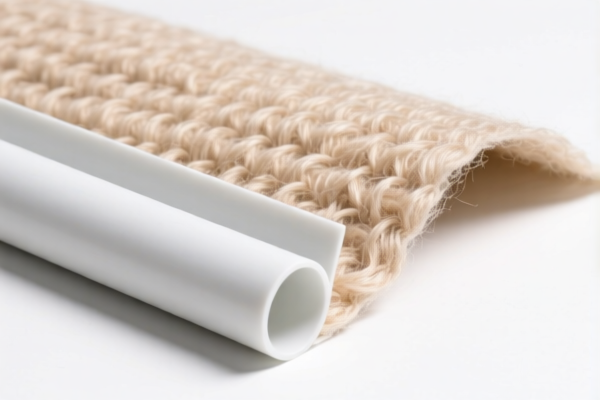
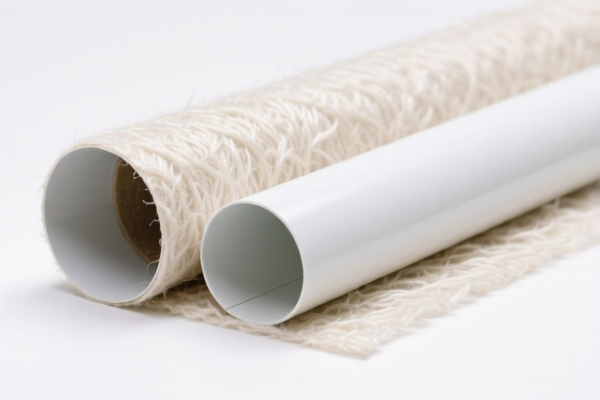
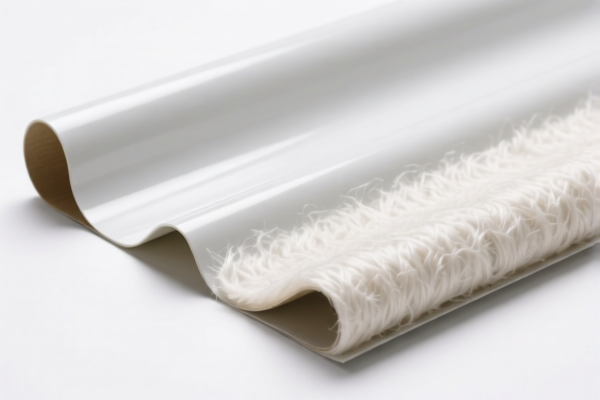
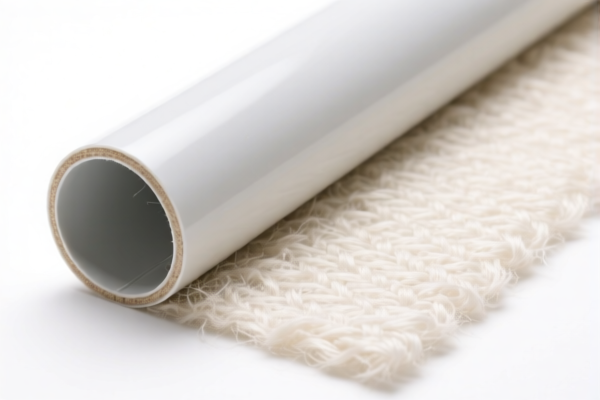
AI分析
🏠 PVC Wall Coverings with Man-Made Fiber Backing (The "Plastic Wallpaper" Analysis)
🌐 HS Code Reference & Customs Clearance Guide | 2026 Latest Tariff Resolution | Specialized Clearance Strategy
📌 I. Product Definition & Classification: What Exactly Are "PVC Wall Coverings"?
PVC wall coverings are decorative materials used for interior walls. In international trade, they are strictly defined as plastics products rather than textiles or paper, even if they have a fabric backing.
Key Components: 1. Base Material: Polymers of Vinyl Chloride (PVC) – This is the dominant component (>70% by weight). 2. Backing: Textile fibers, specifically Man-Made Fibers (e.g., polyester, nylon). 3. Form: Rolls or Tiles.
⚠️ Critical Distinction:
- If the plastic content is >70% by weight → It is classified as a Plastic Product (Chapter 39), NOT a textile.
- If the backing is Woven vs. Other (non-woven/needle-punched) matters for the specific HS Code subheading.
- Do NOT classify under Textiles (Chapter 59) or Paper (Chapter 48) unless the plastic layer is negligible, which is rare for "PVC Wall Coverings."
📦 II. HS Code Classification Details (2026 Latest Tariff Authority)
Based on the provided data, these products fall under HS Code 3918.10. The specific subcodes depend on the construction of the backing.
| HS Code | Product Description | Key Characteristics | Backing Type |
|---|---|---|---|
3918.10.31.10 |
PVC Wall Coverings with Backing of Man-Made Fibers: Woven | Over 70% plastic by weight; Backing is Woven textile. | ✅ Woven |
3918.10.31.50 |
PVC Wall Coverings with Backing of Man-Made Fibers: Other | Over 70% plastic by weight; Backing is Not Woven (e.g., non-woven, felt, spunlace). | ❌ Non-Woven |
🔍 Focus Reminder:
- Both codes require the product to be Wall or Ceiling Coverings made of Polymers of Vinyl Chloride.
- The Backing must be Man-Made Fibers (synthetic). Natural fibers (cotton/wool) would fall under different subheadings (not in the provided data).
- "Over 70 percent by weight of plastics" is a mandatory condition for these specific codes.
💰 III. 2026 Latest Tariff Rate Analysis (Detailed Tax Breakdown)
✅ Applicable Country: United States (US)
✅ Origin: China (CN)
✅ Effective Date: Post-2025 Policy (Based on current 0.0% data)
🎯 1. 3918.10.31.10 — PVC Wall Coverings, Woven Backing
| Item | Content |
|---|---|
| Base Tariff Rate | 0.0% (Ad Valorem) |
| Section 301 Additional Tariff | 0.0% (Currently listed as 0.0% in provided data) |
| Total Tax Rate | 0.0% |
| Tax Calculation | CIF Value × 0.0% = $0.00 Duty |
| De Minimis Eligibility | ✅ Yes (If value <$800, usually entry) |
| Legal Basis Path | USITC:3918.10.31.10 |
📌 Interpretation:
- Zero Duty: Currently, there is no basic tariff and no additional tariff applied to this specific HS code in the provided dataset.
- Advantage: This makes PVC wall coverings with woven man-made backing a low-cost import item regarding duties compared to many other plastic goods or textiles.
- Note: Always verify if Section 301 lists have changed recently, as the provided data explicitly states0.0%for both base and additional tariffs.
🎯 2. 3918.10.31.50 — PVC Wall Coverings, Other Backing (Non-Woven)
| Item | Content |
|---|---|
| Base Tariff Rate | 0.0% (Ad Valorem) |
| Section 301 Additional Tariff | 0.0% (Currently listed as 0.0% in provided data) |
| Total Tax Rate | 0.0% |
| Tax Calculation | CIF Value × 0.0% = $0.00 Duty |
| De Minimis Eligibility | ✅ Yes (If value <$800, usually entry) |
| Legal Basis Path | USITC:3918.10.31.50 |
📌 Interpretation:
- Zero Duty: Same as above, no duty is charged for non-woven backing types under this specific classification.
- Comparison: Whether the backing is woven or non-woven, the tariff burden is identical (0%). The difference is purely in product description and customs verification of the backing type.
🛠️ IV. Customs Clearance Practical Advice (Avoiding Pitfalls)
✅ 1. Preparation Checklist (Essential Documents)
| Document | Must Provide | Purpose |
|---|---|---|
| ✅ Product Specification Sheet | ✔️ | Must explicitly state: Material = PVC (>70% by weight), Backing = Man-Made Fibers. |
| ✅ Backing Material Proof | ✔️ | Certificate of Origin for the backing fabric or a lab test showing it is Man-Made (not cotton/wool). |
| ✅ Composition Test Report | ✔️ | Third-party lab report confirming >70% PVC by weight. This is the most critical document for classification. |
| ✅ Product Photos | ✔️ | Clear images showing the Woven pattern (for 31.10) or Non-Woven texture (for 31.50). |
| ✅ Commercial Invoice | ✔️ | Description: "PVC Wall Covering, Rolls, with Man-Made Fiber Backing." Do NOT use vague terms like "Decorative Paper." |
| ✅ Packing List | ✔️ | Weight details to help verify the >70% plastic claim if audited. |
✅ 2. Declaration Tips (Key Keywords)
🔥 "Be Specific: PVC % > 70%, Backing Type = Man-Made!"
| Scenario | Correct Declaration | Wrong Declaration | Consequence of Error |
|---|---|---|---|
| Woven Backing | "PVC Wall Covering, 75% PVC, Woven Polyester Backing" | "Textile Wallpaper" | Misclassification risk → Possible higher duty or penalty. |
| Non-Woven Backing | "PVC Wall Covering, 72% PVC, Non-Woven Man-Made Backing" | "Vinyl Roll" | Ambiguity → Customs may demand additional lab tests, delaying clearance. |
| Natural Fiber Backing | (Not in provided data) | Using 3918.10.31.xx |
Reject: If backing is cotton, it belongs to a different subheading (e.g., 3918.10.50). |
| Low Plastic Content | (Not in provided data) | Using 3918.10.31.xx |
Reject: If PVC <70%, it may be classified as textile composite (Chapter 59), with different duties. |
✅ 3. Special Considerations
| Issue | Handling Advice |
|---|---|
| "Woven" vs "Non-Woven" | Ensure your supplier provides the correct backing type. A mix-up between 31.10 and 31.50 is common but has no tariff difference in this data. However, accusations of misdeclaration can lead to audits. |
| Self-Adhesive | If the product is self-adhesive (peel-and-stick), it still falls under 3918.10 as long as it is a wall/ceiling covering. Declare "Self-Adhesive PVC Wall Covering." |
| Samples | Even for samples, declare accurately. While de minimis may apply, inconsistent classification patterns trigger customs flags. |
| Lab Tests | Be prepared for CBP to request a composition test. Have your supplier agree to a lab test for plastic/fiber ratio if asked. |
🌍 V. Global Market Comparison (2026 Latest)
| Country/Region | Recommended HS Code | Tariff Rate | Certification Requirements | Notes |
|---|---|---|---|---|
| 🇺🇸 USA | 3918.10.31.10 / .50 |
0.0% | No specific federal certification for PVC walls (check CA Prop 65 for lead/volatile compounds) | Zero Duty Advantage |
| 🇨🇳 China | 3918.10.31.10 / .50 |
~5-7% (Import) | CCC (if applicable) | Export from China benefits from local subsidies. |
| 🇪🇺 EU | 3918.10.31 |
0% - 6.5% | CE Marking (if considered construction product) | VAT applies separately. |
| 🇨🇦 Canada | 3918.10.31 |
0% (MFN) | No major barriers | Check provincial regulations. |
📌 Conclusion:
- USA is highly favorable for this product with 0% duty.
- EU and others may have lower tariffs than the US for other goods, but PVC wall coverings generally enjoy low or zero duties globally due to mature trade policies.
- Certification Focus: In the US, ensure compliance with CAL 117 (flammability) and Prop 65 (chemical safety), not just HS classification.
📌 VI. Common Errors & Pitfalls (Blood Lessons)
❌ Error 1: Classifying as "Textile Wall Covering" (Chapter 59)
👉 Consequence: If PVC >70%, this is wrong. CBP will reclassify and may back-due duties or penalties.
✅ Fix: Prove plastic content >70%.
❌ Error 2: Confusing "Woven" with "Non-Woven"
👉 Consequence: No duty difference in this data, but administrative errors can lead to holds.
✅ Fix: Clearly state "Woven" or "Non-Woven" in the description.
❌ Error 3: Using vague terms like "Vinyl Wallpaper" without material breakdown
👉 Consequence: Customs may request detailed specs, delaying shipment by 1-2 weeks.
✅ Fix: Use precise terms: "PVC Polymer, >70% by weight."
❌ Error 4: Ignoring "Man-Made Fiber" Requirement
👉 Consequence: If backing is cotton (natural), it falls under a different HS code.
✅ Fix: Verify backing material is synthetic (polyester, nylon, etc.).
🎯 VII. Conclusion: Professional Declaration, Cost Savings, Efficiency!
🎯 Remember the Mantra:
🔹 "PVC >70%, Backing Man-Made, Woven vs Non-Woven, Duty is Zero!"
🔹 "Clear Declaration Saves Time, 0% Duty Saves Money!"
📌 Pro Tip:
If your PVC wall coverings include flame-retardant treatments, declare this in the description. While it doesn't change the HS Code, it helps customs agents quickly identify the product's safety features, potentially speeding up the inspection process.
📣 Immediate Action:
📞 Work with a licensed customs broker to confirm the backing type (woven vs. non-woven).
🚀 Label shipments clearly with "PVC Wall Covering, Man-Made Fiber Backing" to avoid ambiguity.
💼 Your product enjoys 0% duty in the US—maximize this advantage with precise documentation!
✨ Professional Clearance, Starts with Accurate Classification!
💼 Every Shipment, Optimized for Cost and Speed!
用户评价
关于 HS 编码归类
协调制度(HS)是由世界海关组织(WCO)制定的国际贸易商品分类标准。全球 200 多个国家采用 HS 系统作为海关关税、贸易统计和进出口监管的基础。
每个 HS 编码遵循以下层级结构:
- 章(2 位)——商品大类(例如:第 84 章:机器和机械设备)
- 品目(4 位)——章内的更具体分类
- 子目(6 位)——国际通用细分,所有 WCO 成员国统一使用
- 本国细分(8-10 位)——各国自行扩展的细分编码,如美国 HTSUS 10 位编码
正确的 HS 编码归类对于顺利通关、准确缴纳关税和遵守贸易法规至关重要。错误归类可能导致海关延误、多缴关税或罚款。
从CN进口到US时,适用的关税税率可能包括:
- 最惠国(MFN)税率——适用于 WTO 成员国的标准关税税率
- 普通税率——适用于无贸易协定国家
- 贸易救济关税——附加关税,如 301 条款(反倾销)、232 条款(国家安全)或反补贴税
本页内容仅供参考。如需正式归类,请咨询当地海关或持牌报关代理。