PVC Wood Grain Ceiling Panel
CN → US| HS编码 | 关税税率 | 原产国 | 目的国 | 文档 |
|---|---|---|---|---|
| 3921125000 | 41.5% | CN | US | 官方文档 |
| 3925900000 | 40.3% | CN | US | 官方文档 |
| 3916200091 | 40.8% | CN | US | 官方文档 |
| 3921121100 | 39.2% | CN | US | 官方文档 |
| 3916200010 | 40.8% | CN | US | 官方文档 |
商品图片
AI分析
🏗️ PVC Wood Grain Ceiling Panels: The Ultimate Customs Classification & Tariff Guide (2026)
🌐 HS Code Reference & Clearance Strategy | 2026 Latest Tariff Analysis | Professional Compliance Protocol
📌 I. Product Definition & Classification: What Exactly Are You Shipping?
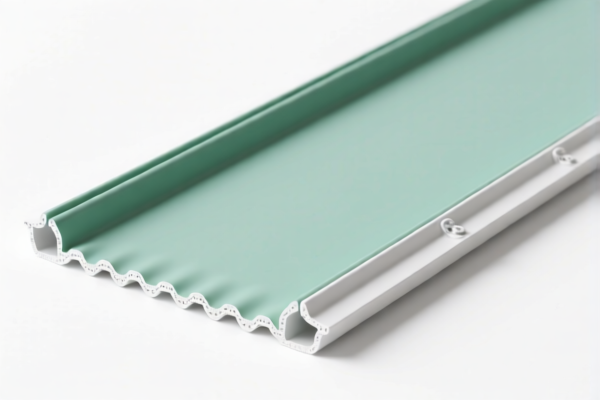
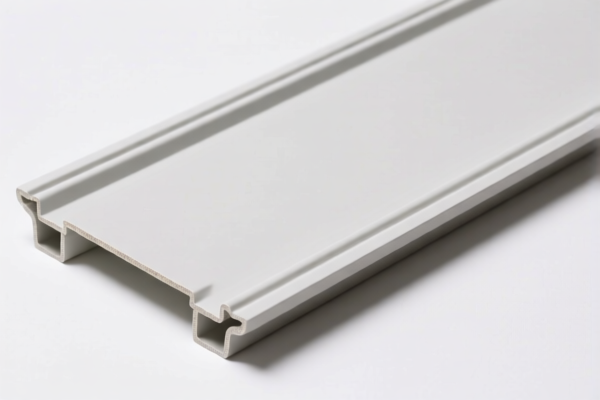
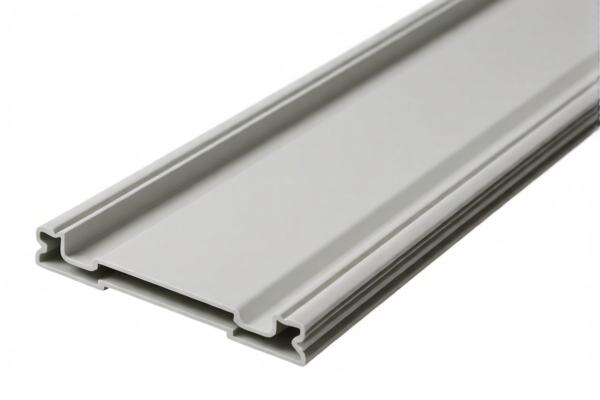
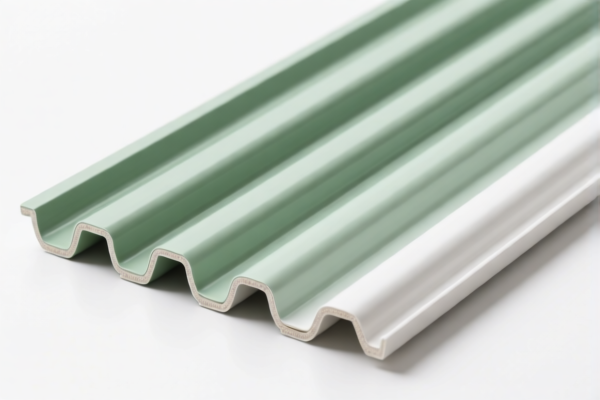
PVC Wood Grain Ceiling Panels are decorative architectural components used for interior wall and ceiling finishes. They mimic the aesthetic of wood but are made entirely of synthetic polymers. In international trade, the critical distinction lies not in the "wood grain" appearance, but in the material composition (PVC) and functional form (Plate/Sheet vs. Profile/Molding).
Key Classification Logic: 1. Material: Polyvinyl Chloride (PVC), a vinyl polymer. 2. Form Factor: * Flat Sheets/Plates: If the panel is rigid, flat, or has a simple embossed pattern without complex cross-sectional profiles → Look to Chapter 39, Heading 39.21 (Plates, sheets, film, foil, and strip). * Profiles/Moldings: If the panel has a specific extruded shape designed to interlock or mount (like tongue-and-groove strips with complex geometric cross-sections) → Look to Chapter 39, Heading 39.16 (Monofilament, rods, cylinders, and profiles). * Building Fittings: If classified broadly as a "building fitting" regardless of material shape → Look to Chapter 39, Heading 39.25.
⚠️ Critical Distinction:
- "Stone Grain/Wood Grain" is a surface treatment, not a material change. It does not shift the product to Chapter 44 (Wood). It remains Chapter 39 (Plastics).
- Shape Matters: Is it a flat sheet (3921) or a shaped profile (3916)? This determines the base duty rate.
📦 II. HS Code Classification Matrix (Based on Provided Data)
Below are the five potential HS Codes identified for PVC Wood Grain Ceiling Panels, ranked by typical industry application and associated tax liabilities.
| HS Code | Product Description Summary | Primary Classification Logic | Total Tax Rate (2026) |
|---|---|---|---|
| 3921.12.50.00 | PVC Plate, Stone/Wood Grain Pattern | Plates/Sheets: Flat PVC board with decorative surface. Fits "Vinyl polymer plates." | 41.5% |
| 3925.90.00.00 | PVC Building Component/Panel | Building Fittings: Classified broadly as a plastic component for buildings. | 40.3% |
| 3916.20.00.91 | PVC Profile (Other) | Profiles: Extruded PVC shape not elsewhere specified. For complex interlocking profiles. | 40.8% |
| 3921.12.11.00 | PVC Plate, Vinyl Polymer | Plates/Sheets: Specific sub-category for PVC plates/sheets/film. Often the most accurate for flat panels. | 39.2% |
| 3916.20.00.10 | PVC Profile, Architectural Use | Profiles: Specific sub-category for PVC profiles used in construction/decoration. | 40.8% |
🔍 Key Insight:
- 3921.12.11.00 offers the lowest total tax rate (39.2%) among the options provided. It is suitable for rigid, flat PVC ceiling panels.
- 3925.90.00.00 is a common "catch-all" for building fittings, offering a competitive rate of 40.3%.
- 3916 codes apply only if the panel is strictly defined as a "profile" (extruded shape) rather than a "plate."
💰 III. 2026 Tariff Rate Breakdown (Detailed Tax Structure)
✅ Applicable Market: United States (US)
✅ Origin: China (CN)
✅ Effective Date: Current rates reflect Section 301 & IEEPA additions.
🎯 1. 3921.12.11.00 — PVC Plates, Sheets, Film (Lowest Duty Option)
| Item | Detail |
|---|---|
| Base Duty (MFN) | 4.2% |
| Section 301 Duty | +25.0% (List 3/4a additions) |
| IEEPA 122 Clause | +10.0% (Specific enforcement provision) |
| Total Effective Rate | 39.2% |
| Calculation | CIF Value × 39.2% |
| De Minimis Exemption | ❌ Not Eligible (High value threshold excluded) |
| Legal Basis | HTSUS 3921.12.11.00 → USITC Footnote 301 → IEEPA Executive Order |
📌 Explanation:
This code represents standard PVC plates. The 4.2% base duty is low, but the 35% total add-ons make it expensive. However, it is 1.1% cheaper than the "Other Profile" code.
🎯 2. 3925.90.00.00 — Other Plastics Building Fittings
| Item | Detail |
|---|---|
| Base Duty (MFN) | 5.3% |
| Section 301 Duty | +25.0% |
| IEEPA 122 Clause | +10.0% |
| Total Effective Rate | 40.3% |
| Calculation | CIF Value × 40.3% |
| De Minimis Exemption | ❌ Not Eligible |
| Legal Basis | HTSUS 3925.90.00.00 → USITC Footnote 301 → IEEPA |
📌 Explanation:
If customs agents classify the panel as a "building accessory" rather than a raw material plate, this code applies. It is slightly higher than 3921.12.11.00 due to a higher base duty (5.3% vs 4.2%).
🎯 3. 3916.20.00.10 & 3916.20.00.91 — PVC Profiles
| Item | Detail |
|---|---|
| Base Duty (MFN) | 5.8% |
| Section 301 Duty | +25.0% |
| IEEPA 122 Clause | +10.0% |
| Total Effective Rate | 40.8% |
| Calculation | CIF Value × 40.8% |
| De Minimis Exemption | ❌ Not Eligible |
📌 Explanation:
These codes apply if the product is deemed an extruded profile (e.g., SPC/WPC flooring planks or complex ceiling battens). The higher base duty (5.8%) results in the highest total tax rate among the safe options. Avoid this if your product is a flat sheet.
🎯 4. 3921.12.50.00 — Other PVC Plates
| Item | Detail |
|---|---|
| Base Duty (MFN) | 6.5% |
| Section 301 Duty | +25.0% |
| IEEPA 122 Clause | +10.0% |
| Total Effective Rate | 41.5% |
| Calculation | CIF Value × 41.5% |
| De Minimis Exemption | ❌ Not Eligible |
📌 Explanation:
This is a residual category for PVC plates not specifically listed elsewhere. It has the highest base duty (6.5%) and is the least desirable option if 3921.12.11.00 is applicable.
🛠️ IV. Clearance Practical Advice (Risk Mitigation Strategy)
✅ 1. Document Checklist (Mandatory)
| Document | Requirement | Why It Matters |
|---|---|---|
| Commercial Invoice | Must state: "PVC Ceiling Panel," "Material: 100% Polyvinyl Chloride," "Finish: Wood Grain Printed" | Prevents misclassification as "Wood" (Ch 44) or "Metal." |
| Product Specification Sheet | Include: Thickness, Width, Length, Weight, Flat/Profile Shape | Determines if it's 3921 (Plate) or 3916 (Profile). |
| Material Composition Certificate | Confirm PVC content >90% | Ensures Chapter 39 application. |
| Photos (360°) | Show cross-section (if profile) and surface texture | Visual proof of "Wood Grain" being a surface print/emboss, not real wood veneer. |
| HTS8 Pre-Ruling | Strongly Recommended | Avoids post-clearance audits and penalties. |
✅ 2. Classification Strategy (The "Right Way")
🔥 Golden Rule: "Shape Determines Heading, Material Determines Chapter."
| Product Form | Recommended HS Code | Base Duty | Total Tax | Risk Level |
|---|---|---|---|---|
| Flat Rigid Sheet (Embossed/Printed) | 3921.12.11.00 |
4.2% | 39.2% | 🟢 Low (Most accurate for flat panels) |
| Building Component (General) | 3925.90.00.00 |
5.3% | 40.3% | 🟡 Medium (Broad category, accepted by many CBPs) |
| Extruded Profile (Interlocking strips) | 3916.20.00.10 |
5.8% | 40.8% | 🟡 Medium (Requires proof of profile shape) |
| Other/Residual | 3921.12.50.00 |
6.5% | 41.5% | 🔴 High (Last resort, highest tax) |
✅ 3. Common Pitfalls & Avoidance
| ❌ Mistake | ✅ Correct Approach | Consequence of Error |
|---|---|---|
| Declaring as "Wood Ceiling" | Declare as "PVC Vinyl Ceiling Panel" | Misclassification under Ch 44 (Wood) → Higher duties + Fines for false origin. |
| Ignoring "Wood Grain" Description | Explicitly state "Surface Finish: Wood Grain Pattern" | Prevents CBP from thinking it's real wood or veneer. |
| Splitting Shipments to Avoid De Minimis | Consolidate and pay full duty | High risk of detection. 39.2% is predictable; evasion is not worth the penalty. |
| Using "Plastic Board" Vaguely | Use specific HTS8 descriptions (e.g., "PVC Plate") | Delays in clearance due to additional scrutiny. |
🌍 V. Global Market Comparison (2026)
| Region | Typical HS Code | Base Duty | Additional Duties (China Origin) | Total Estimate | Notes |
|---|---|---|---|---|---|
| 🇺🇸 USA | 3921.12.11.00 |
4.2% | +35% (301 + IEEPA) | 39.2% | Highest cost. Plan pricing accordingly. |
| 🇨🇳 China | 3921.12.11.00 |
5.3% | 0% | 5.3% | Low import cost for domestic use. |
| 🇪🇺 EU | 3921.12.10 |
6.5% | 0% | 6.5% | No Section 301 equivalents. Much cheaper. |
| 🇬🇧 UK | 3921.12.10 |
6.5% | 0% | 6.5% | Post-Brexit tariffs are generally lower for plastics. |
| 🇮🇳 India | 3921.12.00 |
7.5-10% | BCD + SWS + Cess | ~15-20% | Complex tax structure, but lower than US. |
📌 Strategic Note:
If targeting the US market, the 39.2% duty is a fixed cost. Consider value engineering (thinner gauge, lightweight cores) to reduce CIF value, as duty is ad valorem.
📌 VI. Final Recommendation & Action Plan
🎯 Step 1: Confirm Product Geometry
- Is it a flat sheet? → Use
3921.12.11.00(Lowest Tax: 39.2%). - Is it a strip/profile with a complex cross-section? → Use
3916.20.00.10(Tax: 40.8%). - If unsure,
3925.90.00.00(Tax: 40.3%) is a safe middle-ground for "building fittings."
🎯 Step 2: Optimize Documentation
- Invoice Description: "PVC CEILING PANEL, WOOD GRAIN EFFECT, MATERIAL: POLYVINYL CHLORIDE, FORM: SHEET/PLATE"
- Avoid: "Wood Ceiling," "Veneer," "Lumber."
🎯 Step 3: Calculate Landed Cost
- Formula:
Landed Cost = Product Cost + Freight + Insurance + (CIF × 39.2%) + Broker Fees - Ensure your pricing model includes this ~39.2% duty burden to maintain margins.
🎯 Conclusion: Smart Classification Saves Money!
🔹 Remember:
"Flat Sheet = 3921 (39.2%) | Profile = 3916 (40.8%) | Fitting = 3925 (40.3%)"
"Wood Grain is just paint/polymer, not wood! Don't get trapped in Chapter 44!"
📌 Pro Tip:
If you are exporting large volumes, consider applying for a Section 301 Exclusion (if applicable for your specific product type/year) or explore Third-Country Transshipment (e.g., through Vietnam or Malaysia) with proper transformation rules to mitigate US tariffs.
📣 Immediate Action:
📞 Contact your Customs Broker with the Cross-Section Drawing and PVC Composition Certificate.
🚀 Apply for an Binding Tariff Information (BTI) or Advance Ruling to lock in the3921.12.11.00classification.
✨ Precision in Classification = Profit in Pocket!
💼 Every percentage point of duty saved is pure margin earned!
用户评价
关于 HS 编码归类
协调制度(HS)是由世界海关组织(WCO)制定的国际贸易商品分类标准。全球 200 多个国家采用 HS 系统作为海关关税、贸易统计和进出口监管的基础。
每个 HS 编码遵循以下层级结构:
- 章(2 位)——商品大类(例如:第 84 章:机器和机械设备)
- 品目(4 位)——章内的更具体分类
- 子目(6 位)——国际通用细分,所有 WCO 成员国统一使用
- 本国细分(8-10 位)——各国自行扩展的细分编码,如美国 HTSUS 10 位编码
正确的 HS 编码归类对于顺利通关、准确缴纳关税和遵守贸易法规至关重要。错误归类可能导致海关延误、多缴关税或罚款。
从CN进口到US时,适用的关税税率可能包括:
- 最惠国(MFN)税率——适用于 WTO 成员国的标准关税税率
- 普通税率——适用于无贸易协定国家
- 贸易救济关税——附加关税,如 301 条款(反倾销)、232 条款(国家安全)或反补贴税
本页内容仅供参考。如需正式归类,请咨询当地海关或持牌报关代理。