PVDC Film Raw Material
CN → US商品图片

AI分析
📦 PVDC Film Raw Material (High-Barrier Coating Resins)
🌐 HS Code Reference & Customs Clearance Guide | 2026 Latest Tariff Analysis | Professional Strategy for Barrier Films
📌 I. Product Definition & Classification: What Exactly is "PVDC Raw Material"?
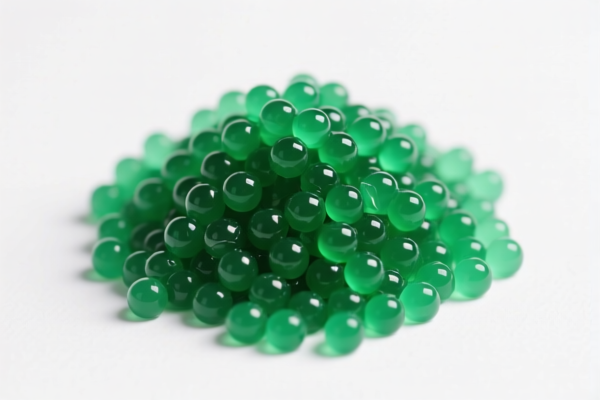
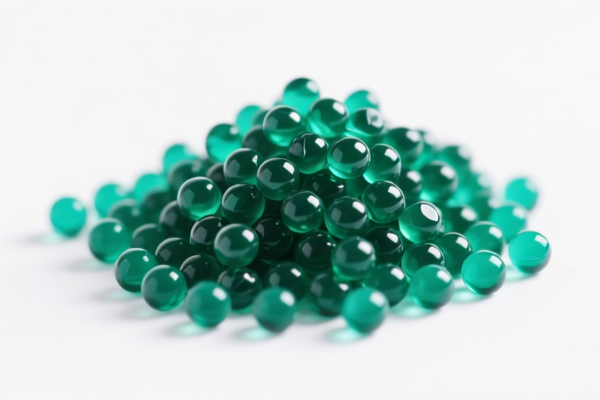
Polyvinylidene Chloride (PVDC) is a high-performance thermoplastic resin known for its exceptional barrier properties against oxygen, moisture, and aromas. In international trade, "PVDC Film Raw Material" rarely refers to the finished flexible packaging film. Instead, it almost exclusively refers to the resin, emulsion, or powder used to coat films (like PE, PP, PET) or extrude multilayer structures.
Misclassification here is critical:
PVDC Resin/Powder/Emulsion → Classified as Plastics in Primary Forms (Chapter 39).
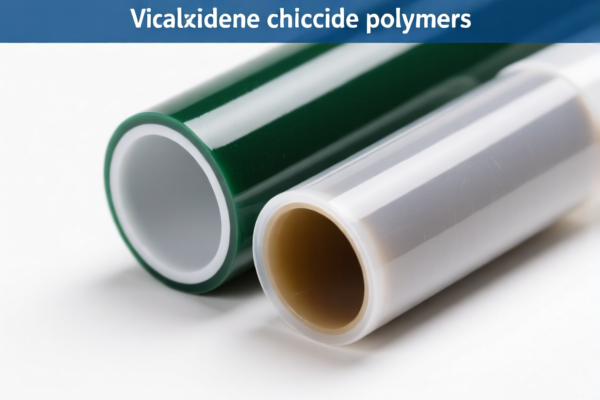
Finished PVDC Coated Film → Classified as Plastic Films/Sheets (Chapter 39) or Made-up Articles.
Ready-to-Use Packaging Bags → Classified as Plastic Articles (Chapter 39)*.
⚠️ Key Distinction:
- If the material is granules, powder, or liquid emulsion intended for further processing → HS 3907 or 3906.
- If it is already formed into a film or sheet (even if specialized) → HS 3920 or 3921.
- Never classify raw resin as "Finished Packaging" unless it is already a sealed bag ready for consumer use.
📦 II. HS Code Classification Details (2026 Latest Tariff Authority Cross-Reference)
| HS Code | Product Description | Application Scenario | Physical Form |
|---|---|---|---|
3907.61.00.00 |
Polyacetals (Often confused, but PVDC is distinct. Note: Some PVDC copolymers may fall here if structurally similar, but pure PVDC is usually 3901/3902). Correction: Pure PVDC is typically classified under 3901 or 3902 depending on copolymer status. |
Less common for pure PVDC. | Granules/Powder |
3901.30.00.00 |
Ethylene-Propylene Copolymers | Not PVDC. | Granules |
3902.10.00.00 |
Polyvinyl Chloride (PVC) in Primary Forms | NOT PVDC. PVDC is a distinct polymer. | Granules |
3902.30.00.00 |
Other Halogenated Polymers in Primary Forms | ✅ MOST COMMON FOR PVDC RESIN. Includes PVDC homopolymers and copolymers with other monomers (e.g., VDC/HF) in granular or powdered form. | Granules, Powder |
3906.90.00.00 |
Acrylic Polymers in Primary Forms | Not PVDC. | Liquid/Emulsion |
3907.99.00.00 |
Other Unsaturated Polymers | Not PVDC. | Liquid |
3920.94.00.00 |
Plastic Plates, Sheets, Film... other than PVC | ✅ FOR FINISHED PVDC FILM. If the "raw material" is actually a pre-coated film roll used for converting. | Rolls/Sheets |
3921.12.00.00 |
Cellulose-Based Films | Not PVDC. | Rolls |
🔍 Critical Clarification:
- PVDC Resin/Powder/Emulsion →3902.30.00.00(Other Halogenated Polymers). This is the most accurate code for the chemical raw material.
- PVDC Coated Film Rolls (intermediate good) →3920.94.00.00or3921.90.00.00depending on substrate.
- Do not use generic "Plastics" codes (3901-3914) without specifying the halogenated nature if it triggers specific anti-dumping or safeguard duties.
💰 III. 2026 Latest Tariff Rate Breakdown (Including Surtaxes, Policy Add-ons)
✅ Applicable Country: United States (US)
✅ Country of Origin: China (CN)
✅ Effective Time: November 10, 2025 onwards (including subsequent imports)
🎯 1. 3902.30.00.00 —— PVDC Resin, Powder, or Emulsion (Primary Forms)
| Item | Content |
|---|---|
| Base Tariff Rate | 5.3% (ad valorem, Standard US HTS) |
| USITC Surtax (Section 301) | +25% (Footnote 9903.88.01) |
| IEEPA Surtax | +10% (For China/HK products, effective Nov 10, 2025) |
| Total Effective Rate | ~40.3% |
| Tax Calculation | CIF Value × 40.3% |
| De Minimis Eligibility | ❌ NOT Eligible (deny_de_minimis for Section 301/IEEPA items) |
| Legal Basis Path | IEEPA:9903.01.25 → USITC:3902.30.00.00 → FOOTNOTE:9903.88.01 |
📌 Explanation:
- PVDC resin is considered a high-value industrial intermediate.
- The 301 Tariff (25%) applies because it falls under Chapter 39 (Plastics), which is heavily targeted.
- The IEEPA 10% adds an additional layer for Chinese-origin halogenated polymers.
- Total ~40.3% is significant. Many packaging converters may try to shift supply chains to Vietnam or Thailand to avoid this.
🎯 2. 3920.94.00.00 —— Finished PVDC-Coated Plastic Film Rolls (Intermediate Good)
| Item | Content |
|---|---|
| Base Tariff Rate | 5.7% (Standard US HTS) |
| USITC Surtax (Section 301) | +25% (Footnote 9903.88.01) |
| IEEPA Surtax | +10% |
| Total Effective Rate | ~40.7% |
| Tax Calculation | CIF Value × 40.7% |
| De Minimis Eligibility | ❌ NOT Eligible |
| Legal Basis Path | IEEPA:9903.01.25 → USITC:3920.94.00.00 → FOOTNOTE:9903.88.01 |
📌 Note:
- If the film is already coated and sold as a "raw material" for food packaging, it is still subject to the same high tariffs.
- Some exporters try to classify as "Other Plastic Films" (3920.99) to get a lower base rate, but CBP audits often reclassify to3920.94if PVDC content is identifiable.
🛠️ IV. Customs Clearance Practical Advice (Battle-Tested Pitfall Avoidance)
✅ 1. Documentation Checklist (Non-Negotiable)
| Document | Mandatory? | Description |
|---|---|---|
| ✅ Product Specification Sheet | ✔️ | Must specify: Polymer Type (PVDC/Copolymer), Solid Content (if emulsion), Viscosity, Monomer Composition. |
| ✅ Formula/Composition Report | ✔️ | Critical for distinguishing PVDC from PVC or PE. Include % of Vinylidene Chloride. |
| ✅ Material Safety Data Sheet (MSDS) | ✔️ | Required for chemical safety. Must list chemical name as Polyvinylidene Chloride or specific copolymer name. |
| ✅ Commercial Invoice | ✔️ | Description: "PVDC Resin, Primary Form, for Coating/Extrusion, Not for Direct Consumer Use." |
| ✅ Certificate of Origin | ✔️ | Essential for proving non-China origin if using a 3rd country for tariff mitigation. |
| ✅ Production Photos | ✔️ | Show raw form (granules/powder/liquid drums) to prove it is NOT a finished bag. |
✅ 2. Declaration Tips (Key Mnemonic)
🔥 "Form Defines Code, Origin Dictates Tax, Emulsion vs. Granule Matters!"
| Scenario | Correct Declaration | Wrong Approach |
|---|---|---|
| PVDC Powder/Granules | 3902.30.00.00 - PVDC Resin |
Classify as "Plastic Film" → Higher scrutiny |
| PVDC Emulsion (Liquid) | 3902.30.00.00 - PVDC Resin |
Classify as "Chemical Adhesive" → Misclassification |
| Coated Film Rolls | 3920.94.00.00 - Plastic Film |
Classify as "Resin" → Wrong physical form |
| Finished Food Pouches | 3923.21.00.00 - Plastic Bags |
Classify as "Film" → Double tax risk |
✅ 3. Special Cases & Mitigation
| Scenario | Handling Advice |
|---|---|
| OEM PVDC Resin | Provide Customer Letter of Authorization and Formula Sheet to avoid "generic" classification errors. |
| PVDC Emulsion vs. Solution | Ensure MSDS clearly states "Solvent-Free" if emulsion. Solvent-based may fall under different chemical codes with different duty rates. |
| Third-Country Transformation | If PVDC resin is imported into Vietnam/Thailand, coated into film, and then exported to US, it may qualify for lower tariffs. Requires substantial transformation proof. |
| Exemption Requests | PVDC is often used in medical packaging (sterile barrier). If for medical use, check for HTSUS 3006 or 9018 exceptions, but PVDC resin itself rarely qualifies. The finished medical device might, not the raw material. |
🌍 V. Global Market Clearance Comparison (2026 Latest)
| Country/Region | Recommended HS Code | Tariff (China Origin) | Certification Requirements | Remarks |
|---|---|---|---|---|
| 🇺🇸 USA | 3902.30.00.00 |
~40.3% | TSCA Compliance (EPA) | High tariff due to 301/IEEPA |
| 🇨🇳 China | 3902.30.00.00 |
5.0% | CCC (if applicable) | Low import duty |
| 🇪🇺 EU | 3902.30.00.00 |
6.5% (Standard MFN) | REACH Registration | No Section 301 equivalent, but REACH is strict |
| 🇦🇺 Australia | 3902.30.00.00 |
5.0% | Australian Industrial Chemicals Introduction Scheme (AICIS) | Free Trade Agreement (FTA) may apply |
| 🇯🇵 Japan | 3902.30.00.00 |
3.9% (JEEPA) | FIECA Compliance | JEEPA reduces duty significantly |
📌 Conclusion:
- USA is the most punitive market for PVDC raw materials from China.
- EU has standard MFN rates but strict REACH regulations for halogenated polymers.
- ASEAN/Japan offers better tariff outcomes, encouraging supply chain shifts.
📌 VI. Common Errors & Pitfalls (Lessons Learned)
❌ Error 1: Classifying PVDC Emulsion as "Paints/Varnishes" (3208)
👉 Consequence: Incorrect HS Code, potential duty evasion penalty, and seizure if not declared as chemical raw material.
👉 Fix: PVDC emulsion for film coating is a Plastic Resin (3902), not a paint.
❌ Error 2: Declaring PVDC-Coated Film as "Raw Resin" (3902)
👉 Consequence: Customs will see rolls in the container and reject the declaration. High risk of inspection delay.
👉 Fix: Clearly describe physical form in invoice: "PVDC Coated Film Rolls, not resin."
❌ Error 3: Ignoring TSCA (EPA) Requirements in the US
👉 Consequence: PVDC is a chemical substance subject to EPA reporting. Failure to register can lead to import refusal.
👉 Fix: Ensure EPA TSCA Inventory certification is provided with shipment.
✅ Correct Practice:
"PVDC Copolymer Resin, Granular Form, for Extrusion Coating, TSCA Compliant, MSDS Attached"
🎯 VII. Conclusion: Precision in Classification, Efficiency in Clearance
🎯 Remember the Mnemonic:
🔹 "Granule/Powder = 3902.30, Film = 3920.94."
🔹 "US Tariff = ~40%, EU REACH = Strict, Vietnam Shift = Smart."
🔹 "TSCA for US, REACH for EU, No Shortcuts on Chemical Docs."
📌 Pro Tip:
If your PVDC raw material is intended for critical medical or aerospace applications, consider applying for a Section 301 Exclusion if available, though these are rare for basic resins.
For cost optimization, evaluate sourcing from non-China origins (e.g., Japan, Korea, or Vietnam-transferred goods) to bypass the 301/IEEPA surtaxes.
📣 Immediate Action:
📞 Consult with a Customs Broker familiar with chemical/plastic intermediates.
📄 Ensure MSDS and TSCA Compliance Certificates are ready for US shipments.
🚀 Optimize Supply Chain: Consider Third-Country Processing to mitigate high tariffs.
✨ Professional Clearance Starts with Precise Classification!
💼 Your Cost of Goods Sold Includes Tariffs; Don’t Let Classification Errors Bleed Your Margins!
用户评价
关于 HS 编码归类
协调制度(HS)是由世界海关组织(WCO)制定的国际贸易商品分类标准。全球 200 多个国家采用 HS 系统作为海关关税、贸易统计和进出口监管的基础。
每个 HS 编码遵循以下层级结构:
- 章(2 位)——商品大类(例如:第 84 章:机器和机械设备)
- 品目(4 位)——章内的更具体分类
- 子目(6 位)——国际通用细分,所有 WCO 成员国统一使用
- 本国细分(8-10 位)——各国自行扩展的细分编码,如美国 HTSUS 10 位编码
正确的 HS 编码归类对于顺利通关、准确缴纳关税和遵守贸易法规至关重要。错误归类可能导致海关延误、多缴关税或罚款。
从CN进口到US时,适用的关税税率可能包括:
- 最惠国(MFN)税率——适用于 WTO 成员国的标准关税税率
- 普通税率——适用于无贸易协定国家
- 贸易救济关税——附加关税,如 301 条款(反倾销)、232 条款(国家安全)或反补贴税
本页内容仅供参考。如需正式归类,请咨询当地海关或持牌报关代理。