Pad Board
CN → US| HS编码 | 关税税率 | 原产国 | 目的国 | 文档 |
|---|---|---|---|---|
| 4823908000 | 35.0% | CN | US | 官方文档 |
| 4823902000 | 35.0% | CN | US | 官方文档 |
| 4817202000 | 35.0% | CN | US | 官方文档 |
| 4817204000 | 35.0% | CN | US | 官方文档 |
| 4811512020 | 35.0% | CN | US | 官方文档 |
| 4811512040 | 35.0% | CN | US | 官方文档 |
商品图片
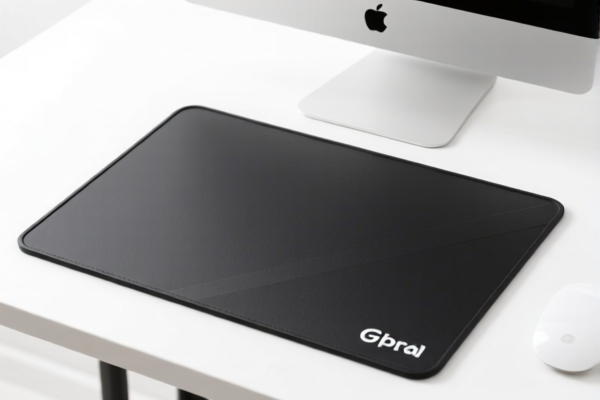
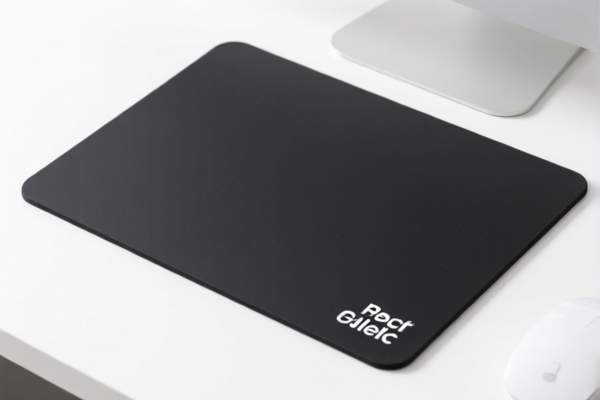
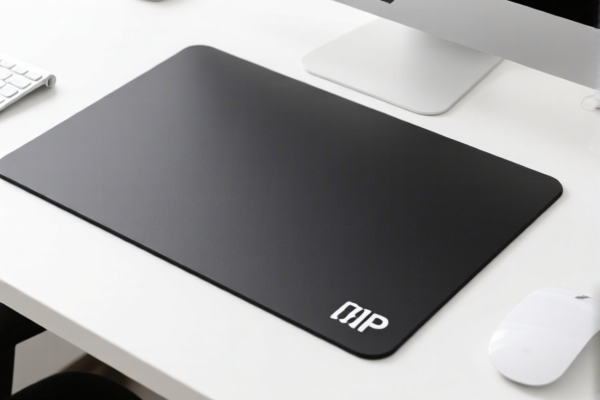
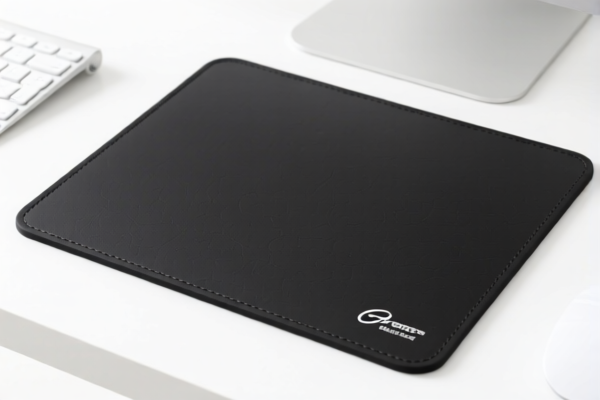
AI分析
📄 Pad Board & Paper-Based Seals/Packaging (Paper, Paperboard, Cellulose Wadding)
🌐 HS Code Reference & Customs Clearance Guide | 2026 Latest Tariff Analysis | Professional-Level Entry Strategy
📌 I. Product Definition & Classification: What Exactly is a "Pad Board"?
In international trade, the term "Pad Board" is ambiguous and highly dependent on material composition, thickness, coating, and end-use. It generally refers to: 1. Paper/Cardboard Base for Sticky Notes or Pads: Uncoated or lightly coated paperboard used as the backing for writing pads, notepads, or memo pads. 2. Paper-Based Gaskets/Seals: Cut-to-shape paper pulp or paperboard components used for sealing (e.g., in engines, pipelines, or packaging). 3. Packaging Paperboard: Thicker, often coated or impregnated paperboard used for boxes, folding cartons, or base stock for packaging.
⚠️ Key Classification Criteria:
- If it is thin paper (e.g., for notepads) → Consider 4817.20 (Correspondence Cards/Letter Cards).
- If it is coated/thick paperboard (>150 g/m², plastic-coated/impregnated) → Consider 4811.51 (Coated Paper/Paperboard).
- If it is cut-to-shape articles like gaskets, washers, or seals → Consider 4823.90 (Other Articles of Paper).
- If it is papier-mâché articles → Consider 4823.90.20.
📦 II. HS Code Classification Details (2026 Latest Tariff Authority Comparison)
Based on the provided <DATA>, here are the possible HS Codes for "Pad Board" depending on its specific characteristics:
| HS Code | Product Description | Applicable Scenario | Coating/Thickness? |
|---|---|---|---|
4817.20.20.00 |
Letter cards, plain postcards, correspondence cards: Sheets of writing paper with border gummed/perforated, with/without inserts, prepared as combination sheets/envelopes | Thin paper pads, notepads, sticky note backs (if classified as "correspondence cards") | ❌ No plastic coating mentioned |
4817.20.40.00 |
Letter cards, plain postcards, correspondence cards: Other | Other paper-based stationery pads not fitting the above | ❌ No plastic coating mentioned |
4811.51.20.20 |
Paper/Paperboard coated/impregnated with plastics: Bleached, >150 g/m², strips/rolls >15cm or sheets >36x15cm, ≥0.3mm thick: Folding carton stock | Thicker, plastic-coated paperboard used for packaging or rigid pads | ✅ Yes (Plastic-coated/impregnated) |
4811.51.20.40 |
Paper/Paperboard coated/impregnated with plastics: Bleached, >150 g/m², strips/rolls >15cm or sheets >36x15cm, ≥0.3mm thick: Base stock for packaging | Base paperboard for packaging boxes, rigid pads | ✅ Yes (Plastic-coated/impregnated) |
4823.90.80.00 |
Other paper, paperboard, etc.: Other: Other: Gaskets, washers, and other seals | Paper-based gaskets, seals, or cut-to-shape padding used for sealing | ❌ No plastic coating (usually paper pulp/board) |
4823.90.20.00 |
Other paper, paperboard, etc.: Other: Of papier-mâché | Articles made from papier-mâché (e.g., decorative pads, molded paper bases) | ✅ Yes (Papier-mâché process) |
🔍 Critical Reminder:
- "Pad Board" is not a single HS Code. You must determine if it is stationery (4817), coated packaging material (4811), or industrial/other paper articles (4823).
- Coating Matters: If the pad board is coated with plastic (>0.3mm thick, >150 g/m²), it falls under 4811.51.
- Shape Matters: If it is cut into specific shapes (like gaskets), it may fall under 4823.90.80.00.
💰 III. 2026 Latest Tariff Rate Breakdown (Including Surcharge, Policy Surcharge)
✅ Applicable Country: United States (US)
✅ Country of Origin: China (CN)
✅ Effective Date: 2025年11月10日起 (Including subsequent imports)
All HS Codes listed in <DATA> have the same tariff structure under the provided data.
🎯 1. General Tariff Structure for All Listed HS Codes
| Item | Content |
|---|---|
| Base Tariff Rate | 0.0% (ad valorem) |
| Additional Tariff (Section 301 / USITC) | +25.0% (Applicable to Chinese-origin goods) |
| Total Tax Rate | 25.0% |
| Tax Calculation | CIF Value × 25% |
| De Minimis Exemption | ❌ Not Applicable (Deny de minimis for Section 301 goods) |
| Legal Basis Path | USITC: [HS Code] → FOOTNOTE: [Relevant Footnote for 301 Tariff] |
📌 Explanation:
- Base Tariff: 0% for most paper products is common under HTSUS.
- 25% Surcharge: This is the Section 301 Additional Duty imposed on Chinese imports. It applies to all the HS codes provided in<DATA>.
- Total Cost: Importers must budget for a 25% tariff on top of the CIF value. No exemptions are mentioned in<DATA>for these codes.
🛠️ IV. Customs Clearance Practical Advice (Pitfall Avoidance Guide)
✅ 1. Preparation Checklist (Required Documents)
| Document | Required | Notes |
|---|---|---|
| ✅ Product Specification Sheet | ✔️ | Must specify: Material (paper/cardboard/papier-mâché), Coating (yes/no), Thickness (>0.3mm?), Weight per m² (>150g?), Dimensions. |
| ✅ Product Photos | ✔️ | Clear images showing: Surface texture (coated/uncoated), Cut shapes (gaskets vs. flat sheets), Packaging. |
| ✅ Commercial Invoice | ✔️ | Must accurately describe the product (e.g., "Coated Paperboard for Packaging" vs. "Paper Gaskets") to match HS Code. |
| ✅ Packing List | ✔️ | Detail contents: Flat sheets vs. cut pieces. |
| ✅ Certificate of Origin (CO) | ✔️ | Essential for confirming Chinese origin (triggers 25% surcharge). |
| ✅ Third-Party Test Report | ✔️ | If claiming specific thickness or coating properties, provide lab reports. |
✅ 2. Declaration Strategy (Key Mnemonic)
🔥 “Check Coating, Check Shape, Declare Right, Avoid Delays!”
| Scenario | Correct HS Code | Incorrect Declaration | Consequence |
|---|---|---|---|
| Flat, thick, plastic-coated paperboard (>150 g/m², ≥0.3mm) | 4811.51.20.20 or 4811.51.20.40 |
Declared as "Paper" (4817) |
⚠️ Audit Risk: Misclassification. If audited, may face penalties or reassessment. |
| Paper Gaskets/Seals (Cut-to-shape) | 4823.90.80.00 |
Declared as "Packaging Material" | ⚠️ Risk: Incorrect HS. Customs may reclassify and apply different duties. |
| Papier-mâché Articles | 4823.90.20.00 |
Declared as "General Paper" | ⚠️ Risk: Misdescription. |
| Thin Paper Pads/Notepads | 4817.20.20.00 or 4817.20.40.00 |
Declared as "Coated Paperboard" | ⚠️ Risk: Over-declaration of coating. |
📌 Tip:
- If the "Pad Board" is uncoated and used for writing/notepads, classify under 4817.20.
- If it is coated and used for packaging, classify under 4811.51.
- If it is cut into shapes like seals/gaskets, classify under 4823.90.80.
✅ 3. Special Cases
| Scenario | Handling Advice |
|---|---|
| Coated vs. Uncoated | Provide a material composition certificate to prove coating status. Uncoated paperboard may fall under different subheadings if not specified as coated. |
| Thickness Dispute | If thickness is close to 0.3mm, provide laboratory test results to confirm it meets the ">0.3mm" threshold for 4811.51. |
| Multiple Uses | If the pad board can be used for both packaging and stationery, declare based on principal use or commercial intent. Provide invoices showing end-use. |
| Papier-mâché Claim | Ensure the product is truly papier-mâché (molded paper pulp). If it is just cardboard, do not declare as papier-mâché to avoid fraud penalties. |
🌍 V. Global Market Clearance Comparison (2026 Latest)
| Country/Region | Recommended HS Code | Tariff | Certification | Notes |
|---|---|---|---|---|
| 🇺🇸 USA | 4811.51.20.20 / 4823.90.80.00 etc. |
25% (All listed) | None specific for paper | High tariff due to Section 301. No de minimis exemption. |
| 🇨🇳 China | Same HS Codes | Varies (usually 0-6%) | None | Importing back into China may have different duties. |
| 🇪🇺 EU | Same HS Codes | 0% (Most paper products) | REACH (if chemicals in coating) | No Section 301 surcharge. Generally lower duty burden. |
| 🇬🇧 UK | Same HS Codes | 0% | UKCA (if applicable) | Post-Brexit rules apply. No US-style surcharge. |
| 🇨🇦 Canada | Same HS Codes | 0% | None | Generally free trade for paper products. |
📌 Conclusion:
- USA: Highest cost due to 25% additional tariff.
- EU/UK/Canada: Typically 0% base duty, no US-style surcharge.
- Strategic Advice: If targeting the US market, consider supply chain diversification (e.g., producing in Vietnam or Mexico) to avoid the 25% tariff, if feasible.
📌 VI. Common Mistakes & Pitfall Guide (Lessons Learned)
❌ Mistake 1: Declaring "Pad Board" as generic "Paper" without specifying coating or shape.
👉 Consequence: Customs may assign the highest duty rate or request additional documentation, causing delays.
❌ Mistake 2: Misclassifying coated paperboard (>0.3mm) as uncoated paper.
👉 Consequence: Incorrect HS Code. If discovered, may result in back-tariff assessments and penalties.
❌ Mistake 3: Ignoring the 25% Section 301 Surcharge.
👉 Consequence: Underestimating landed cost. Budget 25% more for US imports from China.
❌ Mistake 4: Declaring gaskets as packaging material.
👉 Consequence: Misclassification. Gaskets (4823.90.80.00) and packaging base stock (4811.51.20.40) have different regulatory histories.
✅ Correct Practice:
"Coated Paperboard, Bleached, 180 g/m², 0.35mm Thick, for Packaging, Model XYZ"
OR
"Paper Gasket, Cut-to-Shape, For Industrial Sealing, Model ABC"
🎯 VII. Conclusion: Precision Classification Saves Money!
🎯 Remember Mnemonic:
🔹 "Coated? Check Thickness (>0.3mm)! Coated? Use 4811!"
🔹 "Gaskets? Use 4823! Notepads? Use 4817!"
🔹 "25% Tariff for US, Zero for EU! Don't Get Caught!"
📌 Pro Tip:
If your "Pad Board" is coated with plastic and used for packaging, and you are importing into the US, the 25% surcharge is mandatory.
Consider applying for an Exclusion under Section 301 if your product is not available from other sources, though this is difficult and time-consuming.
📣 Immediate Action:
📞 Consult a Customs Broker to verify coating status and thickness.
📄 Prepare specification sheets and photos.
🚀 Classify Accurately, Avoid Delays, Manage Costs!
✨ Professional Clearance Starts with Precise Classification!
💼 Every Percent Matters in Landed Cost!
用户评价
关于 HS 编码归类
协调制度(HS)是由世界海关组织(WCO)制定的国际贸易商品分类标准。全球 200 多个国家采用 HS 系统作为海关关税、贸易统计和进出口监管的基础。
每个 HS 编码遵循以下层级结构:
- 章(2 位)——商品大类(例如:第 84 章:机器和机械设备)
- 品目(4 位)——章内的更具体分类
- 子目(6 位)——国际通用细分,所有 WCO 成员国统一使用
- 本国细分(8-10 位)——各国自行扩展的细分编码,如美国 HTSUS 10 位编码
正确的 HS 编码归类对于顺利通关、准确缴纳关税和遵守贸易法规至关重要。错误归类可能导致海关延误、多缴关税或罚款。
从CN进口到US时,适用的关税税率可能包括:
- 最惠国(MFN)税率——适用于 WTO 成员国的标准关税税率
- 普通税率——适用于无贸易协定国家
- 贸易救济关税——附加关税,如 301 条款(反倾销)、232 条款(国家安全)或反补贴税
本页内容仅供参考。如需正式归类,请咨询当地海关或持牌报关代理。