Paper Envelopes and Letter Paper
CN → US| HS编码 | 关税税率 | 原产国 | 目的国 | 文档 |
|---|---|---|---|---|
| 4911996000 | 17.5% | CN | US | 官方文档 |
| 4911998000 | 17.5% | CN | US | 官方文档 |
| 4817100000 | 35.0% | CN | US | 官方文档 |
| 4817300000 | 35.0% | CN | US | 官方文档 |
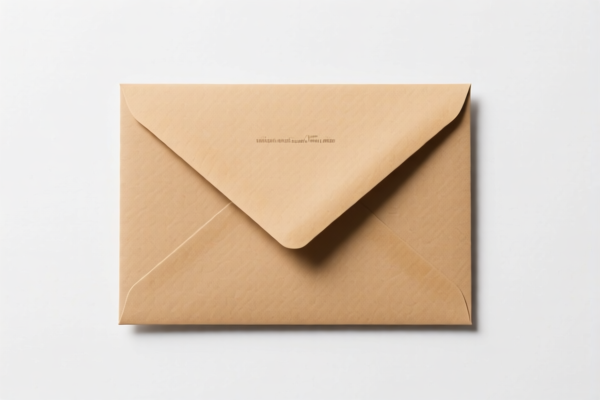
商品图片



AI分析
📬 Paper Envelopes & Letter Paper Sets (Stationery Kits)
🌐 HS Code Reference & Customs Clearance Guide | 2026 Latest Tariff Structure | Professional Entry Strategy
📌 I. Product Definition & Classification: Do You Truly Understand "Envelopes"?
Paper Envelopes and Letter Paper Sets (often sold as stationery kits) are fundamental office supplies. In international trade, their classification hinges on two critical factors: Material (Paper/Cardboard) and Form (Printed item vs. Packaged set).
Printed Stationery (Envelopes/Paper): Classified under Chapter 49 as "Printed Books, Newspapers, Pictures, etc."
Paper Stationery Sets/Pouches: Classified under Chapter 48 as "Articles of Paper Pulp, Paper, or Paperboard, other than of heading 4801 to 4805..." specifically focusing on packaging or carrying cases for stationery.
⚠️ Key Distinction Point:
- If the item is primarily a printed product (the envelope itself is the final consumer good, often branded/printed) → Falls under Chapter 49.
- If the item is a set or container designed to hold a collection of stationery (e.g., a paper box, bag, or wallet containing a set of papers/envelopes) → Falls under Chapter 48.
📦 II. HS Code Classification Details (2026 Latest Tariff Authority Comparison)
| HS Code | Product Description | Application Scenario | Key Feature |
|---|---|---|---|
4911.99.60.00 |
Other printed matter (Specifically: Envelope Sets) | Branded envelopes, printed letterhead sets, final printed consumer goods | ✅ Printed Item (Core feature is the paper content/branding) |
4911.99.80.00 |
Other printed matter (Residual/Fallback) | Generic printed stationery kits, other printed paper goods not elsewhere specified | ✅ Printed Item (General printed goods category) |
4817.10.00.00 |
Articles of paper pulp, paper, or paperboard: Boxes, bags, wallets, writing sets | Paper stationery kits, paper pouches holding a set of stationery | ✅ Set/Container (Focus on the "set" format or holding container) |
4817.30.00.00 |
Articles of paper pulp, paper, or paperboard: Envelopes, cards, etc. (Note: Often used for paper stationery accessories/pouches) | Paper-based stationery holders, non-printed paper cases for writing utensils | ✅ Set/Container (Focus on the "pouch/box" aspect for stationery) |
🔍 Critical Reminder:
- Chapter 49 (4911) applies when the value/identity comes from the printing (e.g., a branded envelope with a logo).
- Chapter 48 (4817) applies when the value/identity comes from the form/packaging (e.g., a decorative paper box holding a blank set of letters and envelopes).
- If it is a simple envelope without special packaging, 4911 is generally safer. If it is a "Gift Set" in a paper folder, 4817 may apply.
💰 III. 2026 Latest Tariff Rate Breakdown (Including Additional Duties & Policies)
✅ Applicable Country: United States (US)
✅ Country of Origin: China (CN)
✅ Effective Date: November 10, 2025 (Including subsequent imports)
🎯 1. 4911.99.60.00 & 4911.99.80.00 —— Printed Envelopes/Letter Paper Sets
These codes fall under "Other Printed Matter." Due to current trade policies, they are subject to significant additional tariffs.
| Item | Content |
|---|---|
| Base Tariff Rate | 0% (ad valorem) |
| Section 301 Additional Duty | +7.5% (Standard USITC additional tariff for general goods from China) |
| Section 122 Duty | +10% (Specific additional tariff applicable to certain Chinese imports) |
| Total Tariff Rate | 17.5% |
| Tax Calculation | CIF Value × 17.5% |
| De Minimis Eligibility | ❌ Not Eligible (Most Section 301/122 duties do not apply to de minimis shipments under $800 in the same way, but for formal entry, this rate applies. Note: Policy shifts may affect low-value shipments, but high-value commercial imports strictly follow this). |
| Legal Basis Path | USITC:4911.99.60.00 → Section 301: 7.5% → Section 122: 10% |
📌 Explanation:
- The 7.5% is part of the ongoing trade war adjustments (Section 301).
- The 10% is a specific "Section 122" tariff targeting specific categories of goods.
- Total: 17.5%. This is a moderate-to-high tariff compared to free-trade partners.
🎯 2. 4817.10.00.00 & 4817.30.00.00 —— Paper Stationery Sets/Pouches
These codes fall under "Articles of Paper Pulp/Paper" (specifically sets or containers). They face higher additional tariffs because they are often classified under different "basket" items in trade retaliation lists (sometimes categorized alongside broader consumer goods or specific paper products).
| Item | Content |
|---|---|
| Base Tariff Rate | 0% |
| Section 301 Additional Duty | +25.0% (Higher tier additional tariff for specific paper/office supply categories) |
| Section 122 Duty | +10% |
| Total Tariff Rate | 35.0% |
| Tax Calculation | CIF Value × 35.0% |
| De Minimis Eligibility | ❌ Not Eligible |
| Legal Basis Path | USITC:4817.10.00.00 → Section 301: 25% → Section 122: 10% |
📌 Explanation:
- The 25% additional duty is significant. This rate often applies to goods perceived as basic manufacturing inputs or specific consumer goods targeted in broader retaliatory measures.
- Total: 35%. This is a very high tariff, nearly doubling the landed cost.
- Why the difference? If Customs determines the "Envelope Set" is primarily a paper container/set (Chapter 48) rather than a printed document (Chapter 49), the tariff jumps from 17.5% to 35%.
🛠️ IV. Customs Clearance Practical Advice (Real-World Pitfall Avoidance)
✅ 1. Preparation Checklist (Non-Negotiable)
| Document | Mandatory | Explanation |
|---|---|---|
| ✅ Product Composition List | ✔️ | Must detail % of paper vs. ink vs. packaging. Is it mostly printed value or container value? |
| ✅ High-Res Product Photos | ✔️ | Show if it's a single envelope (4911) or a boxed set/pouch (4817). |
| ✅ Commercial Invoice | ✔️ | Clearly state "Printed Envelope Set" or "Paper Stationery Kit". Avoid vague terms like "Stationery". |
| ✅ Description of Use | ✔️ | Is it for mailing (4911) or for storing/writing (4817)? |
| ✅ Origin Certificate | ✔️ | Proof of Chinese origin is assumed unless otherwise stated, but needed for tariff calculation. |
✅ 2. Classification Strategy (Key Mantra)
🔥 “Printed is 4911 (17.5%), Set is 4817 (35%)! Define the Core Value!”
| Scenario | Recommended HS Code | Why? |
|---|---|---|
| Standard Business Envelopes (with logo/printing) | 4911.99.60.00 |
The primary value is the printed item. |
| Generic Blank Paper Sets | 4911.99.80.00 |
General printed paper goods. |
| Gift Box of Stationery (Paper box holding pens/paper) | 4817.10.00.00 |
It is a set in a paper container. |
| Decorative Paper Pouch for letters | 4817.30.00.00 |
It is a paper article for stationery, not just the letter itself. |
⚠️ Critical Tip:
If you import printed envelopes, argue for 4911. If you import unprinted paper folders or sets in paper bags, Customs may push for 4817.
Mistake: Classifying a printed envelope as4817→ Risk of Penalty for misclassification (35% vs 17.5% is a big difference, but misclassification penalties are worse).
Mistake: Classifying a paper gift box as4911→ Risk of Penalty because it’s not primarily "printed matter" but a "paper article/set."
✅ 3. Special Cases
| Situation | Handling Advice |
|---|---|
| OEM Printed Envelopes | Provide design files to prove the "print" is the main feature. Use 4911. |
| Blank Paper Sets in Fancy Boxes | If the box is the main selling point, it might be 4817. If the paper is the main point, argue 4911 (but risky). |
| Mixed Containers (Envelopes + Pens) | If pens are included, it might fall under 4820 (Notebooks/Binders) or 9608 (Pens), depending on the set's primary function. Check 4820/9608 rates! |
| Low-Value Shipments | Verify if Section 122/301 applies to de minimis (<$800). Currently, many such duties do apply, so expect the 17.5% or 35%. |
🌍 V. Global Market Comparison (2026 Latest)
| Country/Region | Recommended HS Code | Tariff (China Origin) | Notes |
|---|---|---|---|
| 🇺🇸 USA | 4911.99.60.00 / 4817.10.00.00 |
17.5% or 35% | High trade barriers. Classification is critical. |
| 🇨🇳 China | 4911.99.60.00 / 4817.10.00.00 |
0% - 5% | Low import tariffs. No additional trade war taxes. |
| 🇪🇺 EU | 4911.99.00 / 4817.10.00 |
0% - 6% | Standard MFN rates. No Section 301/122 equivalents. |
| 🇬🇧 UK | 4911.99.00 / 4817.10.00 |
0% - 5% | Post-Brexit rates generally favorable for paper goods. |
| 🇻🇳 Vietnam | 4911.99.00 / 4817.10.00 |
0% (under EVFTA) | Consider supply chain diversification. |
📌 Conclusion:
- The USA is the most challenging market due to Section 301 + Section 122 tariffs.
- EU/UK/China have minimal to no additional duties.
- Strategy: If importing to the US, ensure your declaration is accurate. Classifying a4817product as4911to save 17.5% is a major audit risk. Conversely, accepting 35% when you could argue 17.5% (by proving it's a printed item) is a margin killer.
📌 VI. Common Errors & Pitfalls (Blood & Tears Lessons)
❌ Mistake 1: Calling a "Paper Stationery Box" an "Envelopes" set to get 17.5%.
👉 Consequence: If Customs sees a box/set, they will assess 35% + penalties.
👉 Fix: Declare as "Paper Set in Box" (4817) and budget for 35%, or redesign to be purely printed items.
❌ Mistake 2: Ignoring Section 122.
👉 Consequence: Assuming only Section 301 applies.
👉 Fix: Always add 10% (Sec 122) + 7.5% or 25% (Sec 301) to your cost model for China-origin paper goods.
❌ Mistake 3: Vague Description "Stationery".
👉 Consequence: Customs will pick the highest applicable code (often 4817 or 9608) and delay clearance.
👉 Fix: Use precise terms: "Printed Envelope Set, 100 sheets" vs "Paper Stationery Pouch".
✅ Correct Approach:
"100 Pack of Printed Letterhead Envelopes, 9.5x10.5 inch, Logo Printed, Boxed" → Argue for 4911.99.60.00.
"Decorative Paper Folder Holding Blank Cards and Pens" → Accept 4817.10.00.00.
🎯 VII. Conclusion: Precise Classification Saves 17.5% Margin!
🎯 Remember the Mantra:
🔹 "Printed Value = 4911 (17.5%). Set/Container Value = 4817 (35%). Don't Guess!"
🔹 "17.5% vs 35% is a huge difference. Define your product's PRIMARY character."
📌 Pro Tip:
If you are shipping low-volume samples, check if they qualify for de minimis exemption under the current specific enforcement guidelines for Sec 301/122.
For bulk imports, request an Advance Ruling (Ruling Letter) from US Customs if the classification is ambiguous. It protects you from future audits.
📣 Immediate Action:
📞 Contact your broker: Send product photos and ask: "Is this a printed good (4911) or a paper set (4817)?"
🚀 Optimize your supply chain: If tariffs are too high, consider sourcing from non-China origins (e.g., Vietnam, India) for the US market to avoid the 35% hit.
✨ Professional Clearance Starts with Accurate Classification!
💼 Every Percent of Tariff is Money in Your Pocket!
用户评价
关于 HS 编码归类
协调制度(HS)是由世界海关组织(WCO)制定的国际贸易商品分类标准。全球 200 多个国家采用 HS 系统作为海关关税、贸易统计和进出口监管的基础。
每个 HS 编码遵循以下层级结构:
- 章(2 位)——商品大类(例如:第 84 章:机器和机械设备)
- 品目(4 位)——章内的更具体分类
- 子目(6 位)——国际通用细分,所有 WCO 成员国统一使用
- 本国细分(8-10 位)——各国自行扩展的细分编码,如美国 HTSUS 10 位编码
正确的 HS 编码归类对于顺利通关、准确缴纳关税和遵守贸易法规至关重要。错误归类可能导致海关延误、多缴关税或罚款。
从CN进口到US时,适用的关税税率可能包括:
- 最惠国(MFN)税率——适用于 WTO 成员国的标准关税税率
- 普通税率——适用于无贸易协定国家
- 贸易救济关税——附加关税,如 301 条款(反倾销)、232 条款(国家安全)或反补贴税
本页内容仅供参考。如需正式归类,请咨询当地海关或持牌报关代理。