Paper Gasket Strip
CN → US| HS编码 | 关税税率 | 原产国 | 目的国 | 文档 |
|---|---|---|---|---|
| 4823908000 | 35.0% | CN | US | 官方文档 |
| 4823906000 | 35.0% | CN | US | 官方文档 |
| 8484900000 | 37.5% | CN | US | 官方文档 |
| 3926904510 | 38.5% | CN | US | 官方文档 |
| 4016935050 | 37.5% | CN | US | 官方文档 |
商品图片

AI分析
🧱 Paper Gasket Strip (垫片/纸垫片)
🌐 HS Code Classification & US Customs Clearance Guide | 2026 Latest Tariff Analysis | Expert Strategy
📌 I. Product Definition & Classification: What Exactly is a "Paper Gasket Strip"?
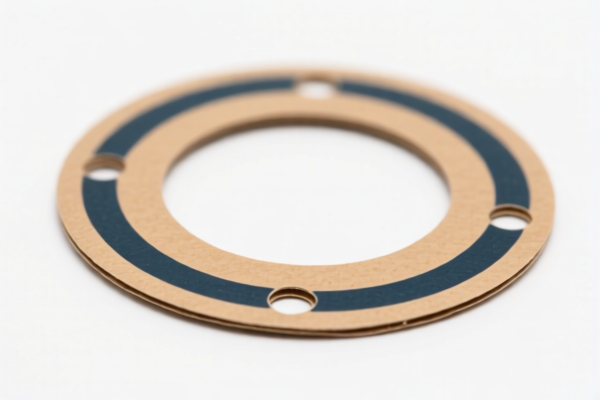
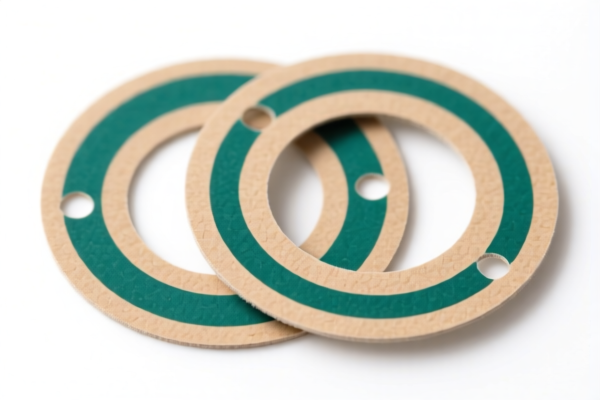
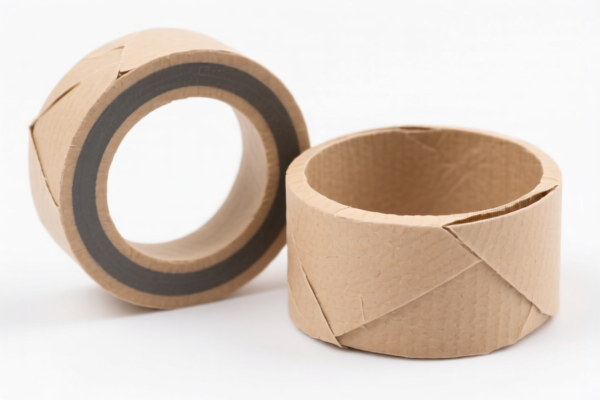
A Paper Gasket Strip is a sealing component used to prevent leakage between two mating surfaces (e.g., in pipes, tanks, engines, or industrial machinery). Unlike metal or rubber gaskets, paper gaskets are known for their compressibility, flexibility, and cost-effectiveness.
In international trade, the classification depends heavily on the material composition and form factor: * Material: Primarily paper-based (cellulose), but sometimes inferred as plastic or rubber based on texture or usage context. * Form: Strips, pre-cut pads, or rolls. * Function: Sealing, isolating, or cushioning.
⚠️ Key Classification Logic:
- If the product is strictly paper-based and shaped as a gasket/pad → Chapter 48 (Paper Products).
- If it is a gasket-like article made of other materials (rubber/plastic) or generic sealing joints → Chapter 84 (Machinery Parts).
- If material is ambiguous but inferred as plastic/rubber → Chapters 39 or 40.
📦 II. HS Code Classification Matrix (2026 Latest Tariff Data)
Based on the provided data, here are the valid HS Code options with their specific tax implications:
| HS Code | Product Description | Material Inference | Total Tax Rate | Key Tax Details |
|---|---|---|---|---|
| 4823.90.80.00 | Paper Gasket, material is paper, use as gasket, complies with classification requirements. | Paper | 35.0% | Base: 0%, Additional: 25%, Section 122: 10% |
| 4823.90.60.00 | Paper Gasket, material is paper, form is gasket/pad, complies with classification interpretation. | Paper | 35.0% | Base: 0%, Additional: 25%, Section 122: 10% |
| 8484.90.00.00 | Paper Gasket, conforms to gasket/joint shape, no material conflict. | Paper (Generic Gasket) | 37.5% | Base: 2.5%, Additional: 25%, Section 122: 10% |
| 3926.90.45.10 | Gasket, inferred as Plastic material, complies with plastic product category. | Plastic | 38.5% | Base: 3.5%, Additional: 25%, Section 122: 10% |
| 4016.93.50.50 | Gasket, inferred as Sulfurized Rubber material, complies with sealing component logic. | Rubber | 37.5% | Base: 2.5%, Additional: 25%, Section 122: 10% |
🔍 Critical Insight:
- The lowest risk classification for paper gaskets is 4823.90.80.00 or 4823.90.60.00 (35% total).
- Misclassifying a paper gasket as a plastic one (3926.90.45.10) increases the tax burden to 38.5% due to a higher base rate (3.5% vs 0%).
- Misclassifying as a rubber gasket (4016.93.50.50) raises the base rate to 2.5%, resulting in 37.5% total.
- Using 8484.90.00.00 (gaskets of all materials) is possible but carries a 2.5% base rate, making it 37.5% total, which is less favorable than Chapter 48 for paper.
💰 III. 2026 US Customs Tariff Breakdown (Detailed Tax Structure)
✅ Applicable Country: United States (US)
✅ Origin: China (CN)
✅ Effective Date: From November 10, 2025 (including subsequent imports)
🎯 1. 4823.90.80.00 / 4823.90.60.00 – Paper Gaskets (Optimal for Paper Products)
| Item | Details |
|---|---|
| Base Tariff Rate | 0% (Ad Valorem) |
| USITC Additional Tariff (Section 301) | +25% |
| IEEPA Additional Tariff (Section 122/EO) | +10% (Specific to Chinese origin) |
| Total Effective Tax Rate | 35.0% |
| Tax Calculation | CIF Value × 35% |
| De Minimis Exemption | ❌ Not Applicable (Deny De Minimis for Section 301 & IEEPA goods) |
| Legal Authority Path | USITC:4823.90.80.00 → FOOTNOTE:9903.88.01 (301 Tariff) → IEEPA:9903.01.25 (122 Tariff) |
📌 Explanation:
- The 0% base rate makes Chapter 48 attractive.
- However, Section 301 (25%) and Section 122 (10%) are aggressively applied to Chinese imports.
- Total 35% is the minimum for paper gaskets. Any material misclassification increases the base rate, raising the total tax.
🎯 2. 8484.90.00.00 – Gaskets (Generic Machinery Parts)
| Item | Details |
|---|---|
| Base Tariff Rate | 2.5% |
| USITC Additional Tariff (Section 301) | +25% |
| IEEPA Additional Tariff (Section 122) | +10% |
| Total Effective Tax Rate | 37.5% |
| Tax Calculation | CIF Value × 37.5% |
📌 Warning:
- While this code covers "gaskets of all materials," using it for paper gaskets is not optimal. You pay an extra 2.5% base rate compared to Chapter 48.
- Only use this if the gasket contains non-paper, non-rubber, non-plastic components or is classified strictly as a "mechanical joint" without material specification.
🎯 3. 3926.90.45.10 – Plastic Gaskets (High Risk for Misclassification)
| Item | Details |
|---|---|
| Base Tariff Rate | 3.5% |
| USITC Additional Tariff (Section 301) | +25% |
| IEEPA Additional Tariff (Section 122) | +10% |
| Total Effective Tax Rate | 38.5% |
| Tax Calculation | CIF Value × 38.5% |
📌 Risk Alert:
- If you import paper gaskets but declare them as plastic, you face a 38.5% tax rate.
- Customs Penalties: Misclassification can lead to rejection, seizure, or fraud penalties if evidence shows the product is clearly paper.
🛠️ IV. Customs Clearance Practical Advice (Pitfall Avoidance)
✅ 1. Essential Documentation Checklist
| Document | Required? | Purpose |
|---|---|---|
| ✅ Product Specification Sheet | ✔️ | Must explicitly state "100% Paper" or "Paper-based composite". |
| ✅ Material Safety Data Sheet (MSDS) | ✔️ | To confirm no hazardous chemicals override paper classification. |
| ✅ High-Resolution Photos | ✔️ | Show texture, cut edges, and packaging to prove it is not rubber/plastic. |
| ✅ Commercial Invoice | ✔️ | Description must read: "Paper Gasket Strip, Cellulose Material, For Sealing Applications". Avoid vague terms like "Gasket" alone. |
| ✅ Bill of Lading | ✔️ | Ensure weight and dimensions match the product description. |
| ✅ Proof of Origin (CO) | ✔️ | Critical for applying Section 122 and 301 tariff calculations. |
✅ 2. Declaration Best Practices
🔥 "Declare Material, Not Just Function!"
| Scenario | Recommended HS Code | Risk Level |
|---|---|---|
| Clear Paper Gasket | 4823.90.80.00 |
✅ Low (Correct & Cheapest) |
| Paper Gasket + Metal Core | 8484.90.00.00 |
⚠️ Medium (Check if metal dominates) |
| Rubber Gasket Labeled as Paper | 4016.93.50.50 |
❌ High (Penalty for Misclassification) |
| Plastic Gasket Labeled as Paper | 3926.90.45.10 |
❌ High (Penalty for Fraud) |
✅ 3. Special Scenarios & Mitigation
| Scenario | Strategy |
|---|---|
| Composite Gaskets (Paper + Adhesive) | If adhesive is <10% by weight/value, still classify under Chapter 48. Provide ratio proof. |
| Coated Paper Gaskets | If coated with rubber or plastic, it may shift to Chapter 40 or 39. Verify coating thickness/material. |
| Pre-Cut vs. Rolls | Pre-cut gaskets are still classified under 4823.90. Rolls are also 4823. No difference in rate. |
| Small Value Shipments | ❌ No De Minimis Exemption. Section 301 and 122 tariffs apply even to low-value imports from China. |
🌍 V. Global Market Comparison (2026)
| Market | Recommended HS Code | Estimated Total Tax (China Origin) | Key Requirements |
|---|---|---|---|
| 🇺🇸 USA | 4823.90.80.00 |
35% | Section 301 + 122 Tariffs Apply |
| 🇪🇺 EU | 4823.90.90 |
~6.5% | CE Marking (if machinery parts), No 301 Tariffs |
| 🇨🇳 China | 4823.90.80 |
~5-10% | CCC Certification (if applicable) |
| 🇯🇵 Japan | 4823.90.00 |
~6-8% | PSE Marking (if electrical equipment) |
📌 Conclusion:
- The US is the most expensive market due to political tariffs (35% total).
- EU/Japan offer significantly lower rates (~6-8%) but require strict compliance with safety/environmental standards.
- Strategy for US: Optimize duty drawback or tariff engineering (e.g., export to non-tariff countries for assembly if possible).
📌 VI. Common Mistakes & Blood-Curdling Lessons
❌ Mistake 1: Declaring "Gasket" without specifying material.
👉 Consequence: Customs assigns the worst-case scenario (often plastic/rubber) → 38.5% Tax + Audit Risk.
❌ Mistake 2: Using 8484.90.00.00 for simple paper gaskets.
👉 Consequence: Unnecessary 2.5% base tax → 37.5% Total instead of 35%.
❌ Mistake 3: Ignoring Section 122 (10%) in cost calculations.
👉 Consequence: Underestimating landed cost by 10% → Profit Margin Erosion.
❌ Mistake 4: Mixing Paper and Rubber gaskets in one shipment without proper segregation.
👉 Consequence: Split Assessment → Different HS Codes, Different Taxes → Processing Delays.
✅ Correct Approach:
"Paper Gasket Strip, 100% Cellulose, Pre-Cut, for Industrial Pipe Sealing, Model PG-100"
🎯 VII. Conclusion: Precision Saves Money!
🎯 Remember:
🔹 "Material First, Function Second!"
🔹 "Paper is 35%, Plastic is 38.5%, Rubber is 37.5%."
🔹 "One word wrong = Thousands lost in duties!"
📌 Pro Tip:
If your paper gaskets are exported from China, consider duty drawback claims if they are re-exported or used in manufacturing abroad. Also, explore Section 301 Exclusions if available for specific HS Codes in 2026.
📣 Immediate Action:
📞 Consult a Licensed Customs Broker before shipping.
📄 Provide Detailed Material Composition in your invoice.
🚀 Minimize Tax Burden through accurate classification!
✨ Smart Classification, Smarter Profits!
💼 Every percentage point of duty is a percentage point of profit lost!
用户评价
关于 HS 编码归类
协调制度(HS)是由世界海关组织(WCO)制定的国际贸易商品分类标准。全球 200 多个国家采用 HS 系统作为海关关税、贸易统计和进出口监管的基础。
每个 HS 编码遵循以下层级结构:
- 章(2 位)——商品大类(例如:第 84 章:机器和机械设备)
- 品目(4 位)——章内的更具体分类
- 子目(6 位)——国际通用细分,所有 WCO 成员国统一使用
- 本国细分(8-10 位)——各国自行扩展的细分编码,如美国 HTSUS 10 位编码
正确的 HS 编码归类对于顺利通关、准确缴纳关税和遵守贸易法规至关重要。错误归类可能导致海关延误、多缴关税或罚款。
从CN进口到US时,适用的关税税率可能包括:
- 最惠国(MFN)税率——适用于 WTO 成员国的标准关税税率
- 普通税率——适用于无贸易协定国家
- 贸易救济关税——附加关税,如 301 条款(反倾销)、232 条款(国家安全)或反补贴税
本页内容仅供参考。如需正式归类,请咨询当地海关或持牌报关代理。