Paper Handbag (Commercial)
CN → US| HS编码 | 关税税率 | 原产国 | 目的国 | 文档 |
|---|---|---|---|---|
| 6305900000 | 23.7% | CN | US | 官方文档 |
| 4819300040 | 35.0% | CN | US | 官方文档 |
| 4819400040 | 35.0% | CN | US | 官方文档 |
| 4823908680 | 35.0% | CN | US | 官方文档 |
| 4202291000 | 40.3% | CN | US | 官方文档 |
商品图片
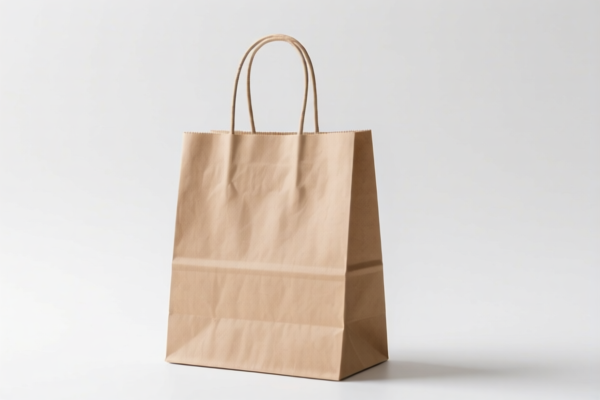
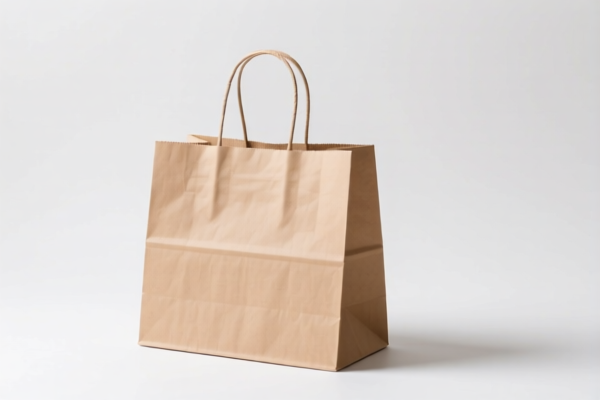
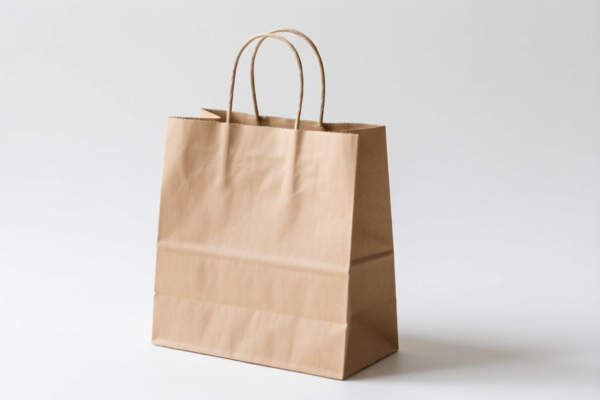
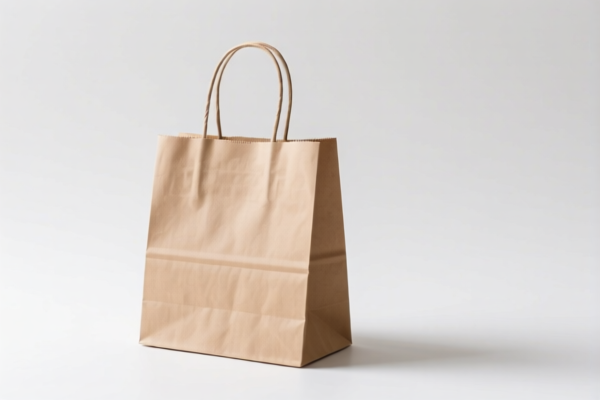
AI分析
👜 Paper Handbag (Commercial Packaging)
🌐 HS Code Reference & Customs Clearance Guide | 2026 Latest Tariff Analysis | Professional Clearance Strategy
📌 I. Product Definition & Classification: Do You Really Understand "Paper Handbags"?
Paper handbags used for commercial packaging are distinct from fashion accessories. In international trade, the classification hinges on three key factors:
1. Material: 100% Paper or Paper-covered surface.
2. Form: Bag with handles, often with a bottom width ≥ 40cm.
3. Purpose: Commercial packaging/goods packaging (not personal fashion use).
⚠️ Critical Distinction:
- If the bag is primarily for carrying goods (retail packaging) → Falls under Chapter 48 (Paper Products) or Chapter 63 (Other Made-up Articles).
- If the bag is fashion-oriented (leather-like, high-end, personal carry) → May fall under Chapter 42 (Articles of Leather).
- Note: The data provided indicates a mix of potential classifications depending on specific structural details (e.g., bottom width, surface coverage).
📦 II. HS Code Classification Details (2026 Latest Tariff Authority Comparison)
| HS Code | Product Description | Application Scenario | Key Feature |
|---|---|---|---|
6305.90.00.00 |
Sacks and bags, of textile materials, other than those of heading 6301 to 6304 | Packaging goods (handbags), material outside textile范畴 (paper) | Non-textile packaging fallback |
4819.30.00.40 |
Cartons, boxes, cases, bags and other packing containers, of paper or paperboard | Commercial use, bag form, bottom width ≥ 40cm | Large commercial paper bags |
4819.40.00.40 |
Folded paper or paperboard boxes, bags and pouches, of paper or paperboard | Commercial use, bag/pouch form, paper material | Standard paper packaging bags |
4823.90.86.80 |
Other articles of paper, paperboard, cellulose wadding or webs of cellulose fibers | Paper material, bag-like form, catch-all category | Other paper products fallback |
4202.29.10.00 |
Handbags with handle(s), whether or not without shoulder-strap(s) or pocket(s) | Matches form (handbag) + surface (paper-covered) | Paper-covered handbag |
🔍 Key Reminder:
- Chapters 48 vs. 42: If the bag is purely functional for packaging goods, it usually falls under Chapter 48. If it mimics a leather handbag in design and use (even if made of paper), it may be pushed to Chapter 42.
- Bottom Width: For4819.30.00.40, the bottom width must be ≥ 40cm.
- Surface Coverage: For4202.29.10.00, the surface must be mainly covered by paper.
💰 III. 2026 Latest Tariff Rate Breakdown (Including Surcharges & Policy Add-ons)
✅ Applicable Country: United States (US)
✅ Origin: China (CN)
✅ Effective Time: From November 10, 2025 (including subsequent imports)
🎯 1. 6305.90.00.00 —— Non-Textile Packaging Bags (Paper)
| Item | Content |
|---|---|
| Base Tariff | 6.2% (ad valorem) |
| USITC Surcharge | +7.5% |
| Section 301 (122 Clause) Surcharge | +10% |
| Total Rate | 23.7% |
| Tax Calculation | CIF Value × 23.7% |
| De Minimis Exemption | ❌ Not Applicable (Deny de minimis for Section 301 items) |
| Legal Basis Path | Base: 6.2% → Surcharge: 7.5% → Section 301: 10% |
📌 Explanation:
- This code is used when the bag is clearly for packaging goods but doesn't fit the specific size/shape of Chapter 48.
- The total burden is 23.7%, which is moderate compared to other codes.
- Warning: If misclassified as a textile bag, duties may vary, but paper is explicitly excluded.
🎯 2. 4819.30.00.40 —— Large Commercial Paper Bags (Bottom ≥ 40cm)
| Item | Content |
|---|---|
| Base Tariff | 0.0% (ad valorem) |
| USITC Surcharge | +25.0% |
| Section 301 (122 Clause) Surcharge | +10% |
| Total Rate | 35.0% |
| Tax Calculation | CIF Value × 35.0% |
| De Minimis Exemption | ❌ Not Applicable |
| Legal Basis Path | Base: 0.0% → Surcharge: 25.0% → Section 301: 10% |
📌 Explanation:
- This code applies to large commercial bags (e.g., shopping bags with wide bottoms).
- Although the base rate is 0%, the Section 301 surcharge of 25% + 10% results in a high effective rate of 35%.
- Key Condition: Bottom width must be ≥ 40cm. If smaller, it may fall to4819.40.00.40.
🎯 3. 4819.40.00.40 —— Standard Paper Packaging Bags/Pouches
| Item | Content |
|---|---|
| Base Tariff | 0.0% (ad valorem) |
| USITC Surcharge | +25.0% |
| Section 301 (122 Clause) Surcharge | +10% |
| Total Rate | 35.0% |
| Tax Calculation | CIF Value × 35.0% |
| De Minimis Exemption | ❌ Not Applicable |
| Legal Basis Path | Base: 0.0% → Surcharge: 25.0% → Section 301: 10% |
📌 Explanation:
- This is the standard code for folded paper bags/pouches used in commerce.
- Identical tax structure to4819.30.00.40.
- Difference:4819.30is for rigid boxes/large bags;4819.40is for folded bags/pouches.
🎯 4. 4823.90.86.80 —— Other Paper Products (Catch-all for Paper Bags)
| Item | Content |
|---|---|
| Base Tariff | 0.0% (ad valorem) |
| USITC Surcharge | +25.0% |
| Section 301 (122 Clause) Surcharge | +10% |
| Total Rate | 35.0% |
| Tax Calculation | CIF Value × 35.0% |
| De Minimis Exemption | ❌ Not Applicable |
| Legal Basis Path | Base: 0.0% → Surcharge: 25.0% → Section 301: 10% |
📌 Explanation:
- This is a fallback category for paper items that don’t fit elsewhere in Chapter 48.
- Use only if the bag does not meet the specific criteria for4819.30or4819.40.
- High tax rate due to Section 301 surcharges.
🎯 5. 4202.29.10.00 —— Paper-Covered Handbags (Fashion/Personal Use)
| Item | Content |
|---|---|
| Base Tariff | 5.3% (ad valorem) |
| USITC Surcharge | +25.0% |
| Section 301 (122 Clause) Surcharge | +10% |
| Total Rate | 40.3% |
| Tax Calculation | CIF Value × 40.3% |
| De Minimis Exemption | ❌ Not Applicable |
| Legal Basis Path | Base: 5.3% → Surcharge: 25.0% → Section 301: 10% |
📌 Explanation:
- This code applies if the bag is considered a handbag (fashion accessory) with a surface mainly covered by paper.
- Highest Tax Rate (40.3%) due to higher base rate (5.3%) plus standard surcharges.
- Risk: If declared as "packaging" but海关 (Customs) views it as a "handbag," this higher rate applies. Ensure the purpose is clearly "commercial packaging."
🛠️ IV. Customs Clearance Practical Advice (Battle-Proven Pitfall Guide)
✅ 1. Documentation Checklist (Mandatory)
| Document | Required | Note |
|---|---|---|
| ✅ Product Specification Sheet | ✔️ | Detail material (100% paper), dimensions, handle type, bottom width |
| ✅ Product Photos (Labeled) | ✔️ | Show front/back, handle attachment, bottom structure |
| ✅ Commercial Invoice | ✔️ | Clearly state "Paper Shopping Bag for Commercial Packaging" |
| ✅ Packing List | ✔️ | Include quantity, gross weight, net weight |
| ✅ Origin Certificate (CO) | ❌ | Not applicable for tariff reduction, but good for proof of origin |
| ✅ Third-Party Test Report | ❌ | Not typically required unless for food contact (FDA compliance if applicable) |
✅ 2. Declaration Tips (Key Mantra)
🔥 "Packaging, not fashion; Paper, not textile; Size matters, 40cm rule!"
| Scenario | Correct Declaration | Wrong Approach |
|---|---|---|
| Commercial Shopping Bag | 4819.30.00.40 or 4819.40.00.40 |
Misdeclare as 4202 → 40.3% vs 35% |
| Large Bag (Bottom ≥ 40cm) | 4819.30.00.40 |
Misdeclare as 4819.40 → Same rate, but wrong HS |
| Small/Pouch Bag | 4819.40.00.40 |
Misdeclare as 6305 → Higher base rate |
| Fashion Handbag (Paper Surface) | 4202.29.10.00 |
Misdeclare as packaging → Penalty for incorrect origin/purpose |
| Non-Textile Packaging | 6305.90.00.00 |
Misdeclare as textile → Wrong chapter |
✅ 3. Special Circumstances Handling
| Situation | Handling Advice |
|---|---|
| Bag with Plastic Window | If plastic > 10% area, may be excluded from Chapter 48. Check composition. |
| Bag with Metallic Coating | May be classified as "Other Paper Products" (4823.90.86.80) or even Chapter 42. |
| Foldable vs. Rigid | Foldable → 4819.40; Rigid/Box-like → 4819.30. |
| Food Contact | If for food, ensure FDA compliance. HS Code remains same, but documentation must include FDA registration. |
🌍 V. Global Market Comparison (2026 Latest)
| Country/Region | Recommended HS Code | Tariff (China Origin) | Certification | Note |
|---|---|---|---|---|
| 🇺🇸 USA | 4819.30.00.40 / 4819.40.00.40 |
35% (with surcharges) | None | High Section 301 burden |
| 🇪🇺 EU | 4819.20.00 / 4819.10.00 |
6.5% | CE (if applicable) | Lower base rates |
| 🇨🇳 China | 4819.20.00 |
5% | None | No surcharges |
| 🇯🇵 Japan | 4819.20.00 |
3.8% | None | Moderate rate |
📌 Conclusion:
- USA is the most expensive market for paper bags due to Section 301 tariffs.
- EU and Japan offer more favorable rates for paper products.
- Strategy: If exporting to the US, ensure accurate classification to avoid 40.3% or 35% rates. Consider supply chain diversification if volumes are high.
📌 VI. Common Mistakes & Pitfall Guide (Lessons Learned)
❌ Mistake 1: Declaring a paper shopping bag as a textile bag (6305.90.00.00) when it doesn’t meet textile criteria.
👉 Consequence: Misclassification penalty + duty discrepancy.
❌ Mistake 2: Declaring a fashion handbag (paper surface) as commercial packaging (4819.xx) to avoid higher duties.
👉 Consequence: Customs audit → Reclassification to 4202.29.10.00 → 40.3% tariff + fines.
❌ Mistake 3: Ignoring bottom width for 4819.30.00.40.
👉 Consequence: If bottom < 40cm, must use 4819.40.00.40. Same rate, but wrong code may delay clearance.
❌ Mistake 4: Not specifying material composition (e.g., paper with plastic lining).
👉 Consequence: Customs may classify as "composite material" → Different code.
✅ Correct Practice:
"Paper Shopping Bag, Commercial Use, 100% Kraft Paper, Bottom Width 45cm, With Handle, For Retail Packaging"
🎯 VII. Conclusion: Professional Declaration, Cost Savings!
🎯 Remember the Mantra:
🔹 "Packaging, not Fashion; Paper, not Textile; Size Matters, 40cm Rule!"
🔹 "HS Code Defines Duty; 35% vs 40% Makes a Difference!"
📌 Pro Tip:
- If your paper handbags are exported to the US, consider applying for HTS Code Rulings in advance.
- For small shipments, check if de minimis applies (usually $800, but Section 301 items are often excluded).
- Always provide clear photos and specifications to avoid Customs delays.
📣 Take Action Now:
📞 Contact a licensed customs broker + Provide product photos + Apply for Advance Ruling if unsure.
🚀 Ensure smooth clearance, lower costs, and faster delivery!
✨ Professional clearance starts with accurate classification!
💼 Every cent counts in international trade!
用户评价
关于 HS 编码归类
协调制度(HS)是由世界海关组织(WCO)制定的国际贸易商品分类标准。全球 200 多个国家采用 HS 系统作为海关关税、贸易统计和进出口监管的基础。
每个 HS 编码遵循以下层级结构:
- 章(2 位)——商品大类(例如:第 84 章:机器和机械设备)
- 品目(4 位)——章内的更具体分类
- 子目(6 位)——国际通用细分,所有 WCO 成员国统一使用
- 本国细分(8-10 位)——各国自行扩展的细分编码,如美国 HTSUS 10 位编码
正确的 HS 编码归类对于顺利通关、准确缴纳关税和遵守贸易法规至关重要。错误归类可能导致海关延误、多缴关税或罚款。
从CN进口到US时,适用的关税税率可能包括:
- 最惠国(MFN)税率——适用于 WTO 成员国的标准关税税率
- 普通税率——适用于无贸易协定国家
- 贸易救济关税——附加关税,如 301 条款(反倾销)、232 条款(国家安全)或反补贴税
本页内容仅供参考。如需正式归类,请咨询当地海关或持牌报关代理。