Paper Hot Food Tray
CN → US| HS编码 | 关税税率 | 原产国 | 目的国 | 文档 |
|---|---|---|---|---|
| 4819600000 | 35.0% | CN | US | 官方文档 |
| 4823690040 | 35.0% | CN | US | 官方文档 |
| 4823908000 | 35.0% | CN | US | 官方文档 |
| 4819502000 | 35.0% | CN | US | 官方文档 |
| 4819600000 | 35.0% | CN | US | 官方文档 |
商品图片
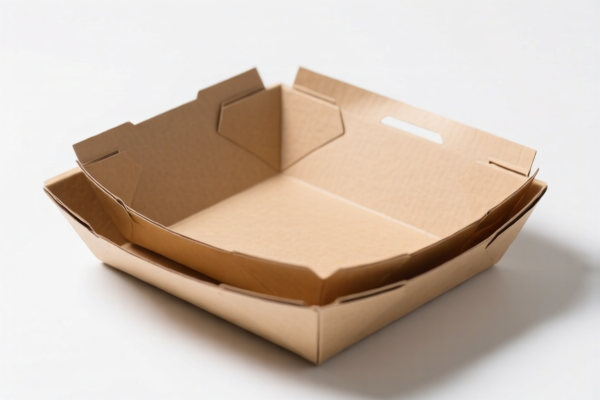
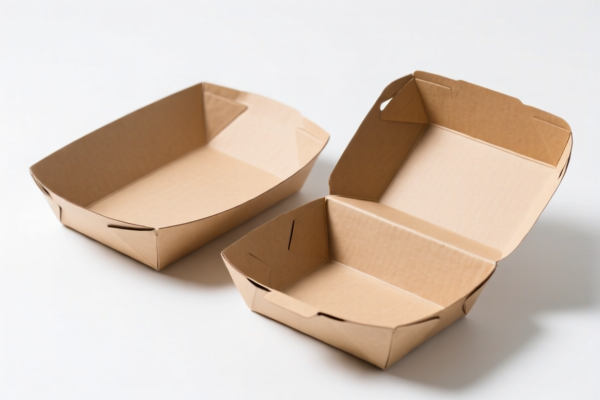
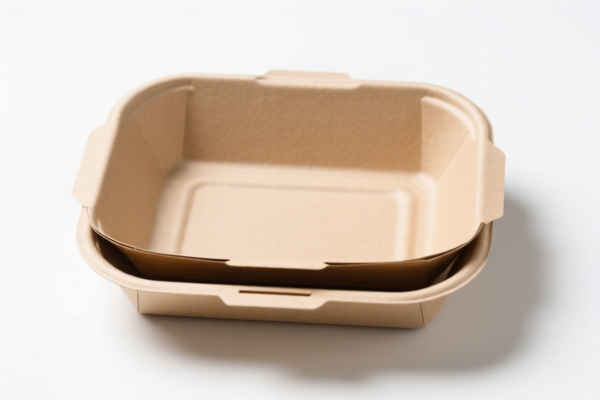
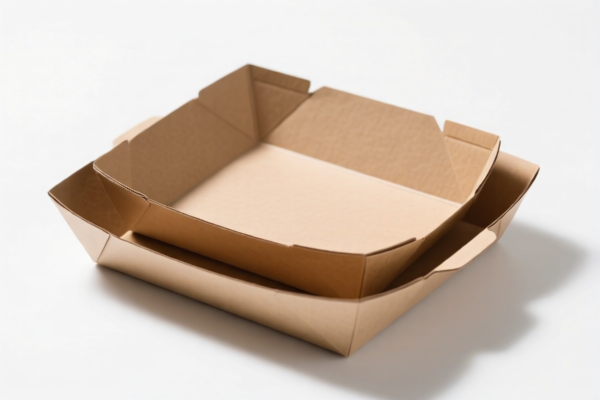
AI分析
📦 Paper Hot Food Tray (Paper Hot Food Container)
🌐 HS Code Reference & Clearance Guide | 2024/2025 Latest Tariff Full Analysis | Professional Customs Strategy
📌 I. Product Definition & Classification: What Exactly is a "Paper Hot Food Tray"?
A "Paper Hot Food Tray" refers to disposable or semi-rigid paper-based containers designed to hold hot foods. In international trade, the classification depends heavily on the primary function and material composition. While often used for food, if the product is primarily designed for storage in offices or retail environments (not direct food contact with specific sanitary certifications implied in the source), it may be classified differently than standard food packaging.
Key Distinction in Source Data: The provided data explicitly highlights a critical nuance: 1. Storage/Office Use: Classified under 4819.60.00.00 or 4823 series if viewed as general paper products. 2. Food/Be Beverage Packaging: Classified under 4819.50.20.00 if specifically defined as containers for food/drink meeting sanitary standards.
⚠️ Critical Classification Point:
- If the tray is marketed for office/store storage of items (even if it looks like a food tray), it falls under 4819.60.00.00 or 4823.69/90.
- If it is marketed specifically as a food container (for hot food delivery/takeout) and meets sanitary definitions, it falls under 4819.50.20.00.
- Do not assume all paper trays are "food packaging." The source data distinguishes between "storage items" and "food containers."
📦 II. HS Code Classification Details (Based on Provided Data)
| HS Code | Product Description (Based on Source) | Application Scenario | Key Attribute |
|---|---|---|---|
4819.60.00.00 |
Paper rectangular tray for storage in offices, shops, etc. | Office supply, retail storage, non-food general storage | ✅ Material: Paper; Use: Storage |
4823.69.00.40 |
Paper tray, category of paper trays, shape/material match | General paper tray product, generic classification | ✅ Shape: Rectangular; Material: Paper |
4823.90.80.00 |
Other articles of paper/cardboard, other sizes/shapes | Non-standard paper products, generic paper articles | ✅ Fallback category for paper goods |
4819.50.20.00 |
Paper tray, packaging container范畴, for food/drink | Food service, takeout, hot food delivery | ✅ Sanitary Container; Use: Food |
4819.60.00.00 |
Paper rectangular tray, storage items, material matches | Repeated entry for storage-focused paper trays | ✅ Material: Paper; Use: Storage |
🔍 Key Reminder from Data:
- All listed HS Codes in the source data carry a Total Tax Rate of 35.0%.
- The tax breakdown is identical for all codes: Base 0% + Additional 25% + Section 122 Tariff 10%.
- The source explicitly states that 4819.50.20.00 is for "containers for food or beverages," while 4819.60.00.00 is for "storage items in offices/shops." Choose based on your product's declared primary use.
💰 III. 2024/2025 Latest Tariff Rate Breakdown (Including Surtaxes)
✅ Applicable Country: United States (US)
✅ Origin: China (CN)
✅ Total Tax Rate: 35.0% for ALL listed HS Codes in the source data
🎯 1. All HS Codes (4819.50.20.00, 4819.60.00.00, 4823.69.00.40, 4823.90.80.00)
| Item | Content |
|---|---|
| Base Tariff Rate | 0% (ad valorem) |
| Section 301 Additional Tariff | +25% (Added Tariff) |
| Section 122 Tariff | +10% (Specific Clause 122) |
| Total Tax Rate | 35.0% |
| Tax Calculation | CIF Value × 35% |
| De Minimis Exemption | ❌ Not Applicable (High risk for small parcels) |
| Legal Basis Path | Base Tariff: 0% → Add Tariff: 25% → Section 122: 10% |
📌 Explanation:
- "Base Tariff 0%": Paper products generally have low base duties in the US.
- "Additional Tariff 25%": Likely refers to Section 301 Tariffs imposed on Chinese goods.
- "Section 122 Tariff 10%": Refers to specific trade actions or penalties under Section 122 of the Trade Act of 1974 (or similar specific clause as per source).
- Total 35% is a significant cost factor. Importers must calculate this into their landed cost.
🛠️ IV. Customs Clearance Practical Advice (Pitfall Avoidance Guide)
✅ 1. Required Documentation List (Non-negotiable)
| Document | Must Provide | Explanation |
|---|---|---|
| ✅ Product Specification Sheet | ✔️ | Must clearly state Material (e.g., Paper, Cardboard, Laminated Paper) and Intended Use (Food vs. Storage). |
| ✅ Product Photos | ✔️ | Clear images showing the tray structure, any coatings (for food safety), and packaging. |
| ✅ Commercial Invoice | ✔️ | Must accurately describe the item. Avoid vague terms like "Paper Tray." Use "Paper Food Container" or "Paper Storage Tray" based on HS Code choice. |
| ✅ Packing List | ✔️ | Weight, dimensions, and quantity. |
| ✅ Food Contact Statement (if using 4819.50.20.00) | ✔️ | If declaring as food packaging, provide evidence of compliance with FDA/USDA standards (even if not always requested, it justifies the classification). |
| ✅ Origin Certificate (if applicable) | ✔️ | To prove Chinese origin (subject to 35% tariff). |
✅ 2. Declaration Strategy (Key Mantra)
🔥 "Function Dictates Code, Use Dictates Duty!"
| Scenario | Correct Declaration | Incorrect Declaration |
|---|---|---|
| Tray for Hot Food (Takeout) | 4819.50.20.00Desc: "Paper Food Container for Hot Meals" |
4819.60.00.00Desc: "Paper Storage Tray" → May trigger scrutiny for misclassification. |
| Tray for Office/Retail Storage | 4819.60.00.00Desc: "Paper Rectangular Tray for Storage" |
4819.50.20.00Desc: "Food Container" → If not for food, this is misclassification. |
| Generic Paper Tray (No specific use) | 4823.69.00.40 or 4823.90.80.00 |
Vague description like "Paper Product" → Leads to delays. |
⚠️ Warning:
- Do not mix "Food" and "Storage" descriptions.
- If you declare as4819.50.20.00(Food), be prepared to prove it is used for food.
- If you declare as4819.60.00.00(Storage), ensure it is not primarily marketed as a food service item.
✅ 3. Special Case Handling
| Scenario | Handling Advice |
|---|---|
| Laminated Paper Trays | Ensure the description specifies "Paper" as the base material. If heavily plastic-coated, it might fall under different chapters, but source data keeps it in 4819/4823. Stick to source data unless certified otherwise. |
| OEM Custom Trays | Provide customer design sheets. Clarify if the design is specifically for "Hot Food" (implies heat resistance) to support 4819.50.20.00. |
| Mixed Shipments | If a shipment contains both food trays and storage trays, separate HS Codes in the same entry if possible, or choose the dominant use. Do not lump them under one code if uses differ significantly. |
🌍 V. Global Market Comparison (Based on Source Data Context)
| Country/Region | Recommended HS Code (Based on Source) | Tariff Rate | Notes |
|---|---|---|---|
| 🇺🇸 United States | 4819.50.20.00 or 4819.60.00.00 |
35% | High tariffs due to 25% + 10% surcharges. |
| 🇨🇳 China (Export) | Same Codes | Varies (Check Local Export Rules) | Source data is US-focused (Section 122/301 references). |
| 🇪🇺 European Union | 4819.60 / 4819.50 | Check EU TARIC | EU may have different VAT and duty structures. |
| 🇬🇧 United Kingdom | 4819.60 / 4819.50 | Check UK Global Tariff | Post-Brexit rules apply. |
📌 Conclusion:
- The 35% total tariff is a major cost driver for US imports of paper trays from China.
- Accurate use declaration is critical to avoid penalties for misclassification.
- Consider supply chain diversification if margins are thin, as paper products are highly sensitive to tariff changes.
📌 VI. Common Errors & Pitfall Guide (Lessons Learned)
❌ Error 1: Declaring "Paper Hot Food Tray" under 4819.60.00.00 (Storage)
👉 Consequence: If the product is clearly for food, customs may reclassify to 4819.50.20.00 or flag for misdeclaration. While the tax rate is the same in this source data (35%), the legal risk remains.
❌ Error 2: Using vague descriptions like "Paper Tray" without specifying Material or Use
👉 Consequence: Customs request for additional information (AI), leading to delays, storage fees, and potential penalties.
❌ Error 3: Ignoring Section 122 Tariff
👉 Consequence: Underestimating landed cost. The 10% surcharge is significant. Budget accordingly.
❌ Error 4: Assuming De Minimis (Section 321) applies to small shipments
👉 Consequence: Paper products from China are often subject to anti-dumping or specific surtaxes that may override de minimis exemptions. Check with your carrier. Source data implies 35% tax, suggesting no de minimis exemption.
✅ Correct Practice:
"Paper Rectangular Tray, Unbleached Kraft, for Hot Food Service, FDA Compliant, Model XYZ"
(For4819.50.20.00)"Paper Storage Tray, Rectangular, for Office Use, Model ABC"
(For4819.60.00.00)
🎯 VII. Conclusion: Professional Declaration Saves Money and Time
🎯 Key Takeaways:
🔹 "Food vs. Storage: Choose Wisely!" – The HS Code depends on the intended use.
🔹 "35% is the Real Cost" – Factor in the 25% + 10% surcharges in your pricing model.
🔹 "Documentation is Key" – Clear specs and photos prevent delays.
📌 Pro Tip:
If your product is used for both food and storage, declare based on the primary commercial purpose. Provide supporting documentation (e.g., marketing materials, target customer list) to justify your classification.
📣 Immediate Action Required:
📞 Contact your customs broker before shipping.
📄 Prepare Product Specs and Photos.
🚀 Accurate classification ensures smooth clearance and predictable costs.
✨ Professional Customs Clearance Starts with Precise Classification!
💼 Every Penny of Duty Matters – Get It Right!
用户评价
关于 HS 编码归类
协调制度(HS)是由世界海关组织(WCO)制定的国际贸易商品分类标准。全球 200 多个国家采用 HS 系统作为海关关税、贸易统计和进出口监管的基础。
每个 HS 编码遵循以下层级结构:
- 章(2 位)——商品大类(例如:第 84 章:机器和机械设备)
- 品目(4 位)——章内的更具体分类
- 子目(6 位)——国际通用细分,所有 WCO 成员国统一使用
- 本国细分(8-10 位)——各国自行扩展的细分编码,如美国 HTSUS 10 位编码
正确的 HS 编码归类对于顺利通关、准确缴纳关税和遵守贸易法规至关重要。错误归类可能导致海关延误、多缴关税或罚款。
从CN进口到US时,适用的关税税率可能包括:
- 最惠国(MFN)税率——适用于 WTO 成员国的标准关税税率
- 普通税率——适用于无贸易协定国家
- 贸易救济关税——附加关税,如 301 条款(反倾销)、232 条款(国家安全)或反补贴税
本页内容仅供参考。如需正式归类,请咨询当地海关或持牌报关代理。