Paper Product (HS Code 4810921235)
CN → US| HS编码 | 关税税率 | 原产国 | 目的国 | 文档 |
|---|---|---|---|---|
| 4810297025 | 35.0% | CN | US | 官方文档 |
| 4802552000 | 35.0% | CN | US | 官方文档 |
| 4823690020 | 35.0% | CN | US | 官方文档 |
| 4819100020 | 35.0% | CN | US | 官方文档 |
| 4819200020 | 35.0% | CN | US | 官方文档 |
商品图片
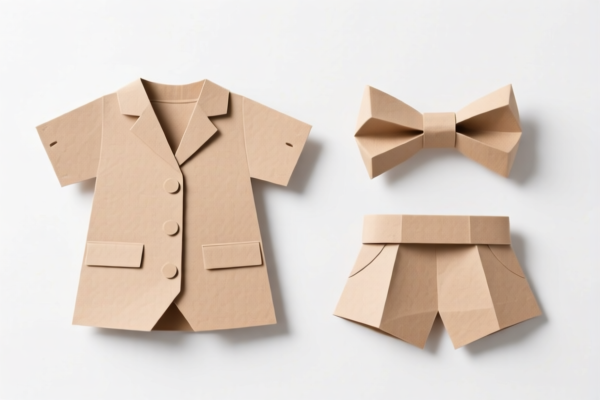
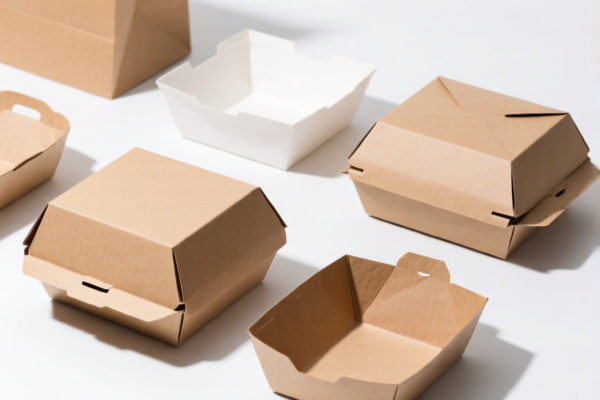
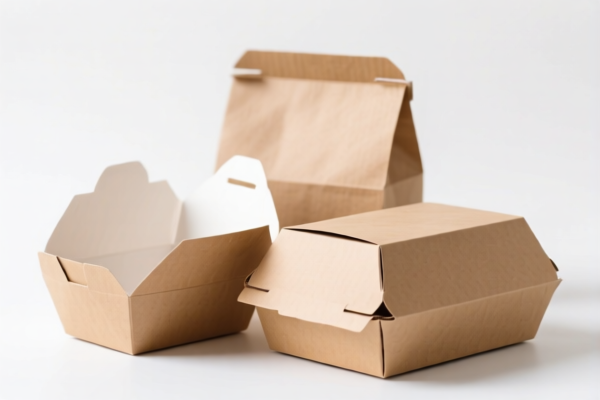
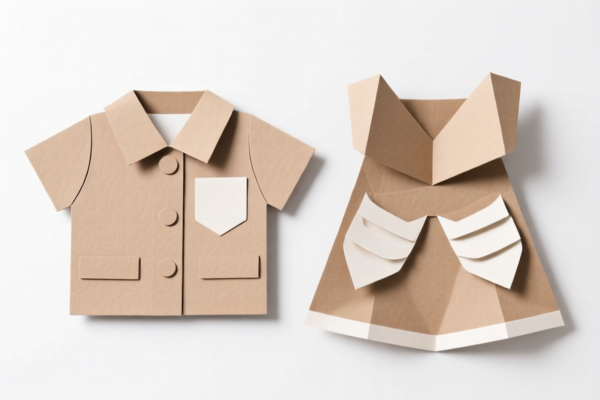
AI分析
📦 Paper Products: HS Code Classification & Tariff Strategy | 2026 Customs Clearance Guide
🌐 HS Code Reference & Customs Guide | 2026 Latest Tariff Analysis | Professional Clearance Strategy
📌 I. Product Definition & Classification: What Exactly Are "Paper Products"?
Paper products are ubiquitous in global trade, ranging from raw materials to finished packaging. In international trade, they are categorized based on material composition, physical form (rolls vs. sheets vs. boxes), and specific application.
Under the provided data, specific HS Codes are recommended based on the form and material of the paper:
⚠️ Key Distinction Points:
- Raw Material Form: If the paper is in rolls (e.g., printing paper, drawing paper), it falls under 4810 or 4802.
- Packaging Form: If the paper is used for containers (cartons, boxes, corrugated sheets), it falls under 4819.
- General Sheet/Processed Paper: If it’s generic cut paper or specialized paperboard not fitting other categories, it may fall under 4823.📌 Note: The specific HS Code depends on the exact physical state (roll vs. sheet vs. box) and weight/coating of the paper.
📦 II. HS Code Classification Details (2026 Latest Tariff Authority)
| HS Code | Product Description | Applicable Scenario | Physical Form | Conflict Check |
|---|---|---|---|---|
4810.29.70.25 |
Paper products, matching roll format, material: paper | Rolls of paper (e.g., printing paper, unwoven paper) | Rolls | ✅ No conflict |
4823.69.00.20 |
Paper products, fit for paper/cardboard/cellulose fiber category | General paper/cardboard items, no specific shape conflict | Sheets/Any | ✅ No conflict |
4819.10.00.20 |
Paper products, fit for corrugated paper or cardboard category | Corrugated boxes, cardboard containers | Corrugated/Box | ✅ No conflict |
4819.20.00.20 |
Paper products, fit for paper boxes, cases, and shells | Paper cartons, shipping boxes, cases | Boxes/Cases | ✅ No conflict (fallback logic) |
4802.55.20.00 |
Paper products, directly match drawing paper material & use | Drawing paper, technical paper | Drawing Paper | ✅ No attribute conflict |
🔍 Key Reminder:
- Rolls vs. Sheets:4810and4802often refer to specific paper types in roll or specific finished formats.
- Packaging:4819is strictly for packaging containers (boxes, cartons).
- Generic:4823is a catch-all for paper articles not specifically mentioned elsewhere.
💰 III. 2026 Latest Tariff Rate Details (Including Surtaxes, Policy Add-ons)
✅ Applicable Country: United States (US)
✅ Origin: China (CN)
✅ Effective Date: From November 10, 2025 (including subsequent imports)
✅ Total Tax Rate: 35.0% for all listed HS Codes
🎯 1. Common Tariff Structure for All Listed Paper Products
| Item | Content |
|---|---|
| Base Tariff | 0.0% (ad valorem) |
| Section 301 Surcharge | +25.0% (Additional Duty under USITC Footnote) |
| Section 122 Duty | +10.0% (Under 122 Provision, targeting specific Chinese imports) |
| Total Tax Rate | 35.0% |
| Tax Calculation | CIF Value × 35% |
| De Minimis Eligibility | ❌ Not Eligible (Deny de minimis for these HS codes under current enforcement) |
| Legal Basis Path | Base: 0% → 301: +25% → 122: +10% |
📌 Explanation:
- “Base Tariff 0%”: Most paper products have a low or zero base MFN tariff.
- “Section 301 Surcharge 25%”: This is the major cost driver. Under the US Trade Act Section 301, many Chinese-origin goods, including paper and cardboard, are subject to a 25% additional duty.
- “Section 122 Duty 10%”: This is an additional layer of tariff applied under specific trade provisions (often related to national security or specific bilateral agreements).
- Total 35%: This is a high effective tariff rate. It significantly impacts the landed cost of Chinese paper products.
🛠️ IV. Customs Clearance Practical Advice (Battle-Tested Pitfall Guide)
✅ 1. Required Documentation Checklist (Non-negotiable)
| Document | Required | Explanation |
|---|---|---|
| ✅ Product Specification Sheet | ✔️ | Must specify: Paper type (e.g., Kraft, Corrugated, Drawing), GSM, dimensions, roll/sheet status. |
| ✅ Commercial Invoice | ✔️ | Clearly state: “Paper Product,” HS Code, Country of Origin (China), CIF value. |
| ✅ Packing List | ✔️ | Detail number of rolls/boxes, net/gross weight. Ensure no mixed HS codes in one shipment unless declared separately. |
| ✅ Certificate of Origin (CO) | ✔️ | Essential for proving origin. May be needed for anti-dumping or countervailing duty checks. |
| ✅ Photos of Product & Labels | ✔️ | Show packaging, labels, and product texture to prove material type. |
| ✅ Third-Party Test Report | ⚠️ Optional | If claiming specific uses (e.g., food-grade packaging), provide FDA compliance or food-contact test reports. |
✅ 2. Declaration Tips (Critical Keywords)
🔥 “Form is King, Origin is Key, HS Code is Destiny!”
| Scenario | Correct Declaration | Wrong Approach |
|---|---|---|
| Paper in Rolls | Declare as 4810.29.70.25 or 4802.55.20.00 based on type. |
Declaring as "boxes" → Misclassification risk. |
| Corrugated Boxes | Declare as 4819.10.00.20 or 4819.20.00.20. |
Declaring as "flat paper" → Lower duty appeal (risky). |
| Generic Paper Sheets | Declare as 4823.69.00.20. |
Vague description “Paper” → Customs may reclassify to highest duty rate. |
| Drawing Paper | Declare as 4802.55.20.00. |
Declaring as general cardboard → Wrong HS code. |
📌 Warning:
- Do NOT declare “Paper” vaguely. Use specific terms like “Corrugated Cardboard Boxes,” “Rolls of Printing Paper,” or “Kraft Paper Sheets.”
- Ensure Origin is Explicitly Stated: “Made in China” must match the Certificate of Origin.
✅ 3. Special Cases & Risk Management
| Scenario | Handling Advice |
|---|---|
| Mixed Shipment (Rolls + Boxes) | Split Declaration: Declare rolls under 4810/4802 and boxes under 4819. Do not mix in one line item. |
| Coated Paper | If coated, ensure it’s declared correctly under 4810 (coated paper) vs. 4802 (uncoated). Misclassification can lead to penalties. |
| Food-Grade Packaging | Provide FDA compliance documents to avoid health/safety holds, even if duty is 35%. |
| Origin Shift (e.g., Vietnam) | If paper is produced in Vietnam with sufficient transformation, you may avoid US tariffs. Requires robust supply chain documentation. |
🌍 V. Global Market Comparison (2026 Latest)
| Country/Region | Recommended HS Code | Base Tariff | US Surtax (China) | Total Effective Rate (China) | Certification Requirements |
|---|---|---|---|---|---|
| 🇺🇸 USA | 4810/4819/4802/4823 |
0% | +25% (301) +10% (122) | 35% | None specific, but origin proof critical. |
| 🇨🇳 China | Same HS Codes | 5-10% | N/A | 5-10% | CCC (if applicable), GB standards. |
| 🇪🇺 EU | Same HS Codes | 0-6% | N/A | 0-6% | CE (if packaging for food/chemicals), REACH. |
| 🇬🇧 UK | Same HS Codes | 0-6% | N/A | 0-6% | UKCA marking where applicable. |
| 🇦🇺 Australia | Same HS Codes | 5% | N/A | 5% | No specific surtax for Chinese paper. |
📌 Conclusion:
- USA is the most expensive market for Chinese paper products due to 35% total tariff.
- EU and UK offer significantly lower duty costs (0-6%).
- Strategy: Consider origin diversification (e.g., producing in Vietnam, Malaysia, or Mexico) to avoid US surtaxes.
📌 VI. Common Mistakes & Pitfalls (Lessons Learned)
❌ Mistake 1: Declaring “Paper Products” without specifying form (roll vs. sheet).
👉 Consequence: Customs may classify under the highest duty rate or demand reclassification → Delays + Penalties.
❌ Mistake 2: Ignoring Section 122 and 301 tariffs.
👉 Consequence: Underpayment of 35% → Back taxes + Interest + Possible seizure.
❌ Mistake 3: Mixing different HS codes in one line item.
👉 Consequence: Invalid declaration → Shipment held at customs.
❌ Mistake 4: Failing to provide Certificate of Origin.
👉 Consequence: Cannot prove origin → Loss of any potential preferential treatment (if any) or inability to verify surtax applicability.
✅ Correct Approach:
“Corrugated Cardboard Boxes, 3-ply, Brown Kraft, Made in China, HS Code: 4819.10.00.20”
🎯 VII. Conclusion: Professional Declaration, Cost Efficiency, Risk Mitigation
🎯 Remember the Golden Rules:
🔹 “Form Defines Code, Origin Defines Tax, 35% is the US Baseline.”
🔹 “HS Code 4810/4819/4802/4823 all face 35% total duty from China.”
🔹 “Specify rolls vs. boxes vs. sheets to avoid misclassification.”
📌 Pro Tip:
If your paper products are not originally from China (e.g., sourced from Southeast Asia with substantial transformation), you may qualify for lower tariffs.
Action:
1. Get Advance Rulings from US CBP if unsure about classification.
2. Document Supply Chain meticulously to prove origin if claiming exemption.
3. Consult a Customs Broker to optimize HS code selection within the 4810/4819/4802/4823 range.
📣 Immediate Action:
📞 Contact a Licensed Customs Broker
📄 Prepare Detailed Product Specs & Origin Proof
🚀 Optimize Landed Cost by Correct Declaration
✨ Professional Clearance Starts with Accurate Classification!
💼 Every Percent of Duty Counts – Don’t Leave Money on the Table!
用户评价
关于 HS 编码归类
协调制度(HS)是由世界海关组织(WCO)制定的国际贸易商品分类标准。全球 200 多个国家采用 HS 系统作为海关关税、贸易统计和进出口监管的基础。
每个 HS 编码遵循以下层级结构:
- 章(2 位)——商品大类(例如:第 84 章:机器和机械设备)
- 品目(4 位)——章内的更具体分类
- 子目(6 位)——国际通用细分,所有 WCO 成员国统一使用
- 本国细分(8-10 位)——各国自行扩展的细分编码,如美国 HTSUS 10 位编码
正确的 HS 编码归类对于顺利通关、准确缴纳关税和遵守贸易法规至关重要。错误归类可能导致海关延误、多缴关税或罚款。
从CN进口到US时,适用的关税税率可能包括:
- 最惠国(MFN)税率——适用于 WTO 成员国的标准关税税率
- 普通税率——适用于无贸易协定国家
- 贸易救济关税——附加关税,如 301 条款(反倾销)、232 条款(国家安全)或反补贴税
本页内容仅供参考。如需正式归类,请咨询当地海关或持牌报关代理。