Paper Tray
CN → US| HS编码 | 关税税率 | 原产国 | 目的国 | 文档 |
|---|---|---|---|---|
| 3924103000 | 22.8% | CN | US | 官方文档 |
| 3924905650 | 20.9% | CN | US | 官方文档 |
| 7323999080 | 88.4% | CN | US | 官方文档 |
| 7615109100 | 70.6% | CN | US | 官方文档 |
| 7323940080 | 70.2% | CN | US | 官方文档 |
商品图片
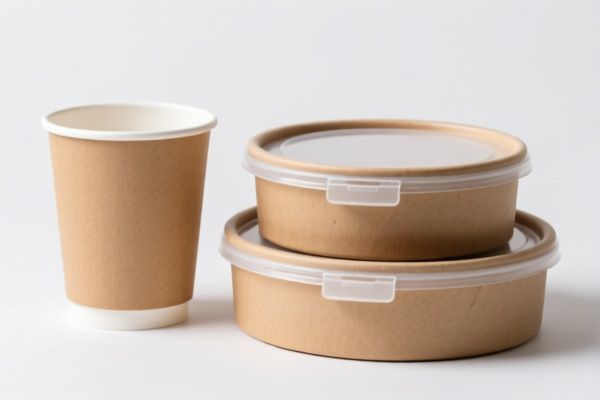
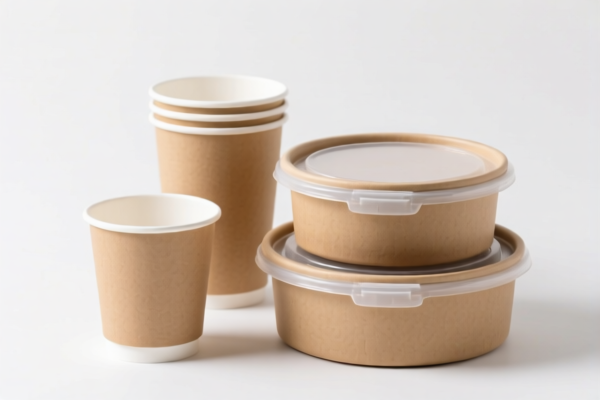
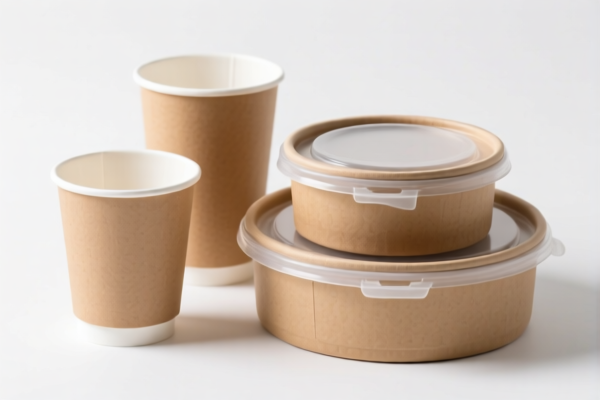
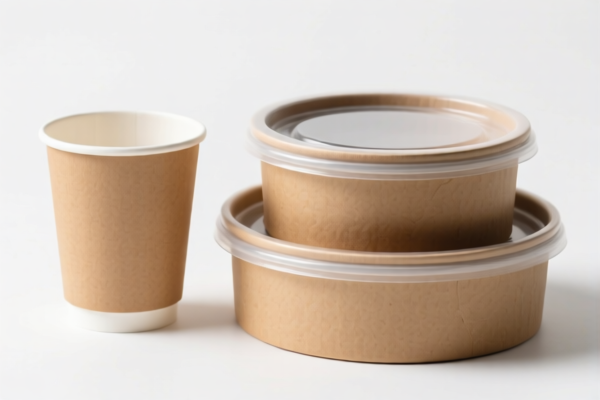
AI分析
🍽️ Paper Trays & Tableware (Paper/Board Cups, Dishes, Trays)
🌐 HS Code Reference & Customs Clearance Guide | 2026 Tariff Analysis | Professional Clearance Strategy
📌 I. Product Definition & Classification: What Exactly Are "Paper Trays"?
Paper trays, cups, and food containers fall under the category of "Articles of paper pulp, paper, paperboard, cellulose wadding or webs of cellulose fibers." In international trade, they are primarily classified based on material composition and shape/function.
Key Distinction: * Bamboo-Based Items: Specifically those made from bamboo fibers are classified under a specific subheading. * Other Paper/Paperboard Items: Includes cardboard, coated paper, or mixed fiber materials, falling under "Other."
⚠️ Critical Classification Point:
- If the product is explicitly made of bamboo (e.g., bamboo fiber tableware) → It goes to 4823.61.00.20.
- If the product is made of standard paper, paperboard, or pulp (e.g., molded fiber containers, cardboard trays) → It goes to 4823.69.00.40.
📦 II. HS Code Classification Details (2026 Latest Tariff Alignment)
| HS Code | Product Description | Applicable Scenario | Material Basis |
|---|---|---|---|
4823.61.00.20 |
Trays, dishes, plates, cups... Of bamboo | Bamboo fiber cups, nested food containers, bamboo-based tableware | ✅ Bamboo |
4823.69.00.40 |
Trays, dishes, plates, cups... Other | Cardboard trays, paper cups, molded pulp containers, coated paperboard | ❌ Non-Bamboo (Paper/Cardboard) |
🔍 Key Reminder:
- Do not confuse "paperboard" with "bamboo." While both are plant-based, customs authorities strictly separate them for tariff purposes. - Nested food containers and cups are explicitly mentioned in the4823.61heading for bamboo items. - If the material is not bamboo (e.g., kraft paper, white card, recycled pulp), it must be classified under4823.69.
💰 III. 2026 Latest Tariff Rate Details (Including Additional Duties)
✅ Applicable Country: United States (US)
✅ Origin: China (CN)
✅ Effective Time: Current tariff regime (Section 301 & IEEPA provisions apply)
🎯 1. 4823.61.00.20 —— Paper/Board Articles Of Bamboo
| Item | Content |
|---|---|
| Base Tariff | 0.0% |
| Additional Tariff (Section 301) | 0.0% |
| Total Tax Rate | 0.0% |
| Tax Calculation | CIF Value × 0.0% = $0 |
| De Minimis Exemption | ✅ Yes (If value < $800, no duty/tax) |
| Legal Basis Path | USITC:4823.61.00.20 → No Footnotes for Additional Duties |
📌 Interpretation:
- This is a ZERO-TARIFF item.
- Both the base duty and the additional "Section 301" tariffs are 0.0%.
- This makes bamboo-based paper tableware highly competitive in cost compared to other packaging materials.
- Advantage: Zero additional taxes mean lower landed costs for US importers.
🎯 2. 4823.69.00.40 —— Other Paper/Board Trays, Dishes, Cups, etc.
| Item | Content |
|---|---|
| Base Tariff | 0.0% |
| Additional Tariff (Section 301) | 25.0% |
| Total Tax Rate | 25.0% |
| Tax Calculation | CIF Value × 25.0% |
| De Minimis Exemption | ❌ No (Subject to Section 301; however, check current Section 321/301 exclusions carefully) |
| Legal Basis Path | USITC:4823.69.00.40 → FOOTNOTE:301 (25% Additional Duty) |
📌 Interpretation:
- Despite a 0% base duty, the 25% additional tariff makes this category expensive.
- This applies to standard paper cups, cardboard food trays, and molded pulp containers.
- Disadvantage: High tariff burden (25%) increases import costs significantly.
- Note: There is no 10% IEEPA additional tax for these codes, only the 25% Section 301 duty.
🛠️ IV. Customs Clearance Practical Advice (实战避坑指南)
✅ 1. Documentation Checklist (Must-Have)
| Document | Required? | Notes |
|---|---|---|
| ✅ Product Specification Sheet | ✔️ | Must clearly state Material: "100% Bamboo Fiber" vs. "Paperboard/Kraft Paper". |
| ✅ Composition Proof | ✔️ | Lab test report or supplier declaration confirming bamboo content. |
| ✅ Commercial Invoice | ✔️ | Describe items as "Bamboo Fiber Tableware" or "Paperboard Food Containers" accurately. |
| ✅ Packing List | ✔️ | Detail net/gross weights. |
| ✅ Certificate of Origin (CO) | ✔️ | Crucial for origin determination (China vs. Vietnam, etc.). |
| ✅ Photo of Product & Label | ✔️ | Show branding, material labels (e.g., "Bamboo Pulp"). |
✅ 2. Classification Strategy (Key Tips)
🔥 "Material is King: Bamboo = 0%, Paper = 25%"
| Scenario | Correct HS Code | Tax Rate | Mistake to Avoid |
|---|---|---|---|
| Bamboo Fiber Cups/Trays | 4823.61.00.20 |
0.0% | ❌ Misclassifying as generic paper → Pay 25%! |
| Standard Paper Cups | 4823.69.00.40 |
25.0% | ❌ Claiming it's bamboo without proof → Penalty & Retrospective Tax |
| Cardboard Food Boxes | 4823.69.00.40 |
25.0% | ❌ Splitting shipment to hide nature → Audit Risk |
| Mixed Materials (e.g., Paper + Plastic Lining) | 4823.69.00.40 |
25.0% | ❌ Assuming it's exempt because it's paper → The primary material dictates the code. |
📌 Clarification:
- If your product is coated with plastic or wax, it is still considered paper/paperboard for this heading unless the coating makes it primarily plastic (which would change the HS code entirely). - "Nested food containers" are explicitly listed under the bamboo subheading. Ensure your product matches this physical description if using4823.61.
✅ 3. Special Cases & Handling
| Situation | Handling Advice |
|---|---|
| OEM Private Label | Ensure the supplier’s spec sheet matches the invoice description. Customs may request lab tests. |
| Biodegradable Certification | Helpful for marketing, but not sufficient for customs classification. Must confirm material origin (Bamboo vs. Wood Pulp). |
| Small Samples (De Minimis) | If shipped via courier (e.g., DHL, FedEx) under $800, 4823.69.00.40 may still be subject to duties if not eligible for Section 321 exemption. Check current US CBP rules. |
| Vietnam/Mexico Origin | If processed in a third country, origin rules change. Ensure proper CoO for FTA benefits. |
🌍 V. Global Market Comparison (2026 Latest)
| Country/Region | Recommended HS Code | Tariff (China Origin) | Remarks |
|---|---|---|---|
| 🇺🇸 USA | 4823.61.00.20 (Bamboo) |
0.0% | Best Rate |
| 🇺🇸 USA | 4823.69.00.40 (Paper) |
25.0% | High Cost |
| 🇪🇺 EU | 4823.61 / 4823.69 |
0.0% - 4.5% | No Section 301. Check EUTR for wood/bamboo legality. |
| 🇨🇳 China | 4823.61 / 4823.69 |
~5% - 8% | Import duty varies. |
| 🇬🇧 UK | 4823.61 / 4823.69 |
0.0% - 4.5% | Post-Brexit Tariff Book applies. |
📌 Conclusion:
- The 25% tariff gap in the US market is massive.
- Bamboo-based paper products are strategically preferred for US export due to 0% duty.
- Paper/Cardboard products face significant cost penalties.
📌 VI. Common Errors & Pitfalls (Lessons Learned)
❌ Error 1: Classifying bamboo fiber products as generic "Paper Cups" (4823.69).
👉 Consequence: You pay an extra 25% unnecessarily. Fix: Use 4823.61.00.20.
❌ Error 2: Claiming a product is "Bamboo" when it is actually Wood Pulp or Mix.
👉 Consequence: Customs audit, retroactive tax + penalties + potential seizure. Fix: Provide lab tests proving bamboo content.
❌ Error 3: Ignoring Plastic Linings.
👉 Consequence: If the plastic lining exceeds certain thresholds, it may be classified as a plastic article (Chapter 39), not paper. Fix: Verify composition.
✅ Correct Declaration Example:
"Bamboo Fiber Nested Food Container, Biodegradable, For Food Service Use, Model ABC, Made of 100% Bamboo Pulp"
→ HS Code:4823.61.00.20→ Tax: 0.0%
🎯 VII. Conclusion: Precision Classification Saves Money!
🎯 Remember the Rule:
🔹 "Bamboo = 0%, Paper = 25%"
🔹 "Check Material First, Then Choose Code."
📌 Actionable Advice:
1. Verify Material: Get a material breakdown from your supplier. Is it bamboo, wood pulp, or recycled paper?
2. Classify Correctly: If bamboo, use 4823.61.00.20. If paper, use 4823.69.00.40.
3. Document Everything: Keep lab reports and material specs on file for customs inspections.
4. Optimize for US Market: If exporting to the US, bamboo-based products are significantly more competitive due to zero tariffs.
📣 Immediate Action:
📞 Confirm material composition with supplier.
📄 Ensure invoice description matches HS Code intent.
🚀 Save 25% on taxes by choosing the right HS Code!
✨ Professional Customs Clearance Starts with Accurate Classification!
💼 Your Cost Savings Are Hidden in Your HS Code!
用户评价
关于 HS 编码归类
协调制度(HS)是由世界海关组织(WCO)制定的国际贸易商品分类标准。全球 200 多个国家采用 HS 系统作为海关关税、贸易统计和进出口监管的基础。
每个 HS 编码遵循以下层级结构:
- 章(2 位)——商品大类(例如:第 84 章:机器和机械设备)
- 品目(4 位)——章内的更具体分类
- 子目(6 位)——国际通用细分,所有 WCO 成员国统一使用
- 本国细分(8-10 位)——各国自行扩展的细分编码,如美国 HTSUS 10 位编码
正确的 HS 编码归类对于顺利通关、准确缴纳关税和遵守贸易法规至关重要。错误归类可能导致海关延误、多缴关税或罚款。
从CN进口到US时,适用的关税税率可能包括:
- 最惠国(MFN)税率——适用于 WTO 成员国的标准关税税率
- 普通税率——适用于无贸易协定国家
- 贸易救济关税——附加关税,如 301 条款(反倾销)、232 条款(国家安全)或反补贴税
本页内容仅供参考。如需正式归类,请咨询当地海关或持牌报关代理。