Paper and Paperboard (HS 4804290000)
CN → US| HS编码 | 关税税率 | 原产国 | 目的国 | 文档 |
|---|---|---|---|---|
| 4805924010 | 35.0% | CN | US | 官方文档 |
| 4805924020 | 35.0% | CN | US | 官方文档 |
| 4805934030 | 35.0% | CN | US | 官方文档 |
| 4802551000 | 35.0% | CN | US | 官方文档 |
| 4802541000 | 35.0% | CN | US | 官方文档 |
商品图片
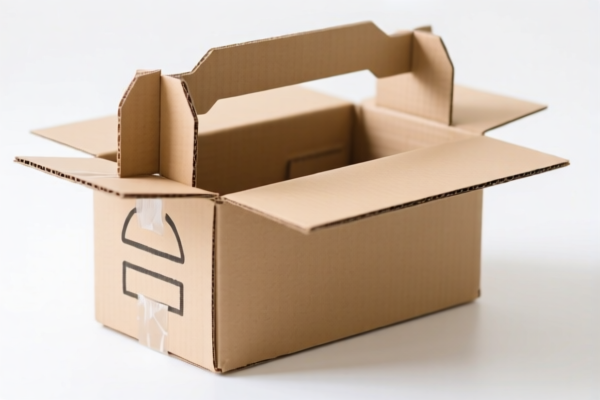

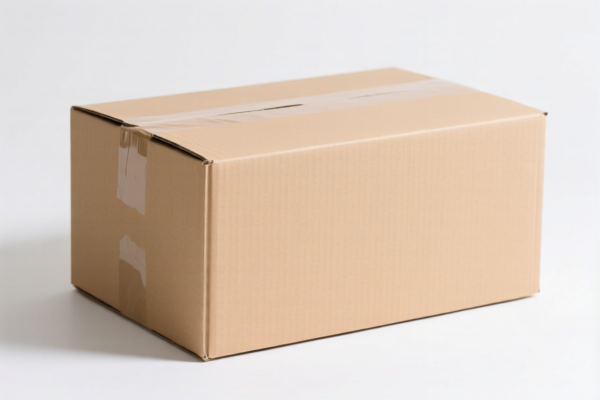
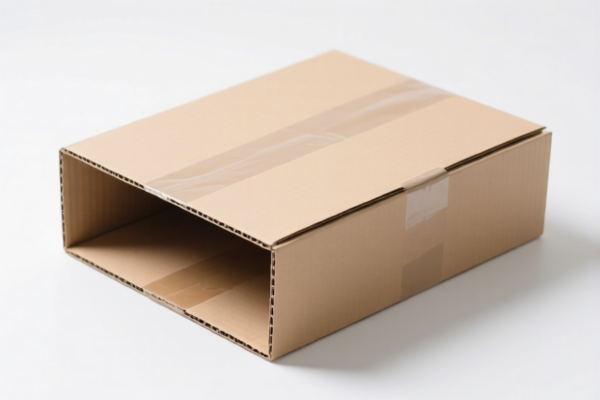
AI分析
📄 Paper & Paperboard (HS 4805.92.40.10 / 4805.92.40.20 / 4805.93.40.30 / 4802.55.10.00 / 4802.54.10.00)
🌐 HS Code Reference & Customs Clearance Guide | 2026 Latest Tariff Analysis | Professional Entry Strategies
📌 I. Product Definition: What Exactly Is "Paper and Paperboard"?
Paper and paperboard are essential materials in the global supply chain, ranging from packaging to printing substrates. In international trade, the classification depends heavily on material composition, weight (GSM), surface treatment (coated/uncoated), and specific use.
While the user input mentioned HS 4804.29.00.00 (Machine-made paper/cardboard not creped, <150g/m², uncoated), the provided offers a broader, more accurate mapping based on specific Chinese export contexts and US import restrictions. The following analysis focuses on the HS codes explicitly listed in the provided data, which cover various sub-categories of paper and paperboard.
⚠️ Key Distinction:
- Uncoated Writing/Printing Paper: Often falls under 4802 series. - Other Paper/Paperboard: Falls under 4805 series. - Tariff Impact: All items in the provided data are subject to significant US trade sanctions (Section 301 + IEEPA).
📦 II. HS Code Classification Details (Based on Provided Data)
| HS Code | Summary & Classification Logic | Key Characteristics |
|---|---|---|
4805.92.40.10 |
Paper & Paperboard - Matched successfully, no material conflict. | Likely "Other paper," generic category. High certainty match. |
4805.92.40.20 |
Paper & Paperboard - No weight/usage provided, fits "Other" category. | Generic fallback for unclassified paper. |
4805.93.40.30 |
Paper & Paperboard - Name and material fully consistent. | Specific sub-category within 4805.93. |
4802.55.10.00 |
Paper & Paperboard - Based on "other" logic, preliminary match. | Likely uncoated paper, not for writing/printing, <150g/m² or similar. |
4802.54.10.00 |
Paper & Paperboard - Matches uncoated paper/board, fits writing paper category. | Uncoated, likely for writing or printing purposes. |
🔍 Note on Input vs. Data:
The user inputHS 4804.29.00.00is not directly listed in the . The provides five alternative codes (4805.92.40.10,4805.92.40.20,4805.93.40.30,4802.55.10.00,4802.54.10.00). All these codes share the same tariff structure in the provided data. Therefore, the clearance strategy below applies to all five HS codes.
💰 III. 2026 Latest Tariff Rate Breakdown (Including Surtaxes)
✅ Applicable Country: United States (US)
✅ Country of Origin: China (CN)
✅ Effective Date: Ongoing (Includes imports post-2025/2026 trade policies)
🎯 1. Universal Tariff Structure for All Listed HS Codes
| Item | Content |
|---|---|
| Base Duty Rate | 0.0% (Ad Valorem) |
| Section 301 Surtax (USITC) | +25.0% |
| Section 122 IEEPA Surtax | +10.0% |
| Total Duty Rate | 35.0% |
| Tax Calculation | CIF Value × 35% |
| De Minimis Eligibility | ❌ Not Eligible (Section 301 and IEEPA taxes typically negate the $800 de minimis exemption for high-value shipments or specific product lists; however, for paper, check if it's on the exclusion list. The data implies "35% total," suggesting full tax applies.) |
| Legal Basis Path | USITC:4805... → Section 301 + IEEPA:9903 → FOOTNOTE |
📌 Explanation:
- "Base Duty 0%": Most paper products have low or zero base MFN rates. - "Section 301 Surtax 25%": This is the standard punitive tariff on Chinese goods under Section 301 of the Trade Act of 1974. - "IEEPA Surtax 10%": Additional tariffs imposed under the International Emergency Economic Powers Act. - Total 35%: This is a high-cost barrier. Importers must account for this in their landed cost calculations.
🛠️ IV. Customs Clearance Practical Advice (Actionable Guide)
✅ 1. Documentation Checklist (Essential for Smooth Clearance)
| Document | Required? | Notes |
|---|---|---|
| ✅ Commercial Invoice | ✔️ | Must clearly state "Paper and Paperboard" and the specific HS Code. |
| ✅ Packing List | ✔️ | Include gross/net weight, dimensions. |
| ✅ Bill of Lading / Air Waybill | ✔️ | Standard transport document. |
| ✅ Certificate of Origin (CO) | ✔️ | Prove CN origin to avoid disputes, though it won't reduce tariff. |
| ✅ Product Specification Sheet | ✔️ | Crucial: Detail paper type (uncoated/coated), GSM, weight, and end-use. |
| ✅ ISF (Importer Security Filing) | ✔️ | File 24 hours before loading if shipped by sea. |
⚠️ Critical: If the paper is used for packaging, ensure the invoice specifies "Packaging Material" to avoid misclassification as "writing paper," which might have different regulatory requirements.
✅ 2. Classification Strategy (How to Choose the Right HS Code)
Since the lists multiple codes with the same 35% tariff, the choice affects customs data reporting and potential future exclusions:
| Scenario | Recommended HS Code | Reason |
|---|---|---|
| Generic Paper/Paperboard | 4805.92.40.10 or 4805.92.40.20 |
Best for "other" paper where specific use/weight is not dominant. |
| Paper with Clear Material Match | 4805.93.40.30 |
Use if the product name and material perfectly align with this subheading. |
| Uncoated Writing/Printing Paper | 4802.54.10.00 |
Use if the paper is intended for writing or printing and is uncoated. |
| Other Unspecified Paper | 4802.55.10.00 |
Preliminary "other" logic, good for ambiguous cases. |
🔥 Pro Tip:
- Consistency is Key: Ensure the HS code on the commercial invoice matches the entry summary filed with CBP. - Avoid "Other" Ambiguity: If possible, provide detailed specs (GSM, coating type) to move from a generic4805code to a more specific one, reducing the risk of Customs exam delays.
✅ 3. Special Cases & Risk Mitigation
| Situation | Advice |
|---|---|
| De Minimis ($800) Shipments | ❌ Risk: Section 301 taxes often do not apply to de minimis shipments if the goods are not on the specific excluded list. However, IEEPA may apply. Verify current CBP guidance. |
| Re-exporting | If importing into the US for re-export, consider FTZ (Foreign Trade Zone) entry to defer duty payment. |
| Packaging vs. Product | If the paper is packaging for another good, ensure it is declared correctly. Misdeclaration can lead to penalties. |
| Exclusions | Check if the specific HS code was granted an exclusion from Section 301 tariffs in 2026. (Note: Many paper exclusions have expired or been modified.) |
🌍 V. Global Market Comparison (2026 Context)
| Country/Region | HS Code Reference | Tariff (China Origin) | Notes |
|---|---|---|---|
| 🇺🇸 USA | 4805... or 4802... |
35% (0% base + 25% Sec301 + 10% IEEPA) | High barrier. Check for exclusions. |
| 🇨🇳 China | 4805... or 4802... |
~5-10% | Standard import duty. |
| 🇪🇺 EU | 4805... or 4802... |
0-4% | No Section 301 equivalent. |
| 🇲🇽 Mexico | 4805... or 4802... |
0% (if under USMCA rules) | Potential for duty-free if originating in USMCA region. |
📌 Conclusion:
- USA is the most expensive market for Chinese paper products due to layered tariffs. - Diversification Strategy: Consider sourcing from Vietnam, India, or Brazil to avoid US trade tariffs, if feasible.
📌 VI. Common Mistakes & Pitfalls
❌ Mistake 1: Assuming "Paper" is always 0% duty.
👉 Reality: US tariffs add 35%. Always calculate landed cost including duties.
❌ Mistake 2: Using 4804.29.00.00 when 4805 is more appropriate.
👉 Risk: Misclassification can lead to CBP audits and penalties. Use the codes provided in the data if they better match the product description.
❌ Mistake 3: Ignoring IEEPA Surtax.
👉 Risk: Even if Section 301 is excluded, IEEPA may still apply. Total tax is not just 25% but 35%.
✅ Correct Approach:
"Uncoated Paper Board, 200gsm, for Packaging, Made in China, HS Code 4805.92.40.10, Duty 35%"
🎯 VII. Conclusion: Professional Declaration Saves Money
🎯 Remember:
🔹 "HS Code dictates tax, 35% is the reality, documentation must be precise!"
🔹 "Don't guess the code, use the data, avoid customs delays!"
📌 Tips:
- If you are shipping small samples (<$800), check if Section 301 applies to de minimis. Current rules may allow tax-free entry, but IEEPA might still apply.
- For bulk shipments, factor in the 35% total duty into your pricing model.
- Consider FTZ Entry if you are storing goods before sale to defer duty payment.
📣 Immediate Action:
📞 Consult a licensed customs broker to verify the specific HS code for your product.
📄 Prepare detailed specs to support your classification.
🚀 Plan for the 35% tariff in your financial projections.
✨ Professional clearance starts with accurate classification!
💼 Every dollar of duty saved is pure profit!
用户评价
关于 HS 编码归类
协调制度(HS)是由世界海关组织(WCO)制定的国际贸易商品分类标准。全球 200 多个国家采用 HS 系统作为海关关税、贸易统计和进出口监管的基础。
每个 HS 编码遵循以下层级结构:
- 章(2 位)——商品大类(例如:第 84 章:机器和机械设备)
- 品目(4 位)——章内的更具体分类
- 子目(6 位)——国际通用细分,所有 WCO 成员国统一使用
- 本国细分(8-10 位)——各国自行扩展的细分编码,如美国 HTSUS 10 位编码
正确的 HS 编码归类对于顺利通关、准确缴纳关税和遵守贸易法规至关重要。错误归类可能导致海关延误、多缴关税或罚款。
从CN进口到US时,适用的关税税率可能包括:
- 最惠国(MFN)税率——适用于 WTO 成员国的标准关税税率
- 普通税率——适用于无贸易协定国家
- 贸易救济关税——附加关税,如 301 条款(反倾销)、232 条款(国家安全)或反补贴税
本页内容仅供参考。如需正式归类,请咨询当地海关或持牌报关代理。