Paraffin Thickener
CN → US| HS编码 | 关税税率 | 原产国 | 目的国 | 文档 |
|---|---|---|---|---|
| 3824994900 | 41.5% | CN | US | 官方文档 |
| 3402422050 | 39.0% | CN | US | 官方文档 |
| 3402422010 | 39.0% | CN | US | 官方文档 |
| 3824992900 | 41.5% | CN | US | 官方文档 |
| 2712902000 | 35.0% | CN | US | 官方文档 |
商品图片
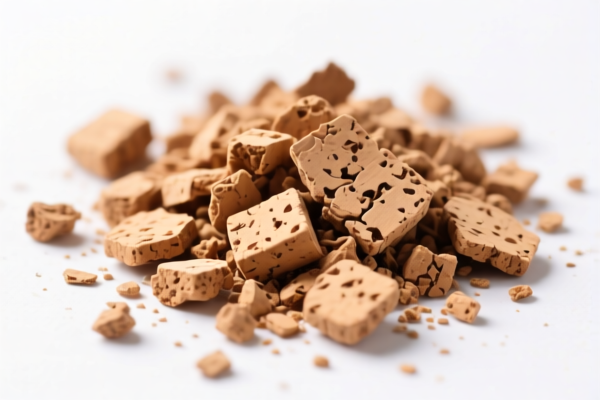
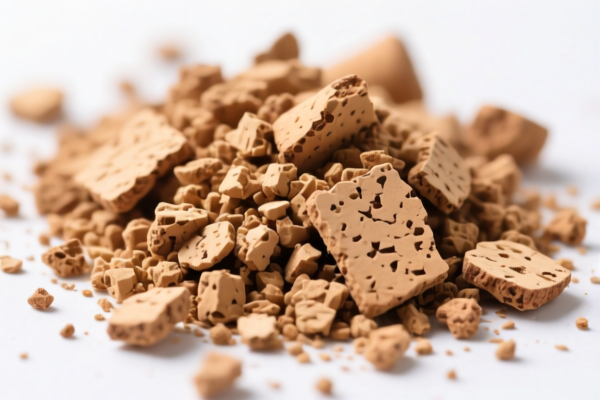
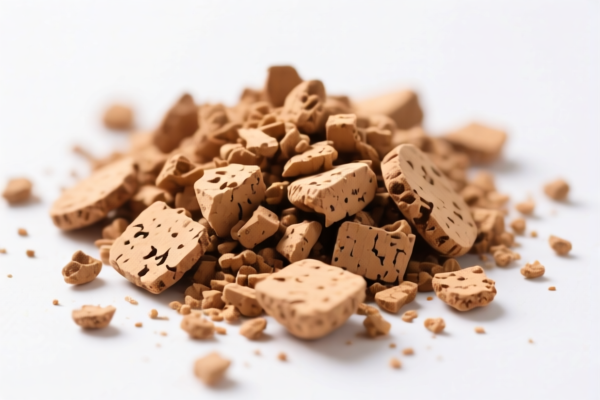
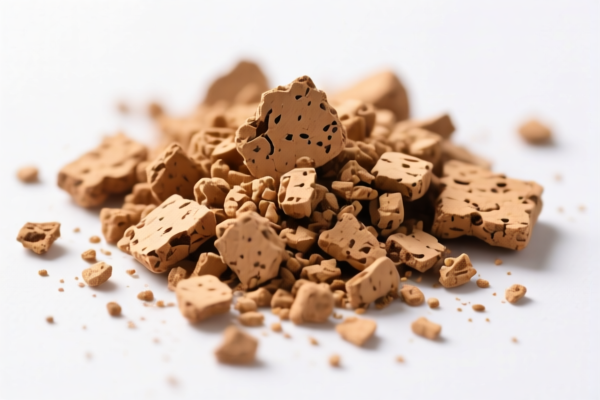
AI分析
🕯️ Paraffin Thickener (Paraffin Emulsifier/Stabilizer)
🌐 HS Code Reference & Customs Clearance Guide | 2026 Latest Tariff Analysis | Professional Entry Strategy
📌 I. Product Definition & Classification: What Exactly is "Paraffin Thickener"?
Paraffin Thickeners, often referred to as Paraffin Emulsifiers or Stabilizers in industrial chemistry, are specialized chemical additives used to improve the viscosity, stability, and texture of paraffin-based products (such as candles, cosmetics, food packaging, and industrial waxes).
In international trade, their classification depends heavily on their chemical composition and primary function:
- As a Chemical Preparation (Industrial Reagent): If the core function is stabilizing the paraffin matrix through chemical modification or mixing with hydrocarbons, it falls under Chapter 38 (Chemical Products and Preparations).
- As a Surface Active Agent (Surfactant): If the key mechanism is using fatty acids, fatty alcohols, or hydrocarbon derivatives to form emulsions (mixing oil/water or stabilizing phases), it falls under Chapter 34 (Soap, Organic Surface-Active Agents).
- As a Paraffin Derivative: If it is essentially processed paraffin wax itself acting as a thickening agent without complex chemical formulation, it may fall under Chapter 27 (Petroleum Waxes).
⚠️ Key Distinction Point:
- If it is a complex chemical mixture designed to modify the physical properties of paraffin (emulsification/stabilization) → Chapter 38 or 34.
- If it is purely processed paraffin wax with no surfactant function → Chapter 27.
📦 II. HS Code Classification Details (2026 Latest Tariff Authority Comparison)
Based on the provided data, here are the five potential HS codes with their corresponding explanations and tax structures.
| HS Code | Product Description | Application Scenario | Core Characteristic |
|---|---|---|---|
3824.99.49.00 |
Chemical Industrial Preparations: Other | Industrial paraffin modification, non-specific chemical blends | Hydrocarbon-based mixture; fits "petroleum/gas derivatives mixed substances" |
3402.42.20.50 |
Organic Surface-Active Agents: Other | Emulsification processes, foam stabilization, cosmetic bases | Non-ionic or Anionic Surfactant; fatty substance source (paraffin/hydrocarbon) |
3402.42.20.10 |
Organic Surface-Active Agents: Fatty Substance Based | High-purity emulsifiers for food/cosmetic grade paraffin | Non-ionic Organic Surfactant; specifically fatty acid/alcohol derived |
3824.99.29.00 |
Chemical Preparations: Other (Not elsewhere specified) | General chemical stabilizers for industrial wax applications | Chemical Preparation; fits general definition of chemical products for industrial use |
2712.90.20.00 |
Petroleum Waxes: Other (Paraffin Wax derivatives) | Pure paraffin wax used as a thickening agent itself | Paraffin Material; additive/derivative category, no material conflict |
🔍 Key Reminder:
- If the product is primarily a surfactant (helps mix oil and water or stabilize emulsions), Chapter 34 (3402.42.20.xx) is often the most accurate, with a lower base tariff (4.0%).
- If the product is a general chemical prep without strong surfactant properties, Chapter 38 (3824.99.xx) applies, with a higher base tariff (6.5%).
- If it is simply processed paraffin wax, Chapter 27 (2712.90.20.00) has the lowest base tariff (0.0%).
💰 III. 2026 Latest Tariff Rate Breakdown (Including Surtaxes & Policy Add-ons)
✅ Applicable Country: United States (US)
✅ Origin: China (CN)
✅ Effective Date: From November 10, 2025 (including subsequent imports)
🎯 1. 3824.99.49.00 & 3824.99.29.00 —— Chemical Industrial Preparations
| Item | Content |
|---|---|
| Base Tariff | 6.5% (ad valorem) |
| USITC Surtax | +25% (Section 301 Surtax) |
| IEEPA Surtax | +10% (Section 122 Clause Tariff for Chinese products, effective Nov 10, 2025) |
| Total Tax Rate | 41.5% |
| Tax Calculation | CIF Value × 41.5% |
| De Minimis Eligibility | ❌ No (deny_de_minimis) |
| Legal Basis Path | IEEPA:122Clause → USITC:3824.99.xx → FOOTNOTE:301Surtax |
📌 Explanation:
- These codes fall under "Other Chemical Preparations."
- The 6.5% base rate is standard for unspecified chemical products.
- The 25% Section 301 surtax applies to most chemical intermediates and preparations from China.
- The 10% Section 122 tariff is a new/additional levy effective from late 2025.
- Total: 41.5% is a significant cost factor.
🎯 2. 3402.42.20.50 & 3402.42.20.10 —— Organic Surface-Active Agents
| Item | Content |
|---|---|
| Base Tariff | 4.0% (ad valorem) |
| USITC Surtax | +25% (Section 301 Surtax) |
| IEEPA Surtax | +10% (Section 122 Clause Tariff for Chinese products) |
| Total Tax Rate | 39.0% |
| Tax Calculation | CIF Value × 39.0% |
| De Minimis Eligibility | ❌ No (deny_de_minimis) |
| Legal Basis Path | IEEPA:122Clause → USITC:3402.42.20.xx → FOOTNOTE:301Surtax |
📌 Note:
- Surfactants (Chapter 34) enjoy a lower base rate (4.0%) compared to general chemicals (6.5%).
- This makes3402.42.20.xxthe more tax-efficient option if the product’s primary function is emulsification/surfactancy.
- The surtaxes (25% + 10%) remain the same as Chapter 38.
🎯 3. 2712.90.20.00 —— Petroleum Waxes (Paraffin Derivatives)
| Item | Content |
|---|---|
| Base Tariff | 0.0% (ad valorem) |
| USITC Surtax | +25% (Section 301 Surtax) |
| IEEPA Surtax | +10% (Section 122 Clause Tariff for Chinese products) |
| Total Tax Rate | 35.0% |
| Tax Calculation | CIF Value × 35.0% |
| De Minimis Eligibility | ❌ No (deny_de_minimis) |
| Legal Basis Path | IEEPA:122Clause → USITC:2712.90.20.00 → FOOTNOTE:301Surtax |
📌 Crucial Insight:
- This code has the lowest total tax rate (35.0%).
- However, it is only applicable if the product is strictly classified as paraffin wax or its direct derivative, not as a complex chemical formulation or surfactant.
- If customs inspectors determine the product contains significant chemical additives or surfactant properties, they may reclassify it to Chapter 38 or 34, leading to higher taxes and penalties.
🛠️ IV. Customs Clearance Practical Advice (Real-World Pitfall Avoidance)
✅ 1. Documentation Checklist (All Required)
| Document | Must Provide | Explanation |
|---|---|---|
| ✅ Product Specification Sheet | ✔️ | Must detail chemical composition, % of paraffin, surfactant type, and intended use. |
| ✅ MSDS/SDS | ✔️ | Safety Data Sheet is critical for chemical products. Clearly state if it is a surfactant. |
| ✅ Commercial Invoice | ✔️ | Must accurately describe the product (e.g., "Paraffin Emulsifier, Non-ionic") and not just "Thickener." |
| ✅ Certificate of Origin | ✔️ | Required to determine surtax applicability (USITC/IEEPA). |
| ✅ Packing List | ✔️ | Detail net/gross weight, packaging type. |
| ✅ Test Reports | ✔️ | Lab analysis proving chemical nature (e.g., HLB value for surfactants) helps justify HS Code. |
✅ 2. Declaration Tips (Key Mantra)
🔥 "Function Dictates Code, Surfactant Saves Cost, Pure Wax Saves Most!"
| Scenario | Correct Declaration | Risk of Error |
|---|---|---|
| Primary function is emulsification (e.g., in cosmetics/food) | 3402.42.20.xx (Total 39.0%) |
Misclassifying as 3824 adds 2.5% extra tax. |
| General chemical stabilizer (industrial wax blend) | 3824.99.49.00 (Total 41.5%) |
Misclassifying as 2712 may trigger customs audit and back-taxes. |
| Pure/Processed Paraffin Wax (no surfactant) | 2712.90.20.00 (Total 35.0%) |
Lowest tax, but requires proof that no chemical additives are present. |
| Mix of Paraffin + Other Chemicals | Cannot be split into 2712 and others. |
Must be classified as one unit. If mixed, likely 3824 or 3402. |
📌 Warning:
- Do NOT declare a complex emulsifier as "Paraffin Wax" (2712) to save taxes. Customs may demand lab tests and impose penalties if the surfactant content is significant.
- Conversely, do NOT declare simple paraffin wax as "Chemical Preparation" (3824) unnecessarily, as it increases your tax burden by 6.5%.
✅ 3. Special Case Handling
| Situation | Handling Advice |
|---|---|
| Customs Audit on Chemical Nature | Provide Lab Test Reports showing the HLB (Hydrophile-Lipophile Balance) value. High HLB suggests surfactant (3402). |
| OEM/Private Label Products | Ensure the invoice reflects the actual chemical composition, not just the brand name. |
| Multiple Functions | If the product thickens AND emulsifies, the primary function determines the code. Emulsification often takes precedence in Chapter 34. |
| Small Sample Shipments | Remember: No De Minimis Exemption for China-origin goods under these codes. Even small samples are subject to 35-41.5% tax. |
🌍 V. Global Market Clearance Comparison (2026 Latest)
| Country/Region | Recommended HS Code | Tariff Rate (China Origin) | Certification Requirements | Notes |
|---|---|---|---|---|
| 🇺🇸 USA | 3402.42.20.xx |
39.0% (Total) | SDS, MSDS | Most balanced option for emulsifiers |
| 🇺🇸 USA | 2712.90.20.00 |
35.0% (Total) | SDS | Only if pure paraffin wax |
| 🇨🇳 China | 3402.42.20.xx |
~4.0% + VAT | No specific import license | Low base rate in China |
| 🇪🇺 EU | 3402.42.20.xx |
Varies (Check EUR.1) | REACH Registration | Surfactants require REACH compliance |
| 🇦🇺 Australia | 3402.42.20.xx |
Varies | AICIS Registration | Chemical inventory notification may be needed |
📌 Conclusion:
- The USA imposes significant surtaxes on Chinese chemical products.
- Chapter 34 (3402) is often the best compromise between accurate classification and lower tax (39.0%) vs. Chapter 38 (41.5%).
- Chapter 27 (2712) offers the lowest tax (35.0%) but carries the highest risk of misclassification if the product is not purely paraffin wax.
📌 VI. Common Mistakes & Pitfall Guide (Lessons Learned)
❌ Mistake 1: Declaring a complex surfactant-based paraffin emulsifier as "Paraffin Wax" (2712)
👉 Consequence: Customs reclassification → Back taxes + Penalty (Difference between 35% and 41.5% + fines).
❌ Mistake 2: Using vague terms like "Wax Additive" on the invoice
👉 Consequence: Customs uncertainty → Delays, potential audit, or worst-case scenario classification.
❌ Mistake 3: Ignoring the Section 122 (10%) tariff effective Nov 2025
👉 Consequence: Underpayment of taxes → Interest and penalties on under-declared duties.
❌ Mistake 4: Assuming "De Minimis" applies to small shipments
👉 Consequence: Packages held by CBP, taxed retroactively, and shipped back or destroyed if unpaid.
✅ Correct Practice:
"Paraffin Emulsifier, Non-ionic Surfactant, Based on Fatty Alcohols, HLB Value XX, for Cosmetic/Industrial Use"
HS Code:3402.42.20.50(or.10if specific fatty substance source)
🎯 VII. Conclusion: Precise Classification, Cost Optimization, Smooth Clearance!
🎯 Remember the Mantra:
🔹 "Surfactant = Chapter 34 (39% Total)"
🔹 "General Chemical = Chapter 38 (41.5% Total)"
🔹 "Pure Paraffin = Chapter 27 (35% Total) - But Be Careful!"
🔹 "Always Declare True Composition to Avoid Fines!"
📌 Pro Tip:
If your product is a hybrid (part wax, part surfactant), consider consulting a customs broker for an Advance Ruling or binding classification before shipment. This provides legal certainty and avoids unexpected costs at the US border.
📣 Immediate Action:
📞 Contact a Professional Customs Broker + Provide MSDS/SDS + Apply for HS Code Pre-ruling if unsure.
🚀 Ensure Smooth Customs Clearance, Minimize Tax Burden, and Maximize Profit Margins!
✨ Professional Clearance Starts with Accurate Classification!
💼 Every Cent of Tax is a Cent of Cost Worth Calculating Precisely!
用户评价
关于 HS 编码归类
协调制度(HS)是由世界海关组织(WCO)制定的国际贸易商品分类标准。全球 200 多个国家采用 HS 系统作为海关关税、贸易统计和进出口监管的基础。
每个 HS 编码遵循以下层级结构:
- 章(2 位)——商品大类(例如:第 84 章:机器和机械设备)
- 品目(4 位)——章内的更具体分类
- 子目(6 位)——国际通用细分,所有 WCO 成员国统一使用
- 本国细分(8-10 位)——各国自行扩展的细分编码,如美国 HTSUS 10 位编码
正确的 HS 编码归类对于顺利通关、准确缴纳关税和遵守贸易法规至关重要。错误归类可能导致海关延误、多缴关税或罚款。
从CN进口到US时,适用的关税税率可能包括:
- 最惠国(MFN)税率——适用于 WTO 成员国的标准关税税率
- 普通税率——适用于无贸易协定国家
- 贸易救济关税——附加关税,如 301 条款(反倾销)、232 条款(国家安全)或反补贴税
本页内容仅供参考。如需正式归类,请咨询当地海关或持牌报关代理。