Pasta
CN → US| HS编码 | 关税税率 | 原产国 | 目的国 | 文档 |
|---|---|---|---|---|
| 1902112010 | 17.5% | CN | US | 官方文档 |
| 1902192010 | 35.0% | CN | US | 官方文档 |
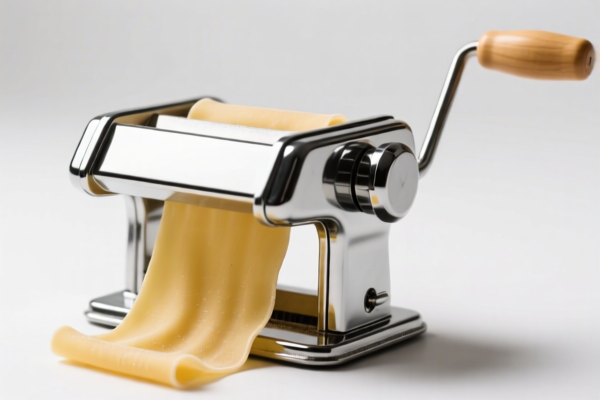
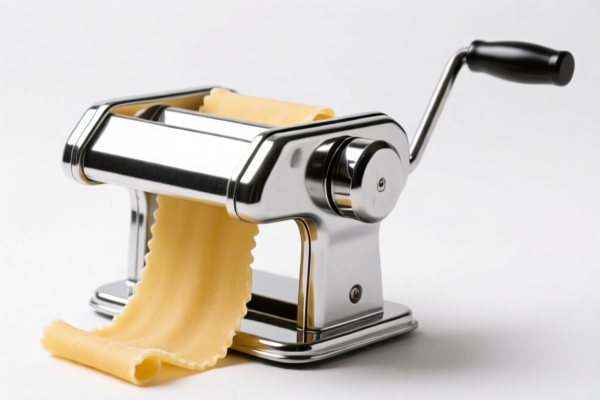
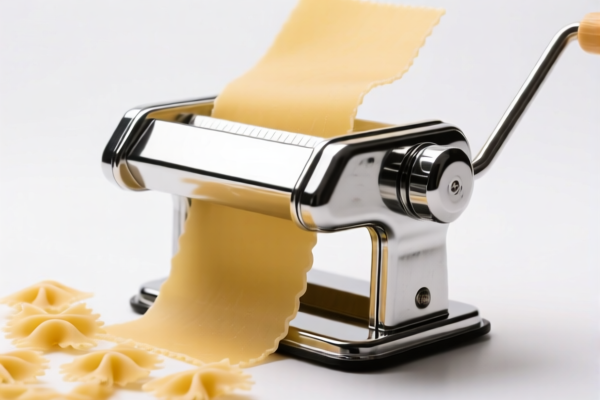
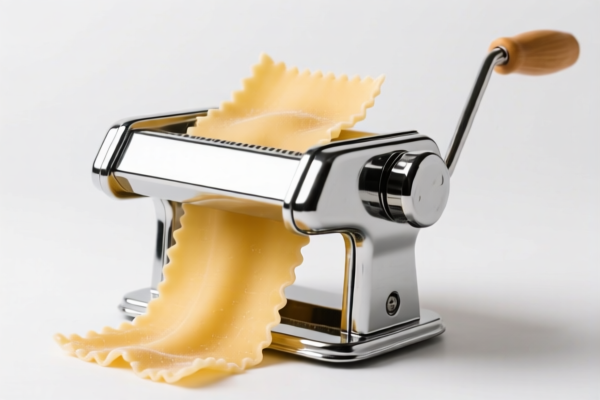
商品图片
AI分析
🍝 Pasta: The Ultimate HS Code & Duty Guide (EU Origin)
🌐 HS Code Classification & Customs Clearance Strategy | 2026 Latest Tax Rules | Professional Compliance Guide
📌 Part 1: Product Definition & Classification — Are You Sure It’s Just "Pasta"?
Pasta is not a single entity in international trade. It is strictly divided based on composition (egg vs. no egg), processing state (cooked vs. uncooked), and origin/status (EU origin under specific regimes). Misclassification can lead to severe duty disparities (from 7.5% to 25%) and customs delays.
In this specific dataset, we are dealing with Uncooked Pasta originating from the European Union (EU), specifically subject to the Inward Processing Regime (IPR).
⚠️ Key Distinction:
- Egg Pasta: Contains eggs as a primary ingredient → Classified under1902.11.
- Other Pasta: Non-egg based (semolina, wheat flour, etc.) → Classified under1902.19.
- Special Status: Both entries in this data are "Exclusively Pasta" from the EU and are under the Inward Processing Regime (IPR), which may offer duty suspension benefits depending on final export, but here we focus on the applicable rates provided.
📦 Part 2: Detailed HS Code Breakdown (2026 Latest Tariff Reference)
| HS Code | Product Description | Key Characteristics | Applicable Condition |
|---|---|---|---|
1902.11.20.10 |
Pasta, containing eggs | Uncooked, unstuffed, unprepared. Includes spaghetti, macaroni, noodles, etc. | ✅ EU Origin ✅ Subject to Inward Processing Regime (IPR) |
1902.19.20.10 |
Pasta, other | Uncooked, unstuffed, unprepared. Non-egg pasta (e.g., standard semolina pasta). | ✅ EU Origin ✅ Subject to Inward Processing Regime (IPR) |
🔍 Critical Note:
- Cooked/Stuffed Pasta: This data excludes cooked, stuffed (with meat/veg), or otherwise prepared pasta (e.g., ravioli, tortellini) which would fall under different subheadings (1902.20or1902.30).
- Couscous: Excluded from these specific codes (usually1902.30).
- IPR Implication: The mention of "Inward Processing Regime" suggests these goods may be imported for further processing and re-export. However, the duty rates below are the applicable percentages as per the provided data.
💰 Part 3: 2026 Latest Duty Rate Breakdown (Detailed)
✅ Applicable Countries: European Union (EU)
✅ Origin: European Union
✅ Status: Subject to Inward Processing Regime (IPR)
✅ Product Type: Exclusively Pasta (Uncooked, Unstuffed)
🎯 1. 1902.11.20.10 —— Pasta, Containing Eggs
| Item | Content |
|---|---|
| Base Duty Rate | 0.0% (Ad Valorem) |
| Additional Duty | +7.5% |
| Total Duty Rate | 7.5% |
| Tax Calculation | CIF Value × 7.5% |
| Legal Basis | HS Code 1902.11.20.10 → Specific Trade Measures |
📌 Explanation:
- This code applies specifically to egg-based pasta (e.g., fresh egg noodles, egg spaghetti).
- While the base tariff is 0%, an additional duty of 7.5% is applied.
- Why? This likely reflects specific trade agreements, countervailing duties, or specific sector levies applicable to EU-origin egg products in this context.
- Total Cost Impact: For every $10,000 of CIF value, you pay $750 in duties.
🎯 2. 1902.19.20.10 —— Pasta, Other (Non-Egg)
| Item | Content |
|---|---|
| Base Duty Rate | 0.0% (Ad Valorem) |
| Additional Duty | +25.0% |
| Total Duty Rate | 25.0% |
| Tax Calculation | CIF Value × 25.0% |
| Legal Basis | HS Code 1902.19.20.10 → Specific Trade Measures |
📌 Explanation:
- This code applies to non-egg pasta (e.g., standard dry spaghetti, macaroni made from semolina/wheat).
- The base tariff is 0%, but a significantly higher additional duty of 25.0% is applied.
- Why? This suggests a protective measure or specific tax policy targeting non-egg pasta imports from the EU, possibly to support domestic producers or under specific trade restrictions.
- Total Cost Impact: For every $10,000 of CIF value, you pay $2,500 in duties.
- ⚠️ High Alert: The 25% duty is 3.33x higher than the egg pasta rate. Misclassification here is costly!
🛠️ Part 4: Customs Clearance Operational Advice (Avoiding Pitfalls)
✅ 1. Documentation Checklist (Non-Negotiable)
| Document | Required? | Purpose |
|---|---|---|
| Commercial Invoice | ✅ Yes | Must clearly state "Pasta, Containing Eggs" or "Pasta, Other" as per HS description. Do not just write "Pasta." |
| Certificate of Origin | ✅ Yes | Must confirm EU Origin. Essential for verifying eligibility under IPR and applicable trade terms. |
| Inward Processing Authorization | ✅ Yes | Proof of IPR Status. If misdeclared, you may lose preferential treatment or face penalties. |
| Product Specification Sheet | ✅ Yes | Must explicitly state egg content (for 1902.11) or absence of eggs (for 1902.19). |
| Ingredient List | ✅ Yes | Detailed breakdown. Even 1% egg content triggers the 1902.11 code. |
| Packing List | ✅ Yes | Must match invoice and specs. |
✅ 2. Declaration Strategy (Key Mnemonics)
🔥 “Eggs Make 7.5, No Eggs 25, IPR Status is Key!”
| Scenario | Correct HS Code | Duty Rate | Risk of Misclassification |
|---|---|---|---|
| Egg Spaghetti (EU, IPR) | 1902.11.20.10 |
7.5% | ❌ If declared as 1902.19, you underpay 17.5% → Penalties + Back Taxes |
| Dry Semolina Spaghetti (EU, IPR) | 1902.19.20.10 |
25.0% | ❌ If declared as 1902.11, you overpay 17.5% → Unnecessary Cost |
| Stuffed Ravioli (EU, IPR) | NOT IN DATA | ❓ | ❌ Stop! These codes only cover uncooked, unstuffed pasta. Ravioli requires different classification. |
| Cooked Pasta (EU, IPR) | NOT IN DATA | ❓ | ❌ Stop! Cooked pasta is not covered here. |
✅ 3. Special Case Handling
| Situation | Action |
|---|---|
| Mixed Shipment (Egg & Non-Egg) | Declare Separately. Do not mix into one line item. Use both HS codes. |
| IPR Status Expired | If IPR authorization is invalid, you may owe full standard duties (not just the 7.5% or 25% shown). Check validity dates. |
| Egg Content Ambiguity | If egg content is <5% but present, still use 1902.11. Customs are strict on egg-based pasta classification. |
| Couscous Included | Do not include couscous in these declarations. Couscous has its own HS code (1902.30). Separate shipment required. |
🌍 Part 5: Global Market Comparison (Contextual)
| Region | Typical Base Duty for Pasta | Notes |
|---|---|---|
| EU | 0% - 10% | Often 0% for intra-EU or under FTAs. |
| USA | 0% - 5% | Subject to Section 301 tariffs if from China, but EU origin usually preferential. |
| China | 0% - 5% | Most-Favored-Nation (MFN) rates are low. |
| Canada | 0% - 15% | Varies by type. |
📌 Observation:
The 25% duty on non-egg EU pasta (1902.19.20.10) is significantly higher than global averages. This indicates a specific trade barrier or policy targeting this category.
The 7.5% duty on egg pasta (1902.11.20.10) is relatively moderate.
Strategy: If possible, consider sourcing egg-based pasta if duty cost is a major factor (7.5% vs 25%).
📌 Part 6: Common Mistakes & Pitfalls (Lessons Learned)
❌ Mistake 1: Declaring "Pasta" without specifying "Egg" vs. "Other"
👉 Consequence: Customs may classify it under the higher rate (1902.19 → 25%) or hold for inspection.
❌ Mistake 2: Ignoring IPR Status
👉 Consequence: If IPR is not properly documented, you may be charged standard duties which could be higher than the 7.5% or 25% shown, or you may lose eligibility for duty suspension.
❌ Mistake 3: Including Stuffed Pasta (Ravioli) in these lines
👉 Consequence: Classification Error. Stuffed pasta is 1902.20. This may trigger different duties and certifications (e.g., meat inspection if stuffed with meat).
❌ Mistake 4: Assuming Couscous is Covered
👉 Consequence: Rejection or Delay. Couscous is 1902.30. Keep shipments separate.
✅ Correct Practice:
“EU-Origin Uncooked Egg Pasta, HS 1902.11.20.10, IPR Registered, 0% Base + 7.5% Add. Duty”
“EU-Origin Uncooked Non-Egg Pasta, HS 1902.19.20.10, IPR Registered, 0% Base + 25% Add. Duty”
🎯 Part 7: Conclusion: Precision Saves Money
🎯 Key Takeaway:
- Egg Pasta (1902.11.20.10): 7.5% Total Duty
- Non-Egg Pasta (1902.19.20.10): 25.0% Total Duty
- Both: Require EU Origin Proof and IPR Documentation.
🔹 “7.5% vs 25%: A 17.5% Difference. Specify ‘Egg’ or ‘Other’!”
🔹 “IPR is not optional: Document it or pay more!”
📌 Pro Tip:
- If you are exporting back to the EU after processing, ensure your IPR paperwork is flawless to claim duty refunds.
- For non-EU destinations, verify if these duties are the final landed cost or if further taxes apply.
📣 Immediate Action:
📞 Verify Ingredient List: Check if eggs are present.
📄 Confirm IPR Status: Ensure authorization is valid.
📝 Draft Accurate Invoice: Use exact HS descriptions from above.
🚀 Avoid the 25% Trap: If you can use egg-based pasta, it’s cheaper!
✨ Professional Clearance Starts with Accurate Classification!
💼 Every Percentage Point Counts in Global Trade!
用户评价
关于 HS 编码归类
协调制度(HS)是由世界海关组织(WCO)制定的国际贸易商品分类标准。全球 200 多个国家采用 HS 系统作为海关关税、贸易统计和进出口监管的基础。
每个 HS 编码遵循以下层级结构:
- 章(2 位)——商品大类(例如:第 84 章:机器和机械设备)
- 品目(4 位)——章内的更具体分类
- 子目(6 位)——国际通用细分,所有 WCO 成员国统一使用
- 本国细分(8-10 位)——各国自行扩展的细分编码,如美国 HTSUS 10 位编码
正确的 HS 编码归类对于顺利通关、准确缴纳关税和遵守贸易法规至关重要。错误归类可能导致海关延误、多缴关税或罚款。
从CN进口到US时,适用的关税税率可能包括:
- 最惠国(MFN)税率——适用于 WTO 成员国的标准关税税率
- 普通税率——适用于无贸易协定国家
- 贸易救济关税——附加关税,如 301 条款(反倾销)、232 条款(国家安全)或反补贴税
本页内容仅供参考。如需正式归类,请咨询当地海关或持牌报关代理。