Patterned Tanned Sheepskin for Shoes
CN → US商品图片
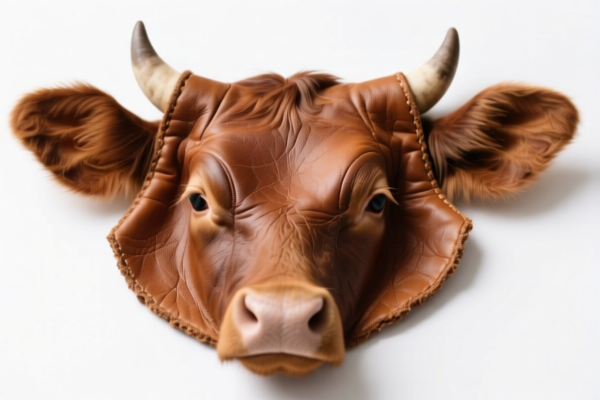
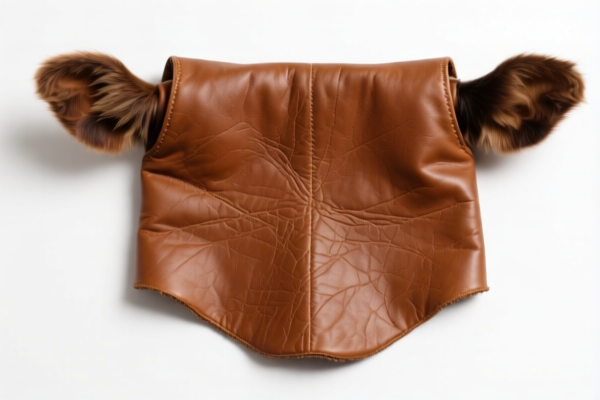
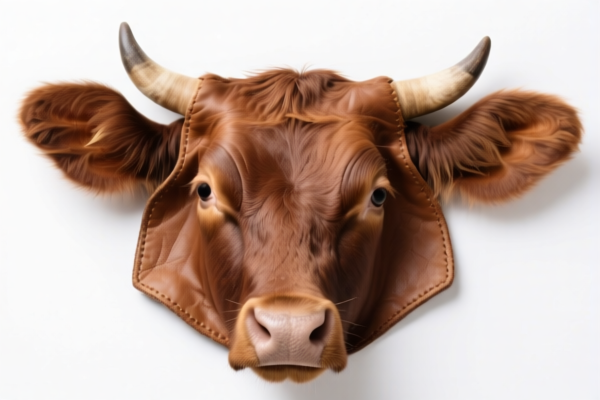
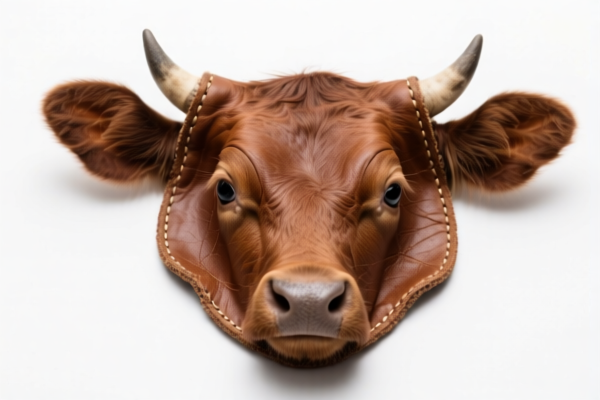
AI分析
🐑 Patterned Tanned Sheepskin for Shoes (Footwear Uppers)
🌐 HS Code Reference & Customs Clearance Guide | 2026 Latest Tariff Breakdown | Professional Clearance Strategy
📌 I. Product Definition & Classification: What Exactly is "Patterned Tanned Sheepskin"?
Patterned tanned sheepskin refers to leather hides from sheep or lambs that have been tanned and processed to feature a specific grain pattern, embossing, or natural texture. In international trade, this material is strictly categorized based on its primary use and state of processing.
Key Distinction:
- For Footwear Uppers: If the sheepskin is cut, finished, and specifically intended to be used as the upper material for shoes, boots, or sandals, it is classified under Chapter 41 (Leather) or Chapter 64 (Footwear) depending on whether it is raw/processed leather or already cut to size for a specific shoe.
- For Other Uses: If used for clothing, bags, or upholstery, it falls under different subheadings.
- State of Processing: "Tanned" means the hide has undergone the chemical tanning process to prevent decay. "Patterned" implies an aesthetic treatment (embossing, perforation, or natural grain) but does not change the fundamental nature of the material as leather.
⚠️ Critical Classification Point:
- Uncut/In the Raw: If the sheepskin is not yet cut into specific shoe parts, it is classified as Leather.
- Cut to Shape/Ready for Assembly: If the sheepskin is already cut into shoe uppers (even if unassembled), it may be classified under Footwear Parts or specific leather articles depending on country-specific rules. However, the most common general classification for material used in footwear is under Chapter 41.
📦 II. HS Code Classification Details (2026 Latest Tariff Authority Mapping)
| HS Code | Product Description | Applicable Scenario | State of Processing |
|---|---|---|---|
4106.31.00 |
Sheep or lamb skin, wet-blued, tanned and dressed (other than chamois-leather) | Raw/Piece Leather: Sheepskin tanned and patterned, not yet cut into shoe parts. Common export form. | ✅ Tanned, Patterned, Uncut |
4106.32.00 |
Sheep or lamb skin, other than wet-blued, tanned and dressed | Other Tanned Sheepskin: If the "patterned" treatment is achieved through mechanical means (embossing) rather than chemical "wet-bluing." | ✅ Tanned, Patterned, Uncut |
6406.10.00 |
Parts of footwear, outer soles and heels | Cut Uppers: If the sheepskin is already cut into the specific shape of shoe uppers (assembled or unassembled) and exported as a component. | ✅ Pre-cut, Ready for Assembly |
4107.11.00 |
Sheep or lamb leather, fully tanned, chrome-tanned, "crust" | Chrome-Tanned Sheepskin: If the tanning process is chrome-based and the leather is in "crust" state (dyed but not finished). | ✅ Chrome-Tanned |
🔍 Key Reminder:
- Most exporters of sheepskin for shoes declare under4106.31.00or4106.32.00if selling rolls or hides.
- If selling pre-cut shoe uppers (knitted or cut leather panels), use6406.10.00.
- Do NOT classify as "raw hide" (Chapter 41, Heading 4101-4103) if it is already tanned. Tanned leather is subject to different duty rates and restrictions.
💰 III. 2026 Latest Tariff Rate Breakdown (Including Additional Taxes & Policy Add-ons)
✅ Applicable Country: United States (US)
✅ Origin: China (CN)
✅ Effective Date: November 10, 2025 (and subsequent imports)
🎯 1. 4106.31.00 / 4106.32.00 —— Tanned Sheepskin (Uncut)
| Item | Content |
|---|---|
| Base Tariff Rate | 5.6% (ad valorem) – Standard MFN Rate |
| USITC Additional Tariff (Section 301) | +7.5% – Footnote 9903.88.01 applies to certain leather articles |
| IEEPA Additional Tariff | +10% – For Chinese-origin products under IEEPA authority |
| Total Tariff Rate | 23.1% |
| Tax Calculation | CIF Value × 23.1% |
| De Minimis Eligibility | ❌ Not Eligible (deny_de_minimis) – Leather goods are generally excluded from $800 de minimis relief |
| Legal Basis Path | IEEPA:9903.01.25 → IEEPA:9903.01.24 → USITC:4106.31.00/4106.32.00 → FOOTNOTE:9903.88.01 |
📌 Explanation:
- The 7.5% Section 301 tariff applies to many leather articles and parts, including certain tanned hides.
- The 10% IEEPA tariff is a broad-based surcharge on Chinese goods.
- Total 23.1% is a significant cost multiplier. Buyers must anticipate this in pricing.
- No De Minimis: Even if shipped as a small parcel, customs will assess full duties.
🎯 2. 6406.10.00 —— Parts of Footwear (Cut Sheepskin Uppers)
| Item | Content |
|---|---|
| Base Tariff Rate | 4.2% (ad valorem) – Standard MFN Rate |
| USITC Additional Tariff (Section 301) | +25% – Footnote 9903.88.01 may apply depending on specific classification |
| IEEPA Additional Tariff | +10% |
| Total Tariff Rate | ~39.2% (if 301 applies) or 14.2% (if 301 does not apply to this specific subheading) |
| Tax Calculation | CIF Value × (4.2% + 10% + [7.5% or 25%]) |
| De Minimis Eligibility | ❌ Not Eligible |
📌 Note:
- Classification as "Footwear Parts" (6406.10.00) can sometimes avoid the higher Section 301 rate if the specific footnote does not apply. However, recent trade enforcement trends suggest strict scrutiny.
- Recommendation: Verify if6406.10.00is exempt from Section 301 in the current 2026 tariff list. If not, the rate jumps significantly.
🛠️ IV. Customs Clearance Practical Advice (Real-World Pitfall Avoidance)
✅ 1. Required Documentation Checklist (Non-Negotiable)
| Document | Must Provide | Notes |
|---|---|---|
| ✅ Product Specification Sheet | ✔️ | Must state: "Tanned Sheepskin," "Pattern/Embossed," "For Footwear Uppers," "Chrome-Free" (if applicable) |
| ✅ Material Safety Data Sheet (MSDS) | ✔️ | If the tanning process involves chemicals, MSDS may be required for environmental compliance |
| ✅ Commercial Invoice | ✔️ | Clearly describe: "Tanned Sheepskin Hides, Patterned, Uncut, For Making Shoes" |
| ✅ Packing List | ✔️ | Detail weight, dimensions, and number of hides/sheets |
| ✅ Certificate of Origin (CO) | ✔️ | Essential for proving origin. If not China-origin, may qualify for lower tariffs |
| ✅ Fur Levy Exemption (If Applicable) | ❓ | Some countries levy additional "fur" taxes. Sheepskin may be subject to this. Verify local regulations |
✅ 2. Declaration Tips (Key Mantras)
🔥 "Tanned is Key, Pattern is Detail, Use Defines HS!"
| Scenario | Correct Declaration | Incorrect Action |
|---|---|---|
| Uncut Hides | 4106.31.00 or 4106.32.00 |
Misclassifying as "Raw Hide" → Higher duty + Penalty |
| Pre-Cut Uppers | 6406.10.00 |
Declaring as "Raw Leather" → Classification Error |
| Mixed Materials | If sheepskin is blended with synthetic, classify based on essential character | Misdeclaring 100% sheepskin when it's a blend → Fraud Risk |
| "Patterned" Description | Use "Embossed" or "Natural Grain" in description | Vague terms like "Fancy Leather" → Customs Delay |
✅ 3. Special Cases & Handling
| Situation | Handling Advice |
|---|---|
| Sheepskin with Fur Intact | If the wool/fur is left on, it may be classified under Chapter 43 (Furskins) or 4114 (Chemical Tanned Leather with Fur). This changes the HS Code and duty rate significantly. Declare accurately! |
| Chrome-Free Tanning | If marketed as "Eco-Friendly" or "Chrome-Free," ensure the specification sheet explicitly states this. Some buyers require chrome-free for compliance. |
| Small Samples | Even for samples, duties apply. Do not rely on De Minimis. |
| Origin Non-China | If sourced from Turkey, Italy, or India, you may avoid Section 301/IEEPA tariffs. Provide Proof of Origin! |
🌍 V. Global Market Comparison (2026 Latest)
| Country/Region | Recommended HS Code | Tariff Rate (China Origin) | Certification Requirements | Notes |
|---|---|---|---|---|
| 🇺🇸 USA | 4106.31.00 |
23.1% | None (General) | High duties due to Section 301 & IEEPA |
| 🇪🇺 EU | 4106.31.00 |
5.6% | REACH Compliance | No Section 301; lower overall cost |
| 🇨🇳 China | 4106.31.00 |
5.0% | None | Low import duty for raw material |
| 🇬🇧 UK | 4106.31.00 |
5.6% | UKCA (if finished goods) | Post-Brexit rates aligned with EU for raw leather |
| 🇯🇵 Japan | 4106.31.00 |
4.4% | None | Competitive tariff |
📌 Conclusion:
- USA is the most expensive market for Chinese tanned sheepskin due to combined tariffs.
- EU & Japan offer more favorable duty structures.
- Supply Chain Strategy: If exporting to the US, consider shifting origin to Vietnam, India, or Turkey to avoid IEEPA/Section 301 tariffs.
📌 VI. Common Mistakes & Pitfalls (Lessons Learned)
❌ Mistake 1: Declaring "Patterned Sheepskin" as "Raw Hide"
👉 Consequence: Misclassification. Raw hides have different HS codes (e.g., 4104.11). If the goods are tanned, this is smuggling risk.
❌ Mistake 2: Ignoring the "Fur" aspect
👉 Consequence: If the wool is still attached, customs may reclassify under Chapter 43 (Furskins), which has different duty rates and regulatory requirements (e.g., CITES, Fur Labeling).
❌ Mistake 3: Assuming De Minimis Applies
👉 Consequence: Sending small parcels of sheepskin under $800 and expecting no duties. Customs will seize and assess full duties + penalties.
❌ Mistake 4: Vague Description "Sheepskin"
👉 Consequence: Customs cannot determine if it's tanned, raw, or fur. Delays, inspections, and potential reclassification.
✅ Correct Action:
"Tanned Sheepskin Hides, Embossed Pattern, Chrome-Tanned, Uncut, For Footwear Uppers, Origin: China"
🎯 VII. Conclusion: Precision Classification, Cost Control!
🎯 Remember the Mantra:
🔹 "Tanned is Key, Pattern is Detail, Use Defines HS!"
🔹 "Sheepskin for Shoes ≠ Raw Hide ≠ Fur"
🔹 "USA Tariffs Hit Hard – 23.1%+ – Plan Your Origin!"
📌 Pro Tip:
If your customer is in the US, consider transshipment or origin substitution (e.g., tanning in Vietnam, shipping from Vietnam) to mitigate the 23.1% tariff burden. Always obtain an Advance Ruling from CBP if the classification is ambiguous (e.g., cut vs. uncut).
📣 Immediate Action:
📞 Consult a licensed customs broker + Provide detailed product specs + Verify Section 301 applicability for 2026
🚀 Ensure Smooth Customs Clearance, Minimize Duties, Maximize Profit!
✨ Professional Customs Clearance Starts with Accurate Classification!
💼 Every Duty Dollar Counts – Know Your HS Code!
用户评价
关于 HS 编码归类
协调制度(HS)是由世界海关组织(WCO)制定的国际贸易商品分类标准。全球 200 多个国家采用 HS 系统作为海关关税、贸易统计和进出口监管的基础。
每个 HS 编码遵循以下层级结构:
- 章(2 位)——商品大类(例如:第 84 章:机器和机械设备)
- 品目(4 位)——章内的更具体分类
- 子目(6 位)——国际通用细分,所有 WCO 成员国统一使用
- 本国细分(8-10 位)——各国自行扩展的细分编码,如美国 HTSUS 10 位编码
正确的 HS 编码归类对于顺利通关、准确缴纳关税和遵守贸易法规至关重要。错误归类可能导致海关延误、多缴关税或罚款。
从CN进口到US时,适用的关税税率可能包括:
- 最惠国(MFN)税率——适用于 WTO 成员国的标准关税税率
- 普通税率——适用于无贸易协定国家
- 贸易救济关税——附加关税,如 301 条款(反倾销)、232 条款(国家安全)或反补贴税
本页内容仅供参考。如需正式归类,请咨询当地海关或持牌报关代理。