Peel off Paper Label
CN → US| HS编码 | 关税税率 | 原产国 | 目的国 | 文档 |
|---|---|---|---|---|
| 4821902000 | 35.0% | CN | US | 官方文档 |
| 4821904000 | 35.0% | CN | US | 官方文档 |
| 4911998000 | 17.5% | CN | US | 官方文档 |
| 4911996000 | 17.5% | CN | US | 官方文档 |
商品图片
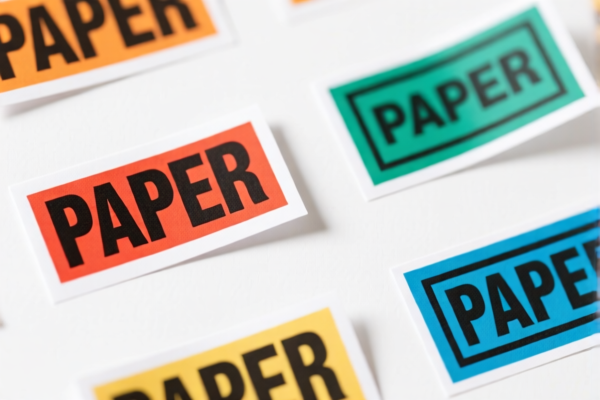
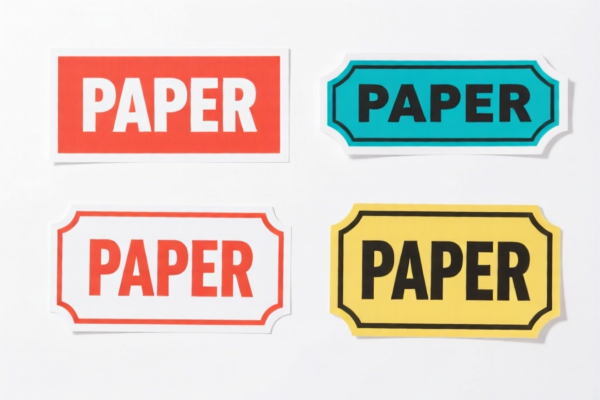
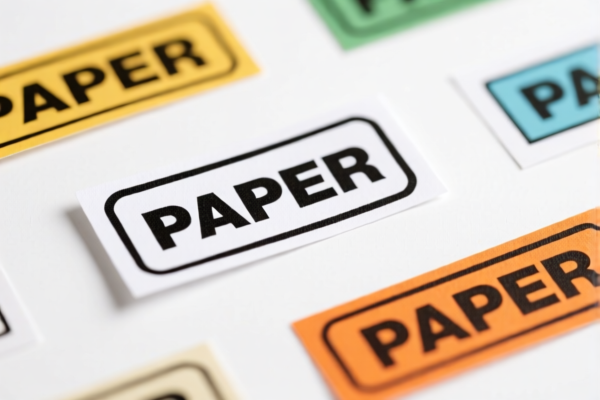
AI分析
🏷️ Peel Off Paper Label
(Self-Adhesive Removable Paper Labels)
🌐 HS Code Reference & Customs Clearance Guide | 2026 Latest Tariff Analysis | Professional Clearance Strategy
📌 I. Product Definition & Classification: Do You Really Understand "Paper Labels"?
"Peel off paper labels" are adhesive-backed labels made primarily of paper, designed to be removed from surfaces without leaving residue. In international trade, their classification depends heavily on material composition (paper vs. other substrates) and printing status (plain printed vs. complex graphics).
There are two primary classification paths for this product: 1. HS 4821.xx: Labels made of paper/cardboard, regardless of printing complexity. 2. HS 4911.xx: Other printed matter where the label is considered a "printed medium" or decorative item.
⚠️ Key Distinction Point:
- If the primary characteristic is "Label" + "Paper Material" → Typically Chapter 48 (Paper/Paperboard).
- If the primary characteristic is "Printed Matter" (complex graphic/artistic) → Typically Chapter 49 (Printed Books/Newspapers/Other Printed Matter).
- "Removable": This is a functional feature (adhesive type) and does not change the fundamental classification in either chapter.
📦 II. HS Code Classification Details (2026 Latest Tariff Authority Comparison)
Based on the provided data, there are four possible HS Codes, split into two tariff categories (High Tax vs. Low Tax).
| HS Code | Product Description | Key Classification Logic | Total Tax Rate |
|---|---|---|---|
4821.90.20.00 |
Labels of paper or paperboard | Matches material (paper) and use (label). No material conflict. | 35.0% |
4821.90.40.00 |
Labels of paper or paperboard | "Paper label" matches "Labels of paper/cardboard". "Removable" does not affect classification. | 35.0% |
4911.99.80.00 |
Other printed matter | Infer material as paper, fitting "Other printed matter". No material conflict. | 17.5% |
4911.99.60.00 |
Other printed matter | "Paper label" meets "Printed on paper" requirement. "Removable" is a functional feature. Inferred as lithographic printed paper product. | 17.5% |
🔍 Critical Insight:
- Chapter 48 (4821.90): Focuses on the physical nature of the label (paper substrate). High tax burden.
- Chapter 49 (4911.99): Focuses on the printed content/artistic nature. Lower tax burden.
- Risk: Customs may challenge Chapter 49 classification if the label is simple/plain, favoring Chapter 48.
💰 III. 2026 Latest Tariff Rate Details (Including Surtaxes & Policy Add-ons)
✅ Applicable Country: United States (US)
✅ Origin: China (CN)
✅ Effective Date: Post-2025 (Including subsequent imports)
🎯 1. 4821.90.20.00 & 4821.90.40.00 —— Paper Labels (High Tax Category)
| Item | Detail |
|---|---|
| Base Tariff Rate | 0.0% (ad valorem) |
| Section 301 Surtax (USITC) | +25.0% (Section 301 duties on Chinese goods) |
| Section 122 Tariff (IEEPA) | +10.0% (Specific Chinese origin surcharge) |
| Total Tax Rate | 35.0% |
| Tax Calculation | CIF Value × 35% |
| De Minimis Eligibility | ❌ Not Eligible (Section 301 duties generally negate de minimis benefits for certain Chinese goods, or require strict declaration) |
| Legal Basis Path | USITC:4821.90 → Section 301: 25% → Section 122: 10% |
📌 Explanation:
- "Base 0%": Paper labels have no standard MFN duty.
- "301 25%": Standard retaliatory tariff on Chinese paper products/labels.
- "122 10%": Additional surcharge under specific emergency powers.
- Total 35%: A significant cost factor. Must be factored into pricing.
🎯 2. 4911.99.80.00 & 4911.99.60.00 —— Other Printed Matter (Low Tax Category)
| Item | Detail |
|---|---|
| Base Tariff Rate | 0.0% (ad valorem) |
| Section 301 Surtax (USITC) | +7.5% (Reduced rate for "Other printed matter" in some contexts, or specific sub-category) |
| Section 122 Tariff (IEEPA) | +10.0% (Standard surcharge) |
| Total Tax Rate | 17.5% |
| Tax Calculation | CIF Value × 17.5% |
| De Minimis Eligibility | ❌ Not Eligible (Same restrictions as above) |
| Legal Basis Path | USITC:4911.99 → Section 301: 7.5% → Section 122: 10% |
📌 Note:
- Lower Total Tax (17.5%): This is half the cost of the Chapter 48 classification.
- Justification Required: To qualify for 17.5%, you must prove the item is "Other Printed Matter" (complex printing, decorative, or informational content beyond simple labeling).
- Risk: If Customs deems it a simple "paper label," they will reclassify to 4821.xx and charge 35.0%.
🛠️ IV. Customs Clearance Practical Advice (Battle-Tested Pitfall Avoidance)
✅ 1. Documentation Checklist (Non-Negotiable)
| Document | Required | Purpose |
|---|---|---|
| ✅ Product Spec Sheet | ✔️ | Must specify: Material (Paper weight, type), Adhesive Type (Removable/Permanent), Printing Method (Litho/Offset). |
| ✅ Product Photos | ✔️ | Clear images showing the label, back adhesive, and printed content. |
| ✅ Commercial Invoice | ✔️ | Must accurately describe goods: "Removable Paper Labels, Lithographically Printed, for Packaging" or "Paper Labels, Simple Print". |
| ✅ Certificate of Origin | ✔️ | To prove Chinese origin and apply correct surtaxes. |
| ✅ Packing List | ✔️ | Details weight, dimensions, and quantity. |
| ✅ Print Samples | ✔️ | If claiming 4911.xx, provide samples showing complex graphic design to justify "Other Printed Matter." |
✅ 2. Declaration Strategy (Key Mantras)
🔥 "Material First, Print Second. Simple Label = 48, Complex Print = 49."
| Scenario | Recommended HS Code | Declaration Strategy | Risk if Wrong |
|---|---|---|---|
| Simple Text/Logo, Standard Paper | 4821.90.20.00 / 4821.90.40.00 |
Declare as "Paper Labels." | If declared as 4911, Customs may audit and charge back 35%. |
| Complex Graphic/Artistic Design | 4911.99.60.00 / 4911.99.80.00 |
Declare as "Printed Matter" or "Decorative Printed Items." | If deemed simple label, risk 17.5% → 35% reassessment. |
| Mixed Lot (Simple + Complex) | Separate! | Split shipment or declare separately. | Mixed declaration leads to customs hold and potential penalties. |
| "Removable" Feature | N/A | Mention in description but do not use it to change HS Code. | "Removable" does not justify Chapter 49. |
✅ 3. Special Situation Handling
| Situation | Advice |
|---|---|
| OEM Custom Labels | Provide client order + design files. If design is complex, lean towards 4911 for tax savings. |
| Security Labels (Holographic) | May not qualify as "paper." Check if material is plastic/film. If paper + hologram, still likely 4821 or 4911 depending on print complexity. |
| Small Quantity (De Minimis) | Do NOT rely on de minimis. Section 301 and 122 duties apply even to low-value shipments from China. |
| Audits | Be prepared to explain why you chose 4911 over 4821. Show the "printed matter" aspect. |
🌍 V. Global Market Comparison (2026 Latest)
| Country/Region | Recommended HS Code | Tax Rate (China Origin) | Key Requirements |
|---|---|---|---|
| 🇺🇸 USA | 4821.90.xx or 4911.99.xx |
17.5% - 35.0% | Strict origin verification. 301/122 duties apply. |
| 🇨🇳 China | 4821.90.xx |
0% | No additional surtaxes. Domestic trade friendly. |
| 🇪🇺 EU | 4821.90.xx |
0% | No Section 301/122 equivalents. Standard EU duty may apply (often 0-2%). |
| 🇬🇧 UK | 4821.90.xx |
0% | Post-Brexit UK Tariff. Generally low for paper goods. |
| 🇨🇦 Canada | 4821.90.xx |
0% | No Section 301. Low duty. |
📌 Conclusion:
- USA is the only major market with significant surtaxes (17.5%-35%) for these goods from China.
- Tax Optimization: If possible, classify under 4911.99 to save 17.5% (half the tax). This requires strong justification of "printed matter" status.
📌 VI. Common Mistakes & Pitfalls (Lessons Learned)
❌ Mistake 1: Declaring all labels as 4911 to save tax.
👉 Consequence: If Customs inspects and finds simple text labels, they will reclassify to 4821 and charge 35%. You will owe the difference + penalties.
❌ Mistake 2: Ignoring "Section 122" surcharge.
👉 Consequence: Underestimating total landed cost by 10%. Profit margins disappear.
❌ Mistake 3: Assuming "Removable" changes the HS Code.
👉 Consequence: Customs ignores "removable" as a functional feature. It does not qualify for a different chapter.
❌ Mistake 4: Not separating Simple vs. Complex labels in mixed shipments.
👉 Consequence: Customs may apply the higher rate (35%) to the entire shipment if classification is ambiguous.
✅ Correct Practice:
"Removable Self-Adhesive Paper Labels, Lithographically Printed with Complex Branding Graphics, For Use on Cosmetic Packaging"
(Use this description to support 4911 classification if the design is indeed complex.)
🎯 VII. Conclusion: Professional Declaration, Cost Savings, Risk Mitigation
🎯 Remember the Mantra:
🔹 "Simple Label = 48 (35%). Complex Print = 49 (17.5%). Removable doesn't matter for HS Code."
🔹 "HS Code determines tax. 35% vs 17.5% is a huge difference. Declare accurately."
📌 Pro Tip:
If your labels are simple, accept the 35% tax.
If your labels are highly decorative/complex, document the print process (lithography, etc.) to support 4911 and save 17.5%.
Always apply for an Advance Ruling (Pre-classification) if the volume is high and the classification is borderline.
📣 Immediate Action:
📞 Consult a US Customs Broker.
📄 Provide high-res images of the printed side.
🚀 Ensure compliant declaration to avoid seizure or back-dated duties.
✨ Professional clearance starts with accurate classification!
💼 Your every dollar saved is a dollar earned!
用户评价
关于 HS 编码归类
协调制度(HS)是由世界海关组织(WCO)制定的国际贸易商品分类标准。全球 200 多个国家采用 HS 系统作为海关关税、贸易统计和进出口监管的基础。
每个 HS 编码遵循以下层级结构:
- 章(2 位)——商品大类(例如:第 84 章:机器和机械设备)
- 品目(4 位)——章内的更具体分类
- 子目(6 位)——国际通用细分,所有 WCO 成员国统一使用
- 本国细分(8-10 位)——各国自行扩展的细分编码,如美国 HTSUS 10 位编码
正确的 HS 编码归类对于顺利通关、准确缴纳关税和遵守贸易法规至关重要。错误归类可能导致海关延误、多缴关税或罚款。
从CN进口到US时,适用的关税税率可能包括:
- 最惠国(MFN)税率——适用于 WTO 成员国的标准关税税率
- 普通税率——适用于无贸易协定国家
- 贸易救济关税——附加关税,如 301 条款(反倾销)、232 条款(国家安全)或反补贴税
本页内容仅供参考。如需正式归类,请咨询当地海关或持牌报关代理。