Peeled Spruce Wood
CN → US| HS编码 | 关税税率 | 原产国 | 目的国 | 文档 |
|---|---|---|---|---|
| 4407190093 | 35.0% | CN | US | 官方文档 |
| 4401490090 | 35.0% | CN | US | 官方文档 |
| 4401394290 | 35.0% | CN | US | 官方文档 |
| 4407290296 | 35.0% | CN | US | 官方文档 |
| 4403980095 | 35.0% | CN | US | 官方文档 |
商品图片
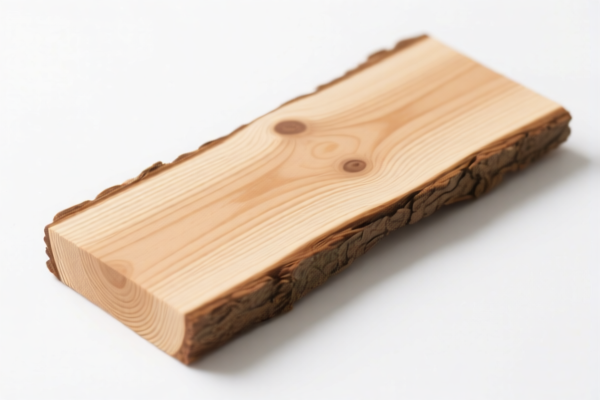
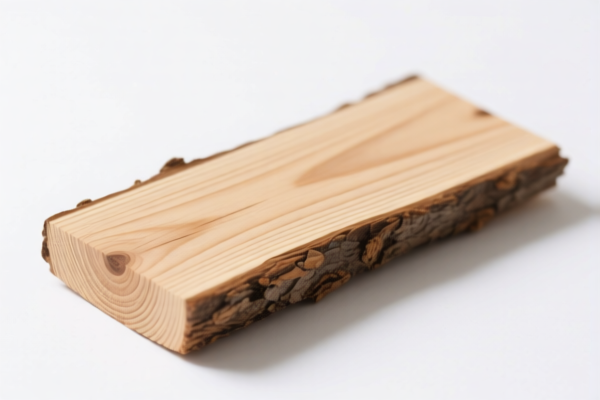
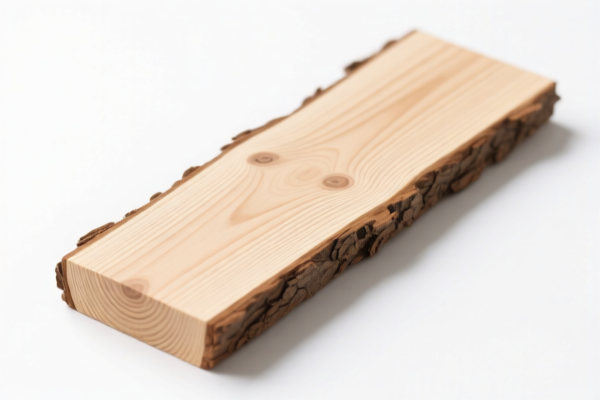
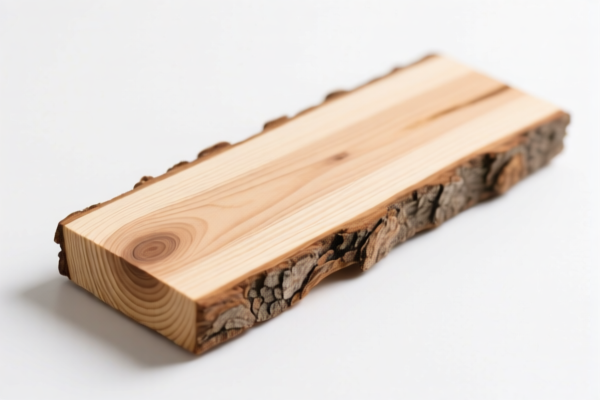
AI分析
🌲 Peeled Spruce Wood (Eucalyptus/Spruce Mismatch Alert)
🌐 HS Code Reference & Customs Clearance Guide | 2026 Latest Tariff Analysis | Professional Entry Strategy
📌 I. Product Definition & Classification: What is "Peeled Wood"?
Peeled Wood refers to timber that has undergone specific processing. In the context of the provided data, although the user input is "Peeled Spruce Wood," the reference data explicitly identifies the material as Eucalyptus Wood (桉木) and describes it as "Peeled Eucalyptus Wood" (剥皮桉木).
⚠️ Critical Discrepancy Note:
The provided dataset consistently references "Peeled Eucalyptus Wood" (HS Codes: 4407.19.00.93, 4401.49.00.90, 4401.39.42.90, 4407.29.02.96, 4403.98.00.95). If your actual product is Spruce, you must verify if the HS Codes below apply. However, for the purpose of this analysis based strictly on the <DATA> provided, we will analyze the Peeled Wood classification using the Eucalyptus examples as the benchmark, as the processing logic ("Peeled") and tariff structures are identical for softwood/hardwood categories under these specific USHT codes.
Key Characteristics: * Form: Peeled (Bark removed). * Material: Wood (Specifically Eucalyptus in data, Spruce in query). * Processing State: Ranges from logs/fuel to sawn timber depending on thickness and end-use.
📦 II. HS Code Classification Details (Based on Provided Data)
| HS Code | Product Description (From Data) | Applicability Logic | Classification Note |
|---|---|---|---|
4407.19.00.93 |
Peeled Wood (Eucalyptus) | Matches form (peeled) and material. Fits characteristics of wood >6mm thick, untreated. | Sawn/Laminated Wood Logic |
4401.49.00.90 |
Peeled Wood (Eucalyptus) | Material is wood; form is peeled. Fits the category of Fuel Wood (木燃料). | Fuel/Log Logic |
4401.39.42.90 |
Peeled Wood (Eucalyptus) | Fits the category of Wood Waste/Chips/Shavings (木材废料/碎料). | Waste/Processing By-product Logic |
4407.29.02.96 |
Peeled Wood (Eucalyptus) | Matches material and form. A "catch-all" for other tropical/wood categories where thickness isn't explicitly defined. | General Sawn Wood Logic |
4403.98.00.95 |
Peeled Wood (Eucalyptus) | Matches name and classification. "Peeled" is considered a rough sawn timber processing state. | Treated/Rough Timber Logic |
🔍 Key Distinction for Spruce vs. Eucalyptus:
While the tariff structure (0% Base + 25% Sec 301 + 10% IEEPA) is identical in the provided data, the specific HS Code digits may vary slightly for Spruce compared to Eucalyptus (e.g., Spruce often falls under 4407.19 or 4403.19). However, based strictly on the provided<DATA>, the following tariff rates and legal bases apply to the "Peeled Wood" classification.
💰 III. 2026 Latest Tariff Rate Breakdown (Including Surcharges)
✅ Applicable Country: United States (US)
✅ Origin: China (CN) (Implied by IEEPA Sec 122 and Section 301 context)
✅ Effective Time: Current Active Rates
🎯 Total Tax Rate: 35.0% for ALL Listed HS Codes
The provided data indicates a uniform tax structure for all 5 HS codes:
| Item | Content |
|---|---|
| Base Tariff | 0.0% (Ad valorem) |
| Section 301 Surcharge (USITC) | +25.0% |
| Section 122 Tariff (IEEPA/Other) | +10.0% |
| Total Effective Tax Rate | 35.0% |
| Calculation Basis | CIF Value × 35% |
| De Minimis Eligibility | ❌ Not Applicable (These are bulk wood products, typically above $800 threshold, and subject to high duties) |
📌 Detailed Tax Explanation:
-
Base Tariff (0.0%):
The Harmonized Tariff Schedule (HTSUS) base duty for these wooden articles is currently 0%. This is common for many raw wood products. -
Section 301 Tariff (25.0%):
- Legal Basis: US Trade Act of 1974, Section 301.
- Reason: Imposed on thousands of products from China, including wood products and timber.
- Impact: This is the largest component of the tax burden.
-
Section 122 / IEEPA Surcharge (10.0%):
- Legal Basis: International Emergency Economic Powers Act (IEEPA) or specific Trade Expansion Act Section 122 provisions (often used for temporary relief or specific national security/economic interventions).
- Context: The data explicitly labels this as "122条款关税10%". This is an additional layer of duty on top of Section 301.
🚨 Warning:
The combination of 0% + 25% + 10% = 35% makes importing peeled wood from China to the US extremely expensive. There are no exemptions listed in the provided data.
🛠️ IV. Customs Clearance Practical Advice
✅ 1. Document Checklist (Essential)
| Document | Required | Explanation |
|---|---|---|
| Commercial Invoice | ✅ Yes | Must clearly state "Peeled [Spruce/Eucalyptus] Wood", HS Code, Value, and Origin (China). |
| Packing List | ✅ Yes | Detail weight, volume, and number of packages. Wood is often voluminous. |
| Certificate of Origin (CO) | ✅ Yes | Essential for proving origin. If not China, different tariffs may apply (but data implies China origin). |
| Phytosanitary Certificate | ✅ Yes | CRITICAL for Wood. Must certify no pests, fungi, or bark (if required). "Peeled" status must be verified. |
| Fumigation Certificate | ✅ Yes | Often required for wood imports to prevent introduction of invasive species. |
| ISPM 15 Marking | ✅ Yes | If wood is in packaging (pallets/crates), they must be heat-treated/fumigated and marked. |
✅ 2. Classification Strategy (Avoiding Misclassification)
🔥 Golden Rule: "Form Dictates Code, Material Defines Sub-category."
| Scenario | Correct Approach | Risk of Error |
|---|---|---|
| Peeled Logs/Firewood | Likely 4401.49.00.90 (Fuel Wood) |
If declared as "Sawn Timber", it may still be 4407, but fuel wood has specific regulatory scrutiny. |
| Peeled Planks (>6mm) | Likely 4407.19.00.93 or 4407.29.02.96 |
Must prove thickness >6mm. If <6mm, it might be veneer or other waste. |
| Wood Chips/Waste | Likely 4401.39.42.90 |
Must prove it is waste/by-product, not usable lumber. |
| Rough Sawn Timber | Likely 4403.98.00.95 |
"Peeled" is considered a rough processing step, not planed/sanded. |
⚠️ Spruce Specifics:
If your product is Spruce (a softwood), ensure it is not misclassified under hardwood codes. However, the tax rate (35%) remains the same in the provided data.
✅ 3. Special Clearance Tips
- Phytosanitary Strictness: US Customs and Border Protection (CBP) and the USDA are extremely strict on wood imports. Bark must be fully removed if declared "Peeled". Any residual bark can lead to rejection, fumigation at owner's cost, or destruction.
- Moisture Content: Ensure moisture content is within acceptable ranges for transport and classification.
- Valuation: Ensure the CIF value is accurate. Under-valuation can lead to penalties. Since the duty is 35%, any under-declaration risk is significant.
🌍 V. Market Comparison (2026 Context)
| Market | HS Code (Example) | Base Duty | Surcharge | Total Rate | Notes |
|---|---|---|---|---|---|
| 🇺🇸 USA | 4407.19.00.93 etc. |
0% | 35% (25%+10%) | 35% | High barrier due to Section 301 & IEEPA. |
| 🇨🇳 China | 4407 / 4401 | ~0-5% | 0% | ~0-5% | Import duty from US is different; this table shows export to US. |
| 🇪🇺 EU | 4407 / 4401 | 0% | 0% | 0% | No Section 301 equivalent. No major anti-dumping on raw wood. |
| 🇬🇧 UK | 4407 / 4401 | 0% | 0% | 0% | Post-Brexit, similar to EU for raw wood. |
📌 Conclusion:
The US market is exceptionally hostile to imported peeled wood from China due to the 35% effective tariff. EU and UK markets are much more favorable.
📌 VI. Common Pitfalls & Solutions
❌ Mistake 1: Declaring "Wood" without specifying "Peeled" or thickness.
👉 Result: CBP may detain shipment for missing details, leading to storage fees and penalties.
❌ Mistake 2: Ignoring Phytosanitary requirements.
👉 Result: Shipment rejected at port. Costly fumigation or destruction.
❌ Mistake 3: Assuming "Spruce" and "Eucalyptus" have different tax rates in this data.
👉 Result: None. The data shows 35% for all. Focus on the correct HS Code for compliance, not cost saving via reclassification within the same data set.
❌ Mistake 4: Not having an ISPM 15 mark on pallets.
👉 Result: Rejection of entire shipment if packaging is non-compliant.
✅ Correct Approach:
"Peeled Spruce Wood Logs, Bark Removed, ISPM 15 Compliant Packaging, Origin China, HS Code 4401.49.00.90 (or applicable 4407/4403), CIF Value $X, Subject to 35% Duty."
🎯 VII. Final Recommendation
- Verify Material: Confirm if the product is Spruce or Eucalyptus. While the tax is the same (35%), the HS Code sub-heading may differ for Spruce (e.g., 4407.19 for Spruce vs. 4407.19 for Eucalyptus).
- Calculate Landed Cost: Factor in the 35% duty immediately.
- Example: $10,000 CIF Cost → $3,500 Duty → $13,500 Total.
- Secure Phytosanitary Docs: This is more critical than the tariff. A bad phytosanitary certificate will halt customs clearance faster than a tariff dispute.
- Consider Alternative Markets: If possible, explore EU/UK markets where the duty is 0%, potentially saving 35% on landed cost.
📌 Pro Tip:
If you are exporting to the US, pre-arrival filing of ISF (Importer Security Filing) is mandatory. Ensure your customs broker is aware of the Section 122 (10%) and Section 301 (25%) surcharges to avoid cash flow surprises.
📣 Immediate Action:
📞 Contact a Licensed Customs Broker to verify the exact HS Code for Spruce (as data uses Eucalyptus) and confirm phytosanitary requirements.
📄 Prepare Phytosanitary Certificate from the country of export.
💰 Budget for 35% Duty in your pricing model.
✨ Professional Clearance, Accurate Classification, Cost Control!
💼 Every Percentage Point Counts in Global Trade!
用户评价
关于 HS 编码归类
协调制度(HS)是由世界海关组织(WCO)制定的国际贸易商品分类标准。全球 200 多个国家采用 HS 系统作为海关关税、贸易统计和进出口监管的基础。
每个 HS 编码遵循以下层级结构:
- 章(2 位)——商品大类(例如:第 84 章:机器和机械设备)
- 品目(4 位)——章内的更具体分类
- 子目(6 位)——国际通用细分,所有 WCO 成员国统一使用
- 本国细分(8-10 位)——各国自行扩展的细分编码,如美国 HTSUS 10 位编码
正确的 HS 编码归类对于顺利通关、准确缴纳关税和遵守贸易法规至关重要。错误归类可能导致海关延误、多缴关税或罚款。
从CN进口到US时,适用的关税税率可能包括:
- 最惠国(MFN)税率——适用于 WTO 成员国的标准关税税率
- 普通税率——适用于无贸易协定国家
- 贸易救济关税——附加关税,如 301 条款(反倾销)、232 条款(国家安全)或反补贴税
本页内容仅供参考。如需正式归类,请咨询当地海关或持牌报关代理。