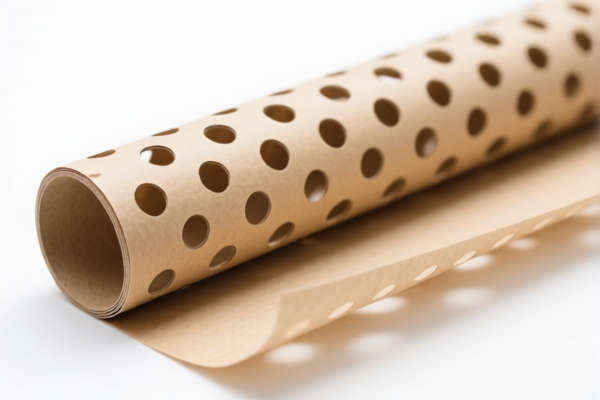
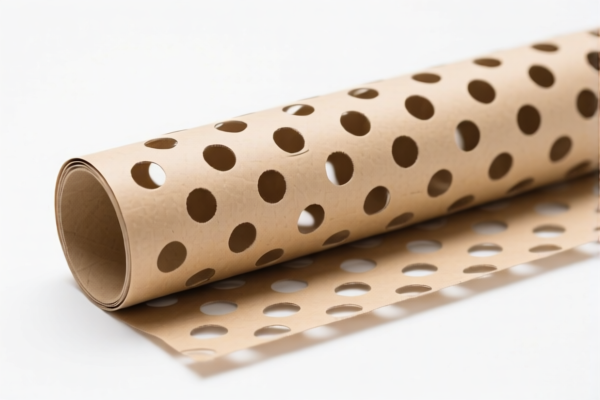
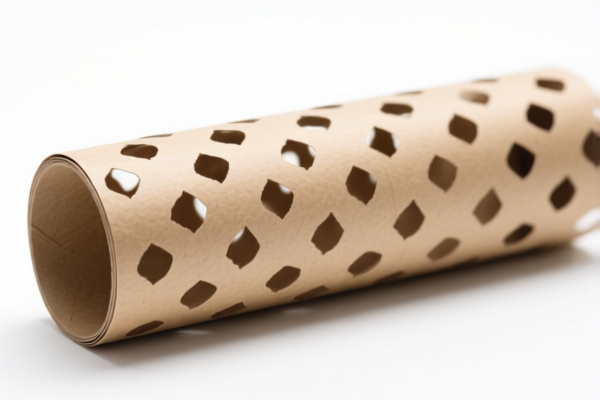
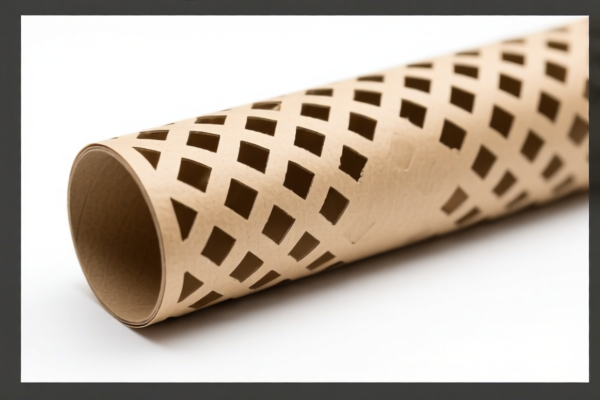
Perforated Card Paper Roll
CN → US| HS编码 | 关税税率 | 原产国 | 目的国 | 文档 |
|---|---|---|---|---|
| 4811904090 | 35.0% | CN | US | 官方文档 |
| 4814900200 | 17.5% | CN | US | 官方文档 |
| 4823903100 | 35.0% | CN | US | 官方文档 |
| 4823906700 | 35.0% | CN | US | 官方文档 |
| 4811904090 | 35.0% | CN | US | 官方文档 |
商品图片
AI分析
📄 Perforated Card Paper Roll (Hole Card Paper)
🌐 HS Code Reference & Customs Clearance Guide | 2026 Latest Tariff Analysis | Professional Clearance Strategy
📌 1. Product Definition: What is "Perforated Card Paper"?
Perforated Card Paper Rolls, commonly known as Hole Cards or Index Cards, are sheets of heavy-weight paper or paperboard with a series of punched holes along the edge. Historically used for early data processing (punched cards), modern applications include:
- Archival & Storage: Index cards for libraries, legal, and historical records.
- Industrial/Technical: Data cards for specific legacy machines, control systems, or custom industrial automation interfaces.
- Printing & Stationery: High-quality card stock for business cards, greeting cards, or specialized printing substrates.
⚠️ Key Classification Distinction:
- If the paper is uncoated, plain, and specifically punched for data/indexing use → It often falls under 4823 (Other paper, paperboard, cardboard, articles of paper pulp, paper or paperboard).
- If the paper is coated, treated, or used as a covering/wrapping → It may fall under 4811 (Paper, paperboard, cardboard, fibrous sheet materials coated, impregnated, covered, surface-carved or embossed, in rolls or sheets) or 4814 (Wallpaper and similar wall coverings, paper for wallpaper).
- Crucial Note: The presence of perforations does not automatically place it in a different chapter; it is still primarily classified by its material composition and surface treatment under Chapter 48.
📦 2. HS Code Classification Details (2026 Authorized Matches)
Based on the provided <DATA>, here are the exact HS Codes and their tax implications for "Perforated Card Paper Roll" variants:
| HS Code | Product Description (From Data) | Summary / Application | Key Characteristic |
|---|---|---|---|
| 4811.90.40.90 | Cotton Paper Roll | Paper/cellulose material, roll form. | High Tax Bracket – Uncoated/Plain paper, not elsewhere specified. |
| 4814.90.02.00 | Paper Coverings, Roll Form | Other paper products used as coverings/wallpapers. | Lower Tax Bracket – Classified as decorative or covering material. |
| 4823.90.31.00 | Unpunched Cotton Paper Rolls for Perforated Cards | Specifically for punching cards, paper/cellulose type. | High Tax Bracket – Most direct match for raw material for punch cards. |
| 4823.90.67.00 | Cellulosic Fiber Products, Roll Form | Coated paper or other paper products. | High Tax Bracket – Treated/coated cellulose products. |
| 4811.90.40.90 | Cotton Paper Roll | Consistent with other paper products classification. | High Tax Bracket – Duplicate entry emphasizing consistency. |
🔍 Critical Analysis:
- The most technically accurate code for raw material intended for "Perforated Cards" is 4823.90.31.00, as the summary explicitly mentions "used for punching cards" (用于打孔卡).
- If the product is already finished (printed/decorative) and used as a "covering" (e.g., decorative index dividers), 4814.90.02.00 might apply, offering a significantly lower tax rate.
- Codes 4811.90.40.90 and 4823.90.67.00 apply to generic cellulose/cotton rolls that may be further processed.
💰 3. 2026 Tariff Rate Breakdown (Detailed Tax Clauses)
✅ Applicable Country: United States (US)
✅ Origin: China (CN)
✅ Effective Date: November 10, 2025 (and subsequent imports)
🎯 1. 4823.90.31.00 – Unpunched Cotton Paper Rolls for Perforated Cards
(Note: Even if the input is "Perforated," customs may classify based on the substrate if perforation is considered a minor finishing step, or if the specific "for punch cards" description applies. If already fully finished and labeled as "Perforated Card," verify if 4823.90.31.00 still captures it. If the summary says "Unpunched... for perforated cards," ensure your product matches.)
| Item | Details |
|---|---|
| Base Rate | 0.0% (Ad Valorem) |
| Section 301 Additional Duty | +25.0% (USITC Footnote 9903.88.01) |
| Section 122 Additional Duty | +10.0% (Targeting China/HK products under specific emergency powers) |
| Total Tariff Rate | 35.0% |
| Calculation | CIF Value × 35% |
| De Minimis Exemption? | ❌ No (Denied. High tariff goods are excluded from $800 exemption.) |
| Legal Path | IEEPA:9903.01.25 → USITC:4823.90.31.00 → FOOTNOTE:9903.88.01 |
📌 Explanation:
- This falls under the highest tax bracket (35%) due to the combination of standard Section 301 tariffs and the additional Section 122/IEEPA surcharges.
- Warning: If you mistakenly classify a "Covering" product (4814) as "Card Paper" (4823), you risk an additional 17.5% in penalties or back-taxes.
🎯 2. 4811.90.40.90 – Cotton Paper Roll (Generic/Unspecified)
| Item | Details |
|---|---|
| Base Rate | 0.0% |
| Section 301 Additional Duty | +25.0% |
| Section 122 Additional Duty | +10.0% |
| Total Tariff Rate | 35.0% |
| Calculation | CIF Value × 35% |
| De Minimis Exemption? | ❌ No |
| Legal Path | IEEPA:9903.01.25 → USITC:4811.90.40.90 → FOOTNOTE:9903.88.01 |
📌 Explanation:
- Identical tax treatment to 4823.90.31.00.
- Applies to rolls of cotton-based paper not specifically coated or printed for decorative covering.
🎯 3. 4814.90.02.00 – Paper Coverings (Roll Form)
(Potential Optimization Target)
| Item | Details |
|---|---|
| Base Rate | 0.0% |
| Section 301 Additional Duty | +7.5% |
| Section 122 Additional Duty | +10.0% |
| Total Tariff Rate | 17.5% |
| Calculation | CIF Value × 17.5% |
| De Minimis Exemption? | ❌ No (Generally, high-value or specific category goods are excluded) |
| Legal Path | IEEPA:9903.01.24 → USITC:4814.90.02.00 → FOOTNOTE:9903.88.01 |
📌 Strategic Insight:
- This is the lowest tax option (17.5%) in the dataset.
- Can you use this? Only if your "Perforated Card Paper" is marketed/used as a wall covering, decorative paper, or archival covering material rather than a functional data-processing card.
- Risk: If the US Customs and Border Protection (CBP) determines the item is primarily for "data processing" or "indexing," they will reclassify it to 4823 or 4811, triggering the 35% rate and potential penalties.
🎯 4. 4823.90.67.00 – Cellulosic Fiber Products, Coated
| Item | Details |
|---|---|
| Base Rate | 0.0% |
| Section 301 Additional Duty | +25.0% |
| Section 122 Additional Duty | +10.0% |
| Total Tariff Rate | 35.0% |
| Calculation | CIF Value × 35% |
| De Minimis Exemption? | ❌ No |
📌 Explanation:
- Applies if the paper roll is coated (e.g., glossy, matte, treated for printing).
- Common for high-end business card stock or printed index dividers.
🛠️ 4. Customs Clearance Practical Advice
✅ 1. Document Preparation Checklist
| Document | Required? | Purpose |
|---|---|---|
| Product Specification Sheet | ✅ Yes | Detail material (100% cotton, wood pulp, etc.), basis weight (gsm), and perforation type. |
| Commercial Invoice | ✅ Yes | Must clearly state "Paper Roll" or "Cellulose Product." Avoid vague terms like "Office Supplies" without detail. |
| Packing List | ✅ Yes | Indicate if perforations are pre-made or if rolls are blank. |
| Certificate of Origin | ✅ Yes | Crucial for proving Chinese origin to apply correct Section 301/122 rates. |
| Usage Declaration | ✅ Yes | Declare end-use: "For archival indexing," "For decorative covering," or "For industrial data cards." |
✅ 2. Classification Strategy & Risk Mitigation
🔥 Key Rule: "Function determines Form, but Material determines Chapter."
| Scenario | Recommended HS Code | Tariff | Risk Level | Strategy |
|---|---|---|---|---|
| Blank Rolls for Clients to Punch | 4823.90.31.00 |
35% | Low | Clearly label as "Paper Rolls for Perforated Cards." |
| Finished Decorative Index Cards (Covering) | 4814.90.02.00 |
17.5% | Medium-High | Must prove "Covering/Wallpaper" use. High risk of reclassification. |
| Coated/Glossy Business Cards | 4823.90.67.00 |
35% | Low | Clearly state "Coated Paper." |
| Generic Cotton Paper Roll | 4811.90.40.90 |
35% | Low | Safe default if specific use is unclear. |
⚠️ Critical Warning:
Do NOT attempt to classify standard perforated data cards as4814.90.02.00to save taxes unless you have a solid legal justification for it being a "covering." CBP frequently audits these classifications. If audited, you will owe the difference (17.5%) + interest + potential penalties.
✅ 3. Special Circumstances
-
De Minimis ($800 Exemption):
- ❌ Not Applicable. All the HS codes above trigger Section 301 and Section 122 duties. The US government has explicitly excluded goods subject to these additional duties from the Section 321 (de minimis) exemption.
- Impact: Every single roll, even under $800, is subject to the 17.5%–35% duty.
-
Pre-Clearance (ACE Portal):
- Use the ACE (Automated Commercial Environment) portal to submit 9910 (Additional Information) if the product has unique characteristics (e.g., special coating for inkjet printing).
-
Origin Marking:
- Ensure all physical rolls are marked "Made in China" if applicable, to avoid Section 301 evasion claims.
🌍 5. Global Market Comparison (2026)
| Region | Recommended HS Code | Base Tariff | Additional Duties (China) | Total Est. Rate | Notes |
|---|---|---|---|---|---|
| 🇺🇸 USA | 4823.90.31.00 / 4811.90.40.90 |
0% | +25% (Sec 301) +10% (Sec 122) | 35% | Highest barrier. Plan pricing accordingly. |
| 🇺🇸 USA | 4814.90.02.00 |
0% | +7.5% (Sec 301) +10% (Sec 122) | 17.5% | Only if defensible as "Covering." |
| 🇨🇳 China | 4823.90.31.00 |
6-10% | None | ~6-10% | Lower entry barrier for domestic use. |
| 🇪🇺 EU | 4823.90.31.00 |
6.5% | None (usually) | ~6.5% | No Section 301 equivalent. Favorable for EU exports. |
| 🇬🇧 UK | 4823.90.31.00 |
6.5% | None | ~6.5% | Post-Brexit tariffs remain low for paper products. |
📌 Conclusion for Exporters:
- The US market is costly for paper rolls due to the 35% combined tariff.
- Consider shifting US-bound inventory to non-China origins (e.g., Vietnam, Thailand) if possible to avoid Section 301/122 tariffs, provided the Substantial Transformation rules are met.
- For non-US markets, these products remain competitive with low single-digit tariffs.
📌 6. Common Errors & Pitfalls
❌ Error 1: Using "Office Supplies" as a generic description.
👉 Result: CBP may assign a higher duty rate under "Miscellaneous" or misclassify.
👉 Fix: Be specific: "Cotton Paper Rolls for Perforated Cards, 50gsm, Uncoated."
❌ Error 2: Misclassifying "Coated Paper" as "Uncoated" to avoid higher scrutiny.
👉 Result: Penalty for false classification.
👉 Fix: Disclose coating type (e.g., "Matte coated").
❌ Error 3: Assuming De Minimis applies.
👉 Result: Shipment seized or held at border for duty payment.
👉 Fix: Always declare duties for US-bound shipments regardless of value.
✅ Correct Declaration Example:
"Rolls of cotton paper, uncoated, 100% cellulose, in rolls of 50m, specifically manufactured for subsequent punching into index cards. Origin: China."
HS Code:4823.90.31.00
Duty: 35%
🎯 7. Conclusion: Professional Clearance, Cost Efficiency
🎯 Key Takeaways:
🔹 "Paper is Paper, but Tax Varies" –
4814(17.5%) is cheaper than4823/4811(35%), but only if usage justifies it.
🔹 "No De Minimis for China Paper" – Even $50 rolls are taxed 35% in the US.
🔹 "Be Specific" – Vague descriptions lead to delays and higher assessments.📌 Pro Tip:
If you are a US importer, consult a licensed customs broker to determine if your specific "Perforated Card Paper" can legitimately be classified under4814.90.02.00to save 17.5%. If not, factor the 35% into your landed cost. For non-US markets, these rates are significantly lower, making paper exports highly competitive.
📣 Immediate Action Required:
📞 Verify HS Code with a customs broker using product samples.
📊 Calculate Landed Cost including the 17.5%–35% duty + freight + insurance.
🚀 Optimize Supply Chain if possible (e.g., third-country manufacturing for US market).
✨ Precision in Classification, Profit in Clearance!
💼 Every percentage point matters in today's trade landscape.
用户评价
关于 HS 编码归类
协调制度(HS)是由世界海关组织(WCO)制定的国际贸易商品分类标准。全球 200 多个国家采用 HS 系统作为海关关税、贸易统计和进出口监管的基础。
每个 HS 编码遵循以下层级结构:
- 章(2 位)——商品大类(例如:第 84 章:机器和机械设备)
- 品目(4 位)——章内的更具体分类
- 子目(6 位)——国际通用细分,所有 WCO 成员国统一使用
- 本国细分(8-10 位)——各国自行扩展的细分编码,如美国 HTSUS 10 位编码
正确的 HS 编码归类对于顺利通关、准确缴纳关税和遵守贸易法规至关重要。错误归类可能导致海关延误、多缴关税或罚款。
从CN进口到US时,适用的关税税率可能包括:
- 最惠国(MFN)税率——适用于 WTO 成员国的标准关税税率
- 普通税率——适用于无贸易协定国家
- 贸易救济关税——附加关税,如 301 条款(反倾销)、232 条款(国家安全)或反补贴税
本页内容仅供参考。如需正式归类,请咨询当地海关或持牌报关代理。