Perforated Card Test Paper
CN → US| HS编码 | 关税税率 | 原产国 | 目的国 | 文档 |
|---|---|---|---|---|
| 4814900200 | 17.5% | CN | US | 官方文档 |
| 4823903100 | 35.0% | CN | US | 官方文档 |
| 4823906700 | 35.0% | CN | US | 官方文档 |
| 4811904090 | 35.0% | CN | US | 官方文档 |
| 4811906090 | 35.0% | CN | US | 官方文档 |
商品图片
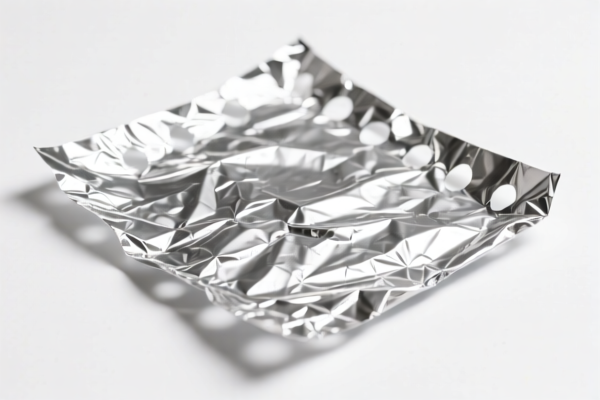
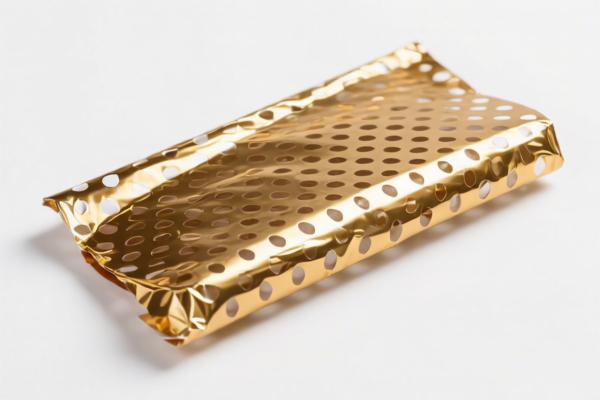


AI分析
🃏 Perforated Card Test Paper (Punched Card Test Paper)
🌐 HS Code Reference & Customs Clearance Guide | 2026 Latest Tariff Analysis | Strategic Compliance Strategy
📌 I. Product Definition & Classification: Do You Really Understand "Test Paper"?
Perforated Card Test Paper is a specialized material used in quality control, material science, or educational testing, typically involving the analysis of paper properties (such as thickness, density, or permeability) using punched or perforated samples. In international trade, classification hinges on the material composition (Cellulose/Paper) and physical form (Rolls/Sheets) and processing (Coated/Uncoated).
⚠️ Key Distinction:
- Is it a finished recording medium (like punch cards for data entry) → Likely 4807 or 4823?
- Is it a raw material/sample for testing (uncoated or lightly processed paper rolls) → Likely 4811 or 4814/4823?
- Critical Factor: The "Roll" form and "Cotton Paper" material strongly suggest categories under Chapter 48 (Paper & Paperboard), specifically focusing on processed paper products or other paper articles.
📦 II. HS Code Classification Details (2026 Latest Tariff Authority Match)
Based on the provided data, the product is matched to the following HS Codes. Note that these are inferred matches based on "Cotton Paper," "Rolls," and "Perforated/Card" attributes.
| HS Code | Summary & Matching Logic | Total Tax Rate | Tax Breakdown |
|---|---|---|---|
| 4814.90.02.00 | Match Logic: "Paper" matches material; "Roll" matches form. Classified under "Other" as a reasonable inference for paper-based transparent covers or similar items. | 17.5% | Base: 0.0% Add-on: 7.5% Section 301: 10% |
| 4823.90.31.00 | Match Logic: Material is Cotton Paper (Cellulose). Form is Roll (Unperforated state implied for classification). Use: Punched card (fits "cards for punching machines"). No material conflict. | 35.0% | Base: 0.0% Add-on: 25.0% Section 301: 10% |
| 4823.90.67.00 | Match Logic: "Cotton Paper Roll" → Cellulose fiber material. Form: Roll. Fits "Other paper, paperboard... cellulose mats" under coated/processed paper categories. | 35.0% | Base: 0.0% Add-on: 25.0% Section 301: 10% |
| 4811.90.40.90 | Match Logic: Material: Cotton Paper (Cellulose). Form: Roll. Consistent with "Other paper products" classification under 4811. | 35.0% | Base: 0.0% Add-on: 25.0% Section 301: 10% |
| 4811.90.60.90 | Match Logic: Material: Cotton/Cellulose Fiber Mat. Form: Roll. Use: Coated/processed paper product. Not excluded from tissue paper categories. | 35.0% | Base: 0.0% Add-on: 25.0% Section 301: 10% |
🔍 Key Insight:
- 4814.90.02.00 is the only low-tax option (17.5%), but its match is described as a "reasonable inference" for "other" items, making it potentially riskier if the product doesn't clearly fit "transparent covers." - 4823/4811 codes (35.0%) are more robustly justified by "Cotton Paper" and "Rolls," but carry a higher tariff burden due to the 25% Add-on Tariff (likely from USITC Section 301 measures).
💰 III. 2026 Latest Tariff Rate Breakdown (Including Surcharges & Policy Add-ons)
✅ Applicable Country: United States (US)
✅ Country of Origin: China (CN)
✅ Effective Date: November 10, 2025 onwards
🎯 1. 4814.90.02.00 – Other Paper Products (Lower Tax Tier)
| Item | Content |
|---|---|
| Base Rate | 0% (ad valorem) |
| USITC Add-on Tariff | +7.5% (Lower surcharge tier) |
| Section 301 Tariff | +10% (Targeting Chinese origin) |
| Total Rate | 17.5% |
| Tax Calculation | CIF Value × 17.5% |
| De Minimis Eligibility | ❌ No (High risk for small shipments) |
| Legal Basis Path | USITC:4814.90.02.00 → Section 301: 10% |
📌 Explanation:
- This code benefits from a lower USITC add-on (7.5%) compared to other paper codes (25%).
- Risk: The classification justification is weaker ("reasonable inference"). If customs disputes that the product is not a "transparent cover" or similar, it could be reclassified to a higher-tax code.
🎯 2. 4823.90.31.00 / 4823.90.67.00 / 4811.90.40.90 / 4811.90.60.90 – Higher Tax Tier (35%)
| Item | Content |
|---|---|
| Base Rate | 0% |
| USITC Add-on Tariff | +25% (Standard high surcharge for many paper products) |
| Section 301 Tariff | +10% |
| Total Rate | 35.0% |
| Tax Calculation | CIF Value × 35.0% |
| De Minimis Eligibility | ❌ No |
| Legal Basis Path | USITC:4823/4811 → Section 301: 10% |
📌 Note:
- These codes are materially justified by "Cotton Paper" and "Rolls."
- The 25% USITC add-on is standard for many processed paper products under Section 301.
- Total cost is double that of4814.90.02.00.
🛠️ IV. Customs Clearance Practical Advice (Real-World Pitfall Guide)
✅ 1. Documentation Checklist (Essential)
| Document | Required? | Notes |
|---|---|---|
| ✅ Product Specification Sheet | ✔️ | Must specify: Material (Cotton/Cellulose), Form (Rolls), Dimensions, Perforation details. |
| ✅ Product Photos | ✔️ | Clear images of the roll, perforations, and any labels. |
| ✅ Bill of Lading / Commercial Invoice | ✔️ | Must match the declared HS Code and description precisely. |
| ✅ Certificate of Origin (CO) | ✔️ | To prove Chinese origin (triggering Section 301). |
| ✅ Material Composition Statement | ✔️ | Explicitly state "100% Cotton Paper" or "Cellulose Fiber" to support 4823/4811 classification. |
✅ 2. Declaration Tips (Key Mantra)
🔥 "Material First, Form Second, Purpose Third!"
| Scenario | Correct Declaration | Wrong Declaration |
|---|---|---|
| Cotton Paper Rolls | "Cotton Paper Rolls for Testing" + HS 4823/4811 | "Punched Cards" (Misleading, may go to 4807 or 8523) |
| Unperforated Rolls for Perforation | "Unperforated Cotton Paper Rolls" | "Perforated Test Paper" (If not yet perforated, this is false) |
| Trying for Lower Tax (4814) | "Transparent Paper Covers" | "Test Paper" (If it doesn't fit the specific use, risk of audit) |
✅ 3. Special Case Handling
| Situation | Handling Advice |
|---|---|
| Product is Perforated | Ensure description matches "Punched Cards" or "Perforated Paper." If for data entry, HS 4807 might apply (not in data), but if for testing, stick to 4823/4811. |
| Product is Unperforated Rolls | Declare as "Unperforated." Perforation may be done post-import. This supports 4823/4811. |
| High Value Shipment | Consider Advance Ruling from CBP to lock in the HS Code and avoid post-entry audits. |
| Origin Non-China | If made in Vietnam/Mexico, Section 301 10% may not apply, potentially saving 10% on the 35% codes. |
🌍 V. Global Market Comparison (2026 Latest)
| Country/Region | Recommended HS Code | Tariff (China Origin) | Certification | Notes |
|---|---|---|---|---|
| 🇺🇸 USA | 4823.90.31.00 or 4814.90.02.00 |
17.5% - 35% | None Specific | High tariffs due to Section 301. |
| 🇨🇳 China | 4823.90.31.00 |
5% - 10% | None | Low import duties for domestic testing materials. |
| 🇪🇺 EU | 4823.90.67.00 |
0% - 4.5% | CE (if applicable) | Lower tariffs, but strict REACH compliance for cellulose chemicals. |
| 🇬🇧 UK | 4823.90.67.00 |
0% - 4.5% | UKCA | Post-Brexit rules apply. |
| 🇯🇵 Japan | 4823.90.67.00 |
0% - 3.8% | JIS | Low tariffs, high quality standards. |
📌 Conclusion:
- USA is the most expensive market for this product due to Section 301 tariffs.
- EU/Asia are more favorable for cost structure.
- US Importers must budget for 17.5%–35% additional duty costs.
📌 VI. Common Errors & Pitfalls (Lessons Learned)
❌ Error 1: Declaring "Perforated Card" as "Punched Card for Data Processing" (HS 4807)
👉 Consequence: If not for data processing, customs may reject the code and reclassify to 4823/4811 with penalties.
❌ Error 2: Ignoring "Cotton Paper" Composition
👉 Consequence: Misclassification as generic paper, leading to incorrect duty rates and audits.
❌ Error 3: Assuming De Minimis Applies
👉 Consequence: Section 301 and USITC tariffs do not apply de minimis thresholds for most goods from China. Small shipments are taxed too.
❌ Error 4: Using "Test Paper" as Final Description
👉 Consequence: Too vague. Use "Cotton Paper Rolls for Material Testing" to support HS 4823/4811.
✅ Correct Declaration Example:
"Cotton Paper Rolls, Unperforated, for Material Testing, 100% Cellulose Fiber, 500mm Width, 100m Length"
🎯 VII. Conclusion: Professional Classification Saves Money!
🎯 Remember the Mantra:
🔹 "Cotton Paper = 35% Tax (USA), unless it's 'Transparent Cover' (17.5%)!"
🔹 "De Minimis Doesn't Save You! Section 301 Hits Small Shipments Too!"
📌 Pro Tip:
If you are importing large volumes, consider Advance Ruling from CBP to secure the 17.5% rate if your product can be argued as fitting 4814.90.02.00. Otherwise, budget for 35%.
📣 Immediate Action:
📞 Consult a Customs Broker + Provide Product Photos + Request Advance Ruling
🚀 Ensure Smooth Clearance, Avoid Delays, and Manage Costs Effectively!
✨ Professional Classification, From Precise HS Codes!
💼 Every Cent Saved is a Cent Earned!
用户评价
关于 HS 编码归类
协调制度(HS)是由世界海关组织(WCO)制定的国际贸易商品分类标准。全球 200 多个国家采用 HS 系统作为海关关税、贸易统计和进出口监管的基础。
每个 HS 编码遵循以下层级结构:
- 章(2 位)——商品大类(例如:第 84 章:机器和机械设备)
- 品目(4 位)——章内的更具体分类
- 子目(6 位)——国际通用细分,所有 WCO 成员国统一使用
- 本国细分(8-10 位)——各国自行扩展的细分编码,如美国 HTSUS 10 位编码
正确的 HS 编码归类对于顺利通关、准确缴纳关税和遵守贸易法规至关重要。错误归类可能导致海关延误、多缴关税或罚款。
从CN进口到US时,适用的关税税率可能包括:
- 最惠国(MFN)税率——适用于 WTO 成员国的标准关税税率
- 普通税率——适用于无贸易协定国家
- 贸易救济关税——附加关税,如 301 条款(反倾销)、232 条款(国家安全)或反补贴税
本页内容仅供参考。如需正式归类,请咨询当地海关或持牌报关代理。