Perforated Safety Cardboard
CN → US| HS编码 | 关税税率 | 原产国 | 目的国 | 文档 |
|---|---|---|---|---|
| 4823903100 | 35.0% | CN | US | 官方文档 |
| 4823908000 | 35.0% | CN | US | 官方文档 |
商品图片
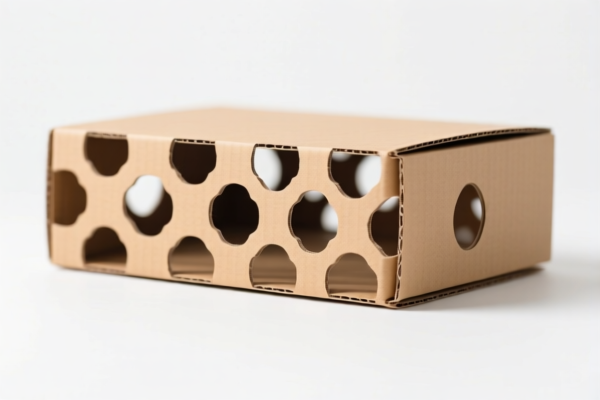
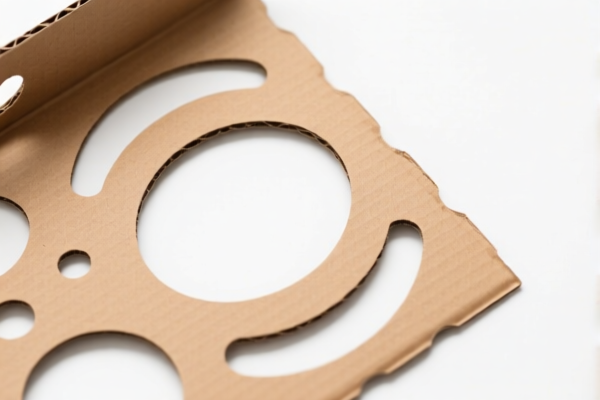
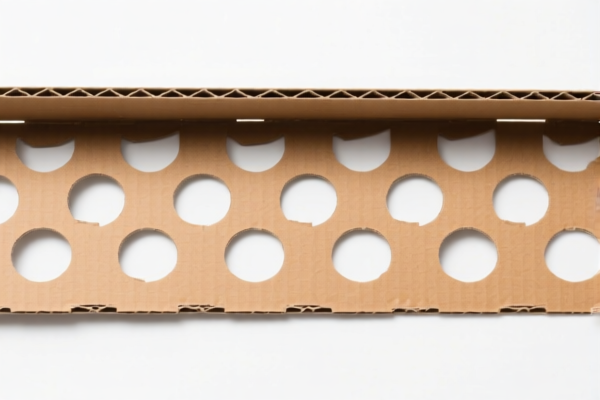
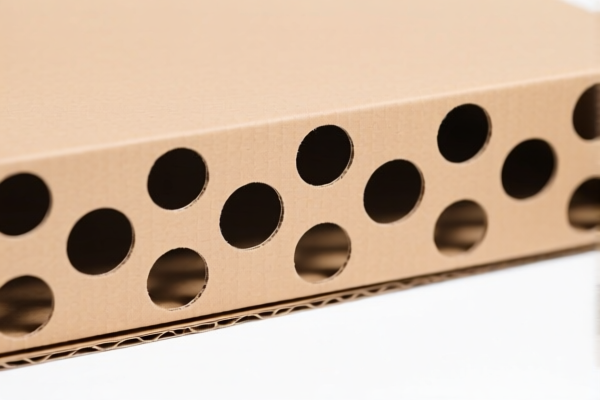
AI分析
🎟️ Perforated Safety Cardboard (Punchcard Machines)
🌐 HS Code Reference & Clearance Guide | 2026 Latest Tariff Analysis | Professional Customs Strategy
📌 I. Product Definition & Classification: Do You Really Understand “Safety Cardboard” in Trade?
Perforated Safety Cardboard, commonly referred to in international trade as Paper Cards for Punchcard Machines, is a specialized paper product used to input data into automated processing systems. These cards are cut to specific sizes and features pre-punched holes (or holes to be punched) that represent binary data (0s and 1s) for legacy or industrial control systems.
In the context of HS Code classification, the key distinction lies in whether the cards are punched (already containing data holes) or not punched (blank cards for user punching). According to the provided data, the classification focuses on cards, not punched, whether or not in strips.
⚠️ Key Distinction:
- If the card is blank (no holes) or intended for manual/automatic punching later → Classified under 4823.90.31.00.
- If the card is already punched with specific data patterns for immediate use in a machine → This often falls under different headings (e.g., 4901 or 8471 depending on function), but for this specific data set, we are strictly analyzing the "Not Punched" category.
📦 II. HS Code Classification Details (2026 Latest Tariff Authority Comparison)
Based on the provided <DATA>, there are two primary HS Codes relevant to paper products cut to size/shape. However, only one directly matches the description of "Cards for punchcard machines." The other is a general "Other" category that might be mistakenly used if the specific description is missing.
| HS Code | Product Description | Applicable Scenario | Is it Punchcards? |
|---|---|---|---|
4823.90.31.00 |
Cards, not punched, for punchcard machines, whether or not in strips | Blank punchcards, pre-cut card stock, industrial data input strips | ✅ Yes (Specific) |
4823.90.80.00 |
Other: Other: Other: Other: Gaskets, washers and other seals | General paper articles, paper gaskets, seals, non-specified paper items | ❌ No (General/Incorrect for punchcards) |
🔍 Critical Reminder:
- Perforated Safety Cardboard intended for punchcard machines must be classified under 4823.90.31.00.
- Do NOT classify blank punchcards under4823.90.80.00(which is for gaskets/seals) simply because they are paper. Misclassification leads to severe penalties and clearance delays.
- "Perforated" in the product name does not automatically mean "punched for data." If the holes are just pre-perforated lines for user punching, it is still "not punched" for data purposes.
💰 III. 2026 Latest Tariff Rate Breakdown (Including Additional Taxes & Policy Add-ons)
✅ Applicable Country: United States (US)
✅ Country of Origin: China (CN)
✅ Effective Date: Current (Based on provided data: 25% Total Tax)
🎯 1. 4823.90.31.00 —— Cards, Not Punched, for Punchcard Machines
| Item | Content |
|---|---|
| Base Tariff Rate | 0.0% (Ad Valorem) |
| Section 301 Additional Tariff | +25.0% |
| IEEPA Additional Tariff | Not listed in provided data (Assume 0% or combined into the 25% if data is comprehensive) |
| Total Tax Rate | 25.0% |
| Tax Calculation | CIF Value × 25% |
| De Minimis Eligibility | ❌ Not Applicable (Section 301 goods are generally excluded from de minimis benefits if the total tariff burden is high, but specifically, this is a 25% surcharge item) |
| Legal Basis Path | HTSUS:4823.90.31.00 → Section 301 Footnote: 9903.88.01 (or equivalent for 25% items) |
📌 Explanation:
- The base duty for these specific paper cards is 0%.
- The additional 25% tariff is applied due to the Section 301 trade remedies against Chinese goods.
- Total Cost Impact: You pay 25% on the declared CIF value. There is no base duty, so the entire tax burden comes from the political/trade action tax.
- Warning: This is a high-penalty item in terms of percentage relative to base. A 25% hit on a low-value base means a significant percentage increase in landed cost.
🛠️ IV. Customs Clearance Practical Advice (Field Pitfall Avoidance Guide)
✅ 1. Document Checklist (Must Have)
| Document | Mandatory? | Notes |
|---|---|---|
| ✅ Product Specification Sheet | ✔️ | Must state: "Blank Card for Punchcard Machine," "Not Punched for Data." |
| ✅ Commercial Invoice | ✔️ | Description: "Paper Cards, Not Punched, for Punchcard Machines." Avoid vague terms like "Safety Cardboard." |
| ✅ Packing List | ✔️ | Show quantity of cards/strips. |
| ✅ Certificate of Origin (CO) | ✔️ | Required to prove origin for Section 301 application. |
| ❌ No Need for | No FCC/CE needed for simple paper products. |
✅ 2. Declaration Tips (Key Mnemonics)
🔥 “Describe the Function, Not Just the Material!”
| Scenario | Correct Declaration | Wrong Approach |
|---|---|---|
| Blank Punchcards | "Cards, not punched, for punchcard machines" | "Safety Cardboard" or "Paper Sheets" |
| Already Data-Punched Cards | (Likely 4901/8471 - NOT in provided data) | Classify as 4823.90.31.00 (Error!) |
| Paper Gaskets | "Gaskets, washers, seals, paper" | Classify as Punchcard (Error!) |
✅ 3. Special Cases Handling
| Situation | Handling Advice |
|---|---|
| Pre-Perforated Lines | If cards have pre-cut lines for user punching, still classify as 4823.90.31.00 ("not punched"). |
| Mixed Shipment (Cards + Gaskets) | Separate Line Items! Do not mix 4823.90.31.00 and 4823.90.80.00. They have different descriptions. |
| "Safety" in Name | Do not let "Safety Cardboard" mislead customs into thinking it’s industrial safety gear. Stick to the HS Code definition. |
🌍 V. Global Market Comparison (2026 Latest)
| Country/Region | Recommended HS Code | Tariff (China Origin) | Notes |
|---|---|---|---|
| 🇺🇸 USA | 4823.90.31.00 |
25% (Total) | Base 0% + 25% Section 301 |
| 🇪🇺 EU | 4823.90.31.00 |
0% | Generally no additional tariffs on paper cards |
| 🇨🇳 China | 4823.90.31.00 |
0% | Zero-rated for import into China if applicable |
| 🇯🇵 Japan | 4823.90.31.00 |
0-3% | Varies by trade agreement |
📌 Conclusion:
- The US market is the only high-cost barrier for this item due to the 25% Section 301 tariff.
- Base duty is 0%, so the entire cost is political. This makes it highly sensitive to US-China trade policy changes.
📌 VI. Common Errors & Pitfall Guide (Blood and Tears Lessons)
❌ Error 1: Using generic terms like "Paper Card" or "Cardboard"
👉 Consequence: Customs may misclassify as 4823.90.80.00 (Gaskets) or other general categories, leading to rejection or reclassification fines.
❌ Error 2: Describing as "Punched Card" when it is Blank
👉 Consequence: If actually punched with data, it may fall under a different HS Code with a different tax rate. Misdeclaration leads to penalties.
❌ Error 3: Ignoring the "Not Punched" Clause
👉 Consequence: If you declare "Punched Card" but the product is blank, you risk being accused of fraud if the system expects a different code for data cards.
✅ Correct Action:
Always use the exact HS Code description:
"Cards, not punched, for punchcard machines, whether or not in strips."
🎯 VII. Conclusion: Precision Classification Saves Money!
🎯 Remember the Rule:
🔹 "Blank for Punchcard? Use 4823.90.31.00."
🔹 "Base 0% + 25% Trade Tax = 25% Total."
🔹 "Don't Call it 'Safety Cardboard' – Call it 'Punchcard!'"
📌 Pro Tip:
If you are importing these cards from Vietnam, Thailand, or Malaysia, you may avoid the 25% Section 301 tariff if the Rules of Origin are met.
✅ Recommendation:
- Apply for an Advance Ruling from US CBP if you have large volumes.
- Ensure your supplier provides a detailed material breakdown to prove the product is indeed "cards for punchcard machines."
📣 Immediate Action:
📞 Contact your customs broker with the exact HS Code 4823.90.31.00 and the phrase "Not Punched for Punchcard Machines".
🚀 Clear the customs, save the 25%, boost your margin!
✨ Professional Clearance Starts with Accurate Classification!
💼 Every dollar of tax is a dollar of profit lost – classify right!
用户评价
关于 HS 编码归类
协调制度(HS)是由世界海关组织(WCO)制定的国际贸易商品分类标准。全球 200 多个国家采用 HS 系统作为海关关税、贸易统计和进出口监管的基础。
每个 HS 编码遵循以下层级结构:
- 章(2 位)——商品大类(例如:第 84 章:机器和机械设备)
- 品目(4 位)——章内的更具体分类
- 子目(6 位)——国际通用细分,所有 WCO 成员国统一使用
- 本国细分(8-10 位)——各国自行扩展的细分编码,如美国 HTSUS 10 位编码
正确的 HS 编码归类对于顺利通关、准确缴纳关税和遵守贸易法规至关重要。错误归类可能导致海关延误、多缴关税或罚款。
从CN进口到US时,适用的关税税率可能包括:
- 最惠国(MFN)税率——适用于 WTO 成员国的标准关税税率
- 普通税率——适用于无贸易协定国家
- 贸易救济关税——附加关税,如 301 条款(反倾销)、232 条款(国家安全)或反补贴税
本页内容仅供参考。如需正式归类,请咨询当地海关或持牌报关代理。