Perforation free Film
CN → US| HS编码 | 关税税率 | 原产国 | 目的国 | 文档 |
|---|---|---|---|---|
| 3921904090 | 39.2% | CN | US | 官方文档 |
| 7607116090 | 40.3% | CN | US | 官方文档 |
| 3921905050 | 39.8% | CN | US | 官方文档 |
商品图片


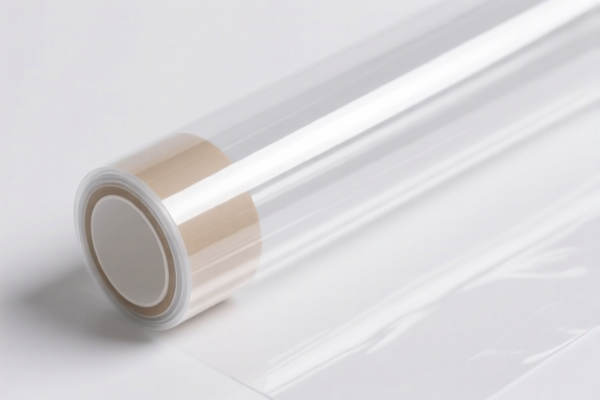
AI分析
🎞️ Perforation-Free Film (无孔底片)
🌐 HS Code Reference & Customs Clearance Guide | 2024 Tax Structure Analysis | Professional Entry Strategy
⚠️ Critical Note: The following data is based on the provided
<DATA>input. It reflects specific high-tariff scenarios (likely US-China trade context due to Section 301/122 Clause references). Always verify with local customs authorities.
📌 One, Product Definition: What is "Perforation-Free Film"?
Perforation-free film refers to flat or film-like products made of specific materials (plastic or metal) that do not have holes punched along the edges (unlike traditional movie film with sprocket holes).
In international trade, the classification depends heavily on the material composition: 1. Plastic-Based: Classified under Chapter 39 (Plastics and Articles Thereof). 2. Metal-Based: Classified under Chapter 76 (Aluminum and Articles Thereof).
⚠️ Key Distinction Point: * If the product is Plastic → Look at HS Codes starting with
3921. * If the product is Aluminum/Metal → Look at HS Code starting with7607. * "No Holes" implies it is not film for cinematography in the traditional sense, but rather a sheet/film for packaging, protection, or industrial use.
📦 Two, HS Code Classification Details (From Provided Data)
Based strictly on the provided <DATA>, there are three potential HS Codes. The choice depends on the specific material structure (Plastic vs. Aluminum) and precise sub-category.
| HS Code | Summary Description | Material Basis | Total Tax Rate |
|---|---|---|---|
3921.90.40.90 |
Perforation-free film classified as a sheet/film product of plastic | Plastic | 39.2% |
7607.11.60.90 |
Perforation-free film potentially as a sheet/film product of metal/aluminum | Aluminum/Metal | 40.3% |
3921.90.50.50 |
Perforation-free film classified as a plastic plate, sheet, film, or foil | Plastic | 39.8% |
🔍 Analysis of Differences: *
3921.90.40.90vs3921.90.50.50: Both are Plastic.3921.90.50.50is slightly more expensive (39.8% vs 39.2%). The distinction lies in the specific sub-heading for "plates, sheets, films, foils" vs general "other plastic sheets/films." *7607.11.60.90: This is for Aluminum. If your film is metalized aluminum or pure aluminum foil with no perforations, this is the code. It has the highest tax rate among the three (40.3%).
💰 Three, Detailed Tax Structure Explanation (2024/2025 Context)
The provided data indicates a high-tariff environment, likely involving US Imports from China due to the specific breakdown of taxes: 1. Base Duty (MFN): Standard World Trade Organization rate. 2. Section 301 Duty (Add-on): A 25% tariff on Chinese goods. 3. Section 122 Clause / IEEPA: An additional 10% tariff.
🎯 1. HS Code: 3921.90.40.90 (Plastic)
| Item | Detail |
|---|---|
| Base Duty | 4.2% |
| Section 301 Add-on | 25.0% |
| Section 122 Clause | 10.0% |
| Total Tax Rate | 39.2% |
| Tax Calculation | CIF Value × 39.2% |
| De Minimis Exemption | ❌ Not Applicable (High-value industrial goods usually excluded) |
📌 Explanation: * 4.2% Base: The standard MFN duty for other plastic plates, sheets, film, etc. * 25% Section 301: The standard punitive tariff on Category 4/4A Chinese products. * 10% Section 122: Additional specific trade remedy or emergency tariff. * Total: You pay nearly 40 cents for every $1 of imported value.
🎯 2. HS Code: 7607.11.60.90 (Aluminum)
| Item | Detail |
|---|---|
| Base Duty | 5.3% |
| Section 301 Add-on | 25.0% |
| Section 122 Clause | 10.0% |
| Total Tax Rate | 40.3% |
| Tax Calculation | CIF Value × 40.3% |
| De Minimis Exemption | ❌ Not Applicable |
📌 Explanation: * 5.3% Base: Aluminum sheets/films have a slightly higher base duty than plastics. * Same Surcharges: The 25% + 10% tariffs apply similarly to metal imports. * Highest Rate: This is the most expensive option at 40.3%.
🎯 3. HS Code: 3921.90.50.50 (Plastic - Plate/Sheet)
| Item | Detail |
|---|---|
| Base Duty | 4.8% |
| Section 301 Add-on | 25.0% |
| Section 122 Clause | 10.0% |
| Total Tax Rate | 39.8% |
| Tax Calculation | CIF Value × 39.8% |
| De Minimis Exemption | ❌ Not Applicable |
📌 Explanation: * 4.8% Base: Slightly higher than
3921.90.40.90(4.2%). * Total: 39.8%. This is a middle-ground option for plastic films, possibly depending on thickness or specific polymer type.
🛠️ Four, Customs Clearance Practical Advice (Pitfall Avoidance)
✅ 1. Preparation Checklist (Mandatory)
| Document | Required? | Notes |
|---|---|---|
| Product Specification Sheet | ✅ | Must state: Material (Plastic/Aluminum), Thickness, Width, NO Perforations. |
| Material Safety Data Sheet (MSDS) | ✅ | Especially for plastic polymers. |
| Commercial Invoice | ✅ | Clearly describe as "Perforation-Free Plastic Film" or "Aluminum Foil," NOT "Cinematographic Film." |
| Packing List | ✅ | Net/Gross weight, dimensions. |
| Certificate of Origin | ✅ | Crucial for verifying "Country of Origin" to apply correct Section 301 rates. |
✅ 2. Critical Declaration Tips
🔥 "Declare Material, Not Function!"
| Scenario | Correct Declaration | Incorrect Declaration | Consequence |
|---|---|---|---|
| Plastic Film | "Plastic Sheet/Film, Perforation-Free" | "Movie Film" or "Photographic Film" | Misclassification → Heavy Penalties |
| Aluminum Foil | "Aluminum Foil, Perforation-Free" | "Plastic Coated Film" | Customs may re-classify & add tax |
| Packaging Material | "Flexible Packaging Material" | "Raw Material" | Ambiguity → Delays at Border |
✅ 3. Special Case Handling
- Material Verification: If the film is a composite (e.g., plastic coated with aluminum), it may still be classified under Chapter 39 (Plastics) if plastic is the essential character. Proof of material composition is key.
- Thickness Matters: For
7607(Aluminum), thickness determines if it's "foil" or "sheet." Ensure your invoice specifies thickness to match7607.11. - No "Free Trade" Hope: Given the 25% + 10% surcharges, FTA exemptions (like USMCA or RCEP) likely do not apply to these specific HS codes from China due to the Section 301/122 nature.
🌍 Five, Global Market Comparison (2024 Context)
| Market | Likely HS Code | Est. Total Tax | Notes |
|---|---|---|---|
| 🇺🇸 USA | 3921.90.40.90 |
39.2% | High Section 301 + 122 tariffs. |
| 🇨🇳 China | 3921.90.40.90 |
~6-10% | Import duties are lower; no Section 301. |
| 🇪🇺 EU | 3920.99.90 |
6.5% | No equivalent to US Section 301. |
| 🇬🇧 UK | 3920.99.90 |
6.5% | Post-Brexit tariffs similar to EU. |
📌 Conclusion: * The USA is the most expensive market for importing perforation-free film from China due to the ~40% effective tariff rate. * For other markets, the burden is significantly lower (<10%). * Strategy: If exporting to the US, consider supply chain diversification (e.g., sourcing from Vietnam, Thailand, or Mexico) to avoid Section 301 tariffs, if applicable.
📌 Six, Common Errors & Pitfalls (Blood & Tears)
❌ Error 1: Calling it "Photographic Film" 👉 Result: Customs may classify it under Chapter 37 (Photographic Goods), which has different duties and stricter regulations. If it's actually plastic packaging film, this is fraud.
❌ Error 2: Ignoring "Perforation-Free" Status 👉 Result: If it has perforations, it might be Class 37. If it doesn't, it's Chapter 39/76. Misstatement leads to seizure.
❌ Error 3: Under-declaring Value 👉 Result: With 40% taxes, under-declaring by even 10% is a massive risk. Customs audits are common for high-tariff plastic/aluminum imports.
✅ Correct Approach:
"Plastic Film, Extruded, Perforation-Free, Used for Packaging, Thickness 0.2mm, HS Code 3921.90.40.90"
🎯 Seven, Conclusion: Professional Clearance, Cost Control!
🎯 Remember the Key Formula:
🔹 Material = HS Code 🔹 China Origin = +35% Tax (US) 🔹 Accuracy = Safety
📌 Actionable Advice:
1. Confirm Material: Is it Plastic or Aluminum?
2. Select Code:
* Plastic → 3921.90.40.90 (Cheapest) or 3921.90.50.50
* Aluminum → 7607.11.60.90 (Most Expensive)
3. Calculate Landed Cost: Add 39.2% - 40.3% to your FOB price to get true US landed cost.
4. Consider Alternatives: If possible, explore sourcing from non-China origins to bypass the 35% surcharge.
✨ Professional Clearance Starts with Accurate Classification! 💼 Your Every Dollar of Cost Deserves Precise Calculation!
用户评价
关于 HS 编码归类
协调制度(HS)是由世界海关组织(WCO)制定的国际贸易商品分类标准。全球 200 多个国家采用 HS 系统作为海关关税、贸易统计和进出口监管的基础。
每个 HS 编码遵循以下层级结构:
- 章(2 位)——商品大类(例如:第 84 章:机器和机械设备)
- 品目(4 位)——章内的更具体分类
- 子目(6 位)——国际通用细分,所有 WCO 成员国统一使用
- 本国细分(8-10 位)——各国自行扩展的细分编码,如美国 HTSUS 10 位编码
正确的 HS 编码归类对于顺利通关、准确缴纳关税和遵守贸易法规至关重要。错误归类可能导致海关延误、多缴关税或罚款。
从CN进口到US时,适用的关税税率可能包括:
- 最惠国(MFN)税率——适用于 WTO 成员国的标准关税税率
- 普通税率——适用于无贸易协定国家
- 贸易救济关税——附加关税,如 301 条款(反倾销)、232 条款(国家安全)或反补贴税
本页内容仅供参考。如需正式归类,请咨询当地海关或持牌报关代理。