Pet Fence Net
CN → US| HS编码 | 关税税率 | 原产国 | 目的国 | 文档 |
|---|---|---|---|---|
| 7326908635 | 87.9% | CN | US | 官方文档 |
| 4421917020 | 35.0% | CN | US | 官方文档 |
| 7326908688 | 87.9% | CN | US | 官方文档 |
| 4421997020 | 35.0% | CN | US | 官方文档 |
| 7326200090 | 88.9% | CN | US | 官方文档 |
商品图片



AI分析
🐾 Pet Fence Net: Global Trade Classification & 2026 Tariff Strategy
🌐 HS Code Reference & Clearance Guide | 2026 Latest Tariff Analysis | Professional Clearance Strategy
📌 I. Product Definition & Classification: Do You Really Understand "Pet Fence Net"?
A Pet Fence Net is a barrier system designed to secure pets (dogs, cats, chickens) within a specific area or prevent them from entering restricted zones. In international trade, classification depends entirely on the material and structural form of the product.
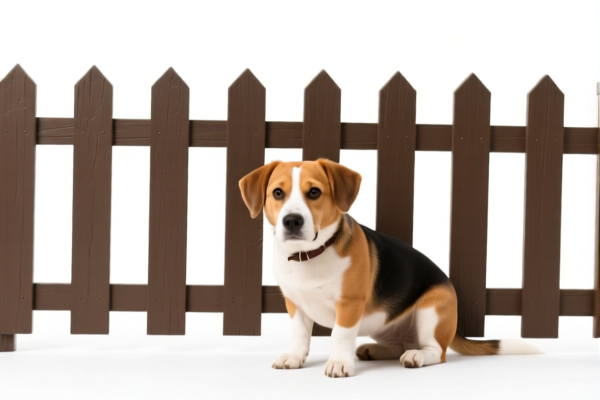
The market primarily splits these products into two main categories: 1. Metal Mesh Fences: Made of iron, steel, or wire mesh, often coated or galvanized. These fall under Chapter 73 (Articles of Iron or Steel). 2. Wooden/Bamboo Fences: Made of wood, bamboo, or woven plant materials. These fall under Chapter 44 (Wood and Articles of Wood).
⚠️ Key Distinction Point:
- If the net is primarily a metal wire mesh (even if bent into a shape) →归入 Chapter 73 (High Tariffs due to Steel/Aluminum/Additive Duties).
- If the net is primarily wooden slats or woven bamboo → 归入 Chapter 44 (Lower Base Tariffs, but still subject to Additive Duties).
- Do NOT classify a wooden frame fence as metal just because it has metal posts. The principal material dictates the code.
📦 II. HS Code Classification Details (2026 Latest Tariff Authority Cross-Reference)
Based on the provided data, here are the precise HS Codes for Pet Fence Nets, categorized by material inference:
| HS Code | Product Description | Inference Logic | Primary Material |
|---|---|---|---|
7326.90.86.35 |
Other articles of iron or steel; fencing products | Matches material & use: Inferred as Iron/Steel fence products | 🇩🇭 Iron / Steel |
7326.90.86.88 |
Other articles of iron or steel; miscellaneous metal goods | Matches "Other" category for iron/steel products; common metal article | 🇩🇭 Iron / Steel |
7326.20.00.90 |
Other articles of wire | Matches Mesh/Net form factor; inferred as Iron/Steel wire mesh products | 🇩🇭 Wire Mesh |
4421.91.70.20 |
Other wooden articles; fencing applications | Matches use for Fencing; inferred as Wooden or Bamboo materials | 🌳 Wood / Bamboo |
4421.99.70.20 |
Other wooden articles; assembled fence parts | Matches use for Fencing; inferred as Wooden parts with assembly form | 🌳 Wood Parts |
🔍 Critical Reminder:
- Metal Nets (7326...) carry significantly higher total tariffs (approx. 87.9% - 88.9%) due to steel-related penalties.
- Wooden Nets (4421...) have lower base tariffs but still face additive duties.
- Misclassification from Metal to Wood (or vice versa) is a common audit risk. Ensure the Bill of Lading and Commercial Invoice match the physical material exactly.
💰 III. 2026 Latest Tariff Rate Breakdown (Including Additives & Policy Surcharges)
✅ Applicable Country: United States (US)
✅ Country of Origin: China (CN)
✅ Effective Time: 2025/2026 (Includes subsequent imports)
🎯 1. 7326.90.86.35 & 7326.90.86.88 —— Iron/Steel Fence Articles
| Item | Content |
|---|---|
| Base Tariff | 2.9% (ad valorem) |
| Section 301 Additive | +25.0% |
| Section 232 Tariff (Steel/Aluminum/Copper) | +50.0% |
| Total Tariff Rate | 87.9% |
| Tax Calculation | CIF Value × 87.9% |
| De Minimis Exemption | ❌ NO (Not eligible) |
| Legal Basis Path | Section 301 → Section 232 → USITC:7326.90.86.xx |
📌 Explanation:
- Base 2.9%: Standard MFN rate for other articles of iron/steel.
- Section 301 (+25%): Standard trade war tariff on Chinese goods.
- Section 232 (+50%): Crucial! This is the specific tariff for Steel and Aluminum products added under the "122 Clause" (Section 232 of the Trade Expansion Act). Since these are iron/steel fences, this 50% penalty applies on top.
- Total: ~87.9%. This is an EXTREMELY HIGH cost barrier.
🎯 2. 7326.20.00.90 —— Iron/Steel Wire Mesh Articles
| Item | Content |
|---|---|
| Base Tariff | 3.9% (ad valorem) |
| Section 301 Additive | +25.0% |
| Section 232 Tariff (Steel/Aluminum/Copper) | +50.0% |
| Total Tariff Rate | 88.9% |
| Tax Calculation | CIF Value × 88.9% |
| De Minimis Exemption | ❌ NO (Not eligible) |
| Legal Basis Path | Section 301 → Section 232 → USITC:7326.20.00.90 |
📌 Explanation:
- Classified as "Wire" rather than "General Articles," hence the slightly higher base rate (3.9%).
- Still subject to Section 232 Steel Tariff (+50%).
- Total: ~88.9%. Even higher than general steel articles.
- Warning: Many importers mistakenly think "Net/Mesh" is exempt from Section 232. It is NOT.
🎯 3. 4421.91.70.20 & 4421.99.70.20 —— Wooden/Bamboo Fence Articles
| Item | Content |
|---|---|
| Base Tariff | 0.0% (ad valorem) |
| Section 301 Additive | +25.0% |
| Section 232 Tariff | ❌ N/A (Not Steel/Aluminum) |
| Total Tariff Rate | 35.0% |
| Tax Calculation | CIF Value × 35.0% |
| De Minimis Exemption | ❌ NO (Likely denied for Section 301 goods) |
| Legal Basis Path | Section 301 → USITC:4421.9x.70.20 |
📌 Explanation:
- Base 0.0%: Wood products often have low or zero base MFN rates.
- No Section 232: Since this is wood, the 50% Steel Tariff does NOT apply.
- Section 301 (+25%): Still applicable as it is a Chinese origin good.
- Total: 35.0%.
- Strategic Insight: If your pet fence can be legally classified as wood (e.g., wooden lattice, bamboo weave), you save ~53% in tariffs compared to steel!
🛠️ IV. Clearance Practical Advice (Combat-Ready Pitfall Avoidance Guide)
✅ 1. Documentation Checklist (Non-Negotiable)
| Document | Must Provide | Explanation |
|---|---|---|
| ✅ Product Specification Sheet | ✔️ | Must clearly state Material Composition (% Steel vs. % Wood). |
| ✅ Material Certificate | ✔️ | For steel fences, prove if it's "Stainless Steel" (may have exemptions) vs. "Carbon Steel" (Subject to 232). |
| ✅ Product Photos | ✔️ | Clear shots of joints, material texture, and labels. |
| ✅ Commercial Invoice | ✔️ | Description must match HS Code logic (e.g., "Steel Wire Mesh Fence" vs. "Wooden Garden Fence"). |
| ✅ Packing List | ✔️ | Weight and volume details for duty calculation. |
| ✅ Origin Certificate | ✔️ | Proof of China origin triggers Section 301. |
✅ 2. Declaration Tips (Key Mantra)
🔥 “Material Defines Code, Steel Triggers 232, Wood Saves Cash!”
| Scenario | Correct Declaration | Wrong Practice |
|---|---|---|
| Steel Wire Netting | 7326.20.00.90 (Steel Wire) |
Misdeclare as "Plastic Net" → Fraud Risk |
| Steel Panel Fence | 7326.90.86.35 (Steel Article) |
Misdeclare as "Wood Fence" → High Penalty |
| Wooden Slatted Fence | 4421.91.70.20 (Wood Article) |
Over-declare as "Composite" → Delay |
| Mixed Material (Wood Frame + Steel Net) | Determine Principal Material | Split shipment → Higher total tax |
⚠️ Complex Case: Mixed Materials
- If a fence has a wooden frame but the netting is steel, customs may look at the principal function/material.
- If the steel netting is the main functional element (the barrier), it may still be classified under Chapter 73.
- Recommendation: If switching to wood is possible, eliminate steel entirely to avoid the 50% Section 232 penalty.
✅ 3. Special Circumstances Handling
| Situation | Handling Advice |
|---|---|
| Stainless Steel Fences | Check if specific stainless steel grades are exempt from Section 232. Some are, some aren't. Verify HTS subheading carefully. |
| Galvanized Steel | NOT EXEMPT. Galvanization does not remove the "Steel" classification. Still subject to 232. |
| Plastic-Coated Steel Mesh | Still Chapter 73. The coating is incidental to the steel structure. Tariff remains ~88.9%. |
| Bamboo Woven Fences | Classify under Chapter 44. Ensure it’s not treated with heavy preservatives that change its chemical nature (though usually still Chapter 44). |
| Dropshipping / De Minimis | ❌ DO NOT RELY ON de Minimis. Section 301 and 232 tariffs generally deny the $800 de minimis exemption for these goods. Expect duties on every package. |
🌍 V. Global Market Clearance Comparison (2026 Latest)
| Country/Region | Recommended HS Code | Total Tariff (China Origin) | Key Certification | Notes |
|---|---|---|---|---|
| 🇺🇸 USA | 7326.20.00.90 (Steel) |
88.9% | FCC (if electric), ASTM | HIGHEST COST. Steel 232 penalty applies. |
| 🇺🇸 USA | 4421.91.70.20 (Wood) |
35.0% | None specific | Lower Cost. No 232 penalty. |
| 🇨🇳 China | 7326.20.00.90 |
~6-10% | CCC (if electric) | Low import tax for raw materials. |
| 🇪🇺 EU | 7326.90.89 |
~5-8% + Anti-dumping? | CE | Check for specific anti-dumping on steel fencing. |
| 🇬🇧 UK | 7326.90.89 |
~5-8% | UKCA | Post-Brexit rules apply. |
📌 Conclusion:
- The US Market is Brutal for Steel Pet Fences. The 88.9% effective rate makes price competitiveness nearly impossible for Chinese steel fences.
- Wood/Bamboo is the Strategic Alternative. At 35%, it is manageable.
- If you must ship Steel: Consider sourcing from Vietnam, Mexico, or Thailand (if rules of origin are met) to potentially avoid Section 301, though Section 232 may still apply depending on steel origin.
📌 VI. Common Errors & Pitfall Guide (Blood & Tears Lessons)
❌ Error 1: Declaring Galvanized Steel Net as "Plastic-Coated Wire" to avoid Steel codes.
👉 Consequence: Customs detects the steel core. Back-tariff of ~89% + Penalties.
❌ Error 2: Ignoring Section 232 for Steel Fences.
👉 Consequence: You budget for 28% tariff (2.9% base + 25% 301), but get hit with 88.9%. Profit wiped out.
❌ Error 3: Assuming De Minimis ($800) applies to Pet Fences.
👉 Consequence: Packages are seized or assessed duties retroactively because Section 301/232 goods are explicitly excluded from de minimis relief in many cases.
❌ Error 4: Mixing Wood and Steel in one shipment without clear separation.
👉 Consequence: Customs may classify the entire shipment under the stricter code if they deem the steel component essential.
✅ Correct Approach:
"Wooden Pet Enclosure Panel, Natural Bamboo Weave, No Metal Components, Model XYZ"
(Use Wood to target4421.91.70.20)"Galvanized Steel Welded Wire Mesh, for Agricultural/Pet Use, Section 232 Applicable"
(Honest Declaration for7326.20.00.90)
🎯 VII. Conclusion: Precision Classification Saves Millions
🎯 Remember the Mantra:
🔹 "Steel = 88% Tax, Wood = 35% Tax."
🔹 "No De Minimis for Steel Fences."
🔹 "Material is Destiny."
📌 Pro Tip:
If your product is electric (e.g., electric shock pet fence), it may fall under Chapter 85 (Electrical Machinery), which has different tariffs. Ensure you separate electronic components from physical barriers if possible.
📣 Immediate Action:
📞 Consult a Customs Broker for Section 232 Exemption Checks (if stainless steel).
🚀 Consider Supply Chain Diversification (Wood/Bamboo) to reduce US Tariff Exposure.
✨ Professional Clearance Starts with Accurate Classification!
💼 Every Dollar of Duty Saved is Pure Profit!
用户评价
关于 HS 编码归类
协调制度(HS)是由世界海关组织(WCO)制定的国际贸易商品分类标准。全球 200 多个国家采用 HS 系统作为海关关税、贸易统计和进出口监管的基础。
每个 HS 编码遵循以下层级结构:
- 章(2 位)——商品大类(例如:第 84 章:机器和机械设备)
- 品目(4 位)——章内的更具体分类
- 子目(6 位)——国际通用细分,所有 WCO 成员国统一使用
- 本国细分(8-10 位)——各国自行扩展的细分编码,如美国 HTSUS 10 位编码
正确的 HS 编码归类对于顺利通关、准确缴纳关税和遵守贸易法规至关重要。错误归类可能导致海关延误、多缴关税或罚款。
从CN进口到US时,适用的关税税率可能包括:
- 最惠国(MFN)税率——适用于 WTO 成员国的标准关税税率
- 普通税率——适用于无贸易协定国家
- 贸易救济关税——附加关税,如 301 条款(反倾销)、232 条款(国家安全)或反补贴税
本页内容仅供参考。如需正式归类,请咨询当地海关或持牌报关代理。