Pet Intrusion Alarm
CN → US| HS编码 | 关税税率 | 原产国 | 目的国 | 文档 |
|---|---|---|---|---|
| 8531100025 | 36.3% | CN | US | 官方文档 |
| 8542390090 | 60.0% | CN | US | 官方文档 |
| 8531100035 | 36.3% | CN | US | 官方文档 |
| 8531100025 | 36.3% | CN | US | 官方文档 |
| 8531100035 | 36.3% | CN | US | 官方文档 |
商品图片
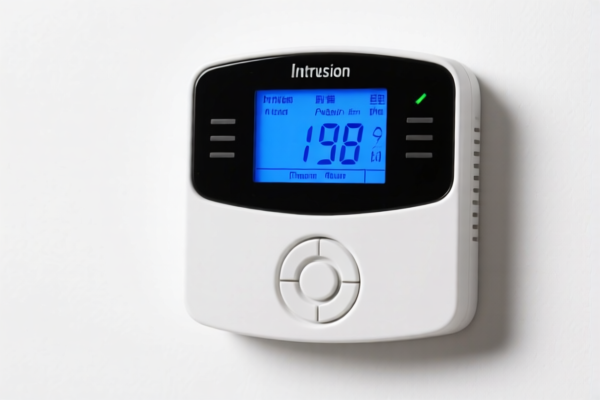
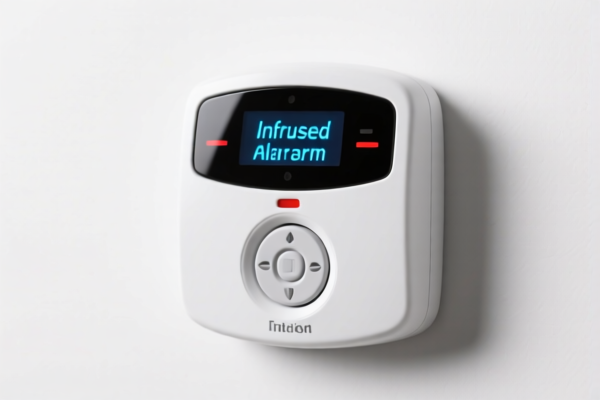
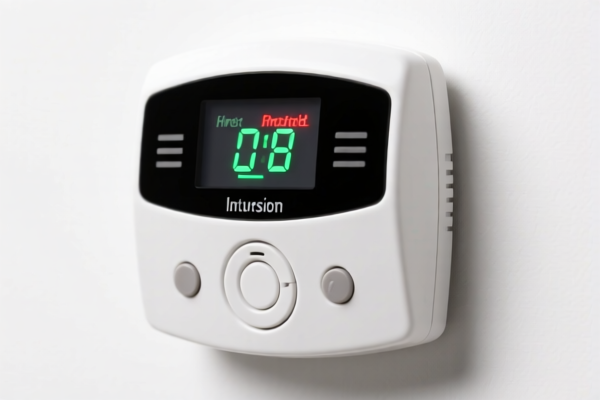
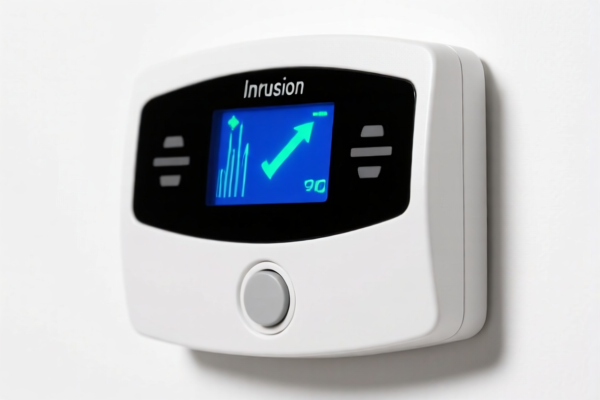
AI分析
🐾 Pet Intrusion Alarm (Pet Immunity Motion Detectors)
🌐 HS Code Reference & Clearance Guide | 2026 Latest Tariff Analysis | Professional Clearance Strategy
📌 I. Product Definition & Classification: Do You Really Understand "Pet Intrusion Alarms"?
Pet Intrusion Alarms, technically known as Pet-Immune Motion Detectors, are a specialized subset of security systems. Unlike standard motion sensors that trigger on any movement, these devices are engineered to ignore small animals (typically dogs up to 20–40 kg or cats) while detecting human intruders.
In international trade, the classification hinges on the specific function and component technology: 1. Signal Device (The Sensor Unit): If the item is the physical motion detector or siren unit itself, it falls under signaling devices. 2. Electronic Component (The Chip): If the import involves only the internal Integrated Circuit (IC) chip that enables the "pet immunity" logic (without the housing or sensor casing), it falls under electronic components.
⚠️ Key Distinction Point:
- If the product is a complete sensor unit (with lens, housing, mounting bracket) → HS Code 8531.10
- If the product is just the core IC chip (bare die or packaged semiconductor) → HS Code 8542.39
📦 II. HS Code Classification Details (2026 Latest Tariff Authority Comparison)
Based on the specific function and composition, the following HS Codes apply to Pet Intrusion Alarms or their core components:
| HS Code | Product Description | Applicable Scenario | Key Characteristic |
|---|---|---|---|
8531.10.00.25 |
Alarm Signals for intrusion detection | Standard pet-immine motion sensors, door/window contact alarms | ✅ Complete Signal Device |
8531.10.00.35 |
Other Alarm Signals (Non-smoke) | Advanced pet-immune PIR detectors, specific non-fire alarm units | ✅ Complete Signal Device |
8542.39.00.90 |
Other Electronic Integrated Circuits | The internal microcontroller or logic chip enabling pet detection | ✅ Bare Component Only |
🔍 Critical Reminder:
-8531.10codes apply when you are importing the finished sensor hardware. This includes PIR (Passive Infrared) sensors, microwave detectors, or ultrasonic alarms that feature "pet immunity" technology.
-8542.39code applies ONLY if you are importing the raw semiconductor chip that performs the logic processing. Do NOT use this code for a complete alarm unit; doing so constitutes misclassification and may lead to severe penalties.
💰 III. 2026 Latest Tariff Rate Breakdown (Including Surtaxes & Policy Add-ons)
✅ Applicable Country: United States (US)
✅ Country of Origin: China (CN)
✅ Effective Date: 2025/2026 (Subject to current Section 301 and IEEPA rules)
🎯 1. 8531.10.00.25 & 8531.10.00.35 —— Complete Alarm Signal Devices
| Item | Content |
|---|---|
| Base Duty Rate | 1.3% (General Ad Valorem) |
| Section 301 Surtax | +25.0% (Additional Tariff under USITC Footnote) |
| IEEPA Surtax | +10.0% (China-specific tariff under International Emergency Economic Powers Act) |
| Total Tariff Rate | 36.3% |
| Tax Calculation | CIF Value × 36.3% |
| De Minimis Eligibility | ❌ Not Eligible (deny_de_minimis) |
| Legal Basis Path | Base: 8531.10 → Sect301: +25% → IEEPA: +10% |
📌 Explanation:
- These alarm devices are considered "Electrical Signaling Equipment."
- The 36.3% total rate is significant. It combines the modest base duty with substantial punitive tariffs.
- Note: Both sub-codes.25(generic intrusion) and.35(other non-smoke alarms) share the same total tax rate of 36.3%. The distinction is purely descriptive for customs inspection.
🎯 2. 8542.39.00.90 —— Electronic Integrated Circuits (Internal Chips)
| Item | Content |
|---|---|
| Base Duty Rate | 0.0% (Most ICs have 0% base duty) |
| Section 301 Surtax | +50.0% (Higher tier for certain semiconductors/electronics) |
| IEEPA Surtax | +10.0% (China-specific tariff) |
| Total Tariff Rate | 60.0% |
| Tax Calculation | CIF Value × 60.0% |
| De Minimis Eligibility | ❌ Not Eligible (deny_de_minimis) |
| Legal Basis Path | Base: 8542.39 → Sect301: +50% → IEEPA: +10% |
📌 Explanation:
- This code is only for the electronic chips themselves.
- The 60.0% total rate is extremely high, even higher than the complete alarm device.
- Strategic Insight: Importing the bare chip is often more costly than importing the finished sensor. Most importers prefer8531.10(36.3%) because the added value of the housing, lens, and assembly outweighs the lower duty rate on the chip.
🛠️ IV. Clearance Operational Advice (Practical Pitfall Avoidance Guide)
✅ 1. Documentation Checklist (Non-negotiable)
| Document | Mandatory? | Description |
|---|---|---|
| ✅ Product Specification Sheet | ✔️ | Must clearly state "Pet Immune" or "Pet Immunity" and max pet weight (e.g., "Ignores pets up to 40lbs"). |
| ✅ Technical Diagram | ✔️ | For 8531.10: Show the sensor lens and housing. For 8542.39: Show the bare chip package (QFP/PLCC). |
| ✅ Commercial Invoice | ✔️ | Describe item accurately: "PIR Motion Sensor with Pet Immunity" OR "Microcontroller IC for Alarm Systems." |
| ✅ Certificate of Origin (CO) | ✔️ | Mandatory for claiming origin status, though tariffs remain high. |
| ✅ FCC ID / Certification | ✔️ | Wireless alarms require FCC ID. Wired alarms may not, but documentation helps. |
| ✅ Packing List | ✔️ | Must match invoice. No hidden accessories. |
✅ 2. Declaration Strategy (Key Mnemonic)
🔥 "Alarm Whole is 36%, Chip Bare is 60%, Don't Mix Them Up!"
| Scenario | Correct Declaration | Wrong Practice |
|---|---|---|
| Complete Pet Sensor | 8531.10.00.25 or .35 |
Misclassifying as "Chip" → 60% Tax! |
| Bare Control Chip | 8542.39.00.90 |
Misclassifying as "Alarm" → 36% Tax (Underpayment Penalty) |
| Alarm System Kit (Sensor + Hub) | Split Declaration | Declare Sensor as 8531.10, Hub as separate code. Do not lump into one line. |
✅ 3. Special Handling Tips
| Situation | Advice |
|---|---|
| "Pet Immune" Claim | Customs may inspect the lens design. Ensure the product description matches the physical appearance (dual-element PIR lenses often indicate pet immunity). |
| Wireless vs. Wired | Both fall under 8531.10. However, wireless units must have FCC certification attached. Missing FCC ID can cause hold-ups. |
| Bundled Kits | If importing a kit (Sensor + Battery + Mount), declare the sensor as the primary article under 8531.10. Mounts/batteries may need separate lines if their value is significant. |
| Origin Masking | Do not declare Chinese chips as "Made in USA" to evade the 10% IEEPA tax. This is fraud and carries heavy fines. |
🌍 V. Global Market Comparison (2026 Outlook)
| Country/Region | Recommended HS Code | Estimated Duty (China Origin) | Certification | Notes |
|---|---|---|---|---|
| 🇺🇸 USA | 8531.10.00.25 |
36.3% | FCC | High tariff burden; consider Section 301 exemptions if eligible. |
| 🇨🇳 China | 8531.10.00.25 |
~1.3% - 5% | CCC | Low import duty; main cost is VAT (13%). |
| 🇪🇺 EU | 8531.10.00.25 |
~0% (if free trade) | CE + RCM | No Section 301 equivalent. |
| 🇬🇧 UK | 8531.10.00.25 |
~0% - 5% | UKCA | Post-Brexit rules may vary; generally favorable. |
📌 Conclusion:
- The USA is the most challenging market due to the 36.3%-60% tariff wall.
- EU and UK offer much better duty advantages.
- If shipping to the US, ensure your commercial invoice explicitly states the HS Code to avoid manual assessment delays.
📌 VI. Common Errors & Pitfalls (Lessons Learned)
❌ Error 1: Declaring a complete sensor as 8542.39.00.90 (IC)
👉 Consequence: You underpay taxes on the "value-added" parts (housing, lens). Customs will reclassify, charge the difference, and impose penalties. Wait, actually, if you declare it as IC, you might pay 60%? No, if you import a finished sensor but declare it as a chip, you are misrepresenting the product nature. However, if the total tax for the sensor (8531.10) is 36.3% and for the chip (8542.39) is 60%, misclassifying a finished good as a chip is risky because customs will demand proof that it is only a chip. If it has a lens/housing, it will be rejected as incomplete goods, leading to delays.
👉 Correct Action: Always classify finished sensors under 8531.10 (36.3%). It is cheaper than importing the chip separately (60%).
❌ Error 2: Ignoring the 10% IEEPA Surcharge
👉 Consequence: Calculating only Section 301 (25% or 50%) leads to underpayment. The total is 36.3% or 60%.
👉 Correct Action: Always include Base + 301 + IEEPA in your cost modeling.
❌ Error 3: Using vague descriptions like "Security Device"
👉 Consequence: Customs may assign a default higher rate or hold the shipment for inspection.
👉 Correct Action: Use precise terms: "Pet-Immune PIR Motion Detector" or "Electronic Intrusion Alarm Signal Device."
🎯 VII. Conclusion: Smart Classification, Higher Margins!
🎯 Remember the Golden Rules:
🔹 "Finished Sensor? Go 8531 (36.3%). Bare Chip? Go 8542 (60%)."
🔹 "Always pay the 10% IEEPA on top. Don't forget the Base Duty!"
🔹 "Pet Immunity is a feature, not a separate HS Code. Describe it clearly!"
📌 Pro Tip:
If you are importing large volumes of Pet Intrusion Alarms to the US, consider applying for a Section 301 Exclusion if available for your specific HTS code. While the IEEPA 10% is hard to escape, the Section 301 duty might be exemptible if you can prove no alternative source exists. Consult a customs broker to check the latest exclusion lists.
📣 Immediate Action:
📞 Verify your HS Code with a licensed customs broker.
📄 Ensure your Commercial Invoice matches the HS Code description exactly.
🚀 Plan your landed cost at 36.3% (US) to protect your profit margin.
✨ Professional Clearance Starts with Accurate Classification!
💼 Every Percentage Point of Duty Matters in Your Bottom Line!
用户评价
关于 HS 编码归类
协调制度(HS)是由世界海关组织(WCO)制定的国际贸易商品分类标准。全球 200 多个国家采用 HS 系统作为海关关税、贸易统计和进出口监管的基础。
每个 HS 编码遵循以下层级结构:
- 章(2 位)——商品大类(例如:第 84 章:机器和机械设备)
- 品目(4 位)——章内的更具体分类
- 子目(6 位)——国际通用细分,所有 WCO 成员国统一使用
- 本国细分(8-10 位)——各国自行扩展的细分编码,如美国 HTSUS 10 位编码
正确的 HS 编码归类对于顺利通关、准确缴纳关税和遵守贸易法规至关重要。错误归类可能导致海关延误、多缴关税或罚款。
从CN进口到US时,适用的关税税率可能包括:
- 最惠国(MFN)税率——适用于 WTO 成员国的标准关税税率
- 普通税率——适用于无贸易协定国家
- 贸易救济关税——附加关税,如 301 条款(反倾销)、232 条款(国家安全)或反补贴税
本页内容仅供参考。如需正式归类,请咨询当地海关或持牌报关代理。