Petroleum Resin Ink Grade
CN → US| HS编码 | 关税税率 | 原产国 | 目的国 | 文档 |
|---|---|---|---|---|
| 3215119060 | 36.8% | CN | US | 官方文档 |
| 3215199060 | 36.8% | CN | US | 官方文档 |
| 2713900000 | 35.0% | CN | US | 官方文档 |
| 2713110000 | 35.0% | CN | US | 官方文档 |
| 3911100000 | 41.1% | CN | US | 官方文档 |
| 3911902500 | 41.1% | CN | US | 官方文档 |
商品图片
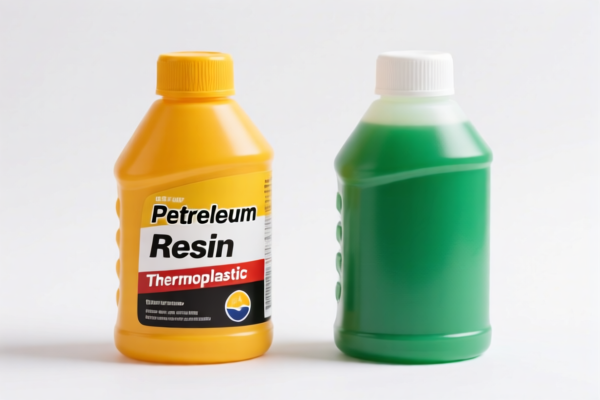

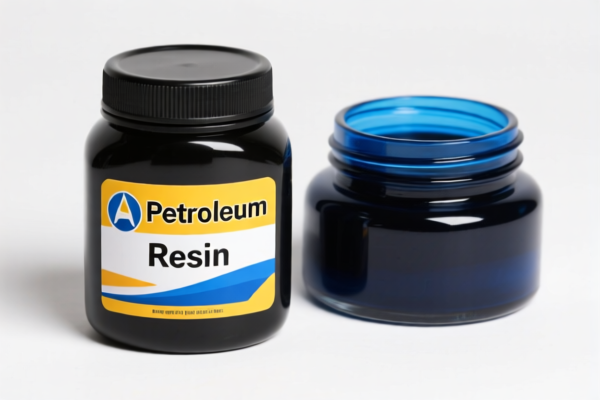

AI分析
🧪 Petroleum Resin Ink Grade (Resinous Additives for Printing Inks)
🌐 HS Code Reference & Customs Clearance Guide | 2026 Latest Tariff Analysis | Professional Clearance Strategy
📌 I. Product Definition: What Exactly is "Petroleum Resin Ink Grade"?
"Petroleum Resin Ink Grade" refers to a specific subset of synthetic resins derived from petroleum by-products. These are not the final printing inks themselves, but rather the binding agents, tackifiers, or modifiers added to printing inks to improve adhesion, gloss, drying speed, and flexibility.
In international trade, these products are often confused with finished inks or other plastic materials. However, based on chemical composition and primary form, they fall under Chapter 39 (Plastics and Articles Thereof) or Chapter 27 (Mineral Fuels/Oils) depending on their specific chemical structure and processing level.
⚠️ Key Distinction:
- If it is a finished liquid paste for direct printing → It is Ink (Chapter 32).
- If it is a solid granule/powder used as an additive → It is Resin (Chapter 39) or Petroleum Residue (Chapter 27).
- This guide focuses on the RESIN/ADDITIVE forms based on the provided data.
📦 II. HS Code Classification Details (Based on Provided Data)
The provided data contains two distinct categories for "Petroleum Resins/Ink Grades": one where it is treated as a generic petroleum residue, and one where it is treated as a specialized thermoplastic resin.
| HS Code | Product Description | Key Characteristics | Applicable to "Ink Grade"? |
|---|---|---|---|
3911.10.00.00 |
Petroleum resins, coumarone-indene resins, polyterpenes, polysulfides, polysulfones... in primary forms | Raw/resin form, often aromatic-based, used as tackifiers in inks | ✅ Yes (Most Common for Traditional Ink Resins) |
3911.90.25.00 |
Other petroleum resins... containing monomer units which are aromatic or modified aromatic... Thermoplastic: Other | Specific thermoplastic resins, aromatic-derived, in primary forms | ✅ Yes (Specific High-Performance/Modified Resins) |
🔍 Critical Note on "Inks" in Data:
The data also lists HS Codes3215.11.90.60and3215.19.90.60for Printing Ink.
- If you are shipping FINISHED INK (liquid/paste ready to print), you MUST use 3215.11.90.60 or 3215.19.90.60.
- If you are shipping RAW RESIN (to be mixed into ink later), you MUST use 3911.10.00.00 or 3911.90.25.00.
Misclassification here is the #1 cause of customs delays.
💰 III. 2026 Tariff Rate Breakdown (Detailed Tax Clauses)
✅ Applicable Country: USA (US)
✅ Origin: China (CN)
✅ Effective Date: Current rates applied to imports from China.
🎯 1. 3911.10.00.00 – Petroleum Resins, Coumarone-Indene, Polyterpenes
| Item | Detail |
|---|---|
| Base Tariff | 6.1% (Ad Valorem) |
| Additional Tariff (Section 301) | +25.0% |
| Total Tariff Rate | 31.1% |
| Tax Calculation | CIF Value × 31.1% |
| Legal Basis | Standard HTSUS Rate + USITC Footnote for Section 301 China Tariffs |
📌 Explanation:
- This is the standard classification for many petroleum-derived tackifiers used in offset and flexographic inks.
- The 31.1% rate is significant and must be factored into landed cost calculations.
- No de minimis exemption for Section 301 items.
🎯 2. 3911.90.25.00 – Other Aromatic/Modified Thermoplastic Resins
| Item | Detail |
|---|---|
| Base Tariff | 0.0% |
| Additional Tariff (Section 301) | 0.0% |
| Total Tariff Rate | 0.0% |
| Tax Calculation | $0 |
| Legal Basis | Specific Exclusion or Non-Subject HTS Code |
📌 Explanation:
- This code applies to specialized thermoplastic resins that are aromatic or modified aromatic.
- If your resin fits this specific chemical description, you can enjoy 0% tariff, which is a massive cost advantage.
- Risk: Customs may challenge this if the resin doesn't strictly meet "thermoplastic" or "armonic monomer" criteria. Requires strong technical documentation.
🎯 3. 2713.90.00.00 – Other Petroleum Residues (General)
| Item | Detail |
|---|---|
| Base Tariff | 0.0% |
| Additional Tariff | 0.0% |
| Total Tariff Rate | 0.0% |
📌 Explanation:
- This code is for general petroleum residues (e.g., decant oil, sludge).
- Warning: Most "Ink Grade Resins" are NOT considered simple residues. They are chemically processed resins. Using this code for refined resins is high-risk for customs penalty. Only use if the product is unrefined sludge/oil.
🎯 4. 3215.11.90.60 & 3215.19.90.60 – FINISHED PRINTING INK
| Item | Detail |
|---|---|
| Base Tariff | 0.0% |
| Additional Tariff | 0.0% |
| Total Tariff Rate | 0.0% |
📌 Explanation:
- If you are shipping ready-to-use ink, the tariff is 0%.
- This is the lowest cost option, but only applies if the product is a finished ink, not a resin additive.
🛠️ IV. Customs Clearance Practical Advice
✅ 1. Documentation Checklist (Critical for Resins)
| Document | Required? | Purpose |
|---|---|---|
| Technical Data Sheet (TDS) | ✔️ Mandatory | Proves chemical structure (aromatic? thermoplastic?). Determines if it's 3911.10 or 3911.90. |
| Formula/Material Safety Data Sheet (MSDS/SDS) | ✔️ Mandatory | Shows composition. Confirms it's not a "finished ink" (which would change HS Code). |
| Commercial Invoice | ✔️ Mandatory | Must clearly state: "Petroleum Resin for Ink Additive" OR "Printing Ink". Never use vague terms like "Chemical". |
| Certificate of Origin | ✔️ Recommended | To verify China origin and apply correct Section 301 rates. |
| Customs Ruling (if available) | ✔️ Strongly Recommended | If you have an existing HRS ruling for this specific resin, attach it. |
✅ 2. Classification Strategy & Risk Mitigation
| Scenario | Recommended HS Code | Risk Level | Why? |
|---|---|---|---|
| Standard Tackifier Resin (Solid) | 3911.10.00.00 |
🟡 Medium | Standard rate (31.1%). Safe if product matches description. |
| Specialty Thermoplastic Aromatic Resin | 3911.90.25.00 |
🔴 High | 0% rate is attractive, but high risk of audit. Needs strong technical proof that it is "thermoplastic" and "aromatic". |
| Finished Liquid Ink | 3215.11.90.60 |
🟢 Low | 0% rate. Low risk if clearly labeled as "Ink". |
| Unrefined Petroleum Sludge | 2713.90.00.00 |
🟢 Low (for code) | High Risk for Misclassification. Only use for actual sludge/residue, not resins. |
🔥 Pro Tip:
If you claim3911.90.25.00(0% tariff), ensure your TDS explicitly states:
- "Thermoplastic nature"
- "Aromatic monomer units"
- "Not a finished ink or printing preparation"
Failure to provide this evidence will lead to reclassification to3911.10.00.00+ Back Duties + Penalties.
✅ 3. Common Customs Errors to Avoid
❌ Error 1: Calling "Resin" an "Ink" to get 0% tariff.
👉 Result: Customs rejects because resin is not "printing ink" (Ch 32). Penalty for false declaration.
❌ Error 2: Calling "Resin" a "General Residue" (2713.90) to avoid 31.1% tariff.
👉 Result: Customs sees a refined, purified resin. Re-classifies to 3911.10.00.00. Back taxes + 30% penalty.
❌ Error 3: Using 3911.90.25.00 without technical proof.
👉 Result: Customs challenges the "thermoplastic" claim. Reclassifies to 3911.10.00.00. Pay 31.1%.
✅ Correct Declaration Example:
"Petroleum Hydrocarbon Resin, Solid Granules, Used as Tackifier in Printing Ink Manufacture, Chemically Processed, Not Finished Ink, Model XYZ, MSDS Attached"
🌍 V. Global Market Comparison (2026)
| Country | Likely HS Code | Tariff Rate (China Origin) | Notes |
|---|---|---|---|
| 🇺🇸 USA | 3911.10.00.00 |
31.1% | High tariff due to Section 301. Try 3911.90.25.00 if eligible (0%). |
| 🇨🇳 China | 3911.10.00.00 |
~6-10% | Standard import tariff. |
| 🇪🇺 EU | 3911.10.00 |
~0-6% | Varies by specific resin type. No Section 301 equivalent. |
| 🇬🇧 UK | 3911.10.00 |
~0-6% | Post-Brexit rates similar to EU. |
| 🇯🇵 Japan | 3911.10.00 |
~0-6% | No extra tariffs for China. |
📌 Conclusion for US Importers:
- The 31.1% tariff on3911.10.00.00is a major cost driver.
- Invest in chemical analysis to see if your resin qualifies for3911.90.25.00(0% tariff).
- If you can blend your resin into a finished ink before export, the tariff drops to 0% (3215.11.90.60). This is a common supply chain optimization strategy.
📌 VI. Final Recommendation & Action Plan
- Identify Product Form:
- Is it Solid Granule/Powder? → It's a Resin (Ch 39).
-
Is it Liquid/Paste? → It's Ink (Ch 32).
-
Check Chemical Structure:
-
If Solid Resin:
- Is it Thermoplastic & Aromatic? → Try
3911.90.25.00(0% tariff). High risk, need docs. - Otherwise →
3911.10.00.00(31.1% tariff). Standard, safe.
- Is it Thermoplastic & Aromatic? → Try
-
Prepare Documentation:
- TDS, MSDS, and Invoice must explicitly state the chemical nature and use.
-
Never use vague terms.
-
Cost Optimization:
- If tariff burden is too high, consider blending into finished ink before export to use
3215codes (0% tariff), provided the product is legally classified as "ink" and not just "resin".
🎯 Remember:
🔹 "Resin is 31.1%, Ink is 0%. Prove the Chemistry, Save the Cost!"
🔹 "Don't guess the HS Code. Document the Structure."
📣 Immediate Action:
📞 Consult with a customs broker and provide TDS/MSDS.
📄 Request a Customs Ruling for your specific resin formula to lock in the 0% rate if possible.
🚀 Optimize your supply chain to shift from Resin (Ch 39) to Finished Ink (Ch 32) where feasible!
✨ Professional Clearance Starts with Accurate Classification!
💼 Your Tax Savings Are in the Details!
用户评价
关于 HS 编码归类
协调制度(HS)是由世界海关组织(WCO)制定的国际贸易商品分类标准。全球 200 多个国家采用 HS 系统作为海关关税、贸易统计和进出口监管的基础。
每个 HS 编码遵循以下层级结构:
- 章(2 位)——商品大类(例如:第 84 章:机器和机械设备)
- 品目(4 位)——章内的更具体分类
- 子目(6 位)——国际通用细分,所有 WCO 成员国统一使用
- 本国细分(8-10 位)——各国自行扩展的细分编码,如美国 HTSUS 10 位编码
正确的 HS 编码归类对于顺利通关、准确缴纳关税和遵守贸易法规至关重要。错误归类可能导致海关延误、多缴关税或罚款。
从CN进口到US时,适用的关税税率可能包括:
- 最惠国(MFN)税率——适用于 WTO 成员国的标准关税税率
- 普通税率——适用于无贸易协定国家
- 贸易救济关税——附加关税,如 301 条款(反倾销)、232 条款(国家安全)或反补贴税
本页内容仅供参考。如需正式归类,请咨询当地海关或持牌报关代理。