Petroleum based Thermosetting Adhesive
CN → US| HS编码 | 关税税率 | 原产国 | 目的国 | 文档 |
|---|---|---|---|---|
| 3506990000 | 37.1% | CN | US | 官方文档 |
| 3506915000 | 37.1% | CN | US | 官方文档 |
| 3901909000 | 41.5% | CN | US | 官方文档 |
| 3901905501 | 41.5% | CN | US | 官方文档 |
| 3824994900 | 41.5% | CN | US | 官方文档 |
商品图片
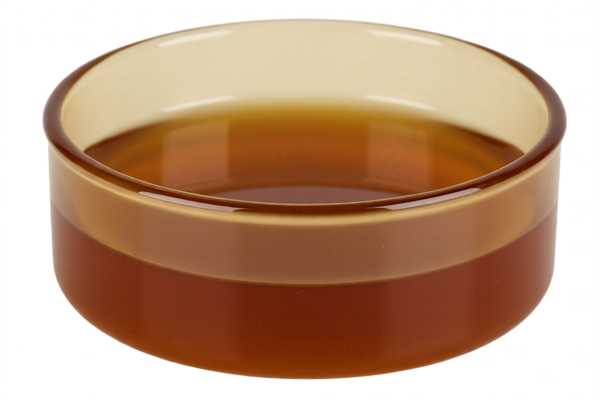
AI分析
🧪 Petroleum-Based Thermosetting Adhesive (Adhesives Based on Petroleums)
🌐 HS Code Reference & Customs Clearance Guide | 2024/2025 Latest Tariff Analysis | Professional Clearance Strategy
📌 I. Product Definition & Classification: Do You Really Understand "Petroleum-Based Adhesive"?
Petroleum-based thermosetting adhesives are complex chemical mixtures. In international trade, the critical distinction lies in whether the product is "pre-mixed for retail sale" (finished adhesive) or "raw polymer/resin" (intermediate material). This distinction dictates the HS Code, the Base Tariff, and the Total Tax Rate.
⚠️ Key Distinction Point:
- If the adhesive is pre-formulated, packaged for retail, or sold directly as an adhesive → Classified under Chapter 35 (Albuminoidal Substances; Modified Starches; Glues) → HS 3506.
- If the product is a raw polymer, resin, or unprocessed hydrocarbon mixture not yet formulated as a final glue → Classified under Chapter 39 (Plastics) or 38 (Miscellaneous Chemical Products) → HS 3901, 3824.
📦 II. HS Code Classification Details (Latest Tariff Authority Comparison)
| HS Code | Product Description | Application Scenario | Classification Logic (Based on Provided Data) |
|---|---|---|---|
3506.99.00.00 |
Pre-mixed Adhesives | Ready-to-use petroleum-based glue; packaged for end-user application. | Summarized as: "Petroleum-based adhesive belongs to pre-mixed adhesives, material is petroleum-based, falling within the adhesive category." |
3506.91.50.00 |
Polymer-Based Adhesives | Adhesives where the binding agent is primarily a polymer derived from petroleum. | Summarized as: "Petroleum-based adhesive is based on polymers, meeting the material requirement for polymer-based adhesives." |
3901.90.90.00 |
Chemical Synthetic Polymers/Resins | Raw resin or polymer precursor; not yet a final adhesive formulation. | Summarized as: "Petroleum-based adhesive belongs to chemical synthetic polymers/resins, conforming to the category of ethylene polymers." |
3901.90.55.01 |
Polymer Compounds/Resins | High-molecular-weight polymer products; intermediate raw materials. | Summarized as: "Petroleum-based adhesive belongs to high-molecular polymer products, conforming to primary polymer attributes like ethylene copolymers." |
3824.99.49.00 |
Hydrocarbon Mixtures | Complex hydrocarbon mixtures derived from petroleum, shale oil, or natural gas; chemical preparations not elsewhere specified. | Summarized as: "Petroleum-based adhesive originates from hydrocarbons of petroleum, shale oil, or natural gas, conforming to this material characteristic." |
🔍 Critical Reminder:
- Final Glue Products (mixed, ready to use) MUST be classified under 3506. Misdeclaring as raw resin (3901/3824) can lead to compliance risks if the product is clearly a finished adhesive.
- Raw Resins/Polymer Precursors that are not yet mixed with solvents/curing agents for direct bonding must be classified under 3901 or 3824.
- If the product is a mixture of hydrocarbons used as a base for adhesive formulation but not yet a "glue," it may fall under 3824.
💰 III. 2024/2025 Latest Tariff Rate Detail (Including Additional Taxes, Policy Surcharges)
✅ Applicable Country: United States (US)
✅ Country of Origin: China (CN)
✅ Effective Date: Current (2024-2025 Tariff Schedule)
🎯 1. 3506.99.00.00 & 3506.91.50.00 —— Pre-Mixed / Polymer-Based Adhesives (Finished Glues)
| Item | Content |
|---|---|
| Base Tariff Rate | 2.1% (Ad valorem) |
| Additional Tariff (Section 301) | +25.0% (Retaliatory tariff on Chinese goods) |
| 122 Clause Tariff | +10.0% (Specific tariff clause for certain chemical/adhesive products) |
| Total Tax Rate | 37.1% |
| Tax Calculation | CIF Value × 37.1% |
| De Minimis Exemption? | ❌ NO (Cannot use $800 de minimis exemption for commercial imports) |
| Legal Basis Path | HTSUS:3506.99.00.00 → USITC Footnote: Section 301 → 122 Clause |
📌 Explanation:
- The 2.1% is the standard Most Favored Nation (MFN) duty for adhesives.
- The 25% is the Section 301 tariff applied to most chemical products from China.
- The 10% is an additional specific duty under the "122 clause" affecting certain adhesive/resin imports.
- Total Effective Duty: 37.1%. This is a high duty rate. Proper classification is crucial to avoid overpayment or customs penalties.
🎯 2. 3901.90.90.00 & 3901.90.55.01 —— Ethylene Polymers & Compounds (Raw Resins)
| Item | Content |
|---|---|
| Base Tariff Rate | 6.5% (Ad valorem) |
| Additional Tariff (Section 301) | +25.0% (Retaliatory tariff on Chinese goods) |
| 122 Clause Tariff | +10.0% |
| Total Tax Rate | 41.5% |
| Tax Calculation | CIF Value × 41.5% |
| De Minimis Exemption? | ❌ NO |
| Legal Basis Path | HTSUS:3901.90.90.00 → USITC Footnote: Section 301 → 122 Clause |
📌 Note:
- Although the base rate (6.5%) is higher than the adhesive rate (2.1%), the total effective rate (41.5%) is HIGHER than the finished adhesive rate (37.1%).
- Misclassifying a raw polymer as a finished adhesive could result in underpayment (if you pay 37.1% instead of 41.5%).
- Conversely, misclassifying a finished glue as a raw polymer leads to overpayment.
- Both categories are subject to the same 35% additional duties (25% + 10%).
🎯 3. 3824.99.49.00 —— Hydrocarbon Mixtures (Chemical Preparations)
| Item | Content |
|---|---|
| Base Tariff Rate | 6.5% (Ad valorem) |
| Additional Tariff (Section 301) | +25.0% (Retaliatory tariff on Chinese goods) |
| 122 Clause Tariff | +10.0% |
| Total Tax Rate | 41.5% |
| Tax Calculation | CIF Value × 41.5% |
| De Minimis Exemption? | ❌ NO |
| Legal Basis Path | HTSUS:3824.99.49.00 → USITC Footnote: Section 301 → 122 Clause |
📌 Note:
- This category is for hydrocarbon mixtures that are not strictly polymers but complex chemical preparations.
- The tax burden is identical to the polymer category (41.5%).
- Use this only if the product is a petroleum-derived hydrocarbon mixture used in adhesive formulation, not a finished glue.
🛠️ IV. Customs Clearance Practical Advice (Battle-Tested Pitfall Avoidance Guide)
✅ 1. Required Documentation Checklist (No Exceptions)
| Document | Must Provide? | Description |
|---|---|---|
| ✅ Product Specification Sheet | ✔️ | Must detail chemical composition, whether it is pre-mixed, curing mechanism, and intended use. |
| ✅ Safety Data Sheet (SDS) | ✔️ | Critical for classifying hazardous vs. non-hazardous chemicals; must match HS code description. |
| ✅ Product Photos (Packaging & Label) | ✔️ | Must show if it is retail-ready or industrial bulk packaging. |
| ✅ Commercial Invoice | ✔️ | Must clearly state: "Petroleum-based thermosetting adhesive" or "Ethylene-based polymer resin", not just "Glue". |
| ✅ Certificate of Origin (CO) | ✔️ | Essential for determining origin and applying Section 301 tariffs. |
| ✅ Bill of Lading / Air Waybill | ✔️ | Standard shipping documents. |
| ✅ Formal Declaration of Material | ✔️ | If raw material, specify if it is a polymer, resin, or hydrocarbon mixture. |
✅ 2. Declaration Tips (Key Mantras)
🔥 “Know Your State: Finished Glue vs. Raw Resin!”
| Scenario | Correct Declaration | Incorrect Action |
|---|---|---|
| Pre-mixed, ready-to-use adhesive | 3506.99.00.00 or 3506.91.50.00 |
Declaring as 3901 (Resin) → Underpayment Risk + Penalties |
| Raw polymer/resin for further processing | 3901.90.90.00 or 3901.90.55.01 |
Declaring as 3506 (Glue) → Overpayment (41.5% vs 37.1%) |
| Hydrocarbon mixture base | 3824.99.49.00 |
Declaring as 3506 → Misclassification Risk |
| Bulk industrial adhesive | 3506.99.00.00 (if pre-mixed) |
Splitting into "solvent" and "resin" → Complex Valuation Risk |
✅ 3. Special Case Handling
| Situation | Handling Advice |
|---|---|
| OEM Custom Adhesive | Provide formulation details. If unique, may require Ruling Request to CBP to confirm 3506 vs. 3901. |
| Adhesive with High Volatile Solvents | Ensure SDS declares volatile organic compound (VOC) levels; may affect customs valuation. |
| Mixture of Polymers & Hydrocarbons | If the primary characteristic is "adhesive function," 3506 is preferred. If "polymer composition" dominates, 3901 may apply. |
| Import for Testing/Lab Use | Still subject to full duties. No duty-free status for commercial testing. |
🌍 V. Global Market Customs Comparison (2024/2025)
| Country/Region | Recommended HS Code | Base Duty | Additional Duties (China Origin) | Notes |
|---|---|---|---|---|
| 🇺🇸 USA | 3506.99.00.00 (Adhesive) |
2.1% | +35% (25% Sec 301 + 10% 122) | Total: 37.1% |
| 🇺🇸 USA | 3901.90.90.00 (Polymer) |
6.5% | +35% (25% Sec 301 + 10% 122) | Total: 41.5% |
| 🇨🇳 China | 3506.99.00.00 |
5% | None | No Section 301 |
| 🇪🇺 EU | 3506.91.90 |
6.5% | None | No retaliatory tariffs |
| 🇬🇧 UK | 3506.91.90 |
6.5% | None | Post-Brexit Tariff |
📌 Conclusion:
- USA has the highest duty burden due to Section 301 and 122 clause tariffs.
- Classification is critical: Saving 4.4% (37.1% vs 41.5%) depends on whether the product is a finished adhesive or a raw polymer.
- EU and UK offer more competitive rates but require CE/UKCA conformity if applicable.
📌 VI. Common Mistakes & Pitfall Guide (Lessons from the Field)
❌ Mistake 1: Declaring all "petroleum-based glues" as 3901 (Polymers)
👉 Consequence: You pay 41.5% instead of 37.1% → Unnecessary extra cost!
❌ Mistake 2: Declaring raw resins as 3506 (Adhesives)
👉 Consequence: Customs may reject declaration, demand underpayment penalties, and delay clearance.
❌ Mistake 3: Ignoring the 122 Clause
👉 Consequence: Tariff system may not automatically apply the 10% surcharge if not manually verified → Audit Risk.
❌ Mistake 4: Vague Product Description ("Glue")
👉 Consequence: Customs classifies based on worst-case scenario or applies highest duty rate for ambiguity.
✅ Correct Approach:
"Petroleum-based thermosetting adhesive, pre-mixed, for industrial bonding, containing polymer resin derived from ethylene, HS 3506.99.00.00"
🎯 VII. Conclusion: Precision Classification, Cost Control, Compliance!
🎯 Remember the Mantra:
🔹 "Finished Glue = 37.1% | Raw Resin = 41.5%"
🔹 "Check the State: Mixed or Raw? Classify Right!"
🔹 "122 Clause is Hidden: Always Verify!"
📌 Pro Tip:
If your adhesive is purchased from non-Chinese sources (e.g., Germany, USA, Japan), you avoid Section 301 tariffs.
- EU Origin: 6.5% Base Duty (No Additional) → Total: ~6.5%
- US Origin: 2.1% Base Duty (No Additional) → Total: ~2.1%Recommendation: Consider supply chain diversification to mitigate the 35% additional tariff burden.
📣 Immediate Action:
📞 Consult a Customs Broker to confirm your product’s state (mixed vs. raw).
📄 Request an Advance Ruling from CBP if uncertain.
📊 Calculate Landed Cost with 37.1% or 41.5% duty to assess profitability.
✨ Professional Clearance Starts with Accurate Classification!
💼 Every Percentage Point Counts in the Chemical Trade!
用户评价
关于 HS 编码归类
协调制度(HS)是由世界海关组织(WCO)制定的国际贸易商品分类标准。全球 200 多个国家采用 HS 系统作为海关关税、贸易统计和进出口监管的基础。
每个 HS 编码遵循以下层级结构:
- 章(2 位)——商品大类(例如:第 84 章:机器和机械设备)
- 品目(4 位)——章内的更具体分类
- 子目(6 位)——国际通用细分,所有 WCO 成员国统一使用
- 本国细分(8-10 位)——各国自行扩展的细分编码,如美国 HTSUS 10 位编码
正确的 HS 编码归类对于顺利通关、准确缴纳关税和遵守贸易法规至关重要。错误归类可能导致海关延误、多缴关税或罚款。
从CN进口到US时,适用的关税税率可能包括:
- 最惠国(MFN)税率——适用于 WTO 成员国的标准关税税率
- 普通税率——适用于无贸易协定国家
- 贸易救济关税——附加关税,如 301 条款(反倾销)、232 条款(国家安全)或反补贴税
本页内容仅供参考。如需正式归类,请咨询当地海关或持牌报关代理。