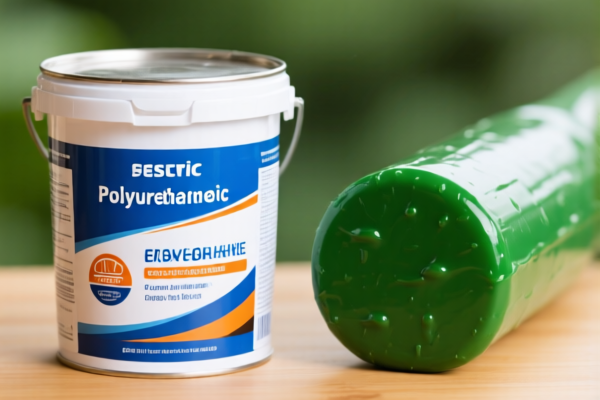
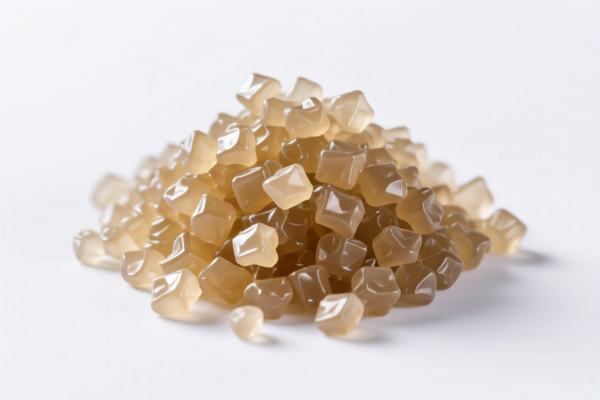
Phosphate Ester Resin for Casting
CN → US商品图片


AI分析
🏭 Phosphate Ester Resin for Casting (Investment Casting Binders)
🌐 HS Code Reference & Customs Clearance Guide | 2026 Latest Tariff Analysis | Professional Strategy for Precision Casting
📌 I. Product Definition & Classification: What Exactly is "Phosphate Ester Resin"?
Phosphate ester resins, specifically designed for investment casting (lost-wax casting), are advanced inorganic binders. Unlike traditional organic wax-based or silica-sol binders, these resins cure to form a high-temperature-strength ceramic shell. They are primarily used in aerospace, automotive, and medical implant manufacturing for casting superalloys (like Inconel, Titanium) and high-strength steels.
Key Distinctions: 1. Cast-Ready Resin (Liquid/Semi-Solid): The final bonding agent applied to refractory materials (zirconia, fused silica) to build the mold shell. 2. Raw Chemical Intermediate: If sold as a precursor chemical for further polymerization, it falls under different headings.
⚠️ Critical Classification Point:
- If the product is a finished binder formulation (mixed with catalysts/thickeners) specifically for creating casting molds → HS 3906.90 or 3824.99.
- If it is a pure chemical substance (e.g., trimethylolpropane trimetaphosphate) not yet formulated as a binder → HS 2920.90.
- Most commercial "Phosphate Ester Resin for Casting" is considered a "Preparation" or "Finished Plastic" depending on stability and packaging.
📦 II. HS Code Classification Details (2026 Authorized Tariff对照)
| HS Code | Product Description | Applicable Scenario | Is it a Finished Binder? |
|---|---|---|---|
3906.90.10.00 |
Acrylic polymers in primary forms (if acrylic-modified phosphate ester) | Hybrid resin systems for casting | ❌ Usually Yes (if >50% polymer by weight) |
3906.90.90.00 |
Other acrylic polymers in primary forms | Generic phosphate-acrylic hybrid binders | ❌ Yes |
3824.99.96.00 |
Other prepared binders for foundry molds or cores (Non-metallic) | Most Common: Pure phosphate ester binders for ceramic shells | ✅ Yes |
3824.99.99.00 |
Other chemical products and preparations (Not elsewhere specified) | Unspecified industrial resins | ⚠️ Risk of Misclassification |
2920.90.00.00 |
Other organo-inorganic compounds | Pure precursor chemicals (e.g., raw phosphate esters) | ❌ No (Raw Material) |
3909.50.00.00 |
Urea-resins, phenol-resins, etc. (If mixed with phenolic components) | Hybrid phenolic-phosphate binders | ⚠️ Depends on dominant resin |
🔍 重点提醒 (Key Warning):
- US Customs (CBP) tends to classify casting binders under3824.99.96.00if they are specifically designed for foundry molds, regardless of chemical composition, provided they are "prepared" (i.e., mixed with additives/catalysts).
- If the resin is sold as a pure chemical substance (e.g., in bulk drums for further processing), it may be classified under2920.90.00.00(Organo-inorganic compounds).
- Do NOT classify under3906(Acrylics) unless the product is primarily acrylic-based. Phosphate esters are inorganic/organic hybrids.
💰 III. 2026 Latest Tariff Rate Breakdown (Including附加税, Policy Add-ons)
✅ Applicable Country: United States (US)
✅ Country of Origin: China (CN)
✅ Effective Date: From November 10, 2025 (including subsequent imports)
🎯 1. 3824.99.96.00 —— Prepared Binders for Foundry Molds (Most Common)
| Item | Content |
|---|---|
| Base Tariff Rate | 5.3% (Ad Valorem) |
| USITC Additional Tariff | +7.5% (From USITC Footnote 9903.88.01, Section 301) |
| IEEPA Additional Tariff | +10% (China/HK Specific, Effective Nov 10, 2025) |
| Total Tariff Rate | 22.8% |
| Tax Calculation | CIF Value × 22.8% |
| De Minimis Eligibility | ❌ Not Eligible (deny_de_minimis) |
| Legal Path | IEEPA:9903.01.25 → IEEPA:9903.01.24 → USITC:3824.99.96.00 → FOOTNOTE:9903.88.01 |
📌 Explanation:
- Base 5.3%: Standard MFN rate for other prepared chemicals.
- 7.5% Section 301: Applies to most chemical preparations from China.
- 10% IEEPA: New surcharge on Chinese industrial chemicals effective Nov 2025.
- Total 22.8%: Significant cost increase. Must be factored into landed cost.
🎯 2. 2920.90.00.00 —— Organo-Inorganic Compounds (Pure Precursors)
| Item | Content |
|---|---|
| Base Tariff Rate | 5.7% |
| USITC Additional Tariff | +7.5% |
| IEEPA Additional Tariff | +10% |
| Total Tariff Rate | 23.2% |
| Tax Calculation | CIF Value × 23.2% |
| De Minimis Eligibility | ❌ Not Eligible |
| Legal Path | IEEPA:9903.01.25 → IEEPA:9903.01.24 → USITC:2920.90.00.00 |
📌 Note:
- Even pure chemical precursors face similar tariffs.
- Risk: If you misclassify a "prepared binder" as a "pure chemical" to seek lower duty (e.g., if any duty-free exemption existed), CBP will audit based on SDS (Safety Data Sheet) and formulation. Penalties can be severe.
🛠️ IV. Customs Clearance Practical Advice (Avoid Pitfalls)
✅ 1. Required Documentation Checklist
| Document | Mandatory | Description |
|---|---|---|
| ✅ Safety Data Sheet (SDS) | ✔️ | Must clearly state "Contains no hazardous chemicals above threshold" and list all components. CBP uses this to determine HS Code. |
| ✅ Product Specification Sheet | ✔️ | Include viscosity, pH, curing time, and intended use (e.g., "For investment casting shells"). |
| ✅ Formula/Composition Breakdown | ✔️ | Percentage of each chemical component. Critical for distinguishing between 2920 (pure) and 3824 (prepared). |
| ✅ Commercial Invoice | ✔️ | Clearly state: "Phosphate Ester Binder for Investment Casting, Not for Personal Use." |
| ✅ Certificate of Origin | ✔️ | For verifying Chinese origin (to apply correct IEEPA tariffs). |
| ✅ FCC/REACH Compliance Docs | ✔️ | If exporting to EU/UK, REACH registration is mandatory. |
✅ 2. Declaration Tips (Key Mnemonics)
🔥 "Use Clearly, Formula Revealed, Don't Call it 'Plastic'!"
| Scenario | Correct Declaration | Wrong Declaration |
|---|---|---|
| Finished Casting Binder | "Prepared Binders for Foundry Molds (HS 3824.99.96.00)" | "Acrylic Resin" → Risk of 3906 classification |
| Raw Chemical Precursor | "Organo-Inorganic Compound, Trimethylolpropane Trimetaphosphate (HS 2920.90.00.00)" | "Casting Binder" → Misleading |
| Mixed with Catalysts | "Prepared Binder" | "Chemical Raw Material" |
| Small Sample Kit | "Samples for Testing Only" (Still subject to duty) | "Free Sample" → Never use this for commercial goods |
✅ 3. Special Cases Handling
| Scenario | Handling Advice |
|---|---|
| Hybrid Resins (Acrylic-Phosphate) | If acrylic content >50%, use 3906.90.90.00. Check SDS for polymer type. |
| Bulk vs. Retail Packaging | Bulk drums (200L) are more likely to be 2920 if unprocessed. Small bottles (1L) with additives are 3824. |
| Export to EU | Requires REACH Registration. Phosphate esters may be SVHC (Substance of Very High Concern). Check ECHA list. |
| Export to Southeast Asia | Lower tariffs, but ensure local MSDS compliance. |
🌍 V. Global Market Customs Comparison (2026 Latest)
| Country/Region | Recommended HS Code | Tariff (China Origin) | Certification Requirements | Notes |
|---|---|---|---|---|
| 🇺🇸 USA | 3824.99.96.00 |
22.8% | EPA (if hazardous), SDS | High tariff burden. Pre-classification ruling recommended. |
| 🇪🇺 EU | 3824.99.96 |
6.5% | REACH, CLP Labeling | REACH compliance is mandatory. Phosphate esters often restricted. |
| 🇨🇳 China | 3824.99.99 |
6% | CCC (if applicable) | No anti-dumping tariffs on this category. |
| 🇮🇳 India | 3824.99.99 |
7.5% + SWS | BIS Certification | SWS (Social Welfare Surcharge) applies. |
| 🇦🇪 UAE | 3824.99.99 |
5% | ESMA | Low tariffs, but strict chemical import permits. |
📌 Conclusion:
- USA: Highest cost due to IEEPA + Section 301. Plan for ~23% duty.
- EU: Strictest environmental compliance (REACH). Ensure chemical registration is complete.
- China Origin Impact: Tariffs are significantly higher for US exports compared to non-China origins (e.g., Vietnam, India).
📌 VI. Common Errors & Pitfalls (Lessons Learned)
❌ Error 1: Classifying as 3906 (Acrylic) because the resin feels like plastic.
👉 Consequence: Misclassification penalty. Phosphate esters are inorganic hybrids. Correct: 3824 or 2920.
❌ Error 2: Declaring as "Chemical Raw Material" for a pre-mixed binder.
👉 Consequence: CBP will demand formula breakdown. If additives >5%, it's a "preparation." Penalty for incorrect origin/duty rate.
❌ Error 3: Ignoring REACH/SVHC in EU shipments.
👉 Consequence: Goods detained at EU border. Phosphate esters may be flagged as toxic. Need TSCA/REACH compliance docs.
❌ Error 4: Not declaring "Intended Use" as casting binder.
👉 Consequence: If used as a general adhesive, it might fall under 3506 (Adhesives), which has different duty rates. Be specific.
✅ Correct Declaration Example:
"Phosphate Ester Based Binder for Investment Casting, Formulated with Catalysts, Viscosity 1500cPs, for Ceramic Shell Construction, HS Code 3824.99.96.00"
🎯 VII. Conclusion: Professional Declaration, Save Cost, Avoid Delays!
🎯 Remember the Mnemonic:
🔹 "Pure Chemical is 2920, Prepared Binder is 3824. Don't Call it Acrylic Unless It Is! 23% Duty Waits for Mistakes!"
🔹 "SDS is King, Formula is Queen. Declare Use Clearly, Stay Clean!"
📌 Pro Tip:
If your phosphate resin is produced in Vietnam, India, or Thailand, you may qualify for lower IEEPA tariffs (0-7.5%) due to origin rules.
Consider Advance Ruling (US CBP) for large shipments to lock in the correct HS Code and avoid post-import audits.
📣 Immediate Action:
📞 Contact your customs broker with SDS + Formula Breakdown.
📄 Apply for a Pre-Decision Ruling from CBP if shipping large volumes.
🚀 Ensure REACH Compliance for EU customers to avoid border blocks.
✨ Precision Casting Begins with Accurate Classification!
💼 Every percent of duty saved is profit earned!
用户评价
关于 HS 编码归类
协调制度(HS)是由世界海关组织(WCO)制定的国际贸易商品分类标准。全球 200 多个国家采用 HS 系统作为海关关税、贸易统计和进出口监管的基础。
每个 HS 编码遵循以下层级结构:
- 章(2 位)——商品大类(例如:第 84 章:机器和机械设备)
- 品目(4 位)——章内的更具体分类
- 子目(6 位)——国际通用细分,所有 WCO 成员国统一使用
- 本国细分(8-10 位)——各国自行扩展的细分编码,如美国 HTSUS 10 位编码
正确的 HS 编码归类对于顺利通关、准确缴纳关税和遵守贸易法规至关重要。错误归类可能导致海关延误、多缴关税或罚款。
从CN进口到US时,适用的关税税率可能包括:
- 最惠国(MFN)税率——适用于 WTO 成员国的标准关税税率
- 普通税率——适用于无贸易协定国家
- 贸易救济关税——附加关税,如 301 条款(反倾销)、232 条款(国家安全)或反补贴税
本页内容仅供参考。如需正式归类,请咨询当地海关或持牌报关代理。