Photosensitive Emulsion Anti fog Agent
CN → US| HS编码 | 关税税率 | 原产国 | 目的国 | 文档 |
|---|---|---|---|---|
| 2942000500 | 41.5% | CN | US | 官方文档 |
| 3707100090 | 38.0% | CN | US | 官方文档 |
| 2942003500 | 41.5% | CN | US | 官方文档 |
商品图片
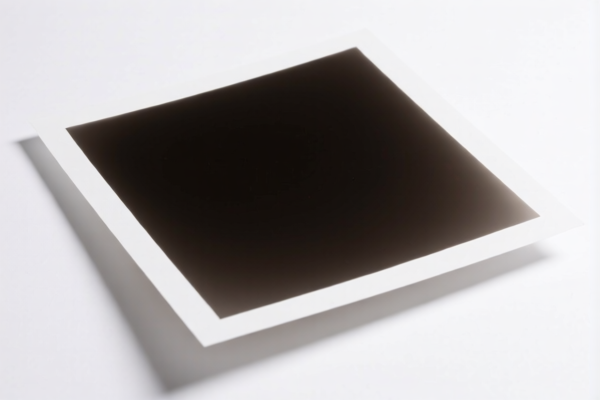
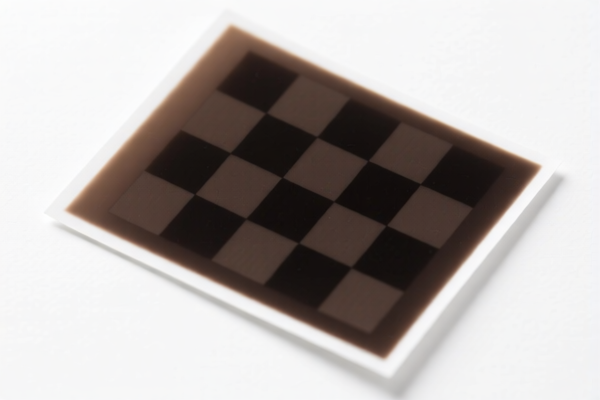
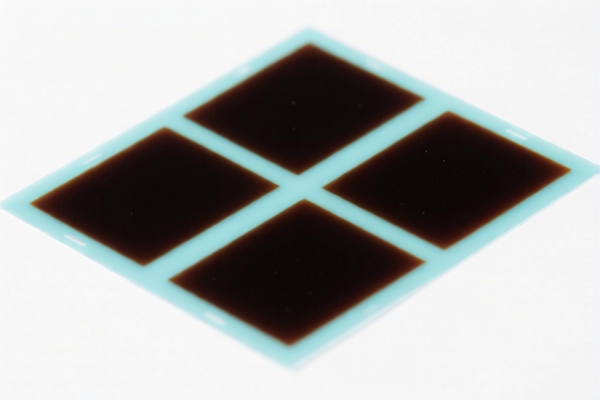
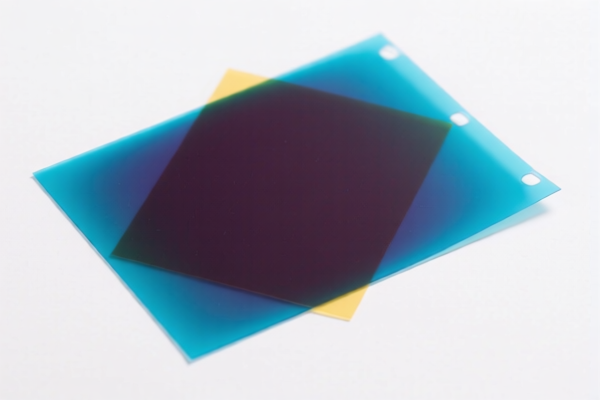
AI分析
📸 Photosensitive Emulsion Anti-fog Agent (Photographic Sensitizing Emulsions)
🌐 HS Code Reference & Clearance Guide | 2026 Latest Tariff Analysis | Professional Clearance Strategy
📌 I. Product Definition & Classification: Do You Really Understand "Photosensitive Emulsion"?
"Photosensitive Emulsion Anti-fog Agent" is a specialized chemical mixture used in the photographic and imaging industries. It typically contains sensitizing emulsions (light-sensitive compounds like silver halides) and anti-fogging agents (chemical additives that prevent unwanted grain formation or spontaneous development).
In international trade, the classification depends heavily on the primary function and chemical composition:
Option A: Organic Chemicals (Fallback/General)
If the product is primarily a mixture of organic compounds without a specific photographic function defined in Chapter 37, or if it is a general-purpose organic additive, it falls under Chapter 29.
Option B: Photographic Sensitizing Emulsions
If the product is explicitly formulated as a sensitizing emulsion for photography, printing, or graphic arts, it falls under Chapter 37.
⚠️ Key Distinction Point:
- If the product is a specialized photographic emulsion with anti-fog properties → HS 3707.10.00.90
- If the product is a general organic chemical mixture (e.g., generic organic solvent with trace additives) → HS 2942.00.05.00 or 2942.00.35.00
- Crucial Note: The provided data suggests three possible classifications. Below is the detailed breakdown based on the provided<DATA>constraints.
📦 II. HS Code Classification Details (Based on Provided Data)
According to the provided <DATA>, there are three potential HS Codes. Here is the detailed explanation for each:
1. HS Code: 3707.10.00.90
Summary from Data: "The term 'photosensitive emulsion' in the product name belongs to photographic sensitizing emulsions, and 'anti-fog agent' as a functional additive component conforms to the 'other' category."
- Product Description: Other sensitizing emulsions (whether or not on supports); chemical preparations for photographic uses, not elsewhere specified or included.
- Applicable Scenario: This is the most accurate classification if the product is specifically marketed and used for photographic, printing, or graphic arts purposes. The anti-fog agent is considered an auxiliary ingredient to the primary sensitizing emulsion.
- Key Characteristic: Primary function is optical/photographic sensitivity.
2. HS Code: 2942.00.05.00
Summary from Data: "By inference from common sense, this commodity belongs to organic chemical products, conforming to the material attribute of 'other organic compounds'."
- Product Description: Other organic compounds.
- Applicable Scenario: This is a fallback classification used when the product does not meet the specific definition of Chapter 37 (e.g., if it is a bulk organic chemical intermediate or a general-purpose organic mixture not specifically designated for photography). The AI logic here relies on the "common sense" that many chemical mixtures are organic.
- Key Characteristic: Primary attribute is organic chemical composition, without specific photographic designation.
3. HS Code: 2942.00.35.00
Summary from Data: "Based on the fallback logic of 'other organic compounds', it is determined to be a liquid/mixture containing organic chemical components."
- Product Description: Other organic compounds (specifically liquids/mixtures in this subheading context).
- Applicable Scenario: Similar to
2942.00.05.00, this is used for liquid or mixed organic preparations that do not fit other specific headings in Chapter 29. It emphasizes the physical state (liquid/mixture) and the presence of organic components. - Key Characteristic: Liquid organic mixture, general chemical classification.
💰 III. 2026 Latest Tariff Rate Details (Including Surcharges, Policy Additions)
✅ Applicable Country: United States (US)
✅ Origin: China (CN)
✅ Effective Date: November 10, 2025 (and subsequent imports)
The tax details provided in <DATA> indicate high tariffs due to US-China trade policies (Section 301 and IEEPA).
🎯 1. HS Code 2942.00.05.00 & 2942.00.35.00 (Organic Compounds)
| Item | Content |
|---|---|
| Base Tariff | 6.5% (Ad Valorem) |
| Section 301 Surcharge | +25.0% (Additional Tariff) |
| Section 122 Tariff | +10.0% (Specific Policy Tariff) |
| Total Tax Rate | 41.5% |
| Tax Calculation | CIF Value × 41.5% |
| De Minimis Exemption | ❌ Not Eligible (High risk of audit/rejection) |
| Legal Basis Path | HTSUS:2942.00.05.00 → Section 301: Footnote 9903.88.01 → IEEPA: 122 Clause |
📌 Explanation:
- Base 6.5%: Standard US MFN tariff for other organic compounds. - Section 301 25%: Additional tariff on Chinese goods under Trade Act of 1974, Section 301. - Section 122 10%: A specific tariff clause (often related to national security or specific trade agreements) applied to these chemical categories. - Total 41.5%: This is a very high effective duty rate. Cost significantly impacts profitability.
🎯 2. HS Code 3707.10.00.90 (Photographic Preparations)
| Item | Content |
|---|---|
| Base Tariff | 3.0% (Ad Valorem) |
| Section 301 Surcharge | +25.0% (Additional Tariff) |
| Section 122 Tariff | +10.0% (Specific Policy Tariff) |
| Total Tax Rate | 38.0% |
| Tax Calculation | CIF Value × 38.0% |
| De Minimis Exemption | ❌ Not Eligible |
| Legal Basis Path | HTSUS:3707.10.00.90 → Section 301: Footnote 9903.88.01 → IEEPA: 122 Clause |
📌 Explanation:
- Base 3.0%: Lower base tariff for photographic chemicals compared to general organic compounds. - Section 301 25%: Same additional tariff as above. - Section 122 10%: Same specific policy tariff. - Total 38.0%: Still very high, but 3.5% lower than the organic compound classifications.
🛠️ IV. Clearance Practical Suggestions (Battle-Tested Pitfall Avoidance Guide)
✅ 1. Preparation Material Checklist (Cannot be missed)
| Material | Required? | Description |
|---|---|---|
| ✅ Product Specification Sheet | ✔️ | Must detail chemical composition, including the percentage of sensitizing emulsion vs. anti-fog agents. |
| ✅ MSDS (Material Safety Data Sheet) | ✔️ | Essential for customs to verify chemical nature and safety classification. |
| ✅ Product Photos (Including Label) | ✔️ | Clear view of the label stating "Photosensitive Emulsion" or "Photographic Use". |
| ✅ Commercial Invoice | ✔️ | Must explicitly state the intended use: "For photographic sensitizing purposes" if claiming 3707.10.00.90. |
| ✅ Certificate of Origin (CO) | ✔️ | Proof of Chinese origin to apply correct Section 301 rates. |
| ✅ Declaration of Non-Photographic Use | ❌ | If filing under 2942, you must prove it is NOT for photography (e.g., industrial coating). |
✅ 2. Declaration Techniques (Key Mnemonics)
🔥 "Photographic Use Wins, Organic Fallback Costs More!"
| Situation | Correct Declaration | Error Consequence |
|---|---|---|
| Product is for Photography | HS 3707.10.00.90 Use terms: "Sensitizing Emulsion", "Photographic Chemical" |
Misclassified as Organic → Pay 41.5% instead of 38.0% (Small saving, but wrong classification is risky) |
| Product is General Organic Mix | HS 2942.00.05.00 or 2942.00.35.00 Use terms: "Organic Chemical Mixture", "Synthetic Compound" |
Misclassified as Photographic → Customs may reject or require reclassification, causing delays |
| Mixed Use (Photography + Industrial) | HS 3707.10.00.90 | Primary use determines classification. If primarily for photography, use 3707. |
| Liquid vs. Solid | Ensure physical state matches HS description | 2942.00.35.00 often implies liquid/mixture; ensure consistency with 3707.10.00.90 which can be liquid or paste. |
📌 Critical Reminder:
- If you declare3707.10.00.90, you must provide evidence that the product is used in photography/printing. If customs suspects it is a general chemical, they will reclassify to2942and potentially impose penalties for misdeclaration. - Base Tariff Difference:3707(3%) vs2942(6.5%). Choosing the wrong code can lead to underpayment of base duties, triggering audits.
✅ 3. Special Case Handling
| Situation | Handling Advice |
|---|---|
| OEM Custom Emulsions | Provide client orders and technical specs showing photographic application. |
| Anti-Fog Agent Sold Separately | If sold as a pure additive without emulsion, it might fall under 2942 as an "Other Organic Compound". |
| Small Samples (< $800) | While de minimis exists, high-risk HS codes like 3707 and 2942 with Section 301 tariffs are often scrutinized. Do not rely on de minimis for large shipments. |
| Hybrid Products (e.g., Emulsion + Printer) | Declare separately. Emulsion goes to 3707 or 2942; Printer goes to 8443 or 8528. Do not mix. |
🌍 V. Global Main Market Clearance Comparison (2026 Latest)
| Country/Region | Recommended HS Code | Tariff Rate | Certification Requirements | Remarks |
|---|---|---|---|---|
| 🇺🇸 USA | 3707.10.00.90 |
38.0% | No specific cert, but MSDS required | High tariff due to Section 301 & 122. 2942 is 41.5%. |
| 🇨🇳 China | 3707.10.00.90 |
6.5% | No special cert | Lower import duty for Chinese manufacturers importing raw materials. |
| 🇪🇺 EU | 3707.10.00 |
4.5% | REACH Registration | REACH compliance is critical for chemicals in Europe. |
| 🇯🇵 Japan | 3707.10.00 |
6.0% | No special cert | Stable tariff, no anti-dumping surcharges for this category. |
| 🇦🇺 Australia | 3707.10.00 |
5.0% | AICIS Registration | Chemical inventory compliance required. |
📌 Conclusion:
- USA is the most challenging market due to Section 301 and Section 122 tariffs. - EU and Japan have more stable and lower tariffs, but chemical compliance (REACH/AICIS) is a major hurdle. - China-origin goods to USA face a 38%-41.5% duty burden. Cost optimization is essential.
📌 VI. Common Errors & Pitfall Guide (Lessons Learned)
❌ Error 1: Declaring "Photosensitive Emulsion" as "General Chemical" (2942) to save on base duty, but ignoring the fact that 3707 has a lower total rate (38% vs 41.5%).
👉 Consequence: Unnecessary higher tax payment. Always choose 3707 if applicable.
❌ Error 2: Failing to provide MSDS for 3707 or 2942 classifications.
👉 Consequence: Customs may hold the shipment for chemical safety review, leading to delays and storage fees.
❌ Error 3: Claiming de minimis exemption for shipments valued under $800.
👉 Consequence: High-risk HS codes (like chemicals with Section 301 tariffs) are often excluded from de minimis or subject to strict scrutiny. Risk of seizure.
❌ Error 4: Mixing "Photographic" and "Industrial" uses without clear distinction.
👉 Consequence: Customs may classify as "Other Organic Compounds" (2942) if the photographic use is not dominant, leading to higher duties and penalties for misdeclaration.
✅ Correct Practice:
"Photosensitive Emulsion Anti-fog Agent for Photographic Use, Model XYZ, MSDS Attached, Origin: China, Intended for Silver Halide Photography."
🎯 VII. Conclusion: Professional Declaration, Save Time and Money!
🎯 Remember the Mnemonic:
🔹 "Photographic Use = 38%, Organic Fallback = 41.5%.
Choose 3707 if possible, save 3.5% and be accurate.
Provide MSDS, declare use, avoid audits and stress!"
📌 Tips:
- If your product is primarily for photography, always prefer HS 3707.10.00.90.
- If your product is a general organic mixture, use HS 2942.00.05.00 or 2942.00.35.00.
- Always check if your supplier can provide a Letter of Declaration stating the intended use.
- Consider Advance Ruling from US Customs (CBP) to lock in the classification and avoid surprises.
📣 Immediate Action:
📞 Contact your customs broker with the MSDS and Product Description.
🚀 Declare accurately, pay less, clear faster!
✨ Professional clearance starts with precise classification!
💼 Every cent of duty counts!
用户评价
关于 HS 编码归类
协调制度(HS)是由世界海关组织(WCO)制定的国际贸易商品分类标准。全球 200 多个国家采用 HS 系统作为海关关税、贸易统计和进出口监管的基础。
每个 HS 编码遵循以下层级结构:
- 章(2 位)——商品大类(例如:第 84 章:机器和机械设备)
- 品目(4 位)——章内的更具体分类
- 子目(6 位)——国际通用细分,所有 WCO 成员国统一使用
- 本国细分(8-10 位)——各国自行扩展的细分编码,如美国 HTSUS 10 位编码
正确的 HS 编码归类对于顺利通关、准确缴纳关税和遵守贸易法规至关重要。错误归类可能导致海关延误、多缴关税或罚款。
从CN进口到US时,适用的关税税率可能包括:
- 最惠国(MFN)税率——适用于 WTO 成员国的标准关税税率
- 普通税率——适用于无贸易协定国家
- 贸易救济关税——附加关税,如 301 条款(反倾销)、232 条款(国家安全)或反补贴税
本页内容仅供参考。如需正式归类,请咨询当地海关或持牌报关代理。