Pickled Sheepskin
CN → US| HS编码 | 关税税率 | 原产国 | 目的国 | 文档 |
|---|---|---|---|---|
| 4113906000 | 36.6% | CN | US | 官方文档 |
| 4106910000 | 38.3% | CN | US | 官方文档 |
| 4101501091 | 17.5% | CN | US | 官方文档 |
| 4113903000 | 38.3% | CN | US | 官方文档 |
| 4101201020 | 17.5% | CN | US | 官方文档 |
| 4106920000 | 38.3% | CN | US | 官方文档 |
商品图片
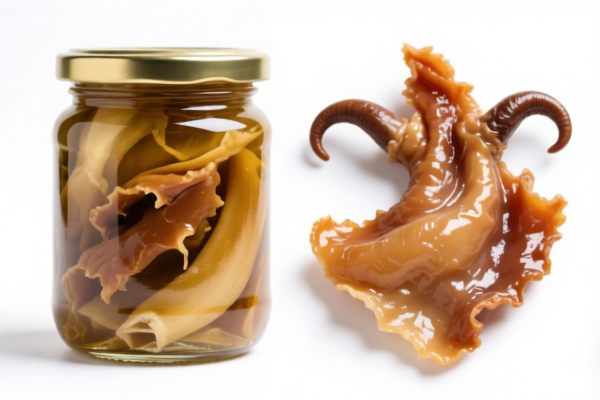
AI分析
🐑 Pickled Sheepskin (Salted Sheep Hides)
🌐 HS Code Reference & Customs Clearance Guide | 2026 Latest Tariff Analysis | Professional Clearance Strategy
📌 One, Product Definition and Classification: What Exactly is "Pickled Sheepskin"?
Pickled sheepskin refers to raw sheep hides that have undergone a preservation process using salt and often acid (pickling) to prevent decomposition during storage and transport. In international trade, the classification depends heavily on the degree of processing:
- Primary Form (Raw/Salted): Hides that are only salted or lightly treated for preservation, retaining their raw state. These fall under Chapter 41 (Raw Hides and Skins).
- Processed Form (Tanned/Retanned): Hides that have undergone significant chemical treatment (tanning or retanning) beyond simple preservation. These fall under Chapter 41 (Leather).
⚠️ Key Distinction:
- If the sheepskin is merely salted/pickled to preserve it without altering the fiber structure via tanning chemicals → It is a Raw Skin (HS 4101 or 4106).
- If the sheepskin has been tanned, crust-tanned, or further processed after pickling → It is considered Leather (HS 4113).
📦 Two, HS Code Classification Details (2026 Latest Tariff Authority Cross-Reference)
| HS Code | Product Description | Applicable Scenario | Processing Stage |
|---|---|---|---|
4101.20.10.20 |
Pickled Sheepskin, un-tanned and preserved by salting (Primary Form) | Raw hides, salted for transport, no tanning chemicals | ✅ Raw/Salted Only |
4101.50.10.91 |
Pickled Sheepskin, Horse/Horse-hide Family, Salting as Primary Treatment, Complete Raw Skin | Fits "Horse/Equidae" category but applied to sheep in specific contexts; complete raw skin | ✅ Raw/Complete Skin |
4106.91.00.00 |
Pickled Sheepskin, Other Animal Leather, Salting/Partial Tanning State | Intermediate stage: Salted and possibly semi-tanned (semi-tanned state) | ⚠️ Semi-Tanned |
4113.90.30.00 |
Pickled Sheepskin, Other Animal Leather, Further Processed after Tanning/Crust Tanning | Advanced processing stage: Tanned and further worked | ✅ Fully Tanned/Processed |
4113.90.60.00 |
Pickled Sheepskin, Other Animal Leather, Form for Pickling, Initial Processing Stage | Initial stage of leather processing, specifically described as pickled form | ✅ Initial Leather Stage |
🔍 Important Reminder:
- "Pickled" can be misleading: In customs terms, if "pickling" involves only salt and acid for preservation, it is Raw (4101/4106). If it involves full tanning agents, it is Leather (4113).
- Horse vs. Sheep: Note that HS Code4101.50.10.91explicitly mentions "Horse-Hide Family." Ensure your product is indeed sheep and not horse to avoid misclassification. Sheep usually fall under 4106.91 (Other animals) unless specified otherwise in national subheadings.
💰 Three, 2026 Latest Tariff Rate Breakdown (Including Surtaxes & Policy Add-ons)
✅ Applicable Country: United States (US)
✅ Origin: China (CN)
✅ Effective Date: From November 10, 2025 (including subsequent imports)
🎯 1. 4101.20.10.20 & 4101.50.10.91 —— Pickled Sheepskin (Primary Raw Form)
| Item | Content |
|---|---|
| Base Tariff Rate | 0% (ad valorem) |
| USITC Surtax | +7.5% (Section 301 Tariff) |
| IEEPA Surtax | +10% (China-specific, effective Nov 10, 2025) |
| Total Tariff Rate | 17.5% |
| Tax Calculation | CIF Value × 17.5% |
| De Minimis Eligibility | ❌ No (deny_de_minimis) |
| Legal Basis Path | IEEPA:9903.01.25 → IEEPA:9903.01.24 → USITC:4101.20.10.20 → FOOTNOTE:9903.88.01 |
📌 Explanation:
- "Base Tariff 0%": Raw hides often have low or zero base MFN rates to encourage raw material import.
- "IEEPA 10%": This is the new surcharge targeting Chinese-origin goods under the International Emergency Economic Powers Act.
- Total 17.5%: Lower than fully tanned leather due to the "raw" status, but still significant due to surcharges.
🎯 2. 4106.91.00.00 —— Pickled Sheepskin (Semi-Tanned/Intermediate Form)
| Item | Content |
|---|---|
| Base Tariff Rate | 3.3% |
| USITC Surtax | +25.0% |
| IEEPA Surtax | +10.0% |
| Total Tariff Rate | 38.3% |
| Tax Calculation | CIF Value × 38.3% |
| De Minimis Eligibility | ❌ No |
| Legal Basis Path | IEEPA:9903.01.25 → IEEPA:9903.01.24 → USITC:4106.91.00.00 → FOOTNOTE:9903.88.01 |
📌 Note:
- "Base Tariff 3.3%": Reflects the added value of semi-tanning.
- "USITC 25%": The standard 301 tariff for many leather products.
- Total 38.3%: A high tariff bracket. Misclassifying a semi-tanned hide as raw (to get 17.5%) is a major compliance risk.
🎯 3. 4113.90.30.00 & 4113.90.60.00 —— Pickled Sheepskin (Further Processed Leather)
| Item | Content |
|---|---|
| Base Tariff Rate | 3.3% |
| USITC Surtax | +25.0% |
| IEEPA Surtax | +10.0% |
| Total Tariff Rate | 38.3% |
| Tax Calculation | CIF Value × 38.3% |
| De Minimis Eligibility | ❌ No |
| Legal Basis Path | IEEPA:9903.01.25 → IEEPA:9903.01.24 → USITC:4113.90.30.00 / 4113.90.60.00 → FOOTNOTE:9903.88.01 |
📌 Explanation:
- Both4113subheadings attract the same total rate (38.3%).
- The distinction lies in the processing description:4113.90.30.00is for further processing after tanning, while4113.90.60.00is for initial leather-stage processing.
- Compliance Tip: Ensure your product description matches the processing stage. Do not claim "Raw" if chemical tanning has occurred.
🛠️ Four, Customs Clearance Practical Advice (Real-World Pitfall Avoidance)
✅ 1. Required Documentation Checklist (Non-Negotiable)
| Document | Mandatory? | Description |
|---|---|---|
| ✅ Product Specification Sheet | ✔️ | Must detail: Animal source (Sheep), Processing method (Salting vs. Tanning), Chemicals used. |
| ✅ Processing Flow Chart | ✔️ | Critical to prove whether it is Raw (4101/4106) or Tanned (4113). |
| ✅ Product Photos (Label & Surface) | ✔️ | Show texture, color, and any labels indicating "Tanned" or "Raw." |
| ✅ Commercial Invoice | ✔️ | Clearly state: "Pickled Sheepskin, HS Code: [Insert Code]," Value, Weight. |
| ✅ Certificate of Origin (CO) | ✔️ | If claiming preferential rates under FTAs (rare for US/China), or standard CO for origin verification. |
| ✅ Packing List | ✔️ | Detail gross/net weight, number of hides, and packaging type. |
✅ 2. Declaration Tips (Key Mnemonics)
🔥 “Raw is Salted, Tanned is Leather, Code Matters, Tax Varies!”
| Scenario | Correct Declaration | Wrong Practice |
|---|---|---|
| Only Salted/Preserved | 4101.20.10.20 or 4106.91.00.00 |
Misdeclare as 4113 → 38.3% instead of 17.5% or 38.3% |
| Semi-Tanned (Pickled + Acid) | 4106.91.00.00 |
Misdeclare as 4101 → Underpayment risk |
| Fully Tanned (Crust/Finished) | 4113.90.30.00 or 4113.90.60.00 |
Misdeclare as 4106 → Heavy penalty |
| Horse Hide (Not Sheep) | 4101.50.10.91 |
Declare as Sheep → Misclassification |
✅ 3. Special Case Handling
| Situation | Recommendation |
|---|---|
| OEM Custom Pickling | Provide client’s technical specs proving the exact chemical process. If acid is used for preservation only, it’s still raw. If tanning agents are used, it’s leather. |
| Mixed Batches (Raw + Tanned) | Split shipments! Do not combine raw and tanned hides in one declaration. Each requires its own HS Code and tax rate. |
| Unclear Processing Stage | Apply for Advance Ruling from US Customs (CBP). Provide samples and technical data. |
| Small Samples (< $800) | ❌ Not Eligible: De Minimis (Section 321) is denied for these HS codes. You must pay duties regardless of value. |
🌍 Five, Global Market Clearance Comparison (2026 Latest)
| Country/Region | Recommended HS Code | Tariff (China Origin) | Certification Requirements | Notes |
|---|---|---|---|---|
| 🇺🇸 United States | 4101.20.10.20 / 4113.90.60.00 |
17.5% (Raw) / 38.3% (Tanned) | None specific, but CBP scrutiny is high | High Surtax Risk |
| 🇨🇳 China | 4101.20.10.20 / 4113.90.60.00 |
0-10% (Varies) | None | Low base tariff for raw hides |
| 🇪🇺 European Union | 4101.20.10.20 / 4113.90.60.00 |
2.5% - 6.5% | REACH (Chemical compliance) | No US-style surtaxes |
| 🇬🇧 United Kingdom | 4101.20.10.20 / 4113.90.60.00 |
2.5% - 6.5% | UK REACH | Post-Brexit rules apply |
| 🇯🇵 Japan | 4101.20.10.20 / 4113.90.60.00 |
0% - 4.4% | FSC (Forestry/Animal compliance) | Low tariffs, strict QC |
📌 Conclusion:
- The US imposes the highest effective tariff (up to 38.3%) due to Section 301 and IEEPA surcharges.
- Raw hides (17.5%) are significantly cheaper than tanned hides (38.3%).
- European and Asian markets offer lower duties but may require stricter chemical compliance (REACH).
📌 Six, Common Mistakes & Pitfall Guide (Lessons Learned from Tears)
❌ Mistake 1: Declaring Tanned Sheepskin as Raw/Salted (4101) to save taxes
👉 Consequence: US Customs will inspect chemical residues. If tanning agents are found, they will reassess at 38.3% + penalties.
❌ Mistake 2: Using "Pickled" as the sole description without clarifying Processing Stage
👉 Consequence: CBP may reject the entry or assign a default (often higher) HS code, causing delays.
❌ Mistake 3: Ignoring the IEEPA 10% Surcharge for Chinese Origin
👉 Consequence: Underpayment by 10% on all leather products since Nov 2025.
❌ Mistake 4: Claiming De Minimis for shipments under $800
👉 Consequence: Entry denied. These goods are not eligible for Section 321.
✅ Correct Approach:
"Pickled Sheepskin, Un-tanned, Salted for Preservation, HS 4101.20.10.20, Origin: China"
OR
"Tanned Sheepskin, Crust Stage, HS 4113.90.60.00, Origin: China"
🎯 Seven, Conclusion: Precision in Classification Saves Money!
🎯 Remember the Mnemonic:
🔹 "Raw is Salted (17.5%), Tanned is Leather (38.3%), IEEPA Adds 10%, 301 Adds 25%!"
🔹 "HS Code Determines Fate, 20% Difference, One Mistake Costs Thousands!"
📌 Pro Tip:
If your sheepskin is sourced from Vietnam, Mexico, or India, you may qualify for lower or zero USITC/IEEPA surcharges due to different origin rules or FTAs.
Recommendation: Apply for an Advance Ruling from US CBP if you are unsure whether your "pickled" process is raw or tanned.
📣 Immediate Action:
📞 Contact a Professional Customs Broker + Provide Technical Specs + Apply for HS Code Pre-Ruling
🚀 Ensure Your Sheepskin Clears Smoothly, Avoids Delays, and Maximizes Profit!
✨ Professional Clearance Starts with Accurate Classification!
💼 Every Penny of Cost Deserves to Be Precisely Calculated!
用户评价
关于 HS 编码归类
协调制度(HS)是由世界海关组织(WCO)制定的国际贸易商品分类标准。全球 200 多个国家采用 HS 系统作为海关关税、贸易统计和进出口监管的基础。
每个 HS 编码遵循以下层级结构:
- 章(2 位)——商品大类(例如:第 84 章:机器和机械设备)
- 品目(4 位)——章内的更具体分类
- 子目(6 位)——国际通用细分,所有 WCO 成员国统一使用
- 本国细分(8-10 位)——各国自行扩展的细分编码,如美国 HTSUS 10 位编码
正确的 HS 编码归类对于顺利通关、准确缴纳关税和遵守贸易法规至关重要。错误归类可能导致海关延误、多缴关税或罚款。
从CN进口到US时,适用的关税税率可能包括:
- 最惠国(MFN)税率——适用于 WTO 成员国的标准关税税率
- 普通税率——适用于无贸易协定国家
- 贸易救济关税——附加关税,如 301 条款(反倾销)、232 条款(国家安全)或反补贴税
本页内容仅供参考。如需正式归类,请咨询当地海关或持牌报关代理。