Pin Buckle Belt
CN → US| HS编码 | 关税税率 | 原产国 | 目的国 | 文档 |
|---|---|---|---|---|
| 6217109510 | 32.1% | CN | US | 官方文档 |
| 6217109550 | 32.1% | CN | US | 官方文档 |
| 7326200020 | 88.9% | CN | US | 官方文档 |
| 3926301000 | 24.0% | CN | US | 官方文档 |
| 7326908688 | 87.9% | CN | US | 官方文档 |
商品图片
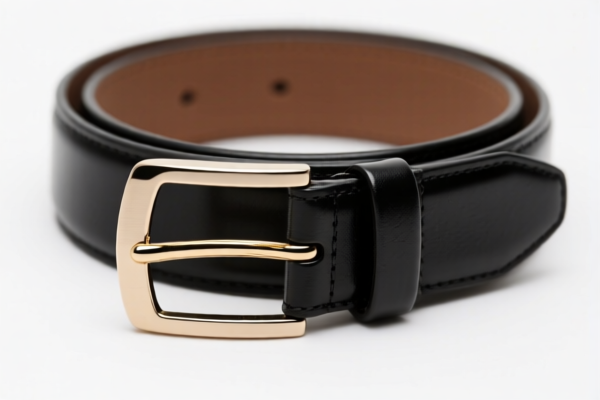
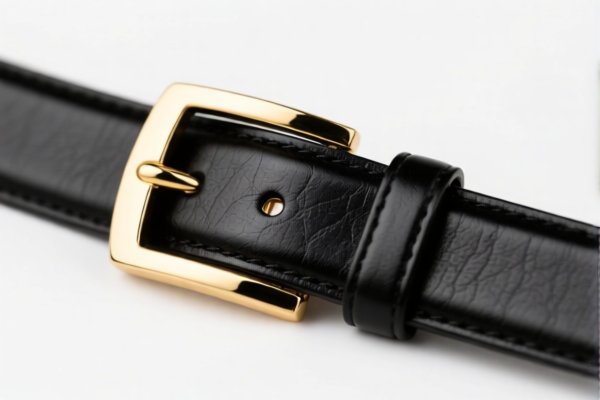
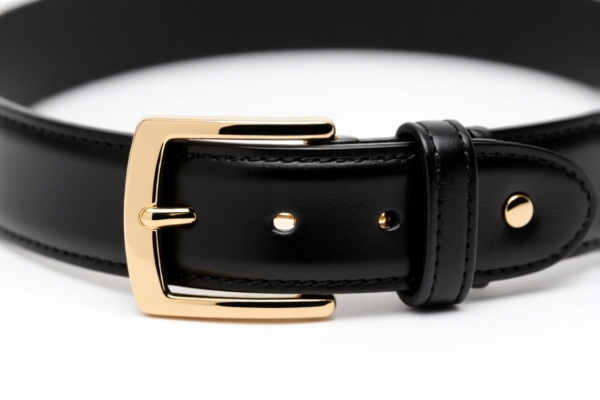
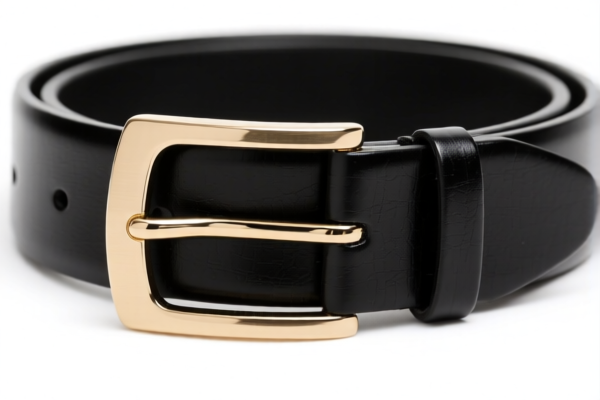
AI分析
🎀 Pin Buckle Belt (The Classic Cinch)
🌐 HS Code Reference & Customs Clearance Guide | 2026 Latest Tariff Analysis | Professional Clearance Strategy
📌 I. Product Definition & Classification: What Exactly is a "Pin Buckle Belt"?
A pin buckle belt is not just an accessory; it is a versatile garment component that changes its HS Code classification entirely based on material composition and functional structure. In international trade, ambiguity in material identification is the leading cause of customs delays and tax reassessments.
There are three distinct categories for a "Pin Buckle Belt":
1. The Textile Belt (Body):
The woven fabric strap itself (Cotton, Polyester, or Blends). This is the most common interpretation of "belt" in apparel classifications.
2. The Metal Hardware (Clasp):
The pin, loop, and frame made of iron, steel, or other base metals.
3. The Plastic Hardware (Clasp):
The molded plastic buckle assembly.
⚠️ Critical Distinction:
- If declared as "Belt (Garment Accessory)" → Goes to Chapter 62 (Textiles).
- If declared as "Hook/Fastener (Metal)" → Goes to Chapter 73 (Base Metals).
- If declared as "Hook/Fastener (Plastic)" → Goes to Chapter 39 (Plastics).
- Customs Reality: Many importers mistakenly declare the entire belt (fabric + metal buckle) under the metal HS Code to avoid higher textile duties, or vice versa. This is risky. The correct approach depends on whether the item is sold as a complete garment accessory or loose hardware.
📦 II. HS Code Classification Details (2026 Latest Tariff Authority Comparison)
Based on the provided data, here are the three possible classifications for a "Pin Buckle Belt" system:
| HS Code | Product Description | Material Inference | Classification Logic |
|---|---|---|---|
6217.10.95.10 |
Woven Belt (Garment Accessory) | Cotton, Polyester, or Blended Textiles | Classified as "Other made-up clothing accessories." Fits the definition of a complete textile belt. |
6217.10.95.50 |
Woven Belt (Garment Accessory) | Textile Materials (Inferred) | Classified under "Other clothing accessories." Assumes the primary character is textile. |
7326.20.00.20 |
Belt Hook/Buckle (Metal) | Iron or Steel | Classified as "Other articles of iron or steel." Specifically for the metal clasp component if declared separately or if the metal component defines the item's essential character. |
3926.30.10.00 |
Belt Hook/Buckle (Plastic) | Plastic (Resin/Synthetic) | Classified as "Other articles of plastics and articles of other materials of heading 3901 to 3914." Specifically for handles/knobs/hooks. |
7326.90.86.88 |
Belt Hook/Buckle (Metal) | Iron/Steel (Other Articles) | Classified as "Other articles of iron or steel." A fallback category for metal fasteners not specified elsewhere in Chapter 73. |
🔍 Key Insight:
-6217.10.95.xxis the correct classification for the woven strap part of the belt when imported as a finished apparel accessory.
-7326.xxand3926.30.xxapply strictly to the metallic or plastic buckle hardware.
- ⚠️ Warning: If you import a complete belt (fabric + metal buckle), declaring it solely under7326(Metal) is often challenged by customs unless the metal component provides the essential character (rare for standard belts). Conversely, declaring a metal buckle as6217(Textile) is incorrect.
💰 III. 2026 Latest Tariff Rate Breakdown (Including Surtaxes & Policy Add-ons)
✅ Applicable Country: United States (US)
✅ Country of Origin: China (CN)
✅ Effective Date: Ongoing (Post-2025 Trade Policies)
🎯 1. 6217.10.95.10 / 6217.10.95.50 —— Textile Woven Belts
| Item | Content |
|---|---|
| Basic Duty Rate | 14.6% (Ad Valorem) |
| Section 301 Surtax | +7.5% (Trade War Tariff) |
| Section 122 Clause Tariff | +10% (Specific Chinese Import Restriction) |
| Total Effective Rate | 32.1% |
| Tax Calculation | CIF Value × 32.1% |
| De Minimis Eligibility | ❌ No (Deny De Minimis) |
| Legal Basis Path | USITC:6217.10.95.10 → Section 301: 7.5% → Section 122: 10% |
📌 Explanation:
- Textile apparel accessories from China face a combined tax burden of 32.1%.
- This is a high-cost category compared to basic plastics.
- Note: Even though 14.6% seems moderate, the additive surtaxes bring the total to over 30%. This impacts profit margins significantly for low-cost woven belts.
🎯 2. 7326.20.00.20 & 7326.90.86.88 —— Metal Belt Hooks/Buckles (Iron/Steel)
| Item | Content |
|---|---|
| Basic Duty Rate | 2.9% - 3.9% (Ad Valorem) |
| Section 301 Surtax | +25.0% (Heavy Trade War Tariff) |
| Section 122 Clause Tariff | +10% |
| Special Steel/Aluminum/Copper Surtax | +50% (Specific Add-on for Base Metal Products from China) |
| Total Effective Rate | 87.9% - 88.9% |
| Tax Calculation | CIF Value × ~88% |
| De Minimis Eligibility | ❌ No (Deny De Minimis) |
| Legal Basis Path | USITC:7326.xx → Section 301: 25% → Section 122: 10% → Special Base Metal Surtax: 50% |
📌 Explanation:
- CRITICAL WARNING: Metal accessories from China are subject to the strictest tariffs in this dataset.
- The 50% special surtax on steel/aluminum/copper products pushes the total tax to nearly 89%.
- Do not declare a metal buckle as 32.1%; it will be audited and reassessed to ~88%, causing penalties.
🎯 3. 3926.30.10.00 —— Plastic Belt Hooks/Buckles
| Item | Content |
|---|---|
| Basic Duty Rate | 6.5% (Ad Valorem) |
| Section 301 Surtax | +7.5% |
| Section 122 Clause Tariff | +10% |
| Total Effective Rate | 24.0% |
| Tax Calculation | CIF Value × 24.0% |
| De Minimis Eligibility | ❌ No (Deny De Minimis) |
| Legal Basis Path | USITC:3926.30.10.00 → Section 301: 7.5% → Section 122: 10% |
📌 Explanation:
- Plastic buckles have the lowest tax burden (24%).
- If you are importing only the buckles (not the woven belt), and they are plastic, this is the most cost-effective classification.
- Strategy: Consider sourcing plastic buckles separately from non-Chinese origins (e.g., Vietnam) if eligible for exemptions, as plastic tariffs are significantly lower than metal ones.
🛠️ IV. Customs Clearance Operational Advice (Practical Pitfall Avoidance)
✅ 1. Documentation Checklist (Non-Negotiable)
| Document | Required? | Details |
|---|---|---|
| ✅ Product Composition Statement | ✔️ | Must explicitly state: "60% Cotton, 40% Polyester Strap; Metal Buckle (Iron)" |
| ✅ Detailed Photo | ✔️ | Show the texture of the weave and the material of the buckle (shiny/metal vs. matte/plastic). |
| ✅ Bill of Lading / Invoice | ✔️ | Item description must match HS Code exactly (e.g., "Textile Belt Accessory" vs. "Metal Fastener"). |
| ✅ Country of Origin Certificate | ✔️ | Crucial for applying Section 122 and 301 surtaxes. |
✅ 2. Declaration Strategy (Key Mantras)
🔥 "Material Defines Code, Not Shape!"
| Scenario | Correct Declaration | Incorrect Declaration | Consequence |
|---|---|---|---|
| Complete Belt (Fabric + Metal Buckle) | Declare as 6217.10.95.10 (Textile Accessory) |
Declare as 7326.20.00.20 (Metal) |
Customs will reclassify to textile if fabric is substantial, but risk penalty for misdeclaration. |
| Loose Metal Buckles Only | Declare as 7326.20.00.20 or 7326.90.86.88 |
Declare as 3926.30.10.00 (Plastic) |
Audit Risk: High. Metal is easily identified. Tax jumps from 24% to 88%. |
| Loose Plastic Buckles Only | Declare as 3926.30.10.00 |
Declare as 6217.10.95.10 (Textile) |
Incorrect. Plastic is not textile. |
| Mixed Shipment (Belt + Spare Buckles) | Split Declaration | One single line item | Customs Delay: Must separate textile value from hardware value. |
✅ 3. Special Handling Cases
| Situation | Recommendation |
|---|---|
| OEM Belt with Custom Metal Logo | Ensure the metal logo is small enough that it doesn't redefine the "essential character" away from the textile. Keep the declaration focused on the textile nature. |
| Belt with Plastic Core & Fabric Cover | Classify as 6217.10.95.10. The fabric covering dictates the classification. |
| Importing Buckles for Assembling in US | If buckles are imported to be sewn onto fabric in the US, declare buckles as 7326 (Metal) or 3926 (Plastic). Note the high tax on metal buckles. |
🌍 V. Global Market Comparison (2026 Latest)
| Market | Recommended HS Code | Est. Total Tax (China Origin) | Notes |
|---|---|---|---|
| 🇺🇸 USA | 6217.10.95.10 (Textile) |
32.1% | High surtaxes. Metal parts (7326) are ~88% – Avoid declaring whole belt as metal. |
| 🇪🇺 EU | 6217.10 (Textile) |
~12-16% (Duty + VAT) | No Section 301/122 equivalents. Much lower barrier. |
| 🇨🇳 China (Import) | 6217.10 |
~5-10% | Lower basic duties, no punitive surtaxes. |
📌 Conclusion:
- For the US Market: The textile classification (6217) at 32.1% is significantly better than the metal classification (7326) at ~88%.
- Strategy: Always declare the complete woven belt under the Textile HS Code (6217.10.95.10). Do not separate the metal buckle into its own line item unless it is sold as a loose replacement part. This leverages the lower tax rate of textiles vs. base metals.
📌 VI. Common Errors & Pitfalls (Lessons Learned)
❌ Error 1: Declaring a complete woven belt with a metal buckle as 7326.20.00.20 (Metal Hook).
👉 Result: Customs may accept it, but if audited, they may reclassify it as textile. However, if they don't, you pay ~88% tax instead of 32%.
👉 Advice: Declare as Textile (6217) to align with the "essential character" of a belt.
❌ Error 2: Declaring plastic buckles as 6217 (Textile).
👉 Result: Rejection or reclassification to 3926. Tax difference is minimal (24% vs 32%), but fines apply for misdeclaration.
❌ Error 3: Ignoring the "Section 122" 10% surtax.
👉 Result: Unexpected cost increase. Always budget for Total Tax = Basic + 301 + 122.
✅ Correct Declaration Example:
"Men's Woven Cotton Belt with Pin Buckle, Model: XYZ, 100% Cotton Strap, Iron Alloy Buckle, For Use with Jeans"
🎯 VII. Conclusion: Professional Declaration, Profit Protection!
🎯 Remember the Golden Rule:
🔹 "Belt is Textile, Buckle is Metal. If it's worn, declare as Textile (6217) – It's cheaper than Metal (7326)!"
🔹 "Metal Tax is 88%, Textile Tax is 32%. Don't pay double for a buckle!"
🔹 "Plastic Buckles? Only 24%. Source wisely!"
📌 Pro Tip:
If you are importing only the metal buckles in high volume, consider duty drawback programs or verify if any exclusions apply to specific steel products. However, for most fashion belts, the Textile Classification (6217.10.95.10) is the most financially viable path for US customs.
📣 Immediate Action:
📞 Consult your customs broker with clear photos of the belt.
📄 Ensure your invoice reads "Textile Garment Accessory" rather than just "Belt."
🚀 Clear goods smoothly, avoid the 88% metal tax trap, and maximize margins!
✨ Professional Customs Clearance Starts with Accurate Classification!
💼 Your profit margin depends on this 10-digit HS Code!
用户评价
关于 HS 编码归类
协调制度(HS)是由世界海关组织(WCO)制定的国际贸易商品分类标准。全球 200 多个国家采用 HS 系统作为海关关税、贸易统计和进出口监管的基础。
每个 HS 编码遵循以下层级结构:
- 章(2 位)——商品大类(例如:第 84 章:机器和机械设备)
- 品目(4 位)——章内的更具体分类
- 子目(6 位)——国际通用细分,所有 WCO 成员国统一使用
- 本国细分(8-10 位)——各国自行扩展的细分编码,如美国 HTSUS 10 位编码
正确的 HS 编码归类对于顺利通关、准确缴纳关税和遵守贸易法规至关重要。错误归类可能导致海关延误、多缴关税或罚款。
从CN进口到US时,适用的关税税率可能包括:
- 最惠国(MFN)税率——适用于 WTO 成员国的标准关税税率
- 普通税率——适用于无贸易协定国家
- 贸易救济关税——附加关税,如 301 条款(反倾销)、232 条款(国家安全)或反补贴税
本页内容仅供参考。如需正式归类,请咨询当地海关或持牌报关代理。