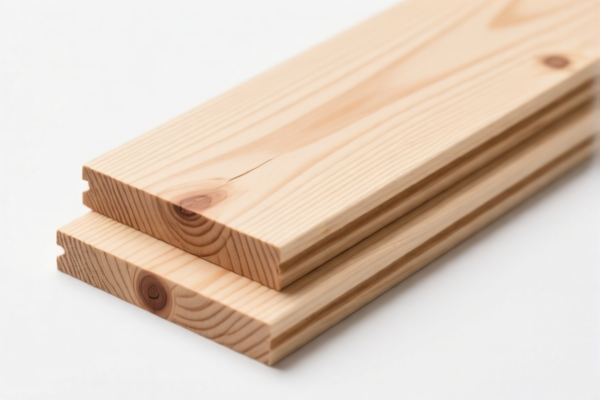
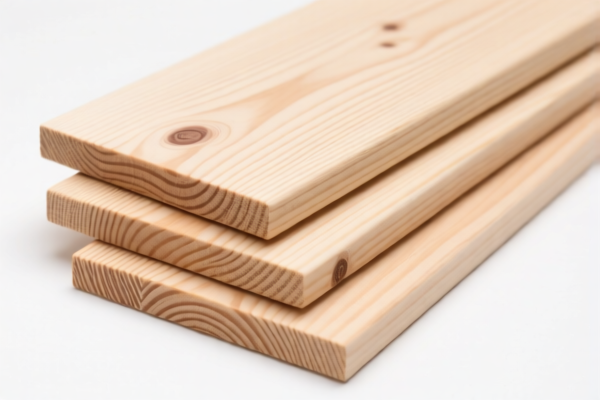
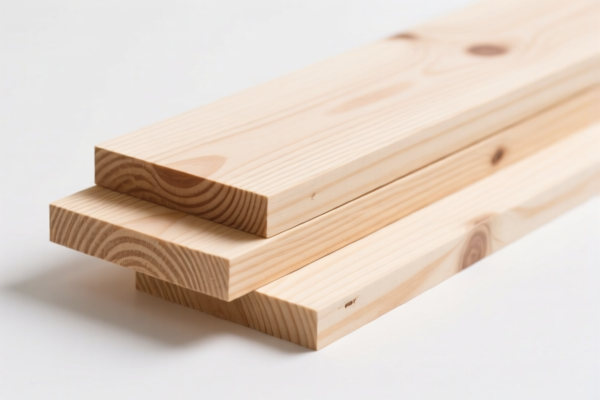
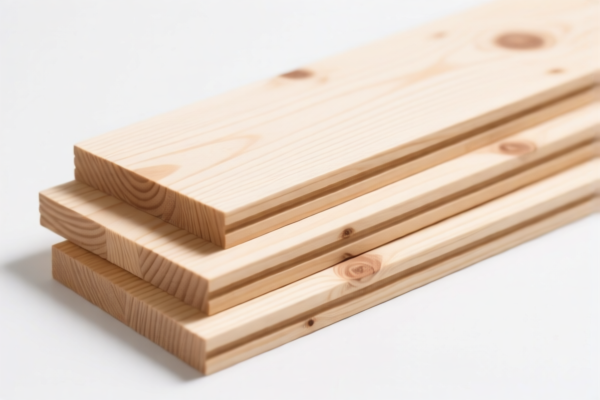
Pine Finger Jointed Sanded Board
CN → US| HS编码 | 关税税率 | 原产国 | 目的国 | 文档 |
|---|---|---|---|---|
| 4407110001 | 35.0% | CN | US | 官方文档 |
| 4407190001 | 35.0% | CN | US | 官方文档 |
商品图片
AI分析
🌲 Pine Finger-Jointed Sanded Board (Wood Products)
🌐 HS Code Reference & Customs Clearance Guide | 2026 Latest Tariff Analysis | Professional Clearance Strategy
📌 One, Product Definition & Classification: Do You Really Understand "Pine Finger-Jointed Board"?
Pine finger-jointed sanded board is a high-value engineered wood product. It is not raw timber, but a processed material where small pieces of pine wood are cut with interlocking "fingers," glued together, and then planed/sanded to a smooth finish.
In international trade, it falls under Chapter 44 (Wood and Articles of Wood). The key to correct classification lies in two factors: 1. Thickness: Must exceed 6mm (if ≤6mm, it might be considered veneer or plywood). 2. Processing Level: It is sawn/chipped, lengthwise, planed, sanded, and end-jointed (finger-jointed).
⚠️ Critical Distinction:
- If it is not finger-jointed (e.g., solid planks or simple edge-joined boards), it falls under other subheadings (e.g., 4407.19.00.01 "Other").
- If it is finger-jointed, it requires specific HS codes based on whether it is Pine (Pinus spp.) or Other Coniferous.
- Note: In the provided data, both Pine and Other Coniferous finger-jointed boards share the same tax rate, but the HS Codes are distinct for statistical and regulatory purposes.
📦 Two. HS Code Classification Details (2026 Latest Tariff Authority Comparison)
| HS Code | Product Description | Application Scenario | Key Feature |
|---|---|---|---|
4407.11.00.01 |
Pine (Pinus spp.) Finger-jointed Wood | Furniture parts, cabinetry, interior trim, DIY projects | Specific Species: Must be Pine (Pinus genus) |
4407.19.00.01 |
Other Coniferous Finger-jointed Wood | Alternative softwoods (e.g., Spruce, Fir, Larch) used in similar applications | Non-Pine Conifer: Includes Spruce, Fir, etc. |
🔍 Key Reminder:
- "Sanded": The description includes "whether or not planed, sanded." Sanding does not change the HS Code if the wood remains >6mm thick.
- "Finger-Jointed": This refers to end-jointing. If the board is only edge-joined (butt joint), it does not qualify for these codes.
- Species Identification: You must provide documentation proving the wood species. Misidentifying Spruce as Pine can lead to customs delays or penalties.
💰 Three. 2026 Latest Tariff Rate Details (Including Surcharge & Policy Add-ons)
✅ Applicable Country: USA (US)
✅ Country of Origin: China (CN)
✅ Effective Time: 2025+ (Current Trade Policy Context)
🎯 1. 4407.11.00.01 — Pine (Pinus spp.) Finger-Jointed Wood
| Item | Content |
|---|---|
| Base Tariff Rate | 0.0% (ad valorem) |
| Section 301 Surcharge | +25.0% |
| Total Tariff Rate | 25.0% |
| Tax Calculation | CIF Value × 25% |
| De Minimis Exemption | ❌ Not Eligible (Most shipments subject to full duty) |
| Legal Basis | HTSUS 4407.11.00 + USITC Footnote for Section 301 |
📌 Explanation:
- The 0% base rate reflects the WTO standard for processed wood.
- The 25% surcharge is imposed under Section 301 of the Trade Act of 1974 against Chinese-origin goods.
- Total Duty: 25%. This is a significant cost factor for exporters.
🎯 2. 4407.19.00.01 — Other Coniferous Finger-Jointed Wood
| Item | Content |
|---|---|
| Base Tariff Rate | 0.0% (ad valorem) |
| Section 301 Surcharge | +25.0% |
| Total Tariff Rate | 25.0% |
| Tax Calculation | CIF Value × 25% |
| De Minimis Exemption | ❌ Not Eligible |
| Legal Basis | HTSUS 4407.19.00 + USITC Footnote for Section 301 |
📌 Note:
- Although the species is different (e.g., Spruce/Fir instead of Pine), the tariff rate is identical to Pine finger-jointed boards.
- Ensure your Commercial Invoice and Bill of Lading clearly state the wood species to avoid customs queries.
🛠️ Four. Customs Clearance Practical Advice (Real-World Pitfall Avoidance Guide)
✅ 1. Required Documentation Checklist (Missing Any = Delay)
| Document | Mandatory? | Description |
|---|---|---|
| ✅ Commercial Invoice | ✔️ | Must explicitly state: "Pine Finger-Jointed Sanded Board" or "Spruce Finger-Jointed..." and HS Code. |
| ✅ Packing List | ✔️ | Detail dimensions, volume (CBM), and weight. |
| ✅ Wood Treatment Certificate | ✔️ | ISPM 15 Compliance: Wood packaging material must be heat-treated (HT) or fumigated (MB). Note: The product itself may require phytosanitary cert if raw, but processed wood often has exemptions; verify latest CBP rules. |
| ✅ Species Declaration | ✔️ | Proof of origin species (Pine vs. Other Conifer) to support HS Code 4407.11 vs 4407.19. |
| ✅ Material Safety Data Sheet (MSDS) | ✔️ | If glued with specific adhesives, some ports require this to confirm no prohibited formaldehyde levels (if applicable). |
| ✅ Bill of Lading | ✔️ | Clean on-board bill. |
✅ 2. Declaration Tips (Key Mantra)
🔥 "Species Clear, Joint Type Specific, Thickness >6mm, No Confusion with Veneer!"
| Scenario | Correct Declaration | Wrong Practice |
|---|---|---|
| Pine Finger-Jointed | 4407.11.00.01 |
Misdeclare as "Wood Panel" → Generic inspection |
| Spruce/Fir Finger-Jointed | 4407.19.00.01 |
Declare as Pine → Species mismatch penalty |
| Thickness ≤ 6mm | Incorrect HS | Must re-classify to Chapter 44 (Veneer/Plywood) |
| Solid Plank (No Fingers) | 4407.19.00.01 (Other) or 4407.10 |
Claim finger-jointed when not → Fraud/False Declaration |
✅ 3. Special Case Handling
| Situation | Handling Advice |
|---|---|
| Mixed Species in One Container | If both Pine and Spruce are present, split the declaration or use the code that covers the majority. Best practice: Keep shipments species-segregated to avoid customs scrutiny. |
| High-Formaldehyde Adhesives | If using urea-formaldehyde resins, ensure compliance with CARB Phase 2 or TSCA Title VI standards. Provide test reports to avoid FDA/CPSC holds. |
| Wood Packaging | Ensure pallets/crates are ISPM 15 marked. Unmarked wood packaging will cause rejection or destruction at US ports. |
🌍 Five. Global Major Market Clearance Comparison (2026 Latest)
| Country/Region | Recommended HS Code | Tariff (China Origin) | Certification Requirements | Remarks |
|---|---|---|---|---|
| 🇺🇸 USA | 4407.11.00.01 / 4407.19.00.01 |
25% (Section 301) | None specific (but ISPM 15 for packaging) | High duty burden |
| 🇨🇳 China | 4407.11.00 / 4407.19.00 |
0-5% (MFN) | N/A (Import) | Low duty if imported into China |
| 🇪🇺 EU | 4407.11 / 4407.19 |
~5.4% | FSC/PEFC (often required by buyers), EUDR (Deforestation Regulation) compliance | EUDR effective 2025 requires proof of no deforestation |
| 🇬🇧 UK | 4407.11 / 4407.19 |
~5.4% | Similar to EU | Post-Brexit rules apply |
| 🇦🇺 Australia | 4407.11 / 4407.19 |
5% | AQIS Requirements for wood | Biosecurity is strict |
📌 Conclusion:
- USA is the most expensive market due to the 25% Section 301 tariff.
- EU and UK have lower base tariffs but are introducing strict environmental due diligence (EUDR). Exporters must prove sustainable sourcing.
- China has low tariffs but is primarily an exporter of such goods.
📌 Six. Common Errors & Pitfall Guide (Blood & Tears Lessons)
❌ Error 1: Misclassifying "Finger-Jointed" as "Solid Wood" or "Plywood"
👉 Consequence: If declared as plywood (4412), you may face anti-dumping duties or incorrect tariff assessment. If declared as solid planks, you might be accused of false origin/species.
❌ Error 2: Ignoring the 6mm Thickness Rule
👉 Consequence: If boards are ≤6mm, they are considered veneer or thin wood sheets, falling under different HS codes (e.g., 4408.10). Misclassification leads to immediate customs holds.
❌ Error 3: No Species Declaration on Invoice
👉 Consequence: Customs cannot verify 4407.11 (Pine) vs 4407.19 (Other). They may apply the higher scrutiny rate or detain goods for species testing.
❌ Error 4: Unmarked Wood Pallets
👉 Consequence: US CBP will refuse entry or order fumigation/destruction of the entire load due to ISPM 15 violations.
✅ Correct Practice:
"Pine (Pinus spp.) Finger-Jointed Sanded Board, Thickness: 15mm, Finish: Sanded, Adhesive: Water-Resistant, ISPM 15 Packaging"
🎯 Seven. Conclusion: Precise Classification Saves Money!
🎯 Remember the Mantra:
🔹 "Pine vs. Other Conifer, Finger-Jointed Not Solid, >6mm Thick, 25% Duty in USA."
🔹 "HS Code determines the cost, 25% is the price of entry, get it right from the start."
📌 Pro Tip:
If your pine is sourced from Canada, Russia, or other non-China countries, the 25% Section 301 tariff does NOT apply. You may pay only the base rate (0% or minimal).
👉 Action: Always verify the Country of Origin on the commercial invoice. If it’s not China, you could save 25% instantly.
📣 Immediate Action:
📞 Contact your freight forwarder + Provide Species Proof + Confirm Thickness >6mm
🚀 Let your wood products clear customs smoothly, reduce costs, and maximize profit!
✨ Professional Clearance Starts with Accurate Classification!
💼 Your every cent of cost deserves to be calculated precisely!
用户评价
关于 HS 编码归类
协调制度(HS)是由世界海关组织(WCO)制定的国际贸易商品分类标准。全球 200 多个国家采用 HS 系统作为海关关税、贸易统计和进出口监管的基础。
每个 HS 编码遵循以下层级结构:
- 章(2 位)——商品大类(例如:第 84 章:机器和机械设备)
- 品目(4 位)——章内的更具体分类
- 子目(6 位)——国际通用细分,所有 WCO 成员国统一使用
- 本国细分(8-10 位)——各国自行扩展的细分编码,如美国 HTSUS 10 位编码
正确的 HS 编码归类对于顺利通关、准确缴纳关税和遵守贸易法规至关重要。错误归类可能导致海关延误、多缴关税或罚款。
从CN进口到US时,适用的关税税率可能包括:
- 最惠国(MFN)税率——适用于 WTO 成员国的标准关税税率
- 普通税率——适用于无贸易协定国家
- 贸易救济关税——附加关税,如 301 条款(反倾销)、232 条款(国家安全)或反补贴税
本页内容仅供参考。如需正式归类,请咨询当地海关或持牌报关代理。