Pine Outdoor Wood Preserved
CN → US| HS编码 | 关税税率 | 原产国 | 目的国 | 文档 |
|---|---|---|---|---|
| 4403210165 | 35.0% | CN | US | 官方文档 |
| 4409104090 | 35.0% | CN | US | 官方文档 |
| 4403110060 | 35.0% | CN | US | 官方文档 |
| 4409104010 | 35.0% | CN | US | 官方文档 |
| 4403210112 | 35.0% | CN | US | 官方文档 |
商品图片
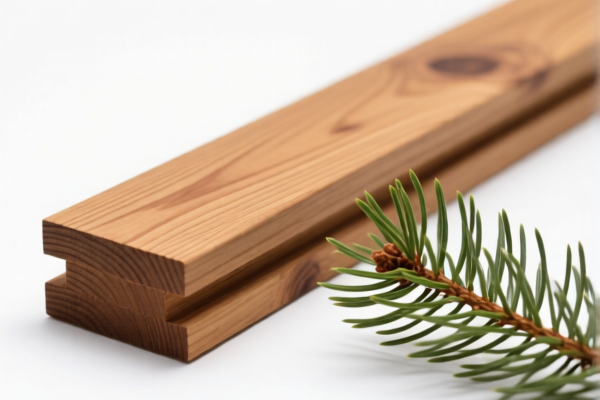
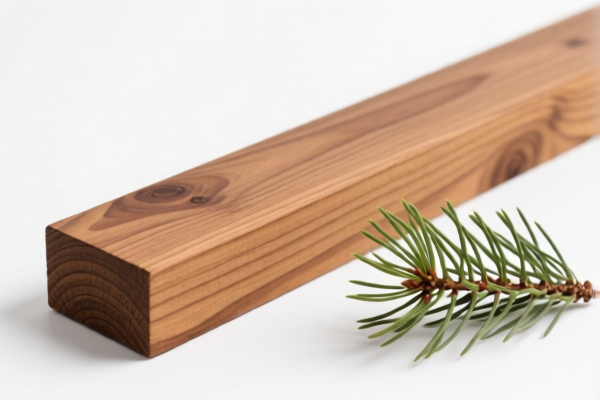
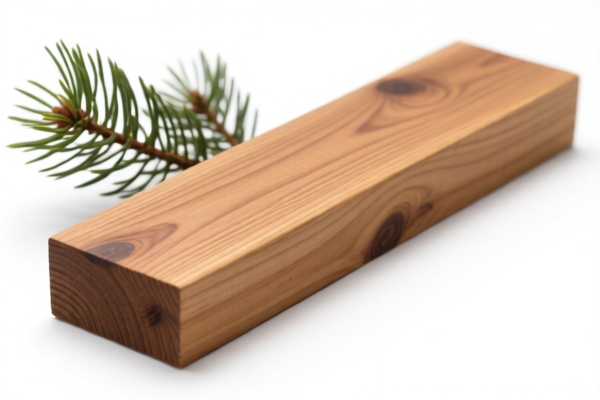
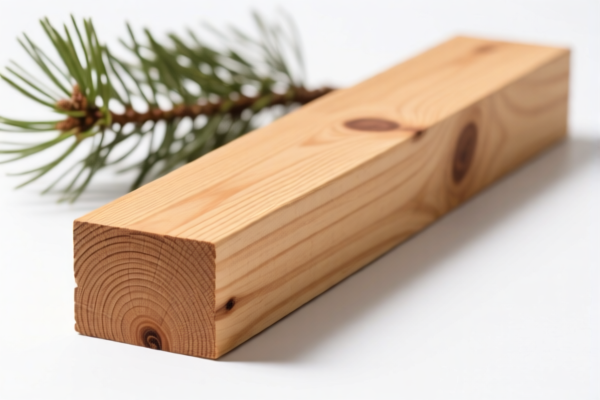
AI分析
🌲 Pine Outdoor Wood Preserved (防腐处理松木)
🌐 HS Code Reference & Customs Clearance Guide | 2026 Latest Tariff Analysis | Professional Clearance Strategy 📌 I. Product Definition & Classification: What is "Preserved Pine Outdoor Wood"?
Preserved Pine Outdoor Wood refers to coniferous timber (specifically Pine) that has undergone chemical treatment to enhance its resistance to decay, insects, and weathering, making it suitable for exterior applications such as decking, fencing, landscaping, and construction. In international trade, the classification hinges on two critical factors: 1. Processing Level: Is it raw/log-like (Chapter 4403) or processed/planed (Chapter 4409)? 2. Material Specifics: It is strictly Coniferous Wood (Pine).
⚠️ Key Distinction Point: - If the wood is in its original state (logs, rough-sawn, or simple preservative treatment without complex profiling) → It falls under Heading 4403 (Wood treated with preservatives). - If the wood is shaped, finger-jointed, or has specific profiles (like tongue-and-groove) suitable for final construction use → It falls under Heading 4409 (Wood continuously shaped along any of its edges).
📦 II. HS Code Classification Details (2026 Latest Tariff Authority Cross-Reference)
Based on the provided data, here are the 5 specific HS Codes for "Preserved Pine Outdoor Wood" and the rationale for each:
| HS Code | Product Description & Rationale | Application Scenario | Processing State |
|---|---|---|---|
4403.21.01.65 |
Preserved Pine, General Coniferous Log Summary: Preserved pine, belonging to the residual category of coniferous logs. |
Raw logs or rough-sawn lumber for general outdoor use. | ✅ Raw/Rough (Log/Beam) |
4409.10.40.90 |
Preserved Pine, Other Profiled Wood Summary: Preserved pine, meeting material requirements for other categories. |
Processed wood (e.g., decking boards with edge profiling) not covered by more specific headings. | ✅ Shaped/Profiled |
4403.11.00.60 |
Preserved Pine, Rough-Sawn Coniferous Summary: Preserved pine, default to rough-sawn wood of coniferous type. |
Standard rough-sawn planks or beams, commonly used in construction framing. | ✅ Rough-Sawn |
4409.10.40.10 |
Preserved Pine, Characteristic Fit Summary: Preserved pine, matching material characteristics with no conflicts. |
Profiled wood (e.g., tongue-and-groove) that fits the generic "other" subheading for coniferous shaped wood. | ✅ Shaped/Profiled |
4403.21.01.12 |
Preserved Pine, Outdoor Poles/Pylons Summary: Outdoor pine logs, inferred for use as poles, piles, or posts. |
Utility poles, fence posts, pilings driven into the ground. | ✅ Round/Rough (Log/Pole) |
🔍 Important Reminder: - All listed codes apply to Pine (Coniferous) wood treated with preservatives. - The difference between
4403(Logs/Rough) and4409(Shaped/Profiled) is critical for duty calculation and customs inspection. Misclassification can lead to delays. - The summary descriptions provided in the source data (4403.21.01.65,4409.10.40.90, etc.) indicate these are specific sub-entries often used in advanced tariff databases to capture nuanced product features.
💰 III. 2026 Latest Tariff Rate Detail (Including Surtaxes & Policy Add-ons)
✅ Applicable Country: United States (US) ✅ Origin: China (CN) (Implied by "122 Clause" and typical high-tariff context for Chinese wood products) ✅ Effective Time: Current rates apply
🎯 1. Applicable HS Codes: 4403.21.01.65, 4409.10.40.90, 4403.11.00.60, 4409.10.40.10, 4403.21.01.12
| Item | Content |
|---|---|
| Base Duty Rate | 0.0% (Ad Valorem, Free Entry for basic wood under certain conditions, but see below) |
| Surtax (Section 301 / "122 Clause") | +25.0% (This refers to the Section 301 tariffs on Chinese wood products) |
| IEEPA / Additional Surtax | +10.0% (Often referred to as "122 Clause Tariff" in some databases, related to specific trade restrictions or Section 232/301 extensions) |
| Total Tax Rate | 35.0% |
| Tax Calculation | CIF Value × 35% |
| De Minimis Exemption | ❌ Not Applicable (De minimis rules generally do not apply to goods subject to Section 301 tariffs) |
| Legal Basis Path | USITC: 4403/4409 → Section 301 Footnote → IEEPA/Trade Act Provisions |
📌 Explanation: - "Base Tariff 0.0%": Many wood products have a low or zero base MFN duty. - "Surtax 25%": This is the standard Section 301 tariff rate for many wood and wood products from China. - "122 Clause Tariff 10%": This likely refers to an additional layer of tariff (possibly under Section 232 or specific bilateral trade clauses) adding another 10%. - Total 35%: This is a high-cost entry barrier. Importers must budget for this significant surcharge.
🛠️ IV. Customs Clearance Practical Advice (Battle-Tested Pitfall Guide)
✅ 1. Required Documentation Checklist (Missing = Delay/Seizure)
| Document | Mandatory | Description |
|---|---|---|
| ✅ Commercial Invoice | ✔️ | Must clearly state "Preservative Treated Pine Wood," Country of Origin, and HS Codes. |
| ✅ Packing List | ✔️ | Detail weight, volume, and number of pieces. |
| ✅ Treatment Certificate | ✔️ | Proof of preservative treatment (e.g., ACQ, CCA, or organic preservatives). Customs may test for prohibited chemicals. |
| ✅ Phytosanitary Certificate | ✔️ | Critical! Required to prove the wood is free of pests (bark, insects, eggs). Without this, goods will be rejected or destroyed. |
| ✅ ISPM 15 Marking | ✔️ | If pallets/crates are wood, they must have the IPPC mark. |
| ✅ Product Photos | ✔️ | Show the wood, labels, and treatment marks. |
| ✅ Fumigation Certificate | ✔️ | If applicable, especially for untreated or poorly treated wood. |
✅ 2. Declaration Tips (Key Mnemonic)
🔥 "Treated Wood, Check Bark, Declare Code, Avoid Quarantine!"
| Scenario | Correct Declaration | Wrong Practice |
|---|---|---|
| Rough Sawn Logs/Beams | 4403.11.00.60 or 4403.21.01.12 |
Declaring as finished lumber → Risk of misclassification penalty. |
| Decking Boards (Profiled) | 4409.10.40.90 or 4409.10.40.10 |
Declaring as raw wood → Incorrect duty rate (though here same, documentation differs). |
| Wood with Bark | Remove bark or declare properly | Importing with bark without proper phytosanitary proof → Quarantine/Return! |
| OEM Custom Sizes | Provide detailed dimensions in invoice | Vague description "Pine Wood" → Customs inquiry & delay. |
✅ 3. Special Circumstances Handling
| Situation | Handling Advice |
|---|---|
| High Moisture Content | Ensure wood is kiln-dried or air-dried to acceptable levels. Wet wood may be rejected for fungal growth. |
| Chemical Preservatives | Declare the type of preservative. Some chemicals (e.g., Chrome Copper Arsenate - CCA) are restricted in residential use in the US. Provide SDS (Safety Data Sheet). |
| Partial Processing | If wood is planed on one side only, it may still be 4403. If fully profiled, it is 4409. Clarify with supplier. |
| Packaging | Ensure packaging itself (pallets, crates) complies with ISPM 15. Non-compliant packaging can lead to fumigation fees at destination. |
🌍 V. Global Market Comparison (2026 Latest)
| Country/Region | Recommended HS Code | Base Tariff | Additional Surtax (China Origin) | Total Effective Rate | Notes |
|---|---|---|---|---|---|
| 🇺🇸 USA | 4403... or 4409... (See above) |
0% | 35% (25% Sec 301 + 10% Other) | 35% | High barrier. Phytosanitary control is strict. |
| 🇨🇳 China | 4403 or 4409 |
~10-15% | None | ~10-15% | Export market. |
| 🇪🇺 EU | 4403 or 4409 |
~0-5% | None | ~0-5% | Requires FSC/PEFC certification for many buyers. |
| 🇦🇺 Australia | 4403 or 4409 |
~5% | None | ~5% | Very strict biosecurity (BSP) requirements. |
| 🇯🇵 Japan | 4403 or 4409 |
~3-5% | None | ~3-5% | Requires ISPM 15 compliance. |
📌 Conclusion: - The US market is the most expensive for Chinese-origin preserved pine wood due to the 35% total tariff. - Biosecurity (Phytosanitary) is a universal hurdle for all countries. Ensure certificates are valid and wood is pest-free. - Profiled vs. Raw: Ensure the HS code matches the physical product state to avoid customs audits.
📌 VI. Common Mistakes & Pitfall Guide (Lessons Learned)
❌ Mistake 1: Declaring "Wood" without specifying "Preserved" or HS code detail. 👉 Consequence: Customs may assign a higher default tariff or require additional testing → Delay & Storage Fees.
❌ Mistake 2: Ignoring Phytosanitary Requirements. 👉 Consequence: Goods held at port, fumigated at importer's expense, or returned → Loss of Goods/Value.
❌ Mistake 3: Confusing 4403 (Logs/Rough) with 4409 (Shaped).
👉 Consequence: If declared as 4403 but product is profiled (4409), it may be flagged for misdeclaration. Even if rates are similar here, documentation must match.
❌ Mistake 4: Not declaring the Type of Preservative. 👉 Consequence: If the preservative is restricted (e.g., in residential decking), the goods may be banned from certain uses or rejected by customs.
✅ Correct Practice:
"Preservative Treated Southern Yellow Pine Lumber, Rough Sawn, for Outdoor Decking, Treated with ACQ, ISPM 15 Packaged, Phytosanitary Certificate Attached, HS Code: 4403.11.00.60"
🎯 VII. Conclusion: Professional Declaration, Save Time, Reduce Costs!
🎯 Remember the Mantra:
🔹 "Treat Well, Certify Strict, Declare Accurate, Pay 35%." 🔹 "Phytosanitary is Key, No Cert = No Entry!" 🔹 "35% Tariff is High, Plan Your Margin!"
📌 Pro Tip:
If your wood is originating from Vietnam, Malaysia, or Thailand, tariffs may be lower or zero (check Free Trade Agreements). Consider pre-classification rulings with US CBP if the product is complex (e.g., mixed wood types). Always verify the latest Section 301 exclusions, as some wood products may have temporary exclusions.
📣 Immediate Action:
📞 Contact a licensed Customs Broker + Provide Treatment Certificate + Verify HS Code 🚀 Ensure Smooth Clearance, Avoid Quarantine, Protect Your Margins!
✨ Professional Clearance Starts with Accurate Classification! 💼 Every cent of tax, accounted for!
用户评价
关于 HS 编码归类
协调制度(HS)是由世界海关组织(WCO)制定的国际贸易商品分类标准。全球 200 多个国家采用 HS 系统作为海关关税、贸易统计和进出口监管的基础。
每个 HS 编码遵循以下层级结构:
- 章(2 位)——商品大类(例如:第 84 章:机器和机械设备)
- 品目(4 位)——章内的更具体分类
- 子目(6 位)——国际通用细分,所有 WCO 成员国统一使用
- 本国细分(8-10 位)——各国自行扩展的细分编码,如美国 HTSUS 10 位编码
正确的 HS 编码归类对于顺利通关、准确缴纳关税和遵守贸易法规至关重要。错误归类可能导致海关延误、多缴关税或罚款。
从CN进口到US时,适用的关税税率可能包括:
- 最惠国(MFN)税率——适用于 WTO 成员国的标准关税税率
- 普通税率——适用于无贸易协定国家
- 贸易救济关税——附加关税,如 301 条款(反倾销)、232 条款(国家安全)或反补贴税
本页内容仅供参考。如需正式归类,请咨询当地海关或持牌报关代理。