Pine Poles (Logs)
CN → US| HS编码 | 关税税率 | 原产国 | 目的国 | 文档 |
|---|---|---|---|---|
| 4404100090 | 35.0% | CN | US | 官方文档 |
| 4404100080 | 35.0% | CN | US | 官方文档 |
| 4403210116 | 35.0% | CN | US | 官方文档 |
| 4403210112 | 35.0% | CN | US | 官方文档 |
| 4403260112 | 35.0% | CN | US | 官方文档 |
商品图片
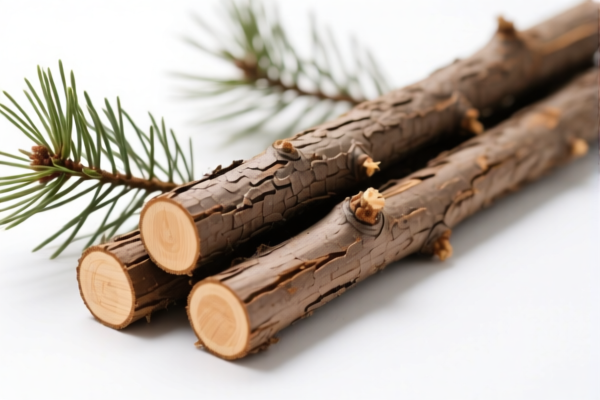



AI分析
🌲 Pine Poles (Logs) | Wood Products for Infrastructure
🌐 HS Code Reference & Clearance Guide | 2026 Latest Tariff Analysis | Professional Customs Strategy
📌 I. Product Definition & Classification: What Exactly Are "Pine Poles"?
Pine Poles (Logs) refer to timber derived from pine trees, prepared in a rough, unprocessed state suitable for use as poles, piles, or structural posts. In international trade, these goods fall under Chapter 44 (Wood and Articles of Wood), specifically targeting processed or semi-processed coniferous wood.
The classification depends heavily on the physical form (log vs. rough sawn) and the species specificity (general coniferous vs. specific pine types).
⚠️ Key Distinction Point:
- If the wood is in its raw log form (unpeeled or roughly peeled), it may fall under 4404 or 4403.26.
- If the wood is roughly sawn or shaped into poles/posts, it falls under 4404 or 4403.21.
- Crucial Note: All items below attract a 35% Total Tax Rate due to US-China trade tensions (Section 301 + IEEPA).
📦 II. HS Code Classification Details (2026 Latest Tariff Authority Alignment)
| HS Code | Product Description | Application Scenario | Processing State |
|---|---|---|---|
4404.10.00.90 |
Pine Pole Body (Logs) - Other Coniferous Wood | Logs in log form, matching "other coniferous wood" criteria | Raw/Unprocessed Logs |
4404.10.00.80 |
Pine Pole Body (Logs) - Poles, Posts & Piles | Shaped poles/posts made of coniferous wood | Refined Shape (Pole/Post) |
4403.21.01.16 |
Pine Pole Body (Logs) - Roughly Sawnc Pine | Pine wood, roughly sawn, poles/posts specific | Roughly Sawn |
4403.21.01.12 |
Pine Pole Body (Logs) - Roughly Made Wood | Pine wood, rough sawn/processed into poles/posts | Roughly Made |
4403.26.01.12 |
Pine Wood Pole (Raw Log) - Raw Log | Raw logs of coniferous wood, specifically for poles | Raw Log |
🔍 Key Reminder:
- Shape Matters: If the wood has been roughly shaped into a pole/post but is not finished, it may shift from4404(Charcoal/Wood Fuel) or general logs to4403(Wood Prepared for Pulp/Construction).
- Species Specificity: Codes4403.21...often refer to specific pine types (e.g., Pinus sylvestris, Pinus radiata), while4403.26is a broader "Other Coniferous" category.
- All listed HS Codes carry the SAME tax burden: 35% Total.
💰 III. 2026 Latest Tariff Rate Breakdown (Including Surcharges & Policy Add-ons)
✅ Applicable Country: United States (US)
✅ Country of Origin: China (CN)
✅ Effective Date: Ongoing (Post-2018 Section 301 & 2025 IEEPA Add-ons)
🎯 Universal Tax Structure for All Listed Pine Pole HS Codes
| Item | Content |
|---|---|
| Base Tariff | 0.0% (Ad Valorem) |
| Section 301 Surcharge | +25.0% (List 3/4, Footnote 9903.88.01) |
| IEEPA Surcharge | +10.0% (Section 122 Clause, Targeting Chinese Imports) |
| Total Tariff Rate | 35.0% |
| Tax Calculation | CIF Value × 35% |
| De Minimis Exemption | ❌ Not Applicable (Denied for wood products under these codes) |
| Legal Path | USITC: [Code] → FOOTNOTE:9903.88.01 → IEEPA:122 |
📌 Explanation:
- "Base Tariff 0%": The standard MFN (Most Favored Nation) rate for most wood logs/poles is 0%.
- "Section 301 25%": Imposed under US Trade Law Section 301 against Chinese goods. Wood products are frequently targeted.
- "IEEPA 10%": Refers to the "Section 122" tariff clause, an additional punitive duty often applied to specific Chinese imports under emergency powers.
- Total 35%: This is a high-cost entry. Profit margins must account for this full burden.
🛠️ IV. Practical Clearance Advice (Battle-Tested Pitfall Avoidance)
✅ 1. Documentation Checklist (Non-Negotiable)
| Document | Required | Explanation |
|---|---|---|
| ✅ Commercial Invoice | ✔️ | Must clearly state "Pine Poles (Logs)" and specify species if possible. |
| ✅ Packing List | ✔️ | Detail quantity, weight, and dimensions. Wood logs vary in size; accurate counting is vital. |
| ✅ Wood Declaration (ISPM 15) | ✔️ | Critical! Wood products require proof of heat treatment or fumigation to prevent pest introduction. |
| ✅ Certificate of Origin | ✔️ | To confirm origin is China (triggering the 35% tax) or to rule out preferential treaties. |
| ✅ Product Photos | ✔️ | Show the cross-section and overall shape to distinguish between "Log" and "Roughly Sawn". |
| ✅ Processing Description | ✔️ | Clarify if poles are debarked, peeled, or left raw. This affects the HS Code sub-category. |
✅ 2. Declaration Tips (Key Mantras)
🔥 "Log vs. Pole, Shape Defines Code. 35% is the Floor, Don't Underestimate!"
| Situation | Correct Declaration | Wrong Practice |
|---|---|---|
| Raw Logs (Unshaped) | 4403.26.01.12 or 4404.10.00.90 |
Misdeclare as "Finished Poles" → Risk of misclassification penalties. |
| Roughly Shaped Poles | 4404.10.00.80 or 4403.21.01.12 |
Declare as "Firewood" → Illegal if used for construction. |
| Roughly Sawn Pine | 4403.21.01.16 |
Confuse with "Sawn Timber Planks" → Different HS code. |
| All Cases | Declare Total Tax 35% | Assume 0% base means 0% total → Budget Failure! |
✅ 3. Special Circumstances Handling
| Situation | Handling Advice |
|---|---|
| Mixed Container | Ensure no prohibited species (e.g., invasive pines) are present. ISPM 15 stamps must be visible. |
| Treated vs. Untreated | If treated with preservatives (creosote, etc.), additional environmental disclosures may be required. |
| Value Fluctuation | Tariffs are ad valorem. A drop in wood prices reduces the dollar amount of tax, but the rate remains 35%. |
| Origin Masking | Warning: Re-labeling Chinese pine as "Made in Vietnam" without substantial transformation is smuggling. Seizure and fines apply. |
🌍 V. Global Market Comparison (2026 Latest)
| Country/Region | Recommended HS Code | Tariff (China Origin) | Certification Requirements | Notes |
|---|---|---|---|---|
| 🇺🇸 USA | 4403.26.01.12 / 4404.10.00.80 |
35% (25% + 10%) | ISPM 15 | High Barrier. Only market with heavy punitive tariffs. |
| 🇨🇳 China | 4403.26 / 4404.10 |
0% - 5% | N/A (Domestic) | Low barrier, but export restrictions may apply. |
| 🇪🇺 EU | 4403.26 |
~0% - 2.4% | Timber Regulation (EUTR) | Strict legality proof required, but no punitive tariffs. |
| 🇲🇽 Mexico | 4403.26 |
0% (USMCA)* | N/A | *If originating from US/Canada. |
📌 Conclusion:
- The US market is exceptionally expensive for Chinese pine poles due to the layered 35% tariff.
- EU and other markets have lower tariffs but stricter legality/forestry sustainability checks.
- Strategy: Consider sourcing from non-Chinese origins (e.g., Russia, Canada) if targeting the US, or pivot to markets with FTAs.
📌 VI. Common Errors & Pitfalls (Lessons Learned)
❌ Error 1: Assuming "Base Tariff 0%" means "0% Total Cost"
👉 Consequence: Shipment delayed for tax payment, storage fees accumulate. 35% must be budgeted.
❌ Error 2: Failing to provide ISPM 15 Treatment Certificate
👉 Consequence: Rejection/Return by US Customs and Border Protection (CBP). No tax discussion if entry is denied.
❌ Error 3: Misidentifying "Roughly Sawn" as "Log"
👉 Consequence: HS Code error. While tax rate is currently same (35%), incorrect classification can lead to audits and back-taxes if rates change.
❌ Error 4: Vague Description "Wood Poles"
👉 Consequence: CBP flags for inspection. Clear description: "Pine Pole Body, Roughly Sawn, Deba rked, Length 3m, for Utility Use" prevents delays.
✅ Correct Practice:
"Pine Wood Poles (Roughly Sawn), Length 2.5-4m, Diameter 10-15cm, Heat-Treated (ISPM 15), For Utility Pole Infrastructure, Origin: China"
🎯 VII. Conclusion: Precision in Classification Saves Money!
🎯 Remember Mantras:
🔹 "Log or Pole? Shape defines HS. 0% Base is a Trap, 35% is the Truth!"
🔹 "ISPM 15 is Mandatory, No Stamp means No Entry!"
🔹 "35% Tariff = 35% Cost, Plan Your Margins Accordingly!"
📌 Pro Tip:
If your pine poles are originating from the USA, Canada, or Mexico, check USMCA benefits. You may qualify for 0% tariffs in the US market!
For Chinese origin, consider Advance Rulings to confirm the exact sub-code (4404.10.00.90vs4403.26.01.12) based on precise physical measurements.
📣 Immediate Action:
📞 Contact a licensed Customs Broker + Provide ISPM 15 Certificates + Verify Origin Status
🚀 Ensure your Pine Poles pass through smoothly, avoid delays, and protect your margins!
✨ Professional Clearance Starts with Accurate Classification!
💼 Every percentage point in tax counts!
用户评价
关于 HS 编码归类
协调制度(HS)是由世界海关组织(WCO)制定的国际贸易商品分类标准。全球 200 多个国家采用 HS 系统作为海关关税、贸易统计和进出口监管的基础。
每个 HS 编码遵循以下层级结构:
- 章(2 位)——商品大类(例如:第 84 章:机器和机械设备)
- 品目(4 位)——章内的更具体分类
- 子目(6 位)——国际通用细分,所有 WCO 成员国统一使用
- 本国细分(8-10 位)——各国自行扩展的细分编码,如美国 HTSUS 10 位编码
正确的 HS 编码归类对于顺利通关、准确缴纳关税和遵守贸易法规至关重要。错误归类可能导致海关延误、多缴关税或罚款。
从CN进口到US时,适用的关税税率可能包括:
- 最惠国(MFN)税率——适用于 WTO 成员国的标准关税税率
- 普通税率——适用于无贸易协定国家
- 贸易救济关税——附加关税,如 301 条款(反倾销)、232 条款(国家安全)或反补贴税
本页内容仅供参考。如需正式归类,请咨询当地海关或持牌报关代理。