Pine Preserved Wood Board
CN → US| HS编码 | 关税税率 | 原产国 | 目的国 | 文档 |
|---|---|---|---|---|
| 4407110002 | 35.0% | CN | US | 官方文档 |
| 4407190002 | 35.0% | CN | US | 官方文档 |
商品图片
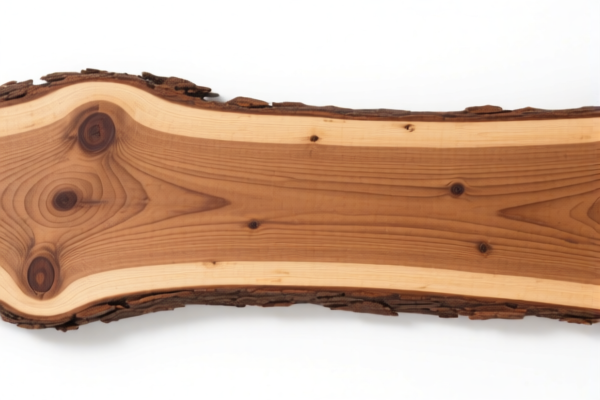
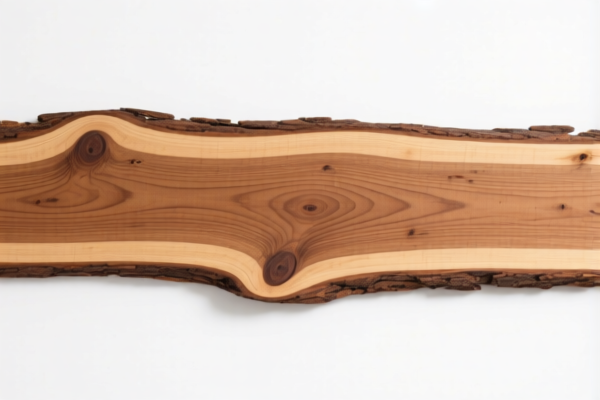
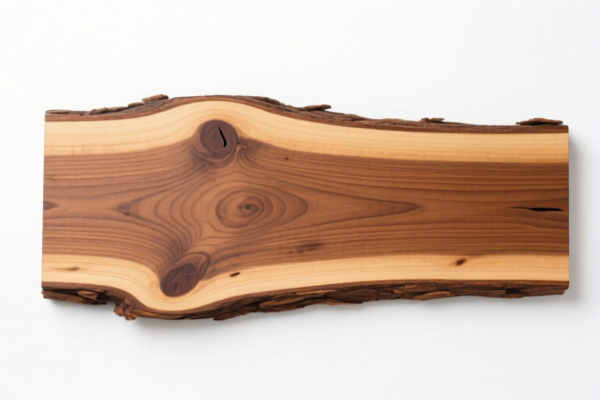
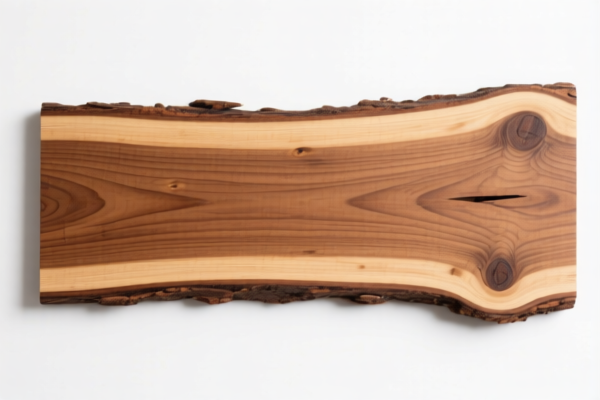
AI分析
🌲 Pine Preserved Wood Board (Coniferous Timber)
🌐 HS Code Reference & Customs Clearance Guide | 2026 Latest Tariff Analysis | Professional Clearance Strategy
📌 I. Product Definition & Classification: What Exactly is "Pine Preserved Wood"?
Pine Preserved Wood Board refers to wood that has been sawn, chipped lengthwise, sliced, or peeled, with a thickness exceeding 6 mm. Crucially, it has undergone treatment with paint, stain, creosote, or other preservatives. In international trade, this falls under Chapter 44 (Wood and Articles of Wood).
The classification hinges on two key factors: 1. Species: Is it Pine (Pinus spp.) or Other Coniferous wood? 2. Treatment: Is it treated with preservatives/paint/stain? (Yes for this input).
⚠️ Critical Distinction:
- If it is Pine and Treated → It falls under specific Pine codes.
- If it is Other Coniferous (e.g., Spruce, Fir) and Treated → It falls under Other Coniferous codes.
- Note: The input "Pine Preserved Wood Board" primarily points to Pine, but customs often require precise species identification. If the species is ambiguous, it may be classified under "Other Coniferous."
📦 II. HS Code Classification Details (Based on Provided Data)
According to the provided <DATA>, there are two primary HS Codes for treated coniferous wood of thickness > 6mm. Both carry the same tax rate.
| HS Code | Product Description | Key Characteristics | Tax Rate (China Origin → US) |
|---|---|---|---|
4407.11.00.02 |
Coniferous: Of Pine (Pinus spp.) Other: Treated with paint, stain, creosote or other preservative | • Species: Pine (Pinus) • Condition: Treated • Thickness: > 6 mm • Method: Sawn, chipped, sliced, or peeled |
25.0% (Base: 0% + Additional: 25%) |
4407.19.00.02 |
Coniferous: Other Other: Treated with paint, stain, creosote or other preservative | • Species: Other Coniferous (Not Pine) • Condition: Treated • Thickness: > 6 mm • Method: Sawn, chipped, sliced, or peeled |
25.0% (Base: 0% + Additional: 25%) |
🔍 Key Reminder:
- Both codes apply to wood that has been sawn, chipped, sliced, or peeled and is > 6mm thick. - "Treated" includes any application of paint, stain, creosote, or preservatives. - If you are unsure of the species, using4407.19.00.02(Other Coniferous) is safer if it’s definitely not Pinus, but if it is Pine,4407.11.00.02is more precise. Tax impact is identical.
💰 III. 2026 Latest Tariff Rate Details (Including Additional Duties)
✅ Applicable Country: United States (US)
✅ Origin: China (CN)
✅ Effective Time: Current trade war tariffs apply (Section 301)
🎯 1. 4407.11.00.02 — Treated Pine Wood Board
| Item | Content |
|---|---|
| Basic Tariff | 0.0% (ad valorem) |
| Section 301 Additional Tariff | +25.0% |
| Total Tax Rate | 25.0% |
| Tax Calculation | CIF Value × 25% |
| De Minimis Exemption | ❌ Not Applicable (Denied for wood products under Section 301) |
| Legal Basis | HTSUS:4407.11.00.02 → Section 301: Footnote 9903.88.01 |
📌 Explanation:
- Wood products from China are subject to 25% additional tariff under Section 301. - There is no basic duty for this specific subheading, making the 25% the total cost. - No de minimis exemption applies; even small shipments are subject to this tariff.
🎯 2. 4407.19.00.02 — Treated Other Coniferous Wood Board
| Item | Content |
|---|---|
| Basic Tariff | 0.0% (ad valorem) |
| Section 301 Additional Tariff | +25.0% |
| Total Tax Rate | 25.0% |
| Tax Calculation | CIF Value × 25% |
| De Minimis Exemption | ❌ Not Applicable |
| Legal Basis | HTSUS:4407.19.00.02 → Section 301: Footnote 9903.88.01 |
📌 Note:
- Identical tax treatment to Pine wood. - Applies to other conifers like Spruce, Fir, Larch, etc., if treated.
🛠️ IV. Customs Clearance Practical Advice (Real-World Pitfall Avoidance)
✅ 1. Required Documentation Checklist (Non-Negotiable)
| Document | Must Provide? | Explanation |
|---|---|---|
| ✅ Product Specification Sheet | ✔️ | Must state: Species (Pinus spp. or other), Treatment Type (e.g., Creosote, Pressure-Treated), Thickness, Dimensions. |
| ✅ Treatment Certificate | ✔️ | Proof of preservative/paint application. Critical for HS Code 4407.xx.xx.02 (Treated). |
| ✅ Commercial Invoice | ✔️ | Must clearly state: "Treated Pine Wood Board," HS Code, Country of Origin, CIF Value. |
| ✅ Packing List | ✔️ | Include gross/net weight, number of packages, dimensions. |
| ✅ ISPM 15 Marking (If applicable) | ✔️ | If raw wood, phytosanitary certificate may be needed. Treated wood often requires specific fumigation/treatment marks. |
| ✅ Photographs | ✔️ | Show wood grain, treatment color, end-joints, and any labels/stamps. |
✅ 2. Declaration Tips (Key Mnemonics)
🔥 “Species First, Treatment Second, Thickness Matters, Tariff is 25%!”
| Scenario | Correct Declaration | Wrong Action |
|---|---|---|
| Pine Wood, Treated | 4407.11.00.02 |
Misclassifying as "Untreated" → Higher tariff risk or penalty. |
| Other Conifer, Treated | 4407.19.00.02 |
Misclassifying as Pine → Potential audit if species mismatch. |
| Wood < 6mm Thick | ❌ Not applicable | This HS Code requires > 6mm. Thinner wood falls under different codes (e.g., 4408/4409). |
| Untreated Wood | ❌ Wrong HS Code | Untreated Pine is 4407.11.00.00 (0% + 25% = 25%, but description differs). Treated wood must be declared as such to avoid false declaration claims. |
✅ 3. Special Cases & Handling
| Situation | Handling Advice |
|---|---|
| Mixed Species | If pine and other conifers are mixed, classify based on majority species or split the shipment. Misclassification can lead to penalties. |
| End-Jointed Wood | If the wood is end-jointed, it still qualifies under 4407 as long as it’s > 6mm thick and treated. |
| Fumigation Required | Even if treated with preservatives, ISPM 15 phytosanitary certification may be required by USDA APHIS. Check with your freight forwarder. |
| Hazmat Concerns | If treated with creosote or certain chemicals, it may be classified as hazardous. Declare accurately to avoid safety holds. |
🌍 V. Global Market Customs Comparison (2026 Update)
| Country/Region | Recommended HS Code | Tariff (China Origin) | Certification Requirements | Notes |
|---|---|---|---|---|
| 🇺🇸 USA | 4407.11.00.02 or 4407.19.00.02 |
25% | ISPM 15, Treatment Certificate | Section 301 applies. No de minimis. |
| 🇨🇳 China | 4407.11.00.00 (Untreated) / 4407.11.00.02 (Treated) |
0-5% | Phytosanitary Certificate | Domestic trade may vary. |
| 🇪🇺 EU | 4407.11.00 |
0-6.5% | FUMI Certificate, REACH Compliance | Treated wood may require chemical compliance checks. |
| 🇬🇧 UK | 4407.11.00 |
0-6.5% | UKCA Marking (if applicable) | Post-Brexit rules apply. |
| 🇯🇵 Japan | 4407.11.00 |
0-5% | Phytosanitary Certificate | Strict on pest control. |
📌 Conclusion:
- The US is the only major market with a flat 25% additional tariff on Chinese wood products.
- EU and UK may require additional chemical compliance (REACH) for treated wood, which can add cost and time.
- China origin is the key driver for the 25% tariff in the US.
📌 VI. Common Errors & Pitfall Guide (Lessons Learned)
❌ Error 1: Declaring "Treated Wood" as "Untreated Wood"
👉 Consequence: False declaration. Potential penalty, seizure, or forced re-classification with back taxes.
❌ Error 2: Ignoring the "> 6mm Thickness" Rule
👉 Consequence: If wood is ≤ 6mm, it falls under different HS codes (e.g., 4408 or 4409). Wrong code = Wrong tariff = Audit risk.
❌ Error 3: Forgetting Treatment Documentation
👉 Consequence: Customs may classify as "Untreated" if no proof is provided, leading to different tariff codes and potential penalties for misdeclaration.
❌ Error 4: Assuming "De Minimis" Applies
👉 Consequence: Section 301 tariffs on Chinese goods do not apply to de minimis ($800) exemption. Even small samples are taxed at 25%.
✅ Correct Practice:
"Pressure-Treated Pine Lumber, 2x4x8, Pressure-Treated with Alkaline Copper Quaternary (ACQ), Thickness 25mm, HS Code 4407.11.00.02, Country of Origin: China"
🎯 VII. Conclusion: Professional Declaration, Save Money, Avoid Delays!
🎯 Remember the Mnemonic:
🔹 "Pine Treated = 4407.11.00.02 | Other Treated = 4407.19.00.02 | Both = 25% Tax | No De Minimis!"
🔹 "Thickness > 6mm, Treatment Proof Required, Origin China = 25% Hit!"
📌 Pro Tip:
If your wood is not from China (e.g., Canada, Russia, Vietnam), check if it qualifies for FTAA or other preferential tariffs. For Chinese origin, plan for the 25% additional cost.
📣 Immediate Action:
📞 Consult a licensed customs broker.
📄 Prepare Treatment Certificates and Species Verification.
🚀 Accurate HS Code classification is critical to avoid 25% surprise costs!
✨ Professional Customs Clearance Starts with Accurate Classification!
💼 Every percentage point of duty matters!
用户评价
关于 HS 编码归类
协调制度(HS)是由世界海关组织(WCO)制定的国际贸易商品分类标准。全球 200 多个国家采用 HS 系统作为海关关税、贸易统计和进出口监管的基础。
每个 HS 编码遵循以下层级结构:
- 章(2 位)——商品大类(例如:第 84 章:机器和机械设备)
- 品目(4 位)——章内的更具体分类
- 子目(6 位)——国际通用细分,所有 WCO 成员国统一使用
- 本国细分(8-10 位)——各国自行扩展的细分编码,如美国 HTSUS 10 位编码
正确的 HS 编码归类对于顺利通关、准确缴纳关税和遵守贸易法规至关重要。错误归类可能导致海关延误、多缴关税或罚款。
从CN进口到US时,适用的关税税率可能包括:
- 最惠国(MFN)税率——适用于 WTO 成员国的标准关税税率
- 普通税率——适用于无贸易协定国家
- 贸易救济关税——附加关税,如 301 条款(反倾销)、232 条款(国家安全)或反补贴税
本页内容仅供参考。如需正式归类,请咨询当地海关或持牌报关代理。