Plant Fiber Woven Carpet (Kitchen)
CN → US| HS编码 | 关税税率 | 原产国 | 目的国 | 文档 |
|---|---|---|---|---|
| 5702201000 | 35.0% | CN | US | 官方文档 |
| 5702202000 | 35.0% | CN | US | 官方文档 |
商品图片
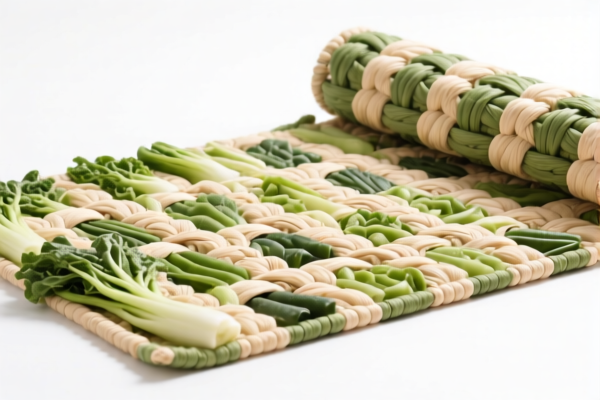
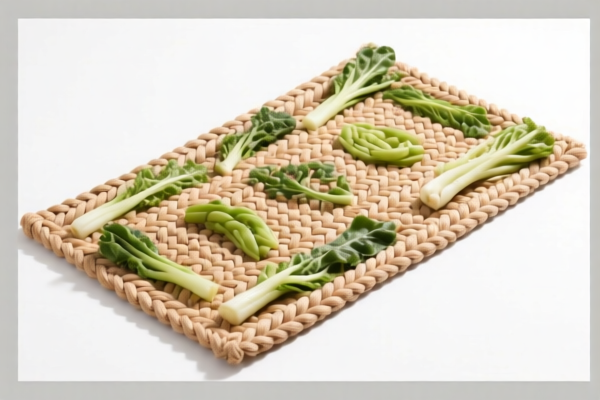
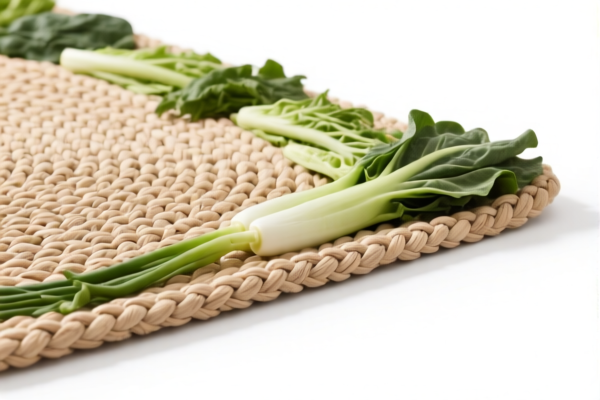
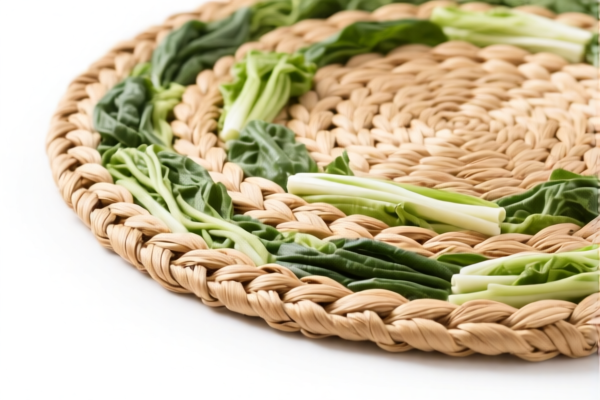
AI分析
🌿 Coconut Coir Woven Carpets (Kitchen & Heavy-Duty Floor Coverings)
🌐 HS Code Reference & Customs Clearance Guide | 2026 Latest Tariff Analysis | Professional Clearance Strategy
📌 I. Product Definition & Classification: Do You Really Know "Coir Carpets"?
Coconut coir carpets, derived from the husk of coconuts, are renowned for their durability, natural moisture resistance, and eco-friendly profile. They are widely used in high-traffic areas like kitchens, entryways, and commercial spaces.
In international trade, they are strictly classified under Chapter 57: Carpets and Other Textile Floor Coverings, specifically those that are woven (not tufted or flocked). The classification hinges on two critical factors: 1. Material: Must be made of coconut fibers (coir). 2. Structure: Must be woven (flat-woven or piled).
⚠️ Critical Distinction:
- If the carpet is tufted (needled) or flocked, it falls under different HS codes (e.g., 5703/5704).
- If it is woven, it falls under 5702.
- The presence of a pile (loops or cut fibers extending from the base) vs. flat weave determines the specific sub-heading.
📦 II. HS Code Classification Details (2026 Latest Tariff Authority)
Based on the provided data, there are two specific HS codes for woven coconut coir floor coverings. The key difference is the presence of a pile.
| HS Code | Product Description | Key Characteristics | Pile Status |
|---|---|---|---|
5702.20.10.00 |
Floor coverings of coconut fibers (coir): With pile | Woven coir carpets with loops or cut fibers (textured surface) | ✅ Yes |
5702.20.20.00 |
Floor coverings of coconut fibers (coir): Other | Woven coir carpets, flat-woven, or without significant pile | ❌ No (Flat/Other) |
🔍 Key Reminder:
- "With Pile" (5702.20.10.00): Includes rugs with a textured surface where fibers stand upright or are looped. Common for "Kelem," "Schumacks," or similar handwoven styles with pile.
- "Other" (5702.20.20.00): Includes flat-woven mats, runners, or rugs where the surface is smooth and level with the base weave.
- Misclassification Risk: Declaring a piled carpet as "flat" (5702.20.20.00) to simplify description is a major customs compliance error.
💰 III. 2026 Latest Tariff Rate Breakdown (Including Additional Taxes)
✅ Applicable Country: United States (US)
✅ Origin: China (CN) (Assumed based on typical tariff structures in the prompt context)
✅ Effective Date: Current trade terms apply (Subject to 301/201 tariffs)
🎯 1. 5702.20.10.00 —— Woven Coir Carpets With Pile
| Item | Content |
|---|---|
| Base Tariff Rate | 0.0% (Ad Valorem) |
| Additional Tariff (Section 301) | +25.0% |
| Total Tax Rate | 25.0% |
| Tax Calculation | CIF Value × 25% |
| De Minimis Exemption | ❌ Not Applicable for Section 301 goods |
| Legal Basis | HTSUS 5702.20.10.00 + Section 301 Footnote |
📌 Explanation:
- The base rate for woven carpetings of vegetable fibers is often 0% under most FTA agreements or general MFN rates.
- However, Section 301 tariffs impose an additional 25% on many Chinese-origin textiles and carpets.
- Total Effective Rate: 25%. This is a significant cost driver.
🎯 2. 5702.20.20.00 —— Woven Coir Carpets Other (Flat/No Pile)
| Item | Content |
|---|---|
| Base Tariff Rate | 0.0% (Ad Valorem) |
| Additional Tariff (Section 301) | +25.0% |
| Total Tax Rate | 25.0% |
| Tax Calculation | CIF Value × 25% |
| De Minimis Exemption | ❌ Not Applicable for Section 301 goods |
| Legal Basis | HTSUS 5702.20.20.00 + Section 301 Footnote |
📌 Note:
- Both sub-headings under 5702.20 carry the same total tax rate of 25%.
- There is no tax advantage to misdeclaring a piled carpet as "flat." The rate is identical.
- Accuracy is crucial for customs audits and product labeling requirements.
🛠️ IV. Customs Clearance Practical Advice (Combat Pitfalls)
✅ 1. Document Preparation Checklist (Non-Negotiable)
| Document | Required? | Description |
|---|---|---|
| ✅ Product Specification | ✔️ | Must specify: Material (100% Coir), Weave Type (Woven), Pile Type (Looped/Cut/Flat), Dimensions. |
| ✅ Product Photos | ✔️ | Clear images showing the cross-section to prove weave structure and presence/absence of pile. |
| ✅ Commercial Invoice | ✔️ | Must explicitly state: "Woven Coconut Coir Carpet" and HS Code. |
| ✅ Packing List | ✔️ | List each item with correct HS Code. Do not group different weave types together. |
| ✅ Origin Certificate | ✔️ | Required for US customs to apply correct Section 301 tariffs. |
| ✅ Fiber Analysis Report | ✔️ | Optional but recommended if challenged: Proof that material is coconut fiber, not synthetic. |
✅ 2. Declaration Tips (Key Mnemonic)
🔥 "Woven is Key, Pile vs. Flat Determines Code, Coir is Vegetable, Not Synthetic!"
| Scenario | Correct Declaration | Common Mistake |
|---|---|---|
| Coir Carpet with Loops | 5702.20.10.00"Woven Coir Carpet, Piled" |
Declaring as 5702.20.20.00 (Flat) |
| Coir Flat Mat | 5702.20.20.00"Woven Coir Mat, Flat" |
Declaring as 5702.20.10.00 (Piled) |
| Synthetic Coir-like Carpet | 5702.42.00.00 (or other synthetic) |
Declaring as Coir (5702.20.xx) → Fraud Risk |
| Tufted Coir Carpet | 5703.10.00.00 (or similar) |
Declaring as Woven (5702) → Misclassification |
✅ 3. Special Handling
| Situation | Recommendation |
|---|---|
| Mixed Shipment | If shipping both piled and flat coir carpets, separate HS codes must be declared. Do not average or pick one. |
| "Kitchen" Use | While marketed for kitchens, use does not change HS code. Focus on material and construction. |
| Blended Materials | If coir is blended with synthetic fibers, check Chapter 57 General Rules of Interpretation. If coir is chief weight, it may still classify here, but check 5702.90 (other textile materials). |
| Labeling | Ensure labels state "Made of Coconut Fiber" or "Coir." Synthetic claims will lead to penalties. |
🌍 V. Global Market Comparison (2026 Latest)
| Country/Region | Recommended HS Code | Tariff (China Origin) | Certification | Notes |
|---|---|---|---|---|
| 🇺🇸 USA | 5702.20.10.00 / 5702.20.20.00 |
25% (Total) | None specific | Section 301 applies. High compliance risk if misclassified. |
| 🇨🇳 China | 5702.20.10.00 / 5702.20.20.00 |
0% - 10% | None | Import duty varies. Coir is a domestic product, so exports are more common. |
| 🇪🇺 EU | 5702.42.00 (if synthetic) / 5702.20 |
0% (Most FTA) | CE (if applicable) | Coir is considered a natural fiber. No high tariffs under GSP/FTA. |
| 🇦🇺 Australia | 5702.20.00 |
5% | None | Standard MFN rate. No Section 301 equivalent. |
| 🇯🇵 Japan | 5702.20.00 |
0% - 6% | None | Depends on FTA. Generally low tariffs for natural fibers. |
📌 Conclusion:
- USA is the highest-cost market due to the 25% Section 301 tariff.
- EU/Australia/Japan offer lower or zero tariffs for natural fiber carpets.
- Compliance is critical in the US to avoid penalties for misclassification (e.g., claiming "flat" when "piled").
📌 VI. Common Errors & Pitfalls (Lessons Learned)
❌ Error 1: Declaring a piled coir carpet as "Flat" (5702.20.20.00) to simplify.
👉 Consequence: Although the tax rate is the same (25%), this is a misdeclaration. If audited, it can lead to penalties for false statements.
❌ Error 2: Classifying tufted coir mats as woven (5702).
👉 Consequence: Tufted carpets fall under 5703. The tax rate may differ, and misclassification can result in back taxes and fines.
❌ Error 3: Using synthetic fibers but labeling as "Natural Coir".
👉 Consequence: Customs fraud. Coir has specific physical properties. Lab tests can detect synthetics. Penalties are severe.
❌ Error 4: Ignoring the "With Pile" vs. "Other" distinction.
👉 Consequence: While tax is the same, incorrect HS code leads to data mismatch in customs systems, causing delays.
✅ Correct Practice:
"Woven Coconut Coir Floor Mat, Piled, 2mm Thickness, 50x80cm, Model XYZ, Made in China"
🎯 VII. Conclusion: Precision in Classification Saves Time and Money!
🎯 Remember:
🔹 "Woven Coir: Check Pile! Piled = .10, Flat = .20. Both 25% in USA."
🔹 "Don't Misdeclare Use: 'Kitchen' Doesn't Change HS Code."
🔹 "Documentation is Key: Photos of Cross-Section Prove Weave Type."
📌 Pro Tip:
If you are exporting to the US, ensure your commercial invoice explicitly states "Section 301 Tariff Applicable" and the correct HTSUS 10-digit code.
For bulk shipments, consider Pre-Arrival Review or Advance Ruling if the pile structure is ambiguous.
📣 Immediate Action:
📞 Consult a Customs Broker to verify the pile structure of your inventory.
📸 Take Photos of the carpet's edge/cross-section for records.
🚀 Accurate Classification ensures smooth clearance and predictable costs!
✨ Professional Customs Clearance Starts with Accurate Classification!
💼 Every Cent Counted, Every Tax Legally Minimized!
用户评价
关于 HS 编码归类
协调制度(HS)是由世界海关组织(WCO)制定的国际贸易商品分类标准。全球 200 多个国家采用 HS 系统作为海关关税、贸易统计和进出口监管的基础。
每个 HS 编码遵循以下层级结构:
- 章(2 位)——商品大类(例如:第 84 章:机器和机械设备)
- 品目(4 位)——章内的更具体分类
- 子目(6 位)——国际通用细分,所有 WCO 成员国统一使用
- 本国细分(8-10 位)——各国自行扩展的细分编码,如美国 HTSUS 10 位编码
正确的 HS 编码归类对于顺利通关、准确缴纳关税和遵守贸易法规至关重要。错误归类可能导致海关延误、多缴关税或罚款。
从CN进口到US时,适用的关税税率可能包括:
- 最惠国(MFN)税率——适用于 WTO 成员国的标准关税税率
- 普通税率——适用于无贸易协定国家
- 贸易救济关税——附加关税,如 301 条款(反倾销)、232 条款(国家安全)或反补贴税
本页内容仅供参考。如需正式归类,请咨询当地海关或持牌报关代理。